Engaging your audience and maintaining their interest in your landing pages can be quite a daunting task. If you’re facing this challenge, you shouldn’t worry; conversational landing pages are a solution that just might change your approach. The rules of inbound marketing continuously change, with landing pages being a basic part of it. The problem is that traditional landing pages are only linear communication between a brand and visitors, with the brand being the only one to talk. While this approach is effective for bottom-funnel prospects, it often leaves unanswered questions for those just starting their journey. Understanding conversational landing pages is vital for marketers seeking to create more personalized and effective campaign experiences. That’s why we’re here to help you understand conversational landing pages more.
What are conversational landing pages?
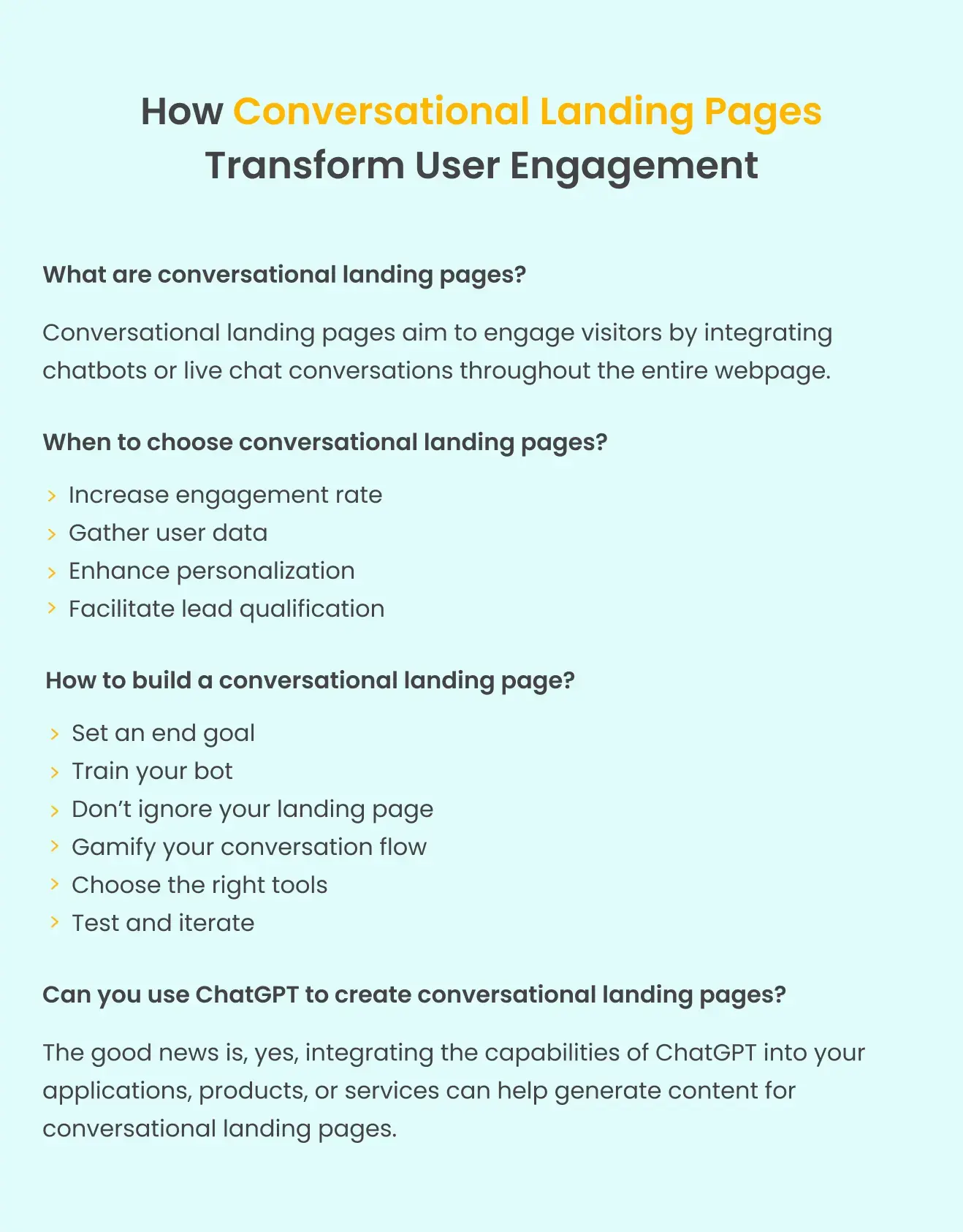
Conversational landing pages aim to engage visitors by integrating chatbots or live chat conversations throughout the entire webpage.
Traditional elements like headlines and copy are still present, but there’s this unique avenue for direct communication. Visitors can ask questions about products and services in real-time.
Derived from the concept of conversational marketing, these landing pages prioritize customer conversations to drive engagement and boost conversions. By using AI tools, brands gather feedback and build meaningful customer interactions.

Conversational landing pages vs conventional landing pages
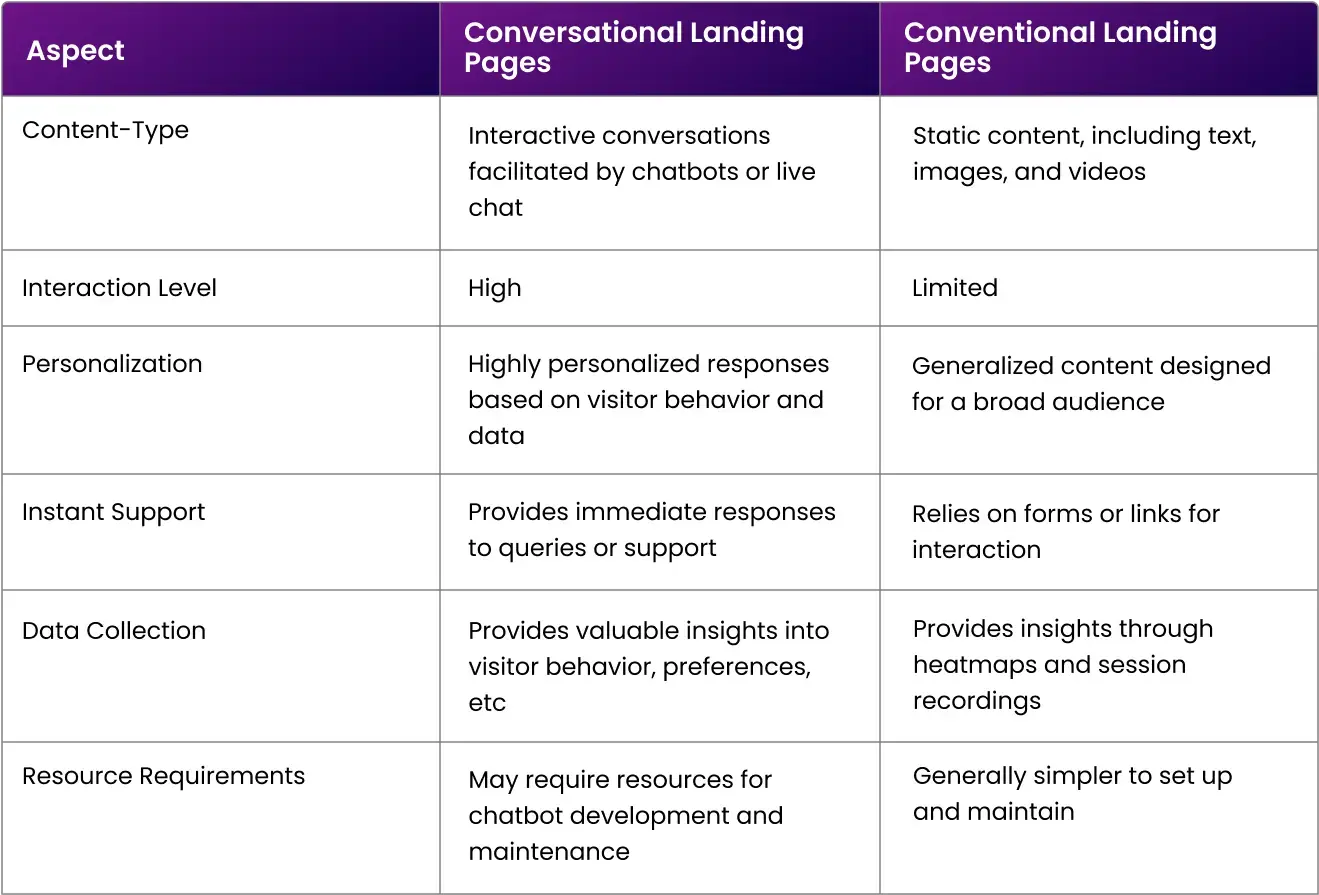
When it comes to capturing leads, conventional landing pages excel at targeting bottom-of-the-funnel prospects. However, they often fail to serve the needs of top-of-the-funnel leads who come with numerous questions and require more extensive research. This is where conversational landing pages step in. They go beyond the traditional format and offer an interactive approach that engages visitors in meaningful conversations. While a FAQ section is a valuable addition to any landing page. It can’t match the real-time, two-way interaction provided by conversational landing pages. With conversational landing pages, brands can address the inquiries of cold leads and provide personalized responses. This improved level of engagement helps build trust and increases the chances of conversions. Let’s take a look at how conventional landing pages stack up against conversational landing pages with the table below:
 Remember, there’s no one-size-fits-all choice between conventional and conversational landing pages. It all comes down to your business goals and target audience.
In fact, many successful businesses use a combination of both or even a hybrid model similar to what Apexure used for one of its clients. We’ll look at this later in the blog post.
Remember, there’s no one-size-fits-all choice between conventional and conversational landing pages. It all comes down to your business goals and target audience.
In fact, many successful businesses use a combination of both or even a hybrid model similar to what Apexure used for one of its clients. We’ll look at this later in the blog post.
When to choose conversational landing pages
Did you know that around 50% of entrepreneurs have found that using interactive pages leads to the highest conversion rates? If you need to do something for your marketing funnel, the stat strongly indicates that conversational landing pages might be the right choice for you.
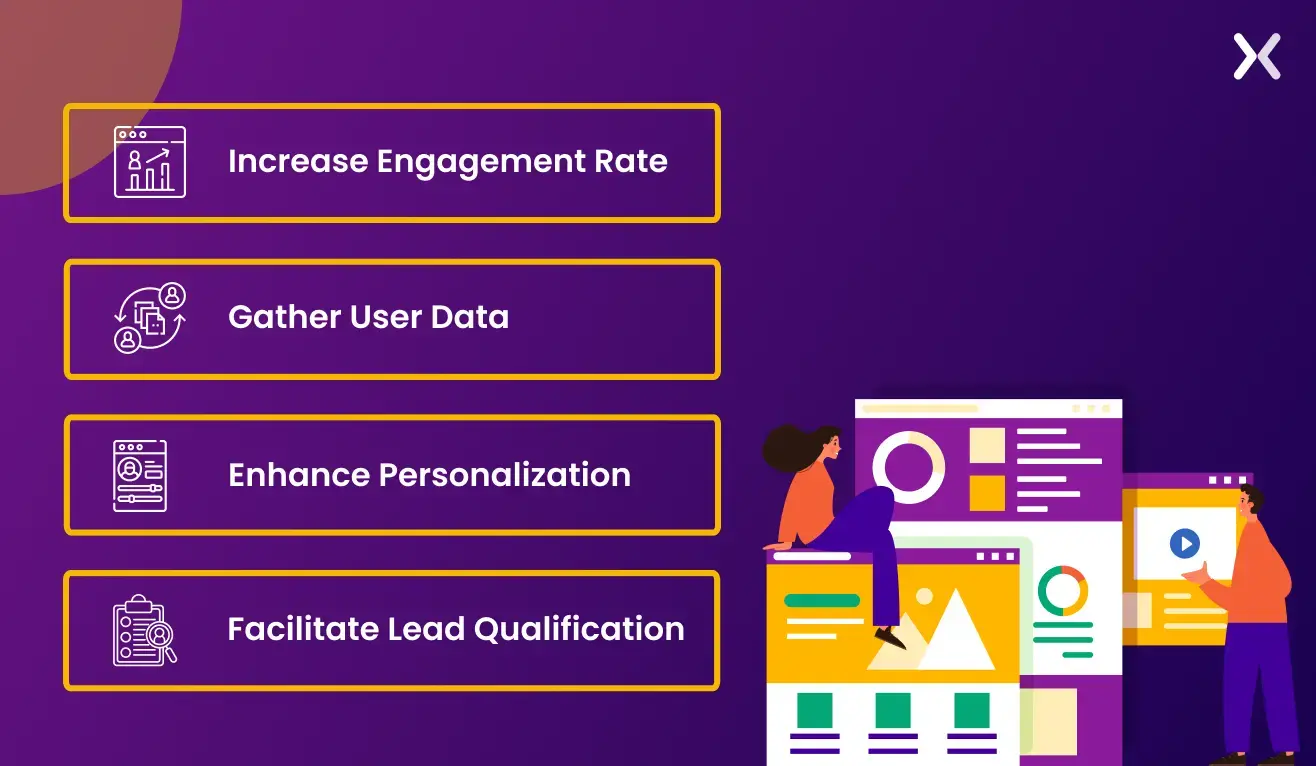
1. Increase engagement rate
Engagement is key when it comes to different landing pages be it for SaaS or ecommerce. With a conversational interaction, the difference is clear. Instead of telling something to your audience. You’re speaking with them. Visitors can also freely explore, ask questions, and get instant responses - this means a smooth and engaging interaction. This not just boosts brand perception but also leads to longer on-page durations, reduced bounce rates, and, most importantly, increased conversions.
2. Gather user data
By engaging in conversations, you gain valuable insights into what your customer feels and needs. This data is a goldmine for refining your marketing strategies, customizing products or services, and improving overall customer satisfaction. Simply put, conversational landing pages provide a dynamic platform for data collection, helping you with the knowledge to supercharge your business growth.
3. Improve Personalization
Personalization is key for capturing the attention of visitors. If you think you highly need it, you can create tailored interactions in conversational landing pages using AI algorithms that adapt to preferences and behaviors. This heightened level of personalization results in a more engaging and customized experience, maximizing the chances of conversions and building long-term customer loyalty. Say goodbye to generic interactions and embrace the power of personalization.
4. Help lead qualification
With you asking targeted questions and assessing interest levels. It’s easier to identify high-quality leads that are primed for conversion. This allows you to prioritize follow-up actions and optimize your sales funnel for increased efficiency.
Two popular conversational landing page types
In addition to understanding the need for conversational landing pages. It’s important to explore the two popular types that can take your engagement strategies to the next level.
1. Live chat conversational landing pages
Live chat landing pages use real-time messaging to connect visitors with human operators directly on the page. With integrations like a chat box or widget, visitors are encouraged to start conversations, leading to immediate engagement and personalized assistance.
Advantages of Live Chat:
-
Connect with an in-house person immediately, addressing complex or sensitive queries.
-
Human operators provide personalized support, understanding emotions and nuances that automated systems may struggle with.
-
Real-time troubleshooting leads to higher customer satisfaction, preventing visitors from leaving frustrated.
-
Operators can handle multiple conversations simultaneously through chat systems, making it an efficient tool for supporting multiple visitors at once. Experience the power of live chat on your landing pages.
2. Chatbot conversation landing pages
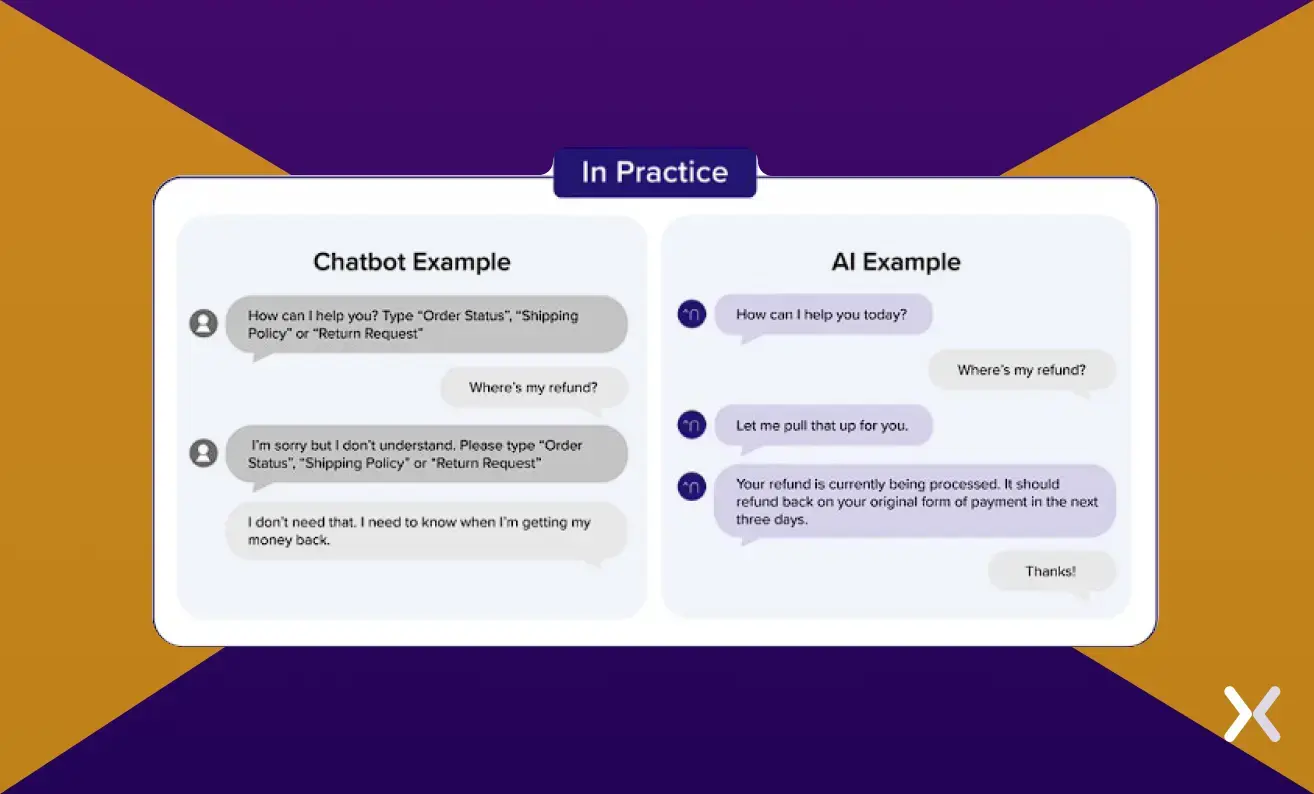
These landing pages use AI-powered chatbots to engage visitors in simulated human-like conversations. These smart tools can be programmed to address queries, follow brand guidelines, provide information, guide users through processes, and even perform specific tasks autonomously. There are two main types of such technology:
- Simpler and following predefined rules, rule-based bots are limited in their ability for natural language processing. Help Crunch provides an example of how to build rule-based bots. See how these bots can improve your conversational landing pages.
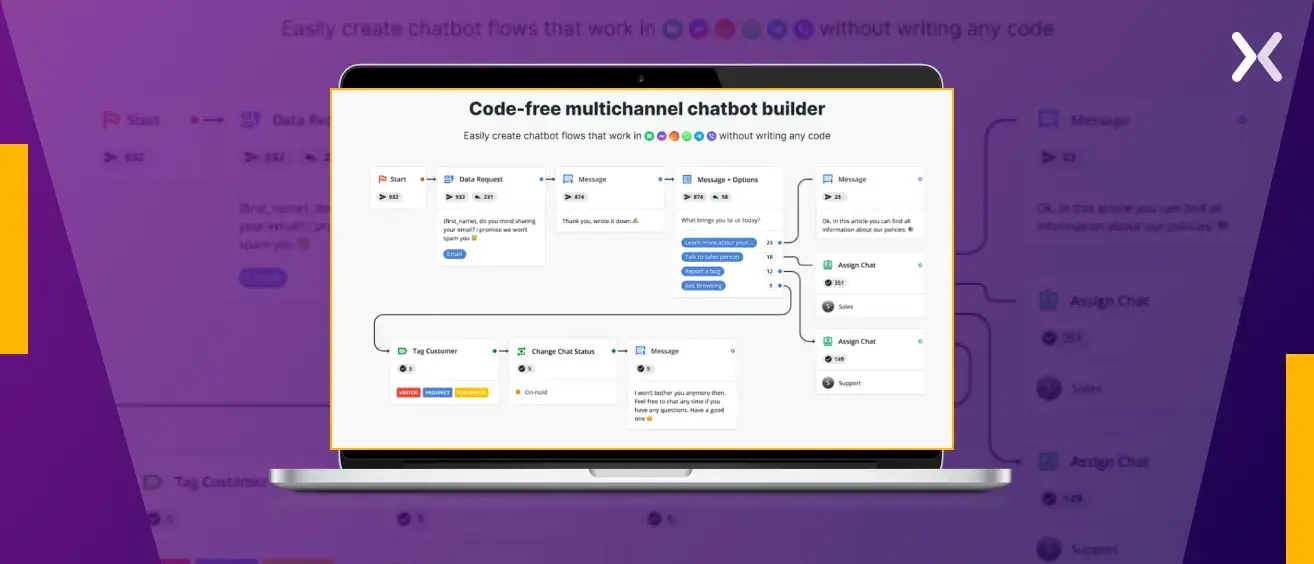
- Unlike rule-based bots, AI-based bots are more advanced and employ NLP to comprehend user input, which allows them to provide personalized and intelligent responses.
Advantages of Chatbot Landing Pages:
-
They engage with visitors anytime, regardless of business hours.
-
Handle multiple conversations simultaneously, perfect for high inquiry volumes.
-
Provide uniform service and information to all visitors.
-
You can have a look at valuable insights into user behavior, preferences, and FAQs for refining marketing strategies and improving customer support.
Note: Based on the information provided, it may require more effort to implement a live chat landing page. For beginners, starting with chatbot landing pages is recommended.
How to build a conversational landing page?
While there’s no secret formula, remember a few conversational marketing guidelines: stay engaging, know your audience, provide valuable content, and make it user-friendly. Keep these principles in mind as you create your conversational landing page and watch engagement soar.
1. Set an end goal
Instead of using open-ended conversations, you should have the goal of guiding visitors toward specific actions. These goals can include primary CTAs for conversions and secondary CTAs for upselling or gathering audience insights.

Use conversations to collect feedback and improve your product, customer experience, and buyer’s journey.
2. Train your bot
To create a successful conversational landing page, start by understanding your audience. Craft a clear and easily comprehensible message. Design the page to capture attention and build meaningful engagement. But a necessary step here is training your chatbot effectively to provide a smooth user experience, where you’ll prioritize user needs for optimal results.
-
These provide detailed insights into the needs and characteristics of your target audience. Help your bot to communicate in a way that matches your ideal customers, leading to more effective conversations and better results.
-
Customize your chatbot’s messaging, purpose, and goals to match your own voice and values. This makes sure that the entire experience is memorable.
3. Don’t ignore your landing page
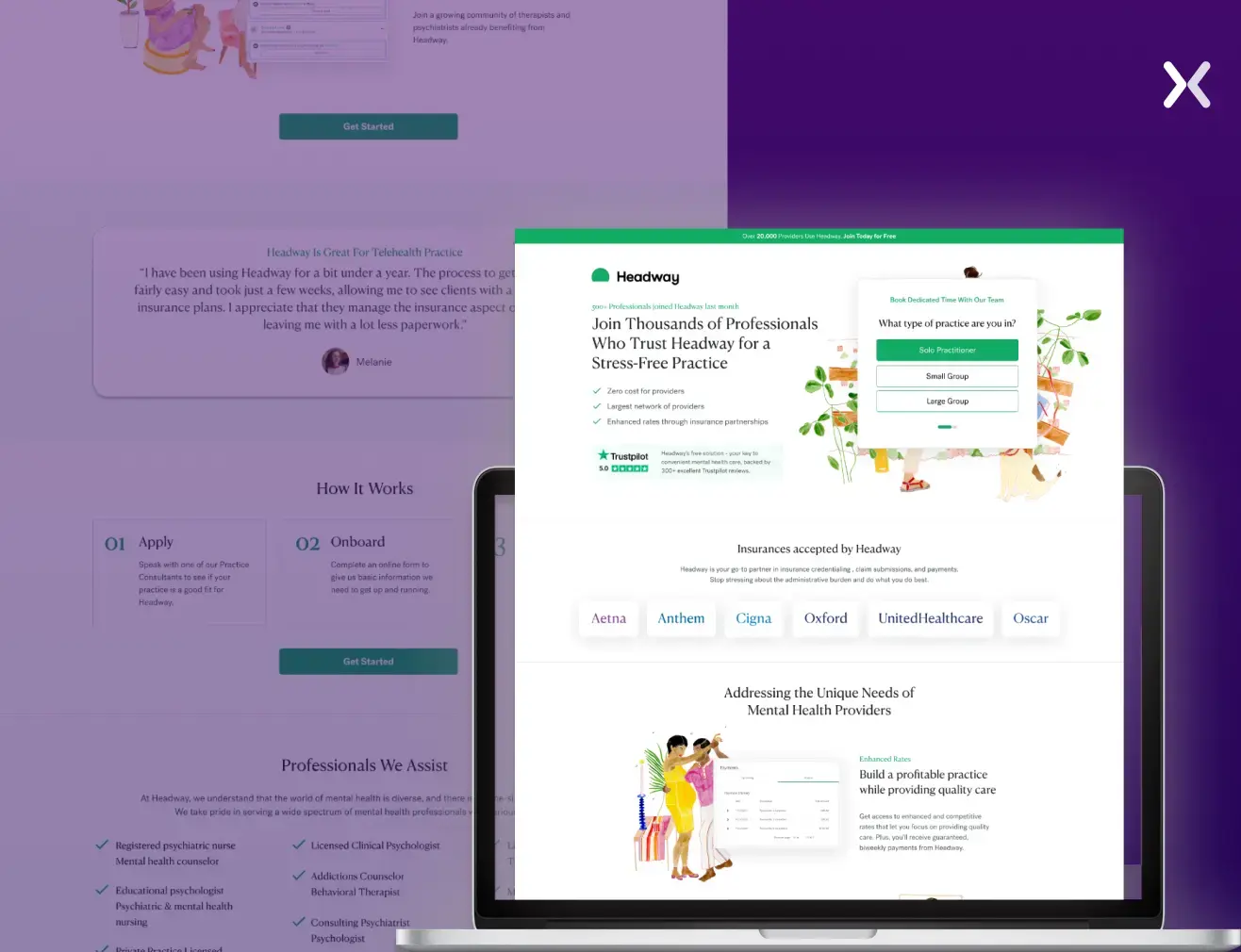
When it comes to your conversational landing page, simplicity is key. Optimize the hero fold by including a strong title, a clear call-to-action, and a concise explanation of your offering. Since you’ll aim for a simple layout, make sure the design is clean and uncluttered, allowing users to understand and engage easily. But don’t forget to accent unique selling points, benefits, and social proof to create a strong page that captivates your audience, no matter whether the page is for getting free trials, booking demos, or pricing.
4. Gamify the conversation flow
Make your conversational landing pages more engaging and effective by avoiding long paragraphs and anticipating user questions. Instead, you can look at how gamification strategies guide users and simplify the conversation flow. This approach improves user engagement and provides clear options, creating a engaging landing page experience. In doing so, prioritize a more smooth interactive approach to successfully make your conversational landing page an interactive adventure.
5. Choose the right tools
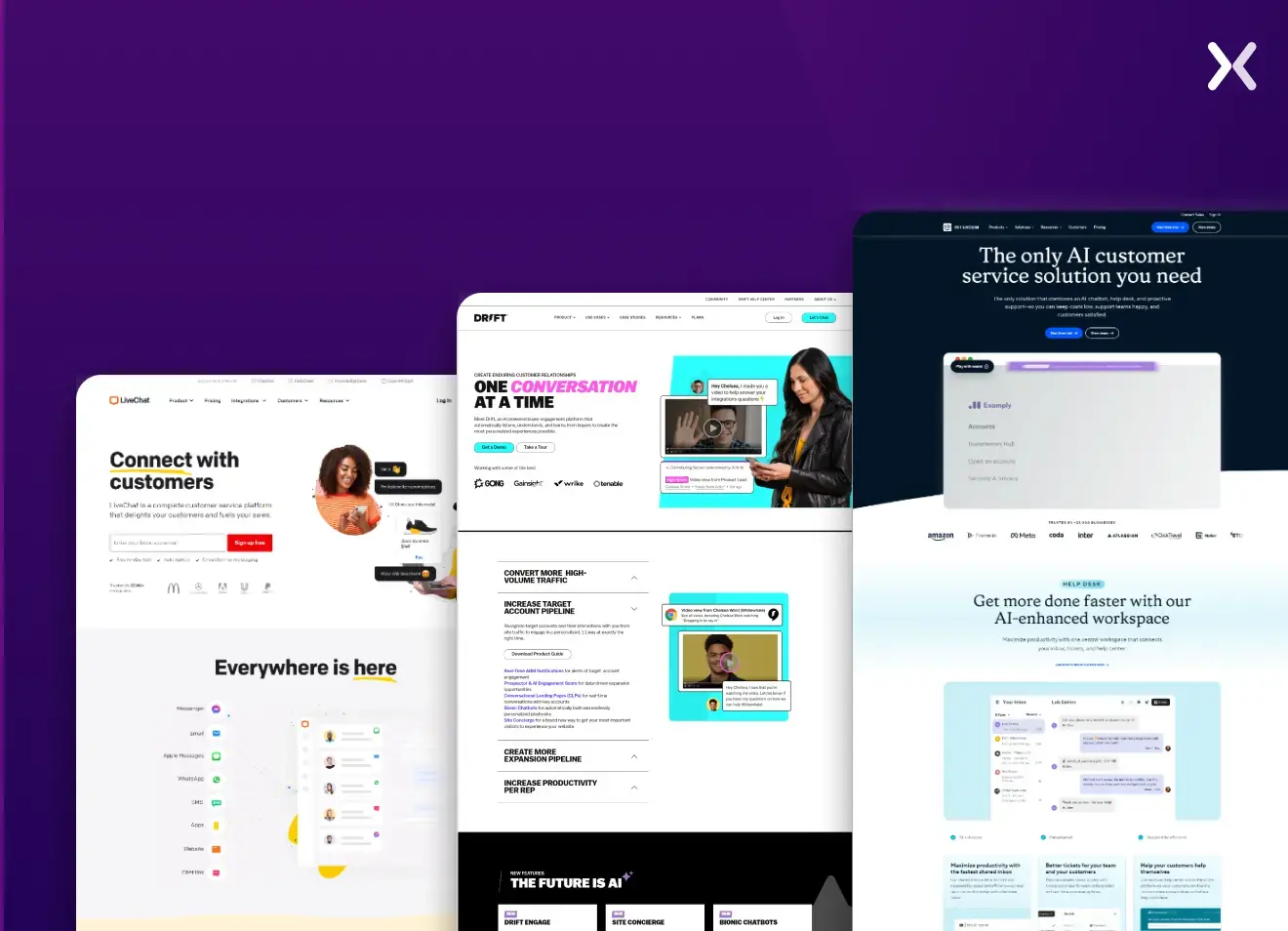
With various options available. It’s necessary to find tools and platforms that smoothly integrate with your landing pages and offer features to bring your chatbot to life. From chatbot builders to landing page builders and marketing automation tools, choose wisely to raise your conversational landing pages to new heights. Some common options to choose from include:
-
A dynamic customer messaging platform, Intercom helps businesses to engage customers through multiple channels such as in-app messaging, email, and live chat. It’s a one-stop shop with features for efficient customer support, marketing automation, and user engagement.
-
As a leading conversational marketing platform, Drift builds real-time messaging to surge leads and revenue. Its goal is to allow businesses the capacity to connect with visitors in an extraordinarily personalized and timely manner.
-
This offers strong customer service software that equips businesses with essential tools to manage customer inquiries effectively, helping real-time customer engagement.
6. Test and Iterate
In the world of marketing, continuous testing is a given. It should be no different for your conversational landing page, be it for a SaaS product or an accounting firm. Try various configurations - adjust colors, fonts, messaging, and call-to-action buttons to see which mix attracts, engages, converts, and thrills customers. Experiment, analyze, and optimize to make sure your page contributes positively to your ROI and lead generation endeavors. In doing so, determine the effectiveness of your page, validating its ability to meet customer needs.
Can you use ChatGPT to create conversational landing pages?
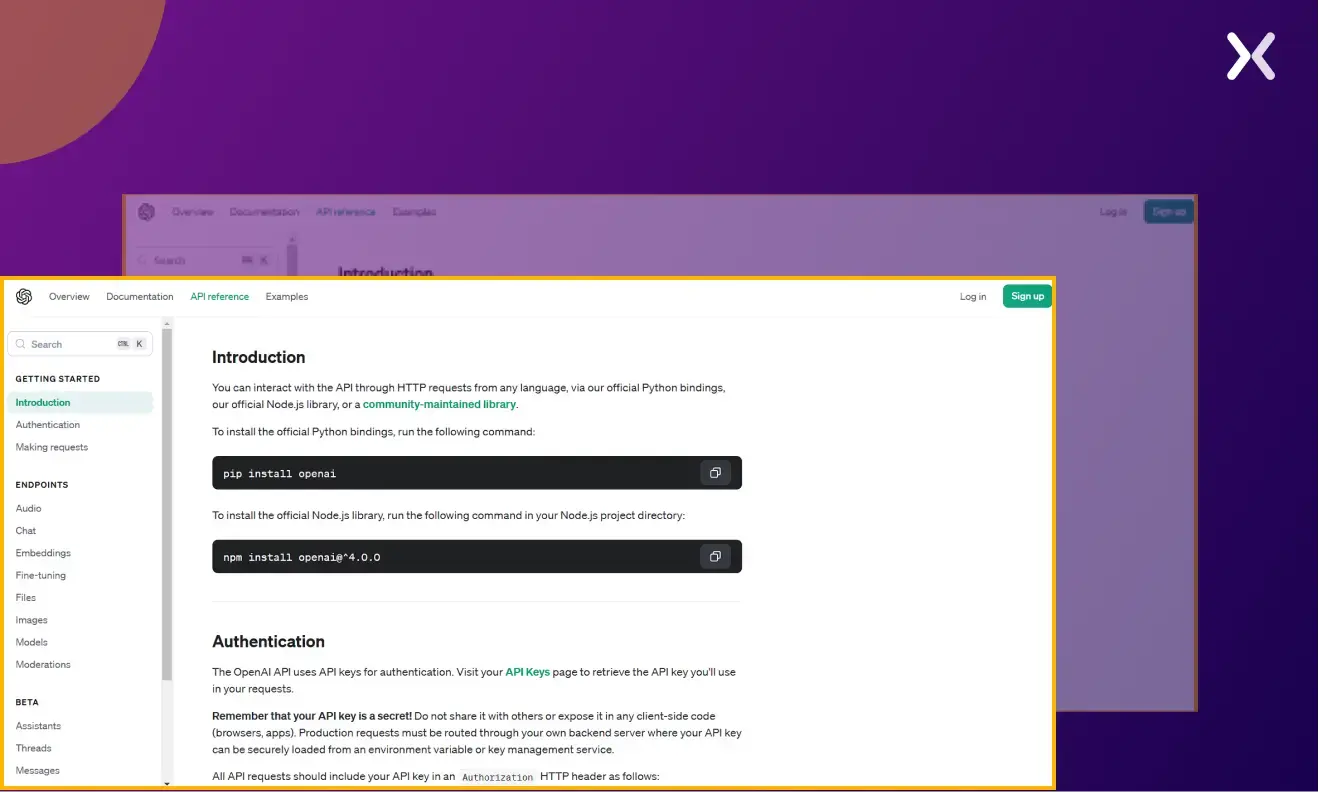
The good news is, yes, integrating the capabilities of ChatGPT into your applications, products, or services can help generate content for conversational landing pages. With the ChatGPT API, you can fuel dynamic interactions with your model for a back-and-forth chat. This API lets you use a series of input messages and get a model-generated message as output. That’s why it’s perfect for creating engaging conversations on your websites, landing pages, and applications. While the API offers an effective tool for creating conversational content, the content must match your brand and messaging. It’s also essential to manage the chat interface’s technical implementation on your landing page. If you’re not technically inclined, collaborating with a developer or a technical expert is recommended for maximizing the ChatGPT API’s potential in creating conversational landing pages. For more information, check out OpenAI’s API Reference page.
How Apexure executed a conversational landing page
When it comes to creating effective landing page experiences, Apexure stands at the forefront. One such instance was when Pilot, our client, wanted a simplified landing page for its career development program. Recognizing the need for a more efficient form submission process, we introduced dynamic changes.
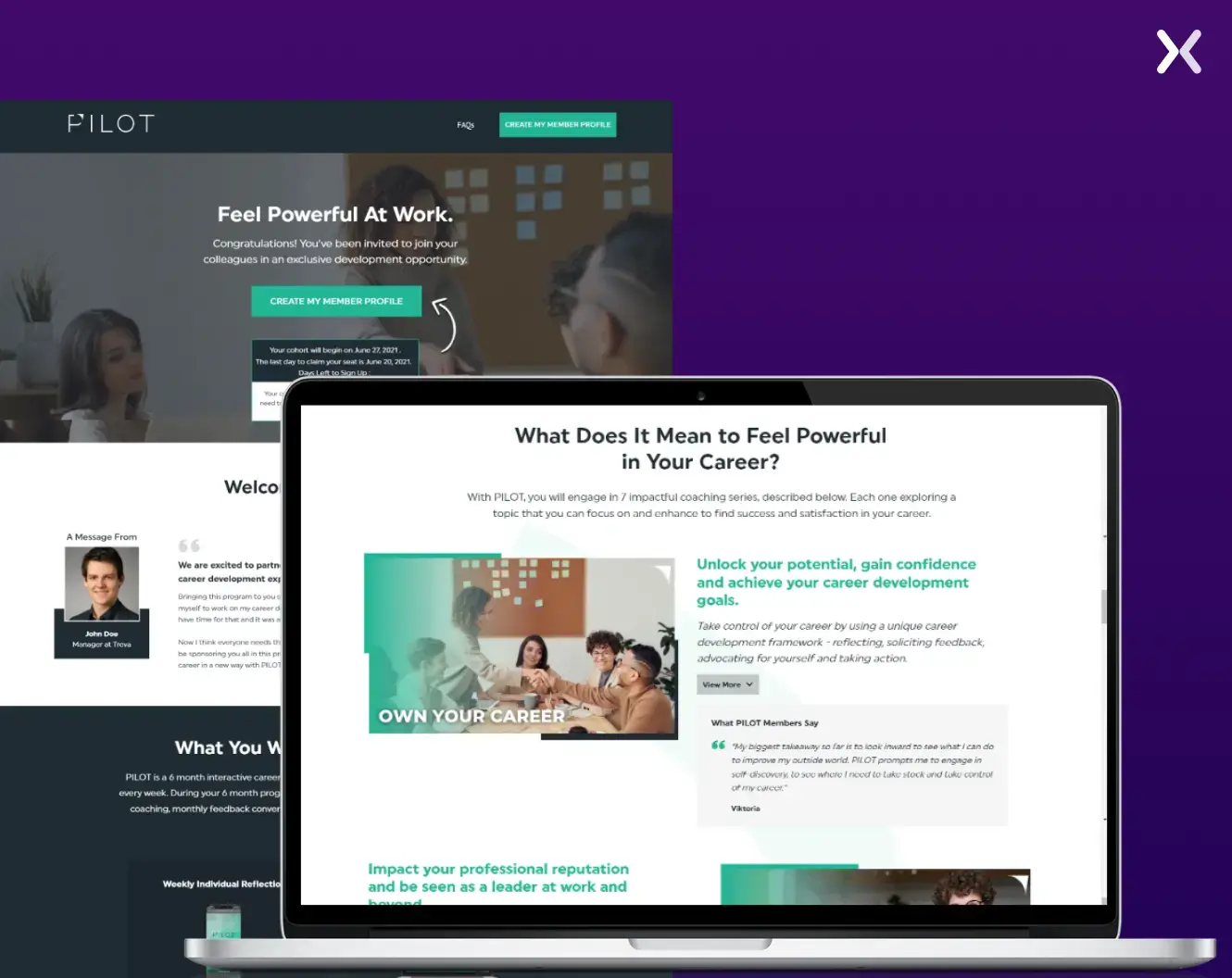 Our solution was to convert the extensive questionnaire into an engaging, multi-step form neatly incorporated into a click-through landing page. We improved the form by adding a conversational element, changing the traditional form-filling process into an interactive dialogue. Our goal was to make sure users feel relaxed and enjoy the process. We achieved this all while remaining true to the brand’s identity.
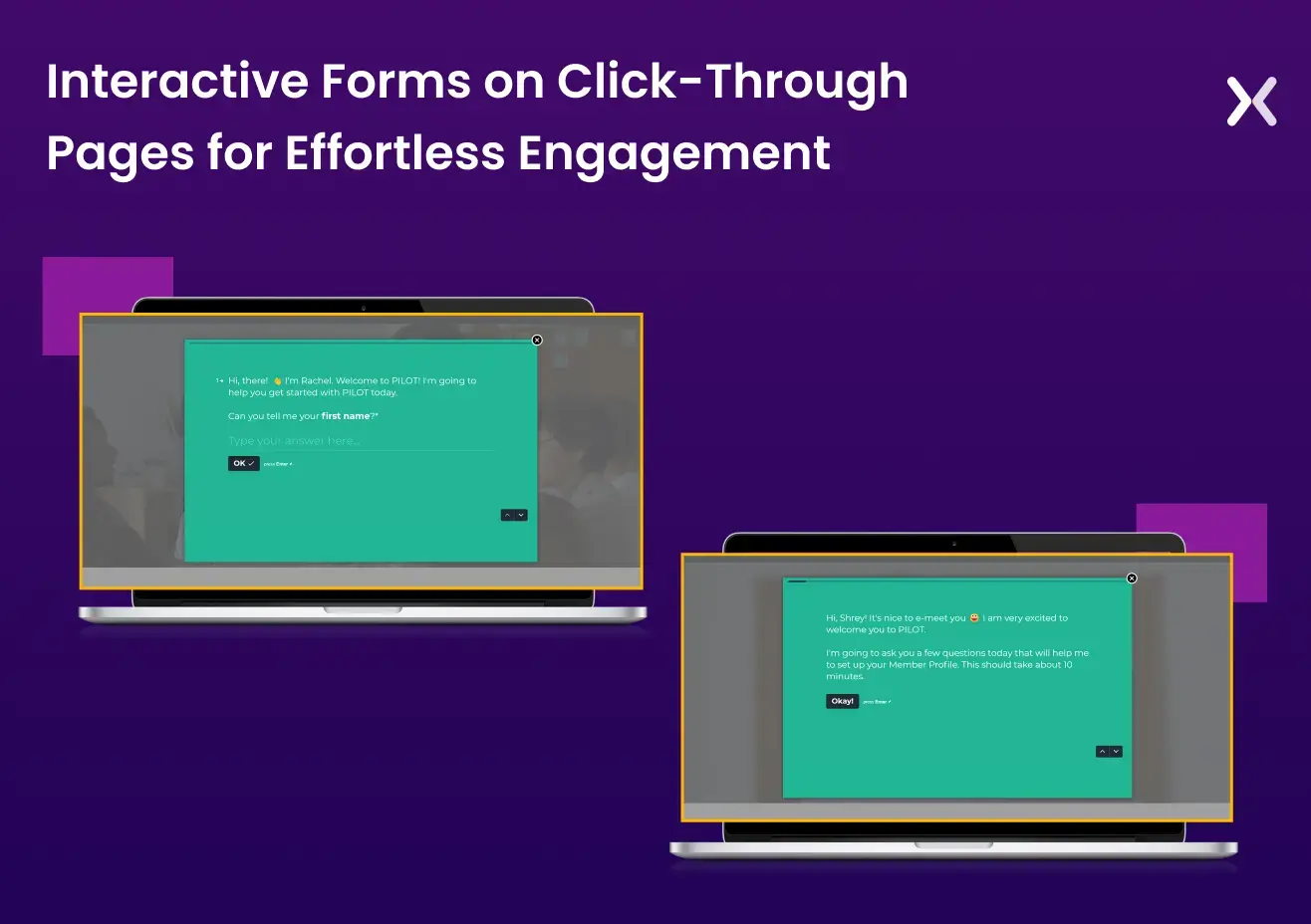 Venturing into the world of conversational landing pages? We recommend starting your journey with this approach; it’s set to deliver the best result in your experimentation, whether you are building free trial, book a demo, or comparison pages. Don’t forget to carry the conversational tone even after the visitor has converted into a lead and lands on your thank you page.
Need help create conversational landing pages?
It might be time to pivot to conversational landing pages if you find audience engagement and retention a hurdle with traditional landing pages. They change static, one-way chats into dynamic, engaging exchanges. With over eight years of experience forging engaging landing pages, Apexure is ideally placed to help businesses create custom, interactive experiences. Harness our expertise to boost engagement, acquire valuable insights, and drive conversions sky-high.
Reach out to us now to give your marketing campaigns a conversational overhaul and open new levels of success.
Related Article: