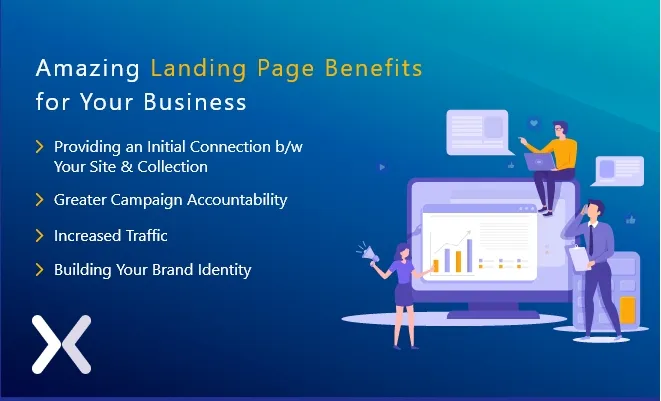
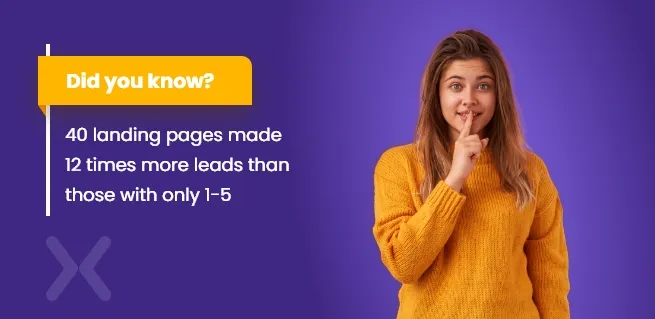
HubSpot’s 2011 marketing benchmarks study found that businesses with over 40 landing pages generated 12 times more leads than those with only 1-5, and that going from 10 to 15 landing pages lifted leads by about 55%. Those numbers are old now, but the direction of travel has not changed: more targeted pages, more leads. Plenty of businesses still run without a landing page marketing strategy at all. What a missed opportunity!
With so many benefits. It’s clear that landing page is a must for your business. Before we explore the ins and outs, we need to start with some simple questions - What is landing page marketing? How will having one help your business’s conversion process?
What is landing page marketing & conversion process?
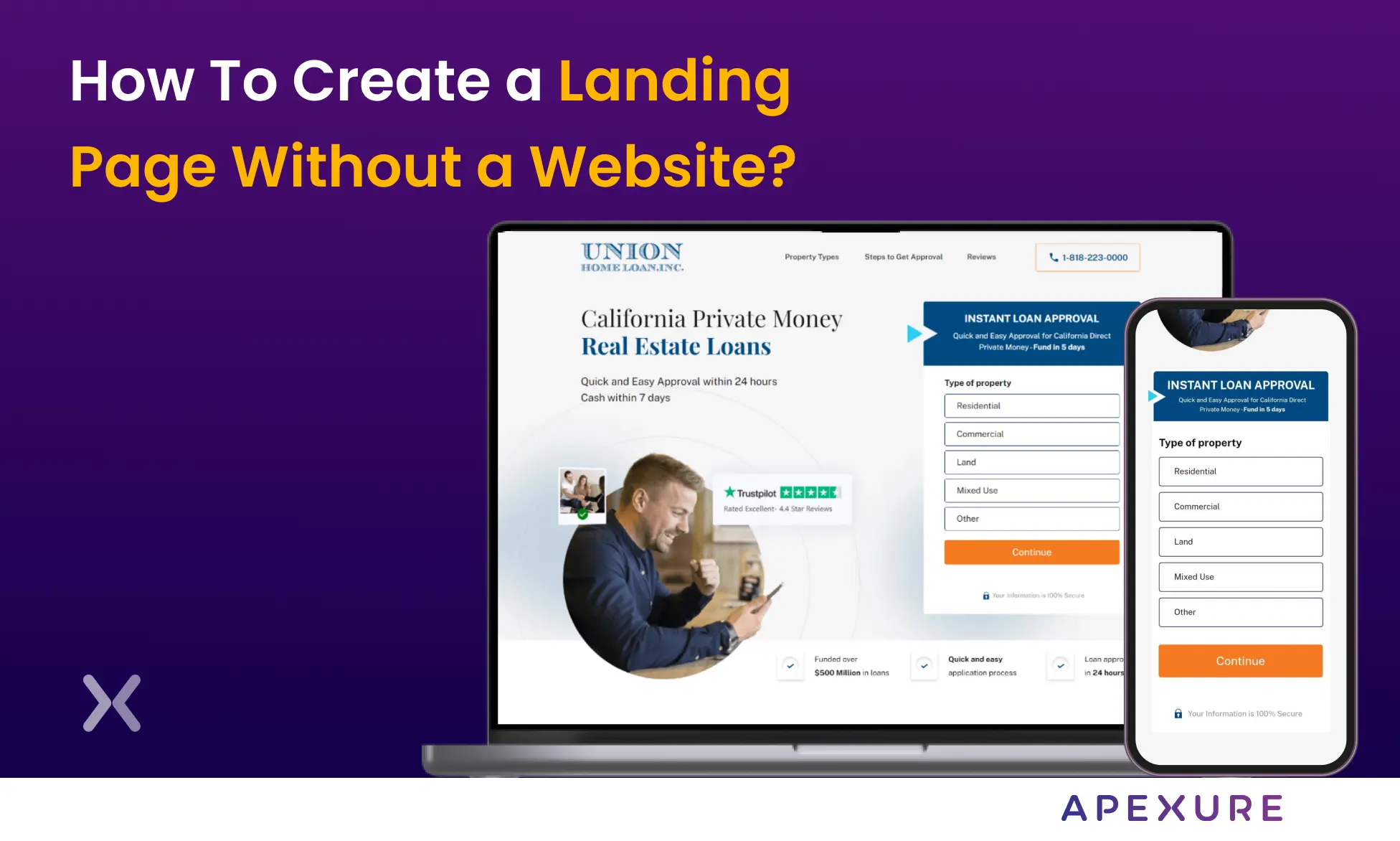
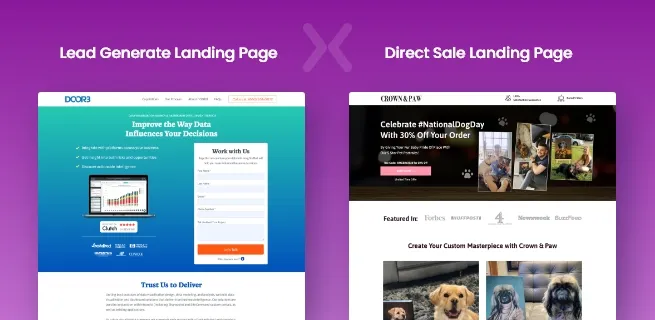
A landing page is a web page specifically used for marketing or advertising campaigns. Essentially, it’s the spot where visitors ‘land’ after they click a link to your website. Landing pages are different from ordinary web pages as they don’t encourage exploration. They are designed for one thing and one thing only - getting customers to answer a call to action (CTA). Landing page marketing makes the most out of your website traffic, convincing visitors to leave as customers. How exactly do landing pages do this? There’s one of two ways:
-
The page displays a form that visitors must fill out to access whatever is on offer, for example, a free ebook. The form’s sole objective is to explain the offers’ benefits and convert visitors into leads.
-
The page could take visitors straight to sales or subscription sign-ups. Clicking the CTA button finishes a transaction or sends the customers directly to the checkout flow.
Once the visitor has completed the desired CTA, they are directed to the ‘Thank You Page’ where they can ‘download’ the offer. This completes the conversion process for that specific offer.
What do you need To Create a Landing Page Marketing Campaign?
So we’ve covered what landing pages are and why they’re important. But how do you go about creating a landing page marketing campaign? There are three simple steps you need to take:
1) Determine the Buyer Persona(s)
Knowing who you are catering your marketing campaign towards is essential. Buyer Persona(s) are not real people but rather fictional representations of your ideal customers and are created using real data. These persona(s) can give you great insight into your customers’ behaviour - what and how they think. This gives you the advantage of designing content specifically made to suit their needs and wants.
2) Fine-Tune your offer
An offer is something of benefit that the visitor might receive outside your business/s products and services. And part of successful landing page marketing is finding the ideal offer to advertise. This is usually something downloadable, like a free ebook or webinar. To generate maximum return, this offer should be linked to a buyer persona’s grievance and ‘solve’ their problem.
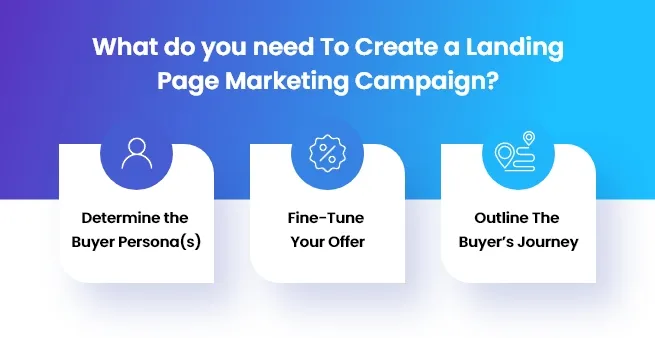
3) outline the buyer’s journey
A buyer’s journey is basically the research process that you foresee a potential buyer undergoing before they make a purchase. You need to create specific content for every stage of this journey to keep them travelling in a specific direction, like signposts on a hiking trail. Understanding the three key stages in this journey helps refine your landing page marketing campaign.
Awareness stage
The visitor is showing signs of having a potential problem or searching for an opportunity. They can’t, however, identify exactly what that problem or opportunity is. So they do a lot of research to understand the signs and where they’re coming from. For this stage in the buyer’s journey. You’re going to want to create content that helps them figure out what’s going on, like e-books, white papers, or guides.
Consideration stage
The visitor has pinpointed their problem or opportunity and now wants to find out how to solve it. For this stage in the buyer’s journey, you need to create content that gives them direct solutions to their quandaries, like white papers, webinars, or videos.
Decision stage
The visitor knows what they need to do to solve their issue and how to approach it. At this stage, they’ll be conducting vendor comparisons and narrowing down their options before making their choice. For this stage in the buyer’s journey, you need to create content that further stresses why your business is a perfect choice. Think case studies, demos, or product information.
What is a good conversion rate for a landing page marketing campaign?
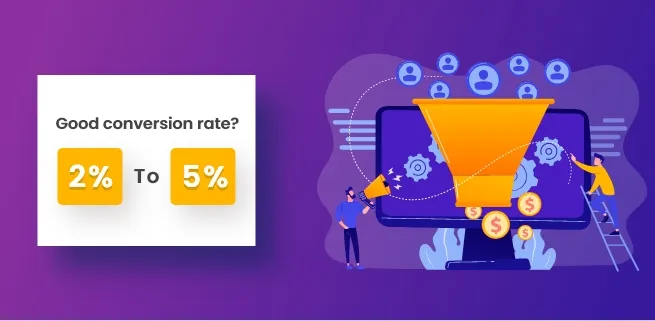
With its hyper-focus on making purchases. It’s no surprise that marketing landing page places a huge role in increasing your conversion rates. A good conversion rate commonly sits somewhere between 2% and 5%. WordStream’s 2014 benchmark put the average landing page conversion rate at 2.35% across industries, with the top 25% of companies at 5.31% or higher. The good news? That isn’t very high, meaning you have loads of room to grow! It’s time to aim higher. What have you got to lose? In the same 2014 benchmark, the top 10% of businesses had landing page conversion rates of around 11.45% or higher, and that is the bar worth aiming at. Landing page marketing can increase your conversion rates, maximize your paid-per-click advertising and improve the reach of your marketing campaigns.
Landing page marketing strategies to increase conversions
Now that you know the perks landing pages give your business - we’re sure you’ll want to give one a try. But how can you make sure your landing page stands out? You’ll need to make sure your landing page catches and keeps the attention of visitors and convert them into leads.
We’ve compiled a list of top tips and tricks to help take your landing page marketing game to the next level!
1) incentivize your visitors with an irresistible offer
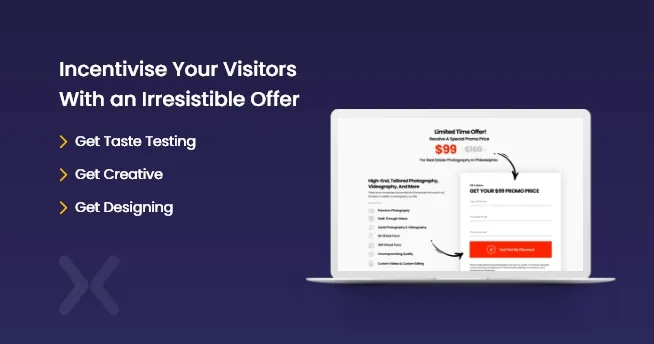
The first step in creating a successful landing page marketing campaign is to fine-tune your offer. Your offer is the bait that motivates visitors to complete your CTA, so it needs to be irresistible. Here are some tips on how to create an alluring landing page offer.
Get taste testing
A successful landing page, whether long or short, needs to be tested for different offers to find the best fit for your audience. You need to find the offer that matches your audience the most.
Get creative
Landing page marketing is highly competitive. For your campaigns to be successful, you need to open your imagination and get creative with your offer. What can your business offer visitors that your competitors can’t? How can you put a unique spin on existing offer ideas? Your offer needs to be both strong and tangible to stand out.
Get designing
It’s no secret that marketing campaigns include aesthetics. And landing page marketing is no different. If your page is going to flourish, you’ll need to create an offer that appeals to visitors’ senses. Try a few (or all) of the following:
-
Use a strong and concise headline.
-
Use relevant and engaging images.
-
Use strong, emotive language to sell your CTA.
-
Align your CTA(s), ads, and post copy with your headline.
-
Colour-coordinate your landing page with your brand or website colours.
2) Limit Choices
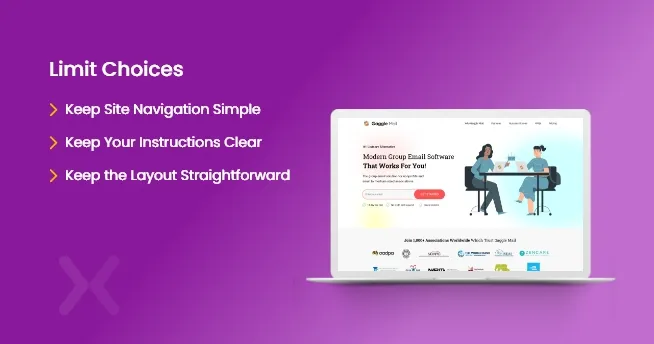
The second step in perfecting your landing page marketing campaign is to make sure your landing page isn’t crammed with too many options or information. You want your landing page to communicate clear, implicit instructions to your visitors, guiding them in the exact direction you want them to go. If there are too many distractions, they won’t end up where you want them to - on the button to convert. To keep this focus, try:
Keep site navigation simple
The standard practice of including links in a website should not apply to landing pages. For landing page marketing to work, only vital links should be included. Obviously, the most important clickable link to be included should be your CTA. Including more than this could clutter up your page and turn visitors away from your site. Make your CTA accessible and obvious!
Keep your instructions clear
To increase the efficiency of your landing page marketing, you’ll want the instructions on your landing page to be simple and easy to follow. Avoid long paragraphs and opt for a brief summary of your offer. For example, you could use bullet points that provide a short, step by step guide on what the visitors can expect after downloading the offer.
Keep the layout straightforward
Be it for SaaS, finance, or, insurance, no matter for which industry you’re building a landing page for, the user experience should be at the centre. You’ll need to create a page layout that is not just aesthetically pleasing but also straightforward. If a visitor lands in the middle of a cluttered page. They’re more likely to leave confused than converted. This holds true for both, short and long-form landing pages. Take this landing page marketing strategy from Gaggle Mail as an example. Minimal links, zero site navigation, and a stand-out CTA which zooms in visitors’ focus. By limiting distractions and keeping design simple, they’ve increased their chances of conversion.
3) customer service with a lighter touch
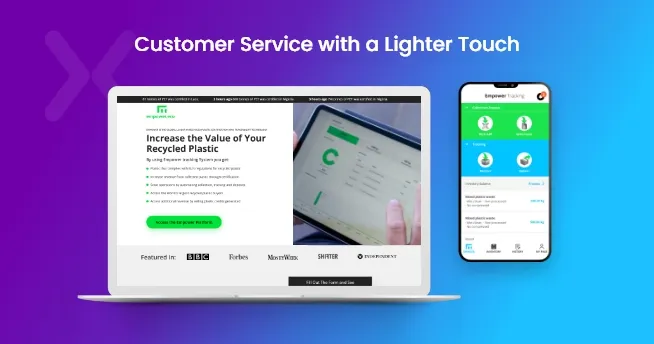
Like most business things, customer service plays a role in the success of landing page marketing. But as landing pages are all about closing the deal, you’ll need to apply a more direct and easily accessible means of customer service to convert visitors. This is where customer service with a lighter touch comes in handy!
Live chat is a less intrusive means of providing immediate customer services. The live chat option rests in the corner of the landing page so that if the customer needs it. It’s there. Visitors will need to give their email access to the live chat, but this is a small price to pay to avoid those annoying (and distracting) chat pop-ups! To further this ‘lighter touch’ approach in your landing page marketing, make sure you only ask for vital information. There’s nothing more frustrating than wanting to get to something quickly and having to slog through a long, drawn-out form asking for specifics. Make sure to keep your form requirements name and email address as this will increase the chances of visitors actually completing and submitting the form.
4) Go for a test drive
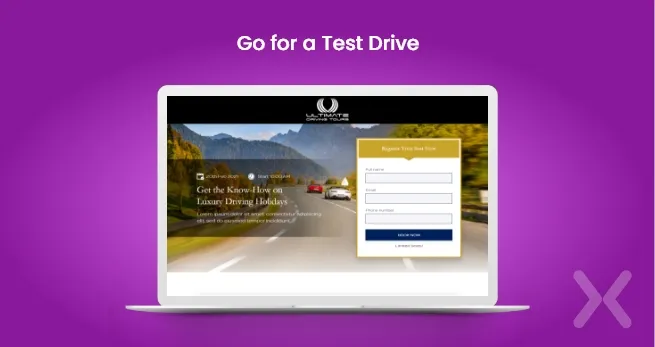
You must test the whole landing page process before you launch it. Without testing, you’ll have no idea if your marketing strategy is working! Make sure to check that the CTA link is working and that once you complete the CTA. You are successfully redirected to the thank you page.
Here are some things to look out for when testing your landing page marketing strategy:
-
Double-check that your contact info has been stored in the database.
-
Show on whether all the steps make sense from the perspective of a visitor.
-
Proofread everything. Silly spelling errors might leave visitors feeling like your offer lacks credibility. Sloppiness can be a major turn off for converting! Test drives matter on the visitor’s side of the page too. The allure of a free trial increases conversions and creates visitor buy-in, because visitors can see the product in action before committing to the purchase. This helps them visualize how the software fits into their lifestyle and closes the sale when the visitor realizes how much they like the product.
5) provide Real-Time social proof
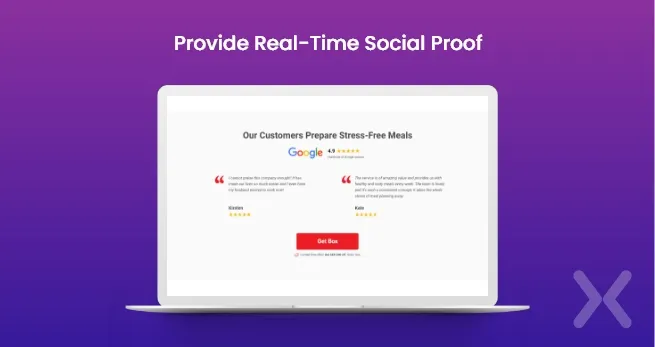
Another way to convert visitors to customers is to incorporate social proof into your landing page marketing plan. Behind every online user is a real person and real people rely on what others say. Providing social proof in your landing page marketing strategies has been proven to increase conversion rates. Try linking testimonials that have direct relevance to your offer. You need what happy customers have to say to correlate with the offer you’re promoting. You could also include a real-time social proof feature that allows users to see who is buying and what is being bought as the transactions happen. Using this social proof as part of your landing page builds user confidence in your business. It also injects a little fun into your marketing campaign!
6) use scarcity and urgency as motivators
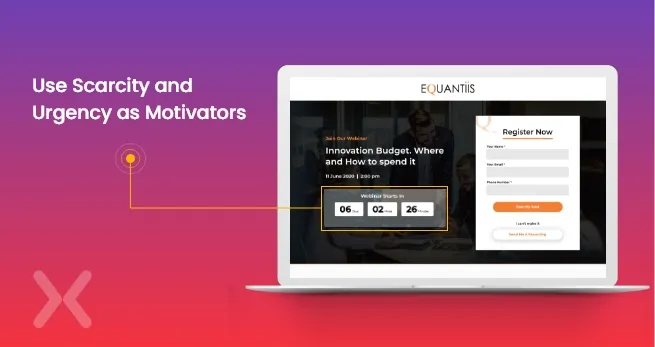
It’s an age-old tactic, but it works - people want what they can’t have. So what better way to make sure you increase the reach of your landing page marketing campaign than to make visitors feel that without acting, they’ll be missing out!
Here are some ways to use scarcity and urgency motivators in your campaign:
-
Include real-time quantity updates.
-
Let visitors know a sale is ending soon by adding a countdown timer.
-
Accent when the end date for a program is and stick to it.
-
Trigger the FOMO feeling by amping up the perks.
-
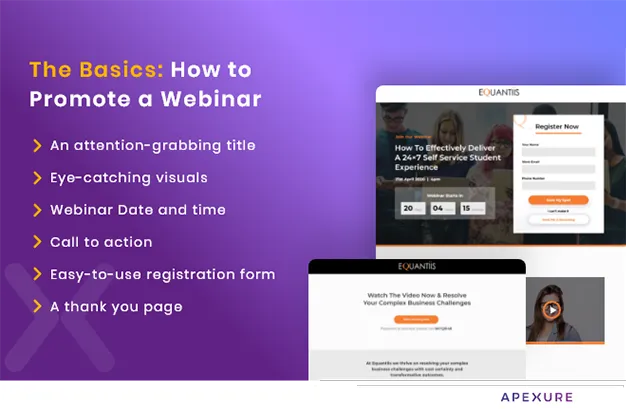
Use emotive keywords like “now” or “instant” or the colour red. This landing page provides a great example of the urgency tactic being used in landing page marketing. Not just do they use emotive language for their CTA - “save my spot”, but they also provide a live countdown for when the event will take place. This motivates users to jump on the bandwagon as countdowns create an air of excitement and anticipation.
7) Show the Value
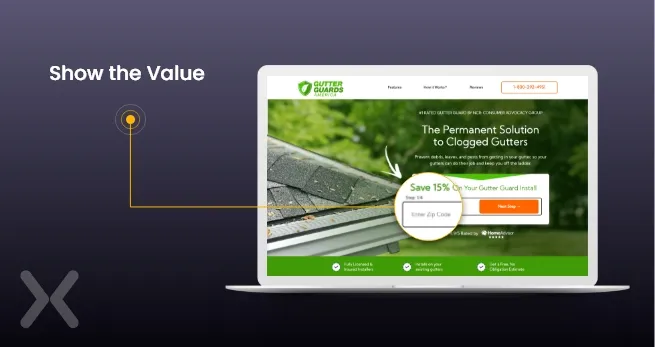
Showing the value of your offer is essential to successfully manage your landing page marketing efforts. To be able to convey the offer’s value, you need to pass the blink test. Basically, you have 3-5 seconds to communicate your message and its value to visitors. You have that time frame to catch and hold their attention. Failing the blink test means losing potential conversions.
Here are some tips and tricks to illustrate your offer’s value quickly on your landing page:
-
Offer deals - show that you’ve slashed prices or are offering massive discounts. In the comparison shopping world, this will make your offer more attractive.
-
Make the gain of clicking on the CTA visible to visitors. You want the user to focus on what they are getting by clicking, not what they are losing.
-
Use a landing page copy that outlines the benefits of the offer and the pain points it solves.
-
Be mindful of the copy you choose for your CTA button. Use terms that are inviting and build feelings of opportunity, like ‘next step’.
How to use landing page marketing
So now you’ve got pretty good coverage of landing page marketing and how it works. You might be wondering how you should use your landing page to increase your conversions. As a foundational element of online marketing, landing pages should be used in all industries. They are incredibly useful tools and can be used for a variety of purposes.
Here are some particularly beneficial ways you can use landing page to advance your business goals. Landing pages can be used to:
-
Direct people to your events.
-
Encourage enrollment in email newsletters.
-
Promote the launch of new products.
-
Promote free resources like ebooks.
-
Offer printable coupons for Facebook.
-
Personalize social media platforms and their links.
The 50-point landing page checklist
Everything we check before a page goes live: copy, layout, forms, trust, speed and tracking. One PDF, sent by email.
Need a page built instead? Get a fixed quote.

Waseem founded Apexure in 2015 and has led its work on 3,000+ pages for 300+ clients since. He writes about what the team sees after the click, which is pages, forms, tracking and the systems behind them.