Landing pages and product pages don’t work the same for your PPC campaigns. While product pages are practical tools for sharing information and encouraging brand exploration, landing pages are great for targeted marketing and driving conversions. There are similarities, but necessary differences often spark the whole landing page vs. Product page debate. In this blog post, we’ll discuss the key differences that define the landing page vs product page debate and show you how to use both effectively. Let’s start.
What is the difference between a product page and a landing page?
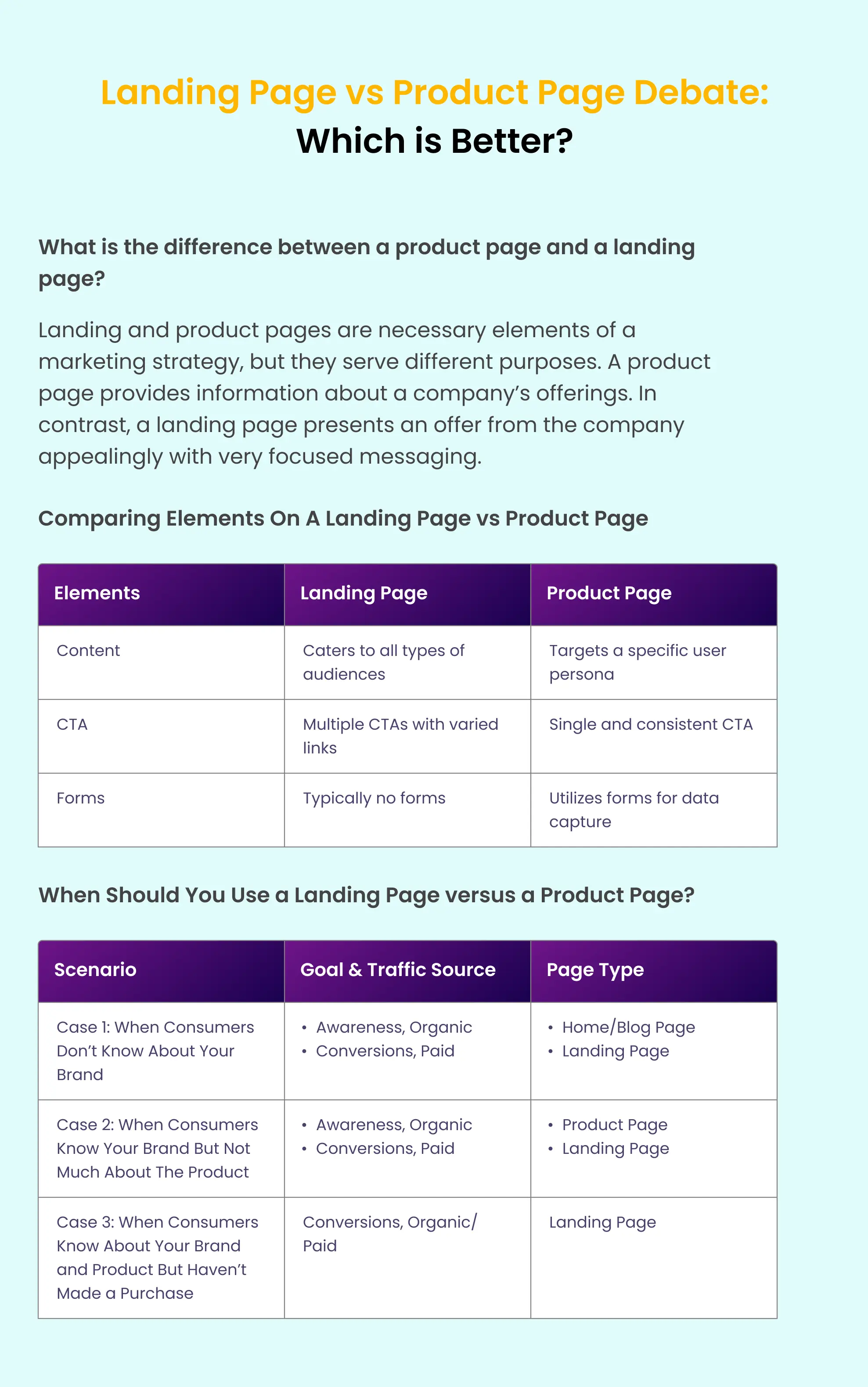
In the landing page vs product page debate. It’s essential to understand that both serve unique roles in a marketing strategy. A product page provides information about a company’s offerings. In contrast, a landing page presents an offer from the company appealingly with very focused messaging. Here’s a quick breakdown for easier understanding of the landing page vs product page functions:
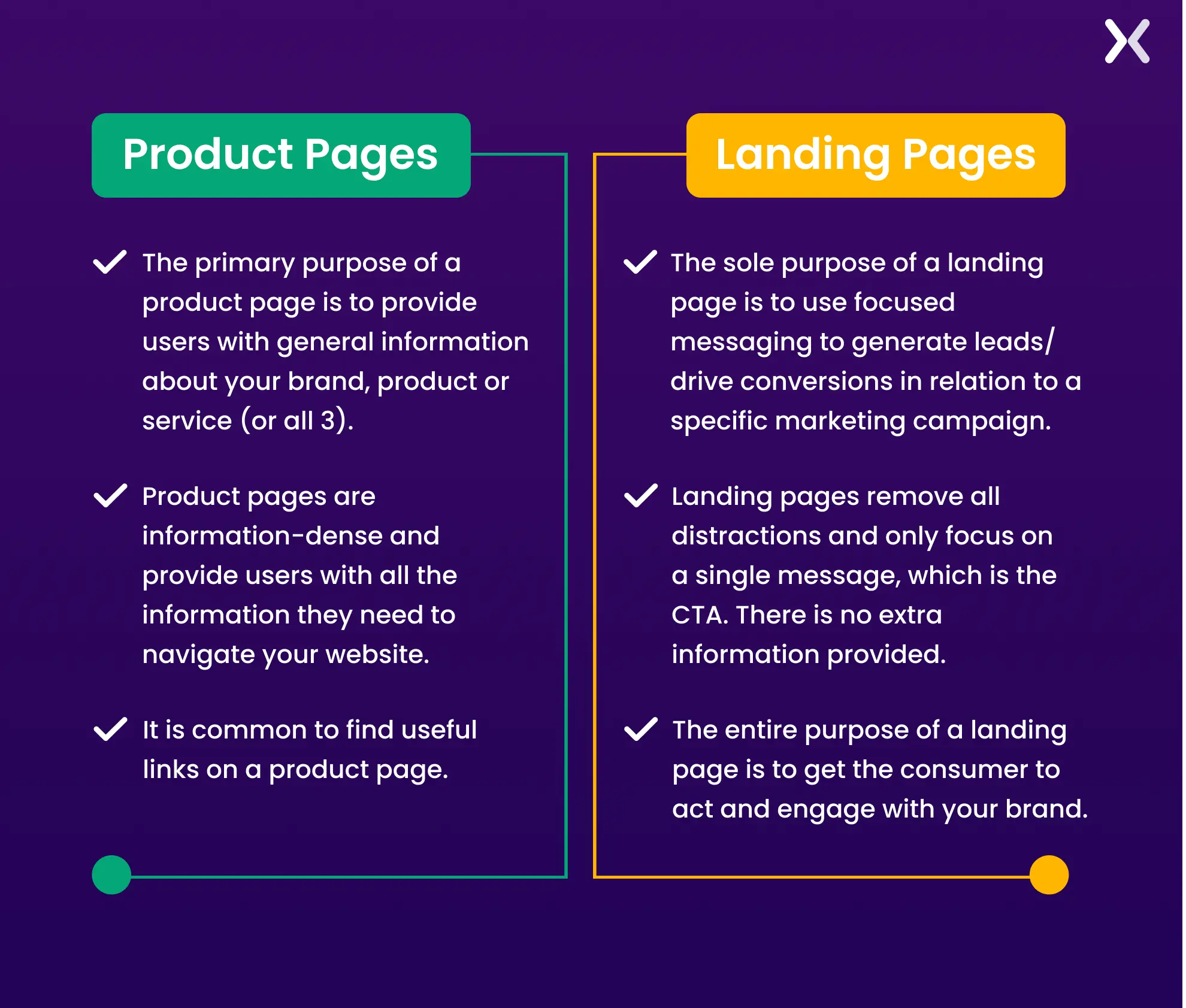 Once you understand the difference between these two types of web pages. You can see that the question shouldn’t be ‘landing page vs. Product page,’ but rather, how to structure your product page and landing page to work together and drive up your conversions.
Definition of landing page vs product page
The landing page vs product page debate is actually much easier to move through if you understand the fundamental function of each type of page.
What is a product page?
A product page is an information-rich page designed to inform the user about a product or service. Anyone should be able to land on a product page and understand exactly what your product is all about. The landing page vs product page contrast here is that product pages are generally broad and content-heavy. To achieve this, the content is usually generalized so that anyone can quickly grasp the essential bits of information that the page offers. Your product page, be it for a SaaS or physical product, needs to educate the consumer.
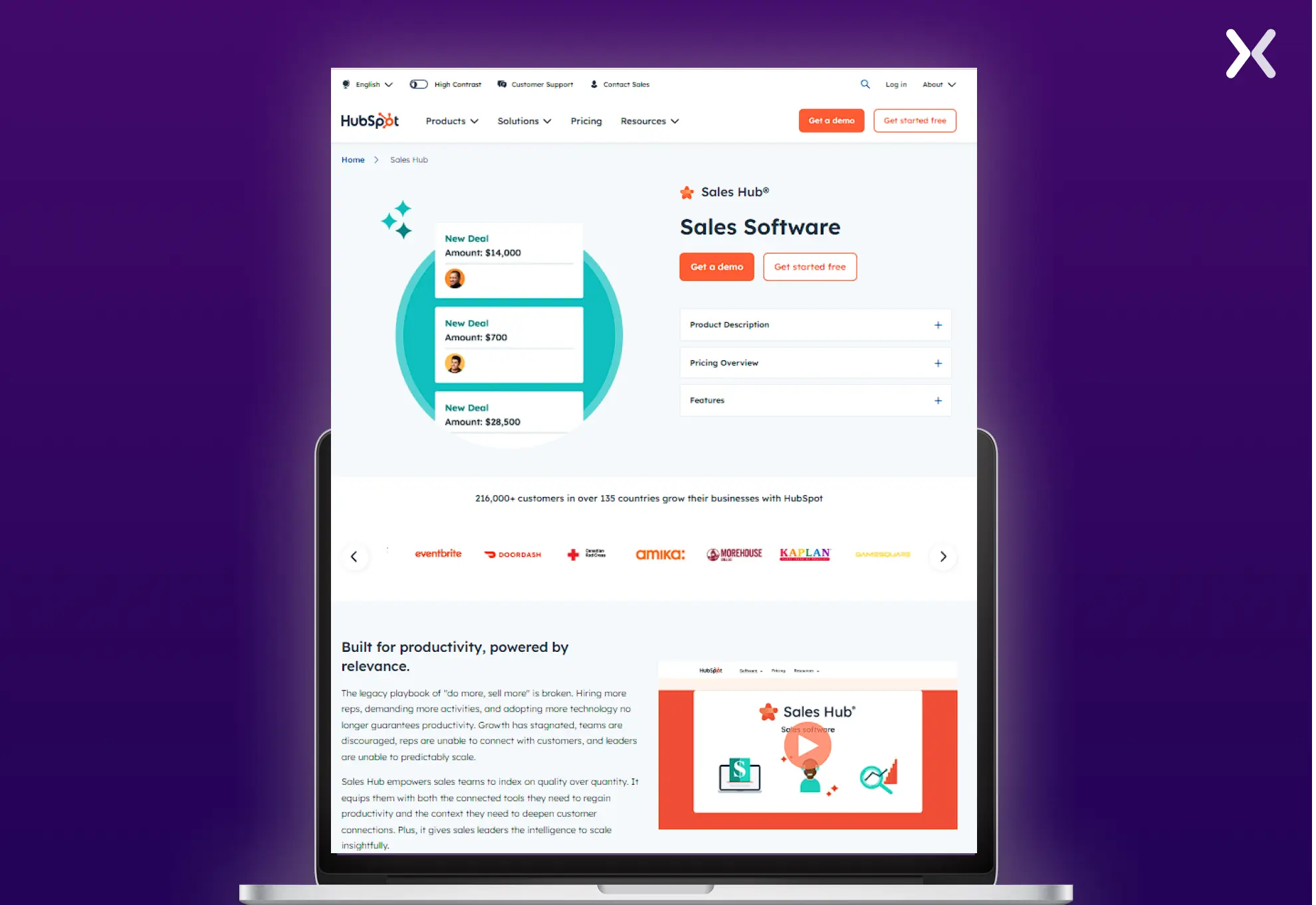 Your target audience may discover your brand through a product page. So, making it easier for visitors to move through through it and the rest of the website becomes necessary. Feel free to put various links on your product page to help consumers have a productive user journey.
Remember, everything your customers need to know about your product should be found on the product page, or it must at least tell the consumers where to find additional information.
Your target audience may discover your brand through a product page. So, making it easier for visitors to move through through it and the rest of the website becomes necessary. Feel free to put various links on your product page to help consumers have a productive user journey.
Remember, everything your customers need to know about your product should be found on the product page, or it must at least tell the consumers where to find additional information.
What is a landing page?
Landing pages are simple and have only one goal: to convince the consumer to take a desired action. Whereas your product page needs to be information-heavy, the opposite is true of a landing page.
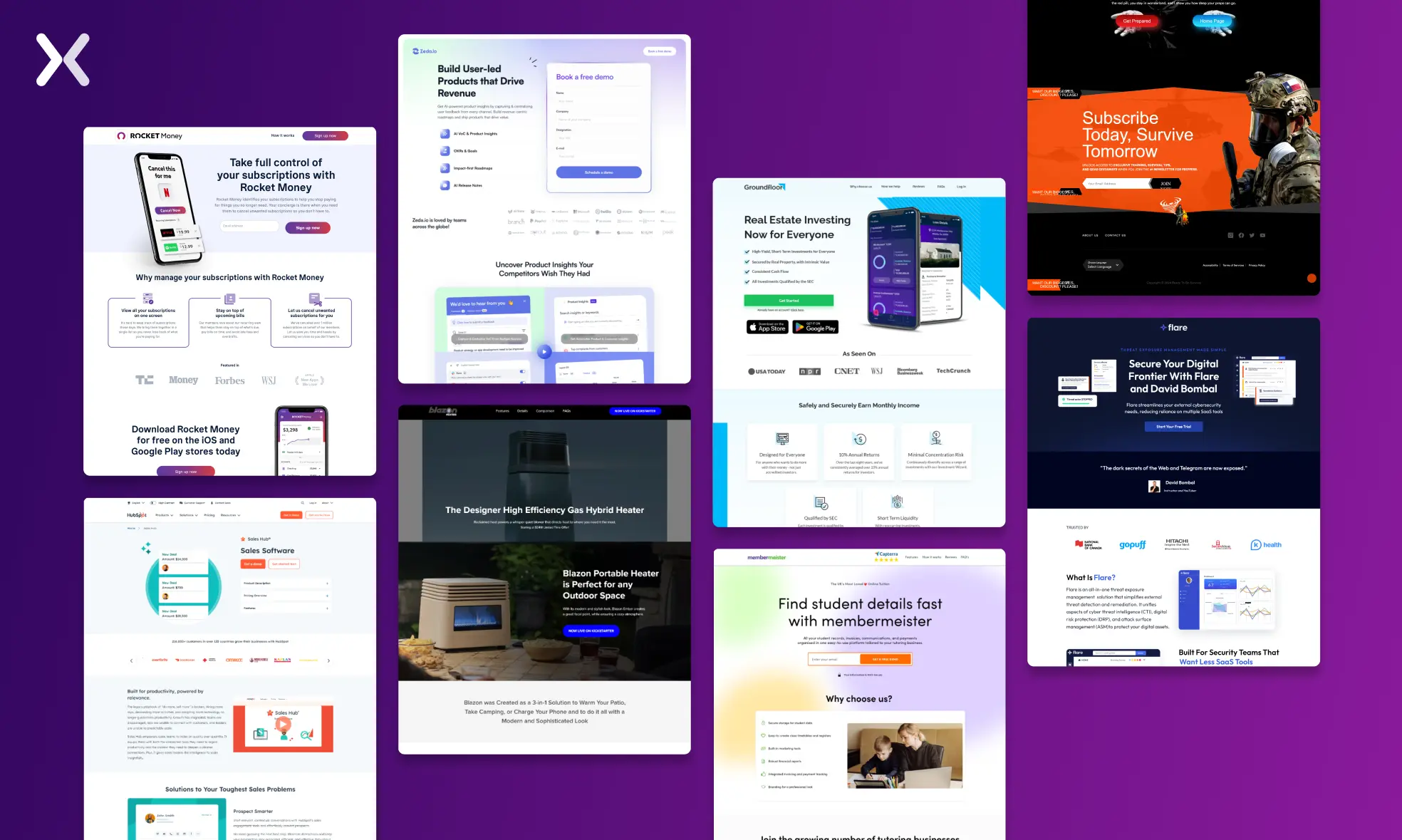 You want paid traffic to be redirected to a high-converting landing page, where the visitors can be converted into qualified leads or even paying customers, helping you get the right return on your capital investments.
But how does a landing page do that?
A landing page is carefully hand-picked to make sure the consumer focuses on only one message: the CTA. It removes all distractions, like links to other website pages, from a visitor’s path to conversion.
Rather than pushing several different offers with the same landing page. It is more effective to focus on a single offer through several landing pages targeting different buyer personas. However, every advertising campaign should have its dedicated landing page.
You want paid traffic to be redirected to a high-converting landing page, where the visitors can be converted into qualified leads or even paying customers, helping you get the right return on your capital investments.
But how does a landing page do that?
A landing page is carefully hand-picked to make sure the consumer focuses on only one message: the CTA. It removes all distractions, like links to other website pages, from a visitor’s path to conversion.
Rather than pushing several different offers with the same landing page. It is more effective to focus on a single offer through several landing pages targeting different buyer personas. However, every advertising campaign should have its dedicated landing page.
Can i use a product page as a landing page?
The answer is no if you want to use your product pages with your PPC ads. A landing page vs product page comparison accents that each has its strengths, especially in paid campaigns. You wouldn’t want to send your paid traffic to a page with fewer chances of conversion. A landing page makes sure that your PPC campaigns can capture quality leads and make the best returns.
Comparing elements on a landing page vs product page through an example
Let’s examine some necessary product page vs landing page elements that distinguish them. To make things easier, we will use Rocket Money’s product page and landing page as an example.
Content
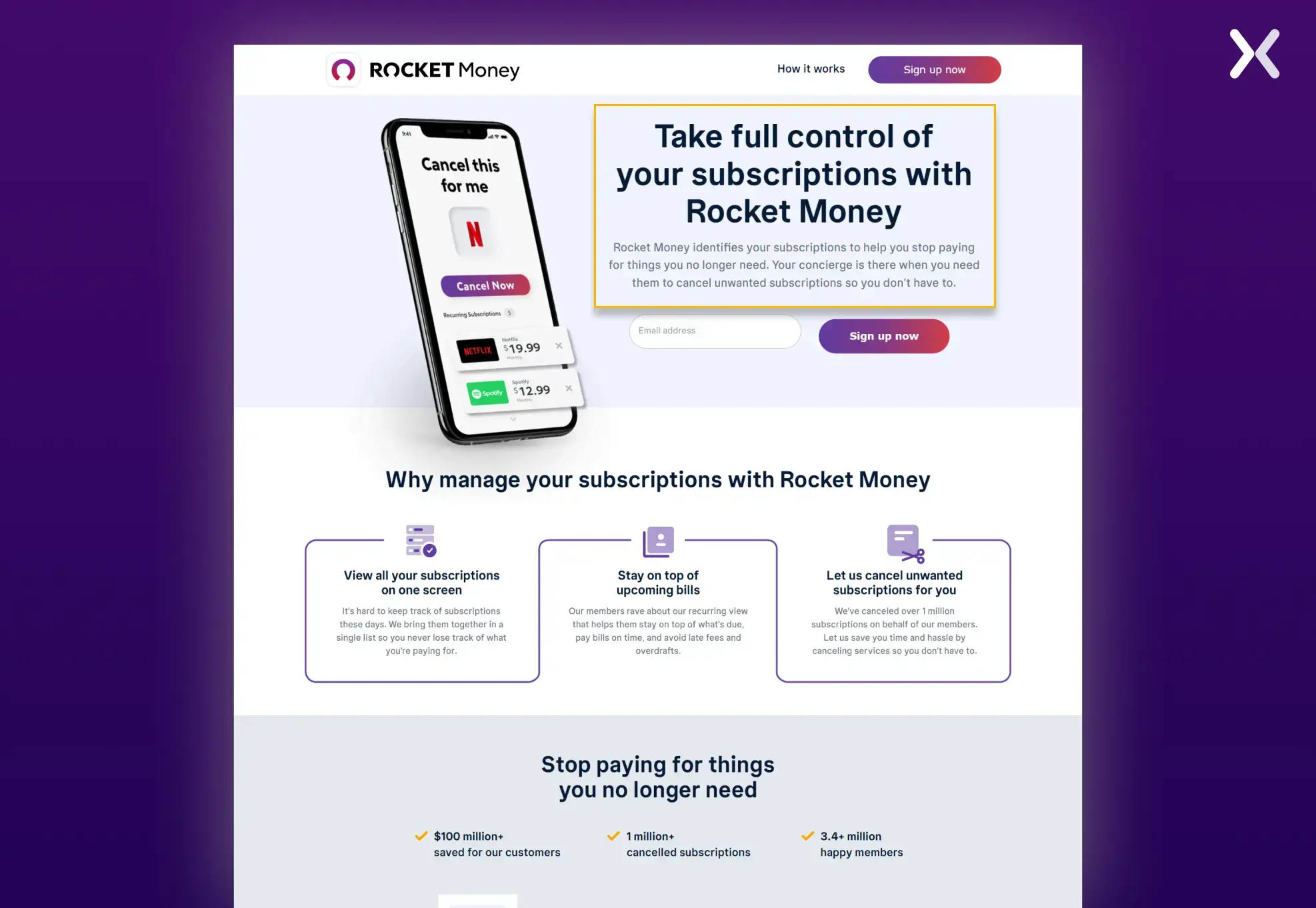
Rocket Money’s product page is longer than its landing page and filled with content serving various user bases. It explores all the features the platform offers and has a section comparing various perks the product offers in its free and premium versions.
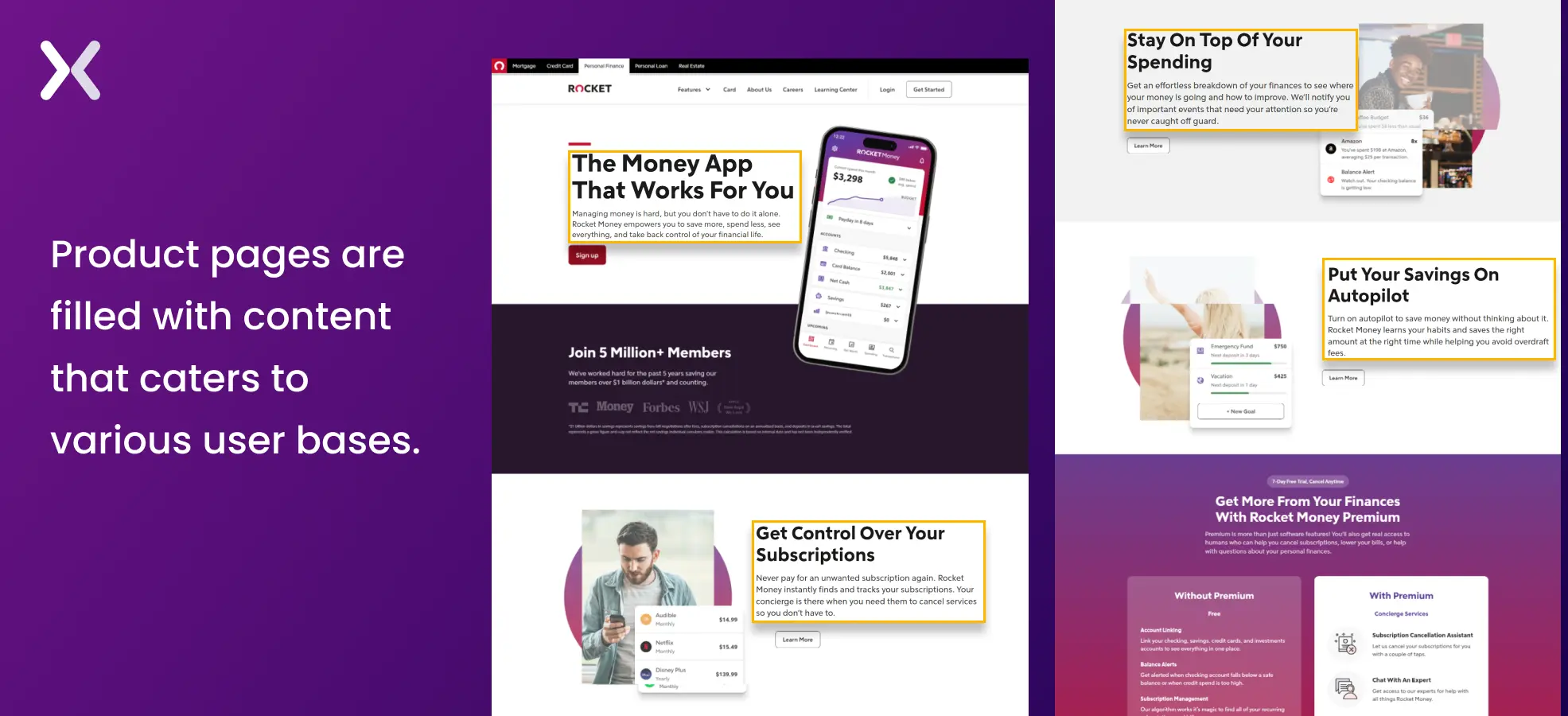 In comparison, Rocket Money’s landing page tackles a single pain point: subscription management, marked in its headline. It presents how the product makes things easier and backs it up with quantified social proof.
CTA
Regarding the call to action, the product page has multiple and vague CTAs placed after every feature. These CTAs lead to pages where the particular feature of the product is elaborated upon.
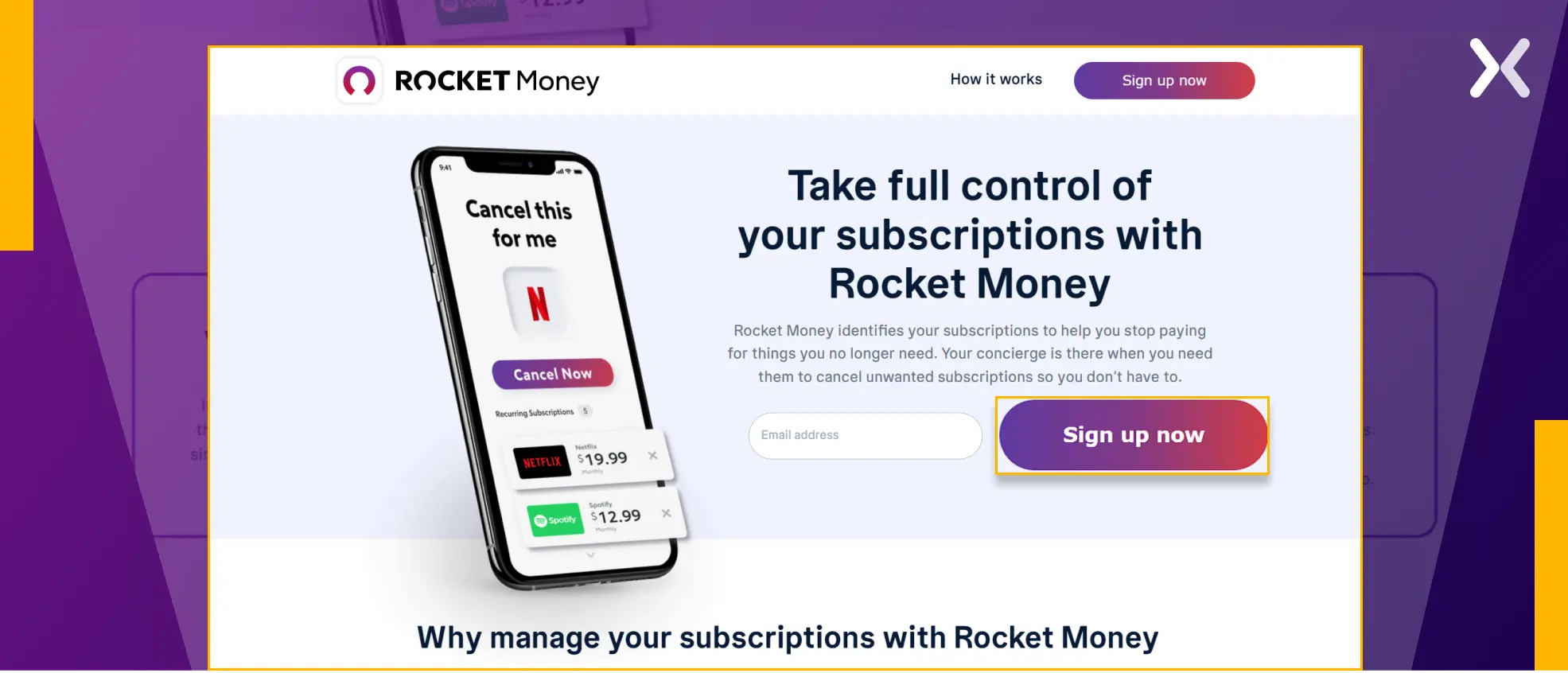
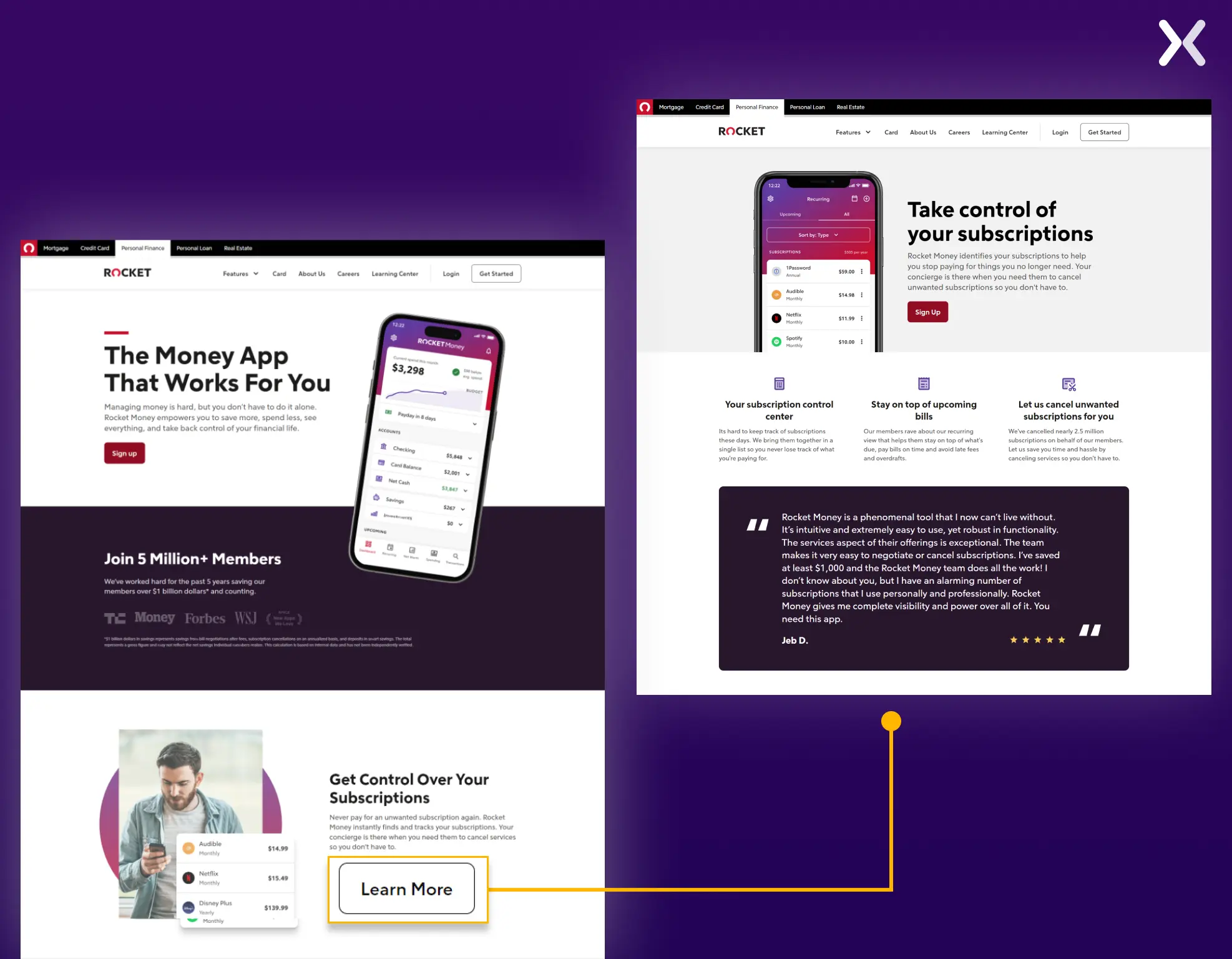 The landing page, on the other hand, has a single CTA with the text ‘Sign up now,’ which appears multiple times throughout the page.
Form
Another thing to notice is that the product page does not have a form, whereas the landing page has a form that asks for visitors’ email information.
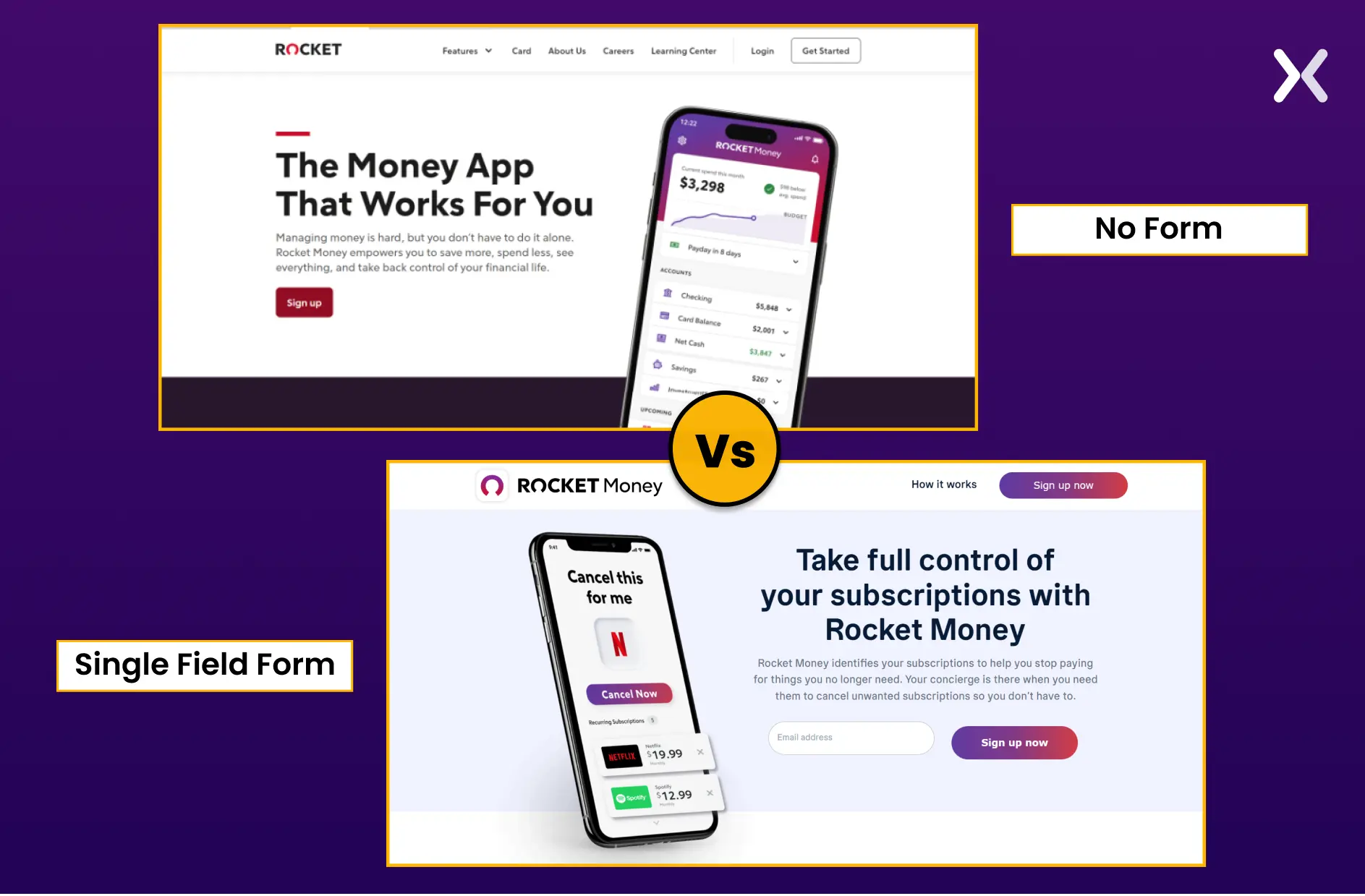 This shows that while the product page focuses on presenting product details without seeking immediate interaction, the landing page aims to engage visitors and gather their contact information as part of a lead generation or marketing strategy.
When should you use a landing page versus a product page?
To resolve the landing page vs product page debate, consider your campaign goals. While the product page clearly plays a very important role in your online presence and marketing efforts. It is not the element of your marketing campaign that drives conversions. You will need well-researched, personalized landing pages with focused messaging to increase conversions and make sure that most of your traffic is turned into paying customers. These pages should speak directly to the market segment you’re targeting. Let’s examine various cases and how you can use product and landing pages together.
Case 1: when consumers don’t know about your brand
Brand visibility is necessary for building a credible user base. If your audience isn’t aware of your brand, you must focus on generating and spreading content that presents your brand’s expertise and helps prospects better understand their problems.
You can reach out to your audience organically and through paid media. Here’s how:
Page Goal: Awareness
Page Traffic: Organic
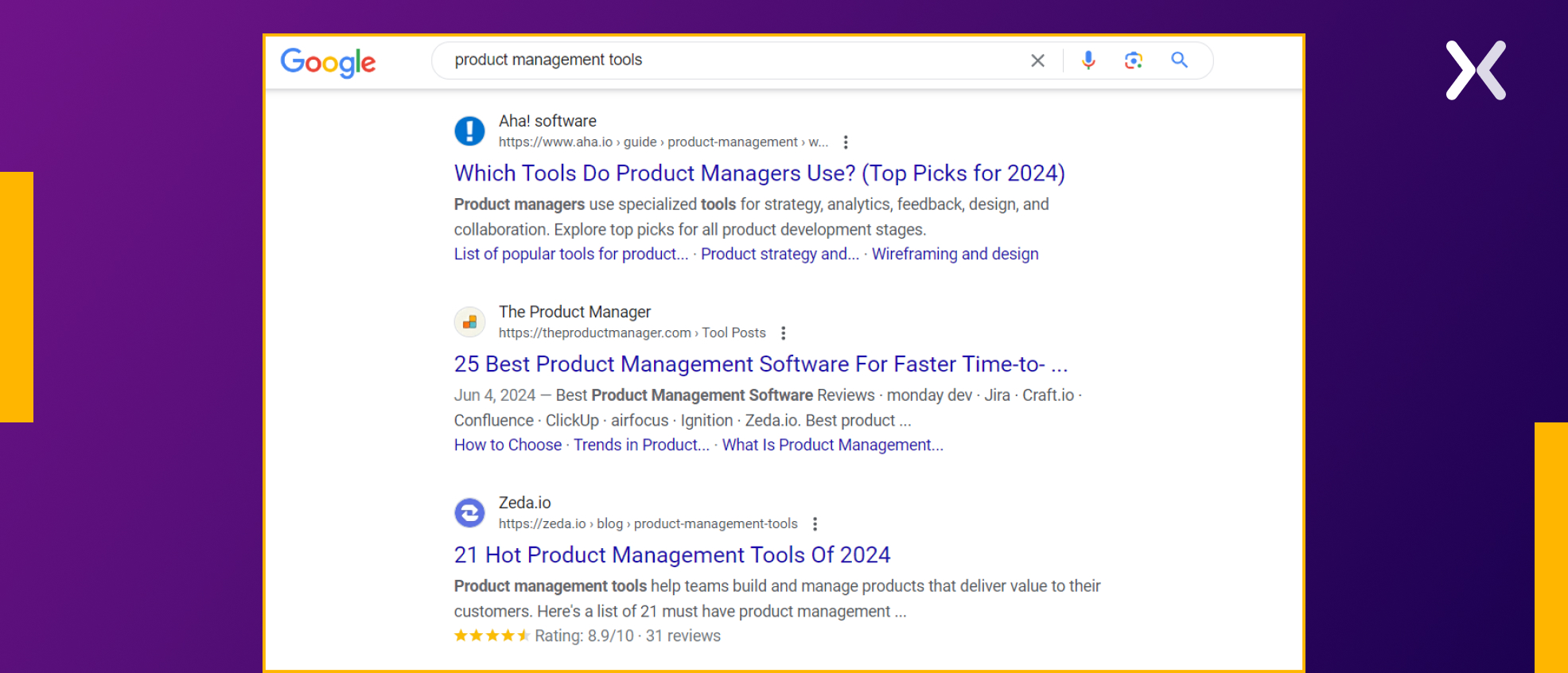
Homepages and blog posts work best when dealing with top-of-the-funnel visitors. These pages help position your brand as a dependable source of information for a targeted topic while also encouraging visitors to explore your brand further. It involves increasing the page’s or brand’s visibility to a broader audience through search engine optimization (SEO) and content marketing. For example, in a search query for ‘product management tools,’ the top-ranking blog posts are from platforms like aha.io, zeda.io, and Productplan.com, which have dedicated products for product management.
Page Goal: Conversions
Page Traffic: Paid Conversions do not always mean getting a paid client. They can also mean securing leads who might not be ready to buy now but could be in the future. With the help of paid campaigns, you can get information like the name, email, etc., of prospective leads and nurture them into customers. For an audience not aware of your brand, you can use lead magnet landing pages for your paid campaigns at this stage.
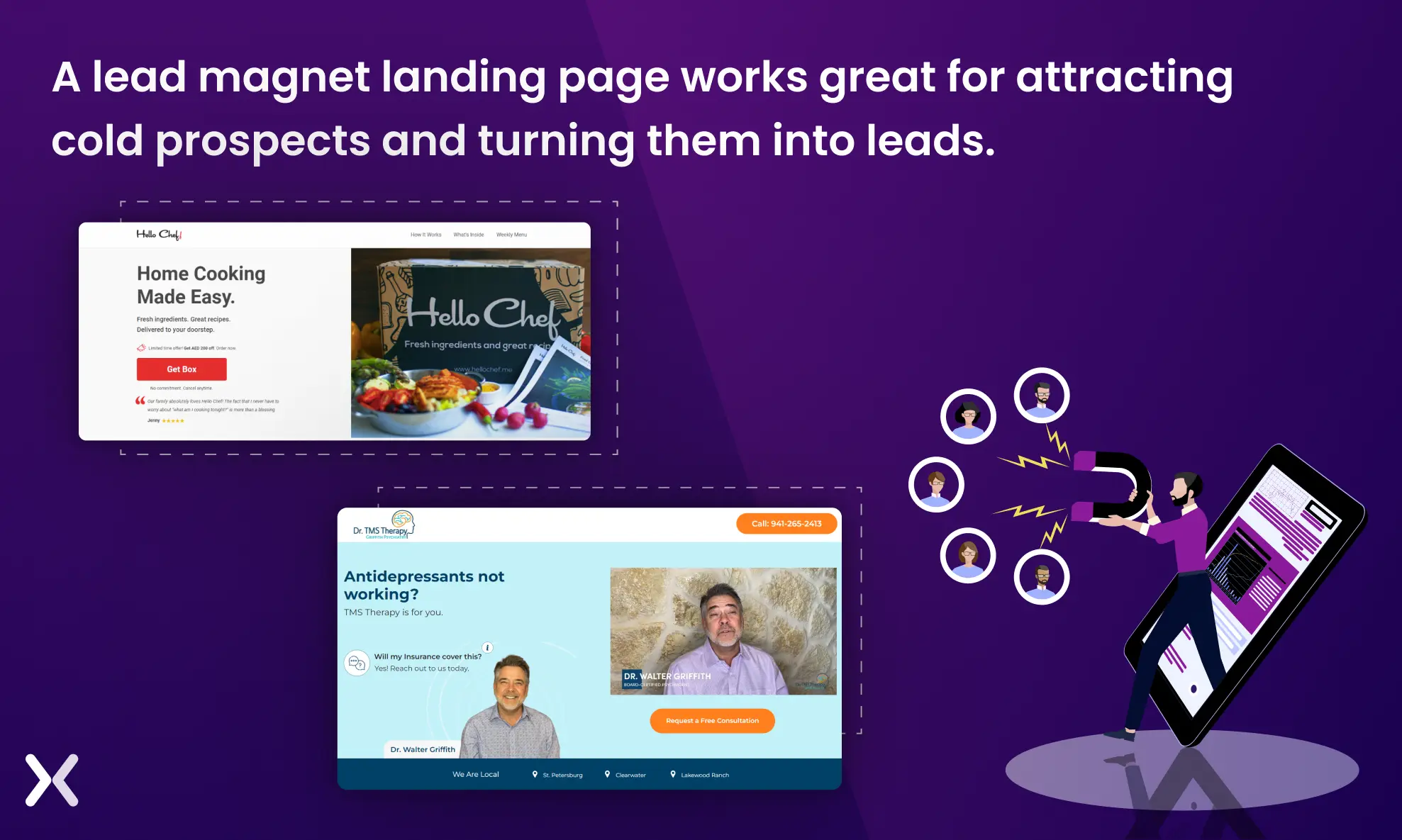
Such landing pages allow you to share a resource like an ebook or whitepaper with the visitors in exchange for their data.
Case 2: when consumers know your brand but not much about the product
Consumers must first understand what your product offers to consider buying it. Again, the goal is to generate awareness. But this time, we will target creating pages centered around the product.
Page Goal: Awareness
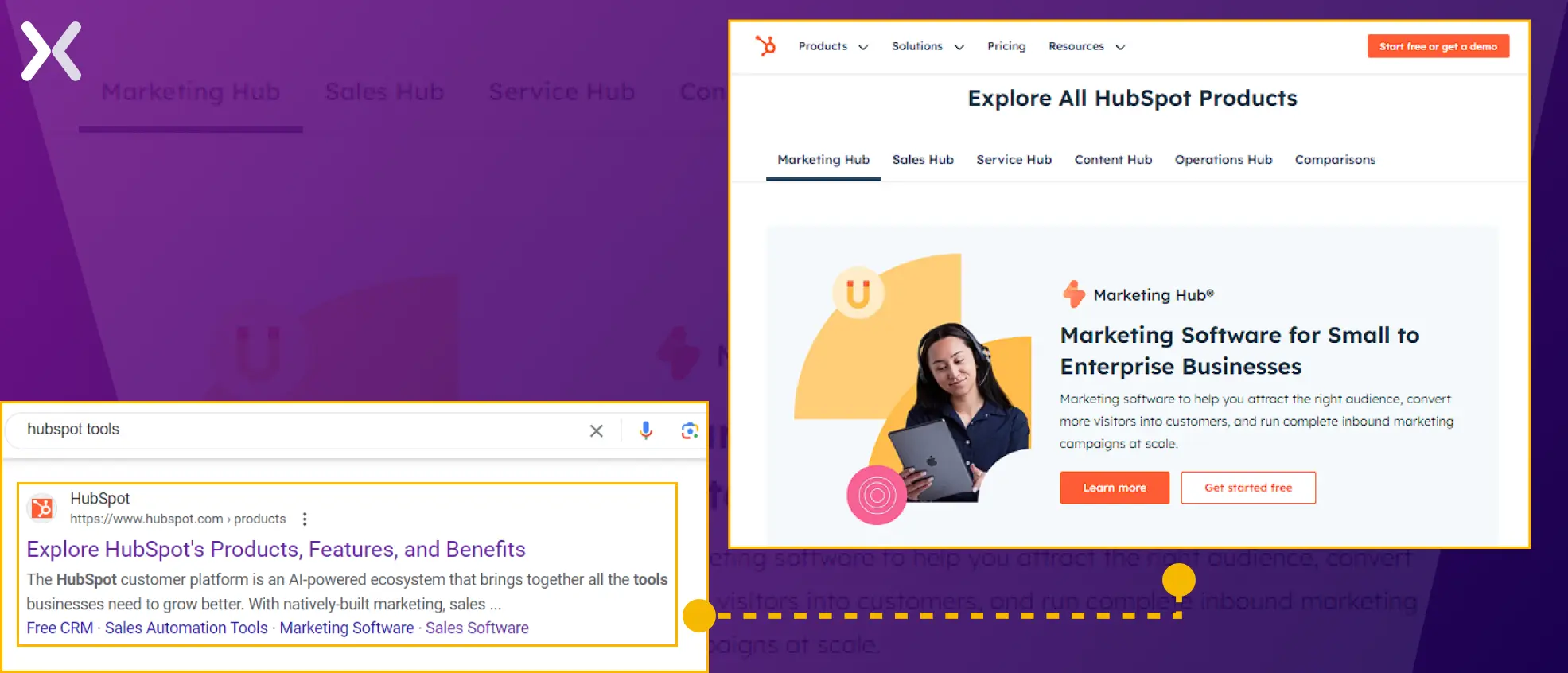
Page Traffic: Organic Product pages need to be optimized and appear at the top of SERPs so that more people will learn about all your product offers. The product page targets a broader audience base, serving the needs of different potential users. For example, when searching for ‘Hubspot tools’ on Google, the SERPs present a Hubspot page that leads to its main product pages, from which visitors can explore all the different tools Hubspot offers.
Page Goal: Conversions
Page Traffic: Paid Paid campaigns for product awareness should be directed to product landing pages. You can create different landing pages targeting different user personas. It helps create a more targeted page about specific pain points, USPs, user cases, etc.
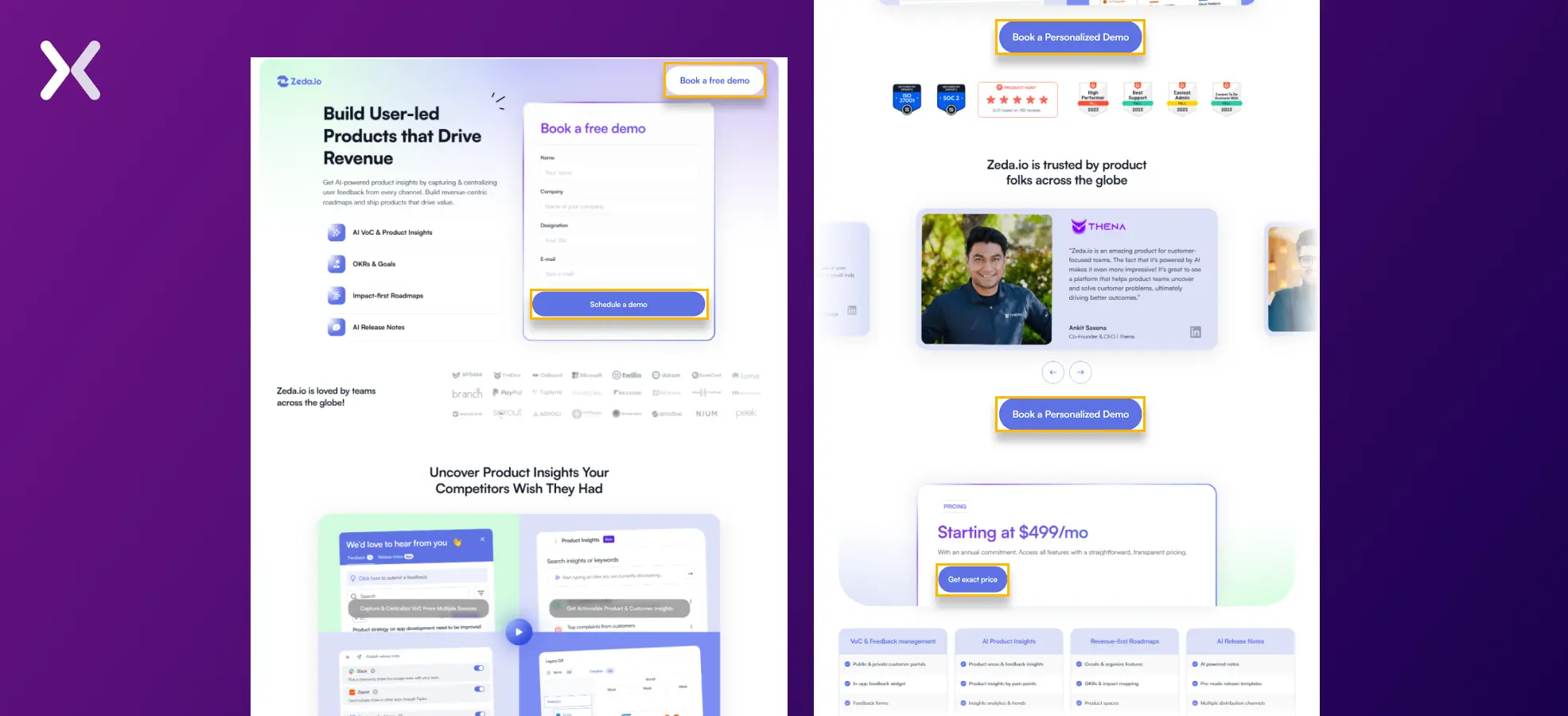 Hence, the whole product landing page is personalized and aims to increase conversions for CTAs like ‘Sign up for a free trial’ or ‘Get a Demo Today.’
Case 3: when consumers know about your brand and product but haven’t made a purchase
Now that your consumers know your brand and product. It is time to make the final pitch. For audiences at this stage, landing pages are a perfect choice, as they focus on conversions. Here. You can use landing pages like:
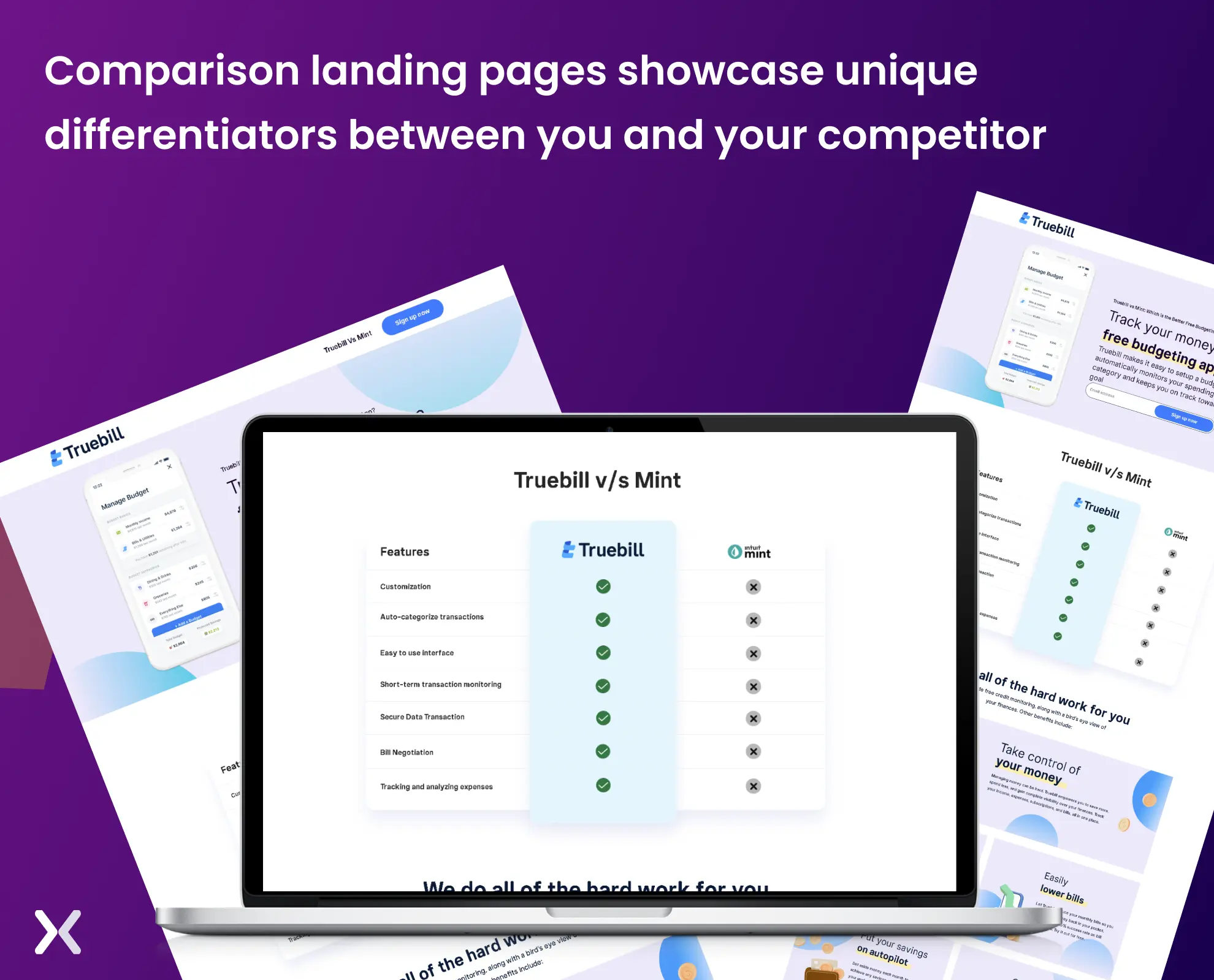
- Competitor Comparison Landing Pages These comparison pages are the best way to present how your product is better than your competitors. They have elements like comparison tables and charts presenting differences in pricing, features, and benefits. Competitor pages stress unique differentiators between you and your competition to persuade visitors to convert.
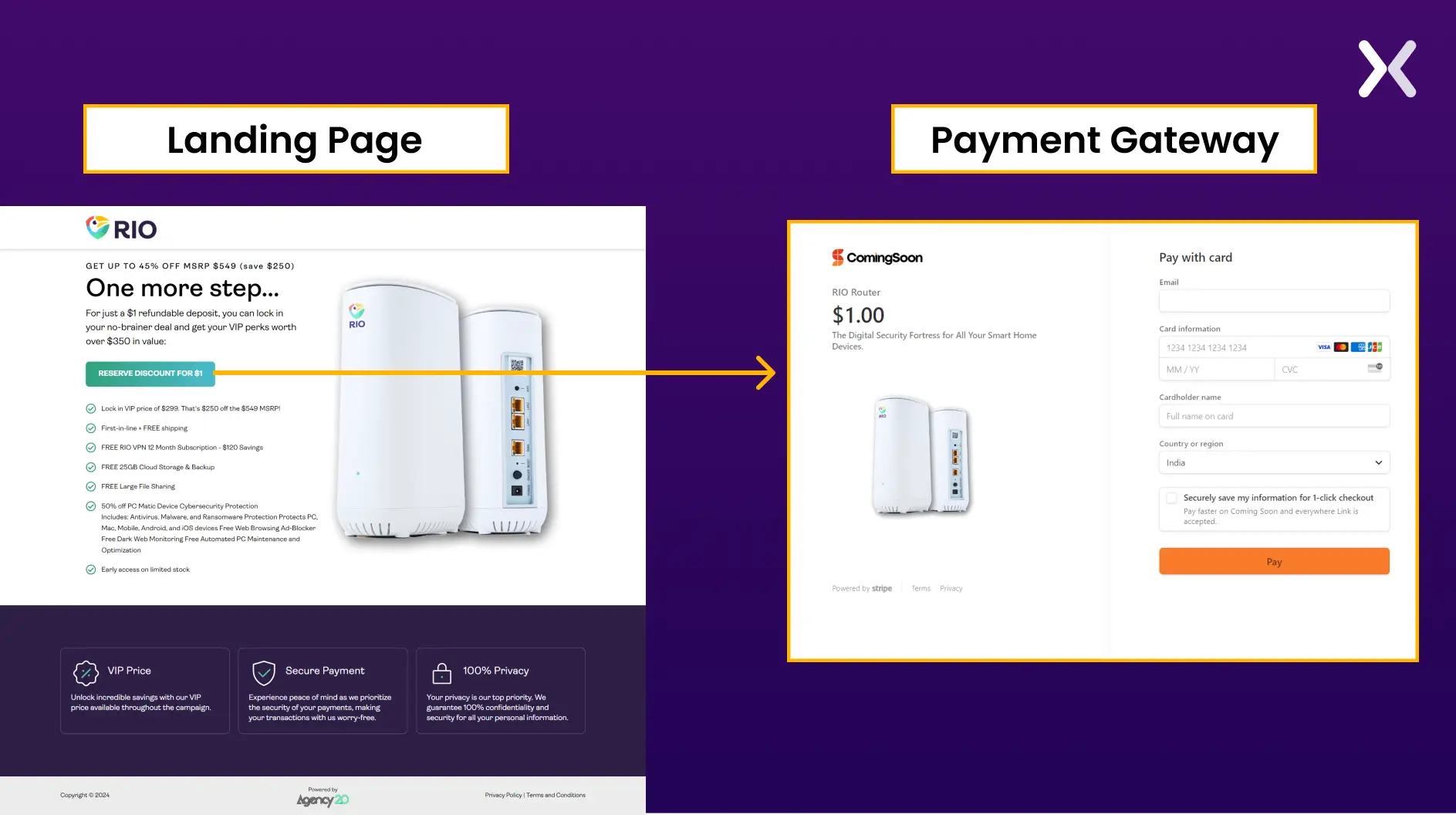
- Payment Landing Pages These pages are necessary for visitors who are ready to make the purchase. Such pages should be distraction-free, with just some testimonials to wade off any last-minute doubts. Equipped with safe and secure transactions, such landing pages are built with transparency and ease of use.
Do landing pages convert better than product pages?
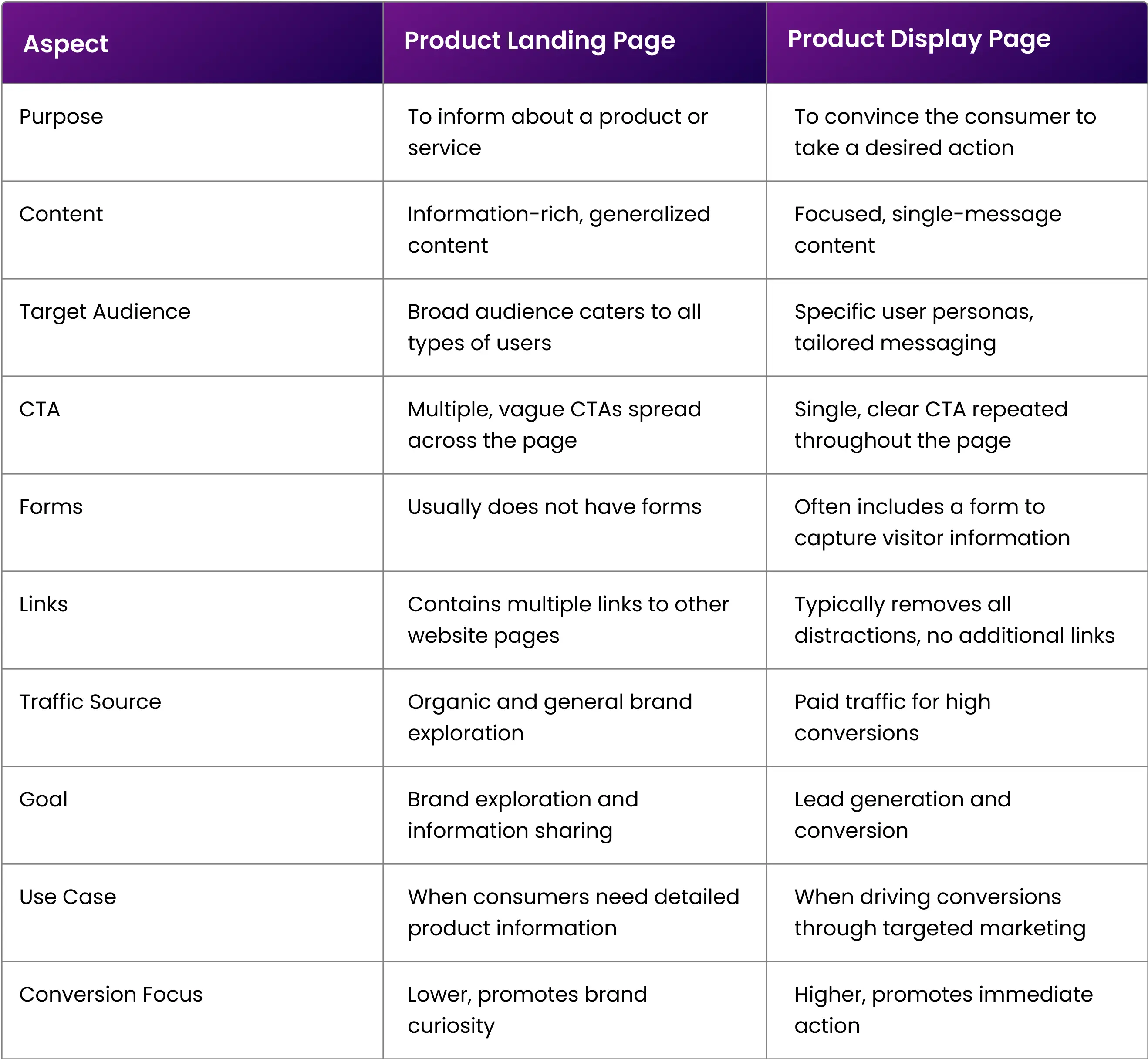
Naturally, product landing pages convert better than product display pages as all landing page elements are focused on conversions, while product page elements promote brand curiosity. Many new businesses also use landing pages to test their minimum viable products (MVPs) and understand their future demands. Such is the impact of landing pages.
How to build a product landing page?
Now that we have broken down the debate on the landing page vs. Product page, let’s look at what it will take to design an effective landing page. What questions do you need to ask before you get started? What type of product are you marketing? SaaS? eCommerce? An online course? Or perhaps you are looking to generate leads and marketing ‘free’ information, like an e-book or a newsletter.
-
What is the main problem you are trying to solve for the consumer?
-
Who are you marketing the product to?
This last question will then launch the next round of your investigation.
-
Who is the product for?
-
What are their goals?
-
How will your product help them to reach their goals? Finding the answer to these questions will limit the risk of developing an ineffective landing page. The key is understanding the purpose of your landing page. Once you are confident in your goals and purposes, you can build a series of landing pages that will catapult your conversions to the next level.
Product landing page vs product display page comparison table
Here’s a product page vs landing page comparison table you can save.
Utilizing product pages and landing pages in marketing funnels
In the landing page vs product page funnel strategy, both are indispensable. While product pages take care of organic traffic, engaging them through options and visuals, the landing page makes sure that interested prospects are captured immediately and turned into quality leads. The key lies in using both pages as necessary marketing tactics in your funnel instead of pitting them against each other. When used in sync, landing, and product pages can help you build dependable funnel systems that boost your ROI.
Related Articles: