A referral program is only effective if you promote it right. Referral landing pages help you complete your sales funnel and turn word of mouth into a powerful sales tool. A well-designed referral landing page clearly and transparently explains the rewards, terms, and how the program works. It also allows users to easily generate referral links, reducing friction and encouraging participation. Without clear referral pages, users may misunderstand the program, resulting in high abandonment of the page or participation without fully benefiting, leading to frustration or mistrust. In this article, we’ll analyze various B2B referral landing page examples to understand the elements they use to establish transparency and gain loyal customers. Let’s start by defining what a referral landing page is.
What is a referral landing page?
A referral landing page is a web page that explains and manages a referral program in which existing customers bring in new customers in exchange for rewards. The page spells out how the program works, provides referral links or buttons to share, and monitors referrals for both the person referring and the company. It aims to make the referral process more accessible, encourage participation, and make sure proper reward allocation. Until you want something complex, such pages are cost-effective and help gain high potential leads.
 In short, it’s the central page where users learn about the referral program and take action to refer others.
Once you’ve established your referral program and promotional strategy, it is time to build your referral landing page. Let’s examine examples of how the pros design their referral pages.

Difference between affiliate and referral programs
Here’s a short comparison table to understand the difference between affiliate and referral programs.
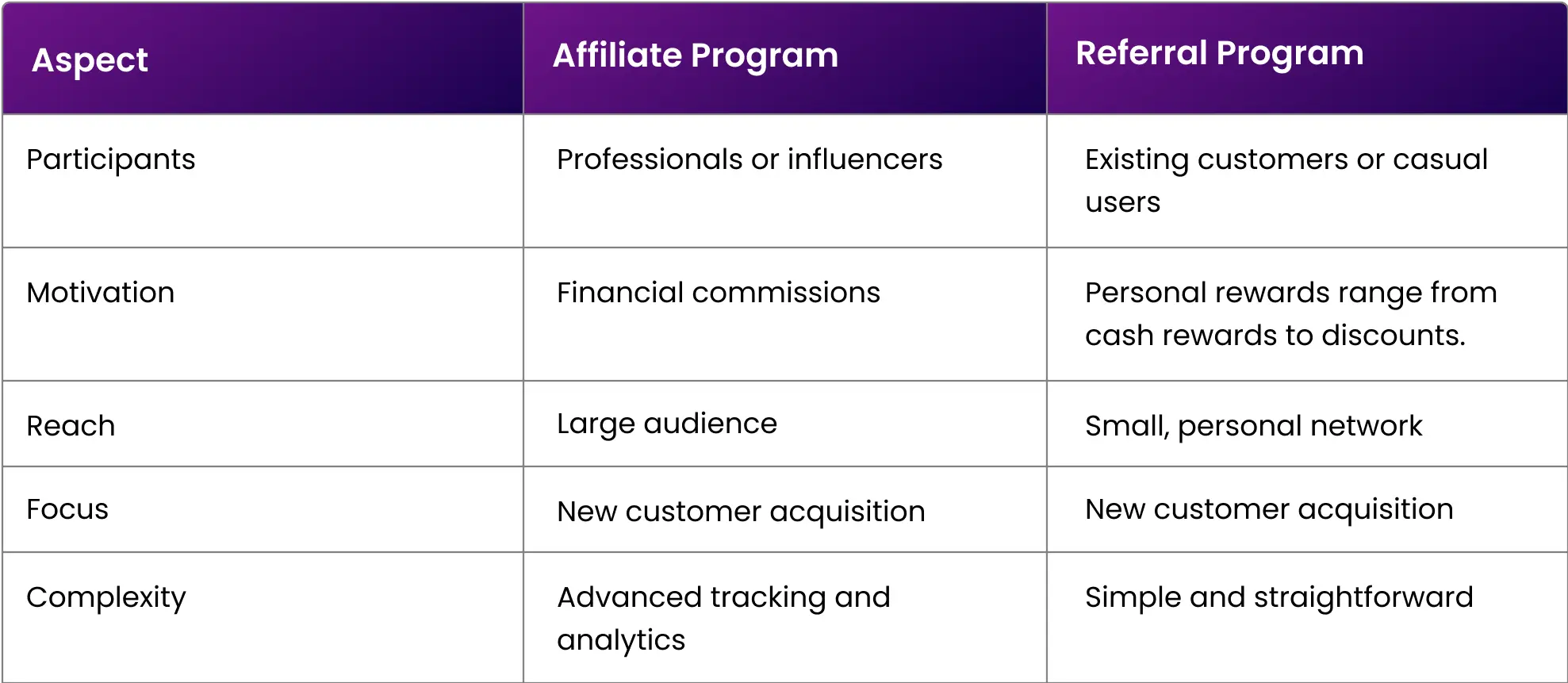 Affiliate and referral programs have different participants, but the focus on both campaigns is the same. Hence, we will discuss affiliate and referral landing pages with similar elements.
11 referral landing page examples to inspire you
Checking out examples is a great way to get ideas for landing page design. Here are 11 referral landing page examples to spark your campaign’s creativity and boost user engagement. Check them out for effective tactics and features to add to your projects!
1. Ubindi
Ubindi is an easy-to-use platform for instructors to manage class schedules, bookings, payments, and other administrative tasks. It simplifies administrative tasks so teachers can focus on teaching. Their referral landing page is short and simple, covering every essential detail. The first fold of the page has a headline, subhead, and form that complement each other.
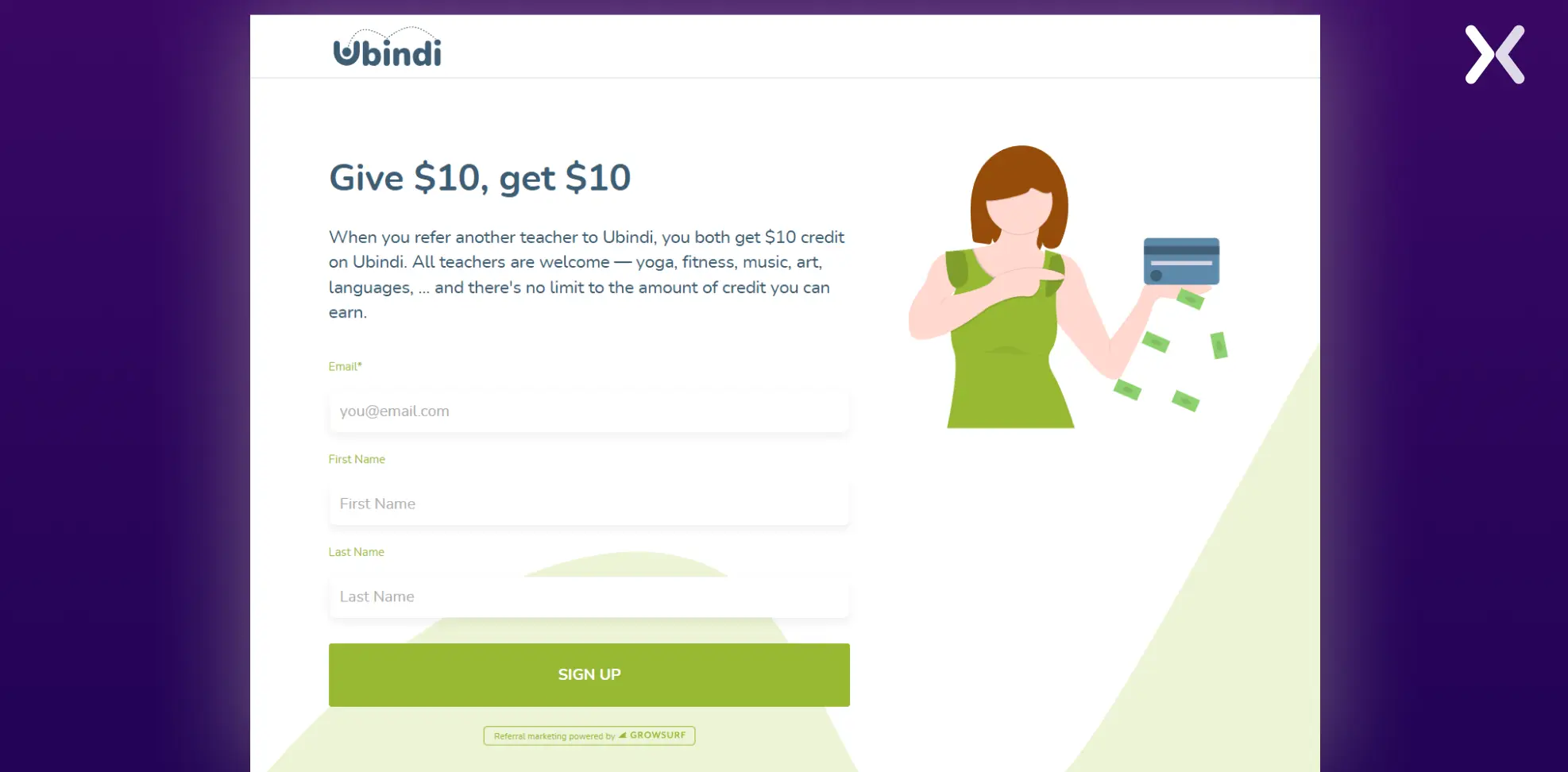 The copy of the subhead shines out here as it accents necessary elements of the rewards and conditions. Terms like “All teachers are welcome” and “There’s no limit to the amount of credit you can earn” give visitor information in a friendly tone.
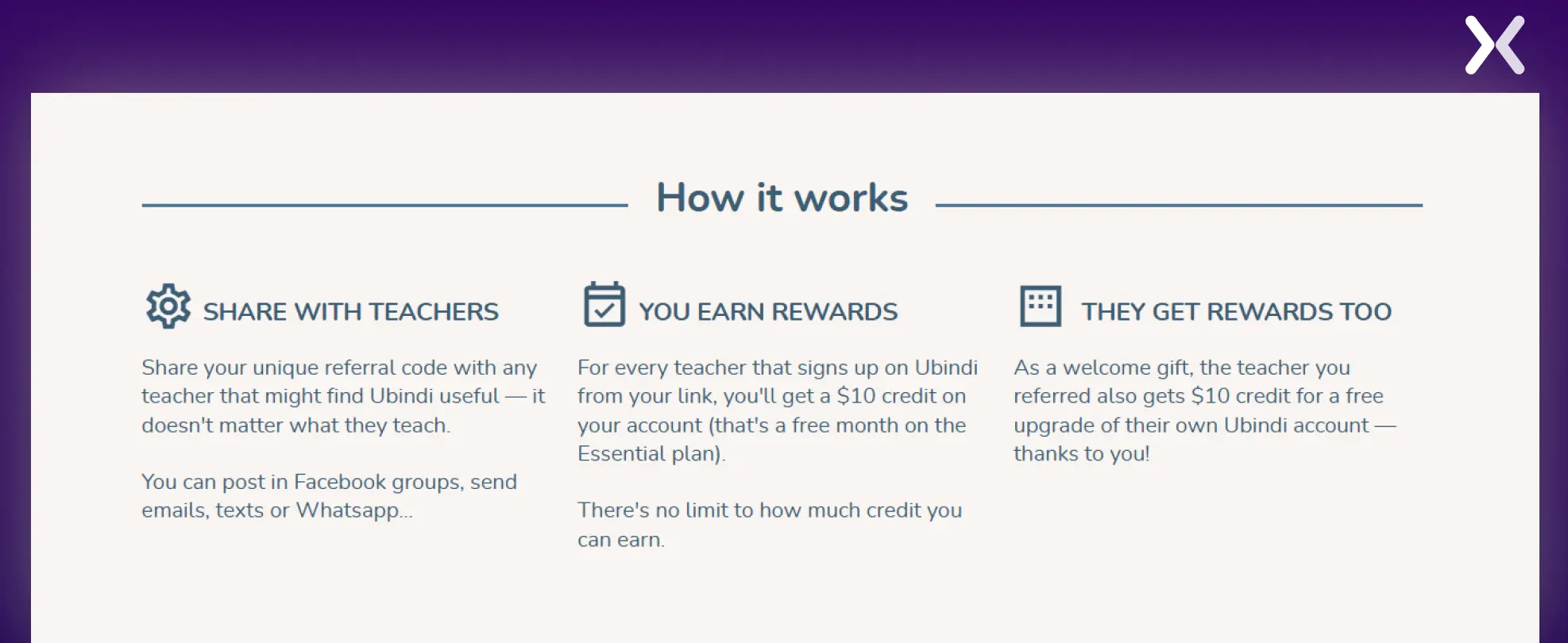 These points are reiterated in the second fold, which presents the step-by-step process of referring and earning rewards through the Ubindi referral program.
2. Trello’s somewhat referral landing page
Trello is a visual collaboration tool that helps teams organize tasks, projects, and workflows using boards, lists, and cards. Though Trello doesn’t have a referral program, they have a “recommend page,” which has exciting features and, hence. Can’t be ignored.
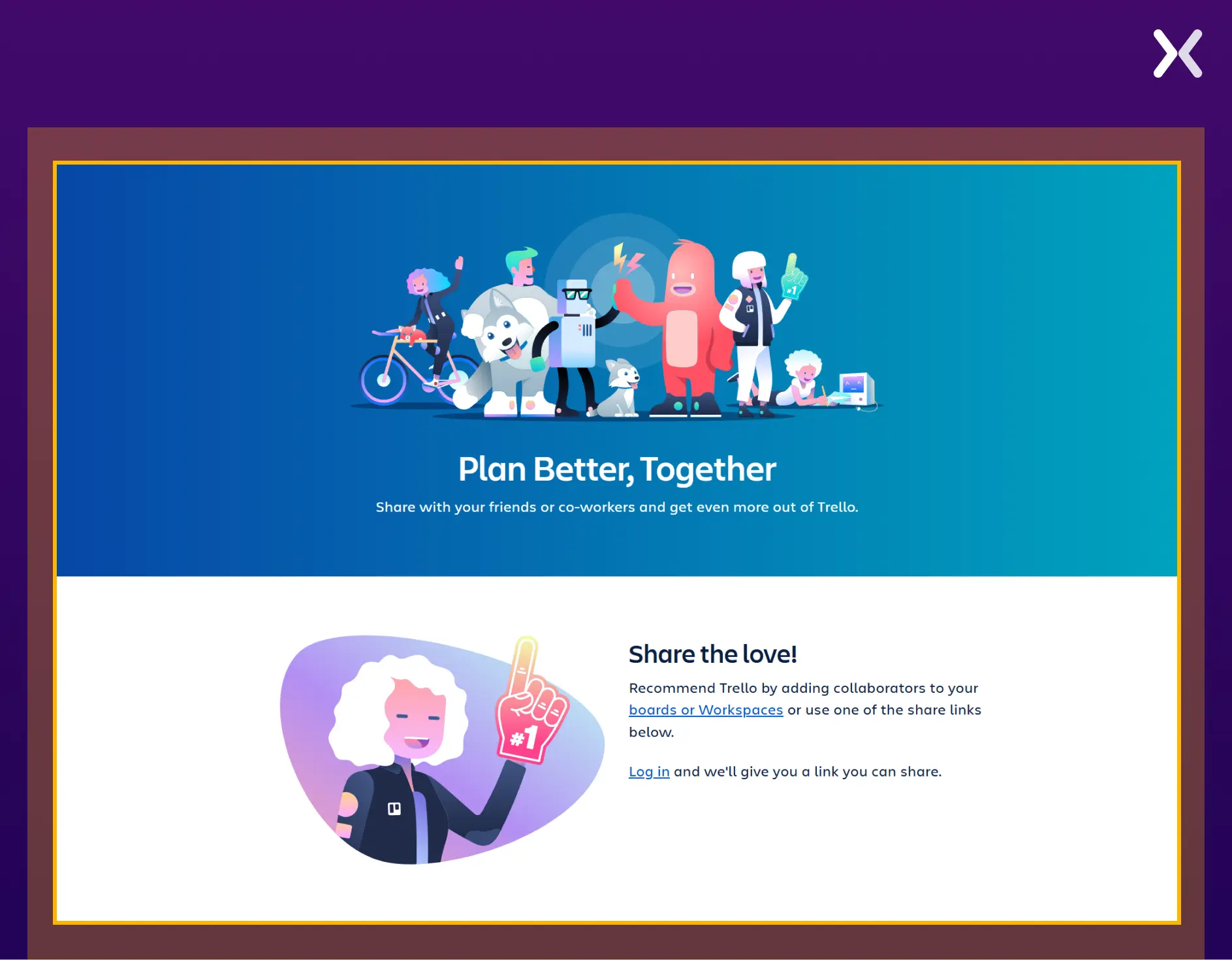 To generate an invite, you first need to log in. Once logged in, a customized link is automatically generated to copy or share on social media using the various options provided.
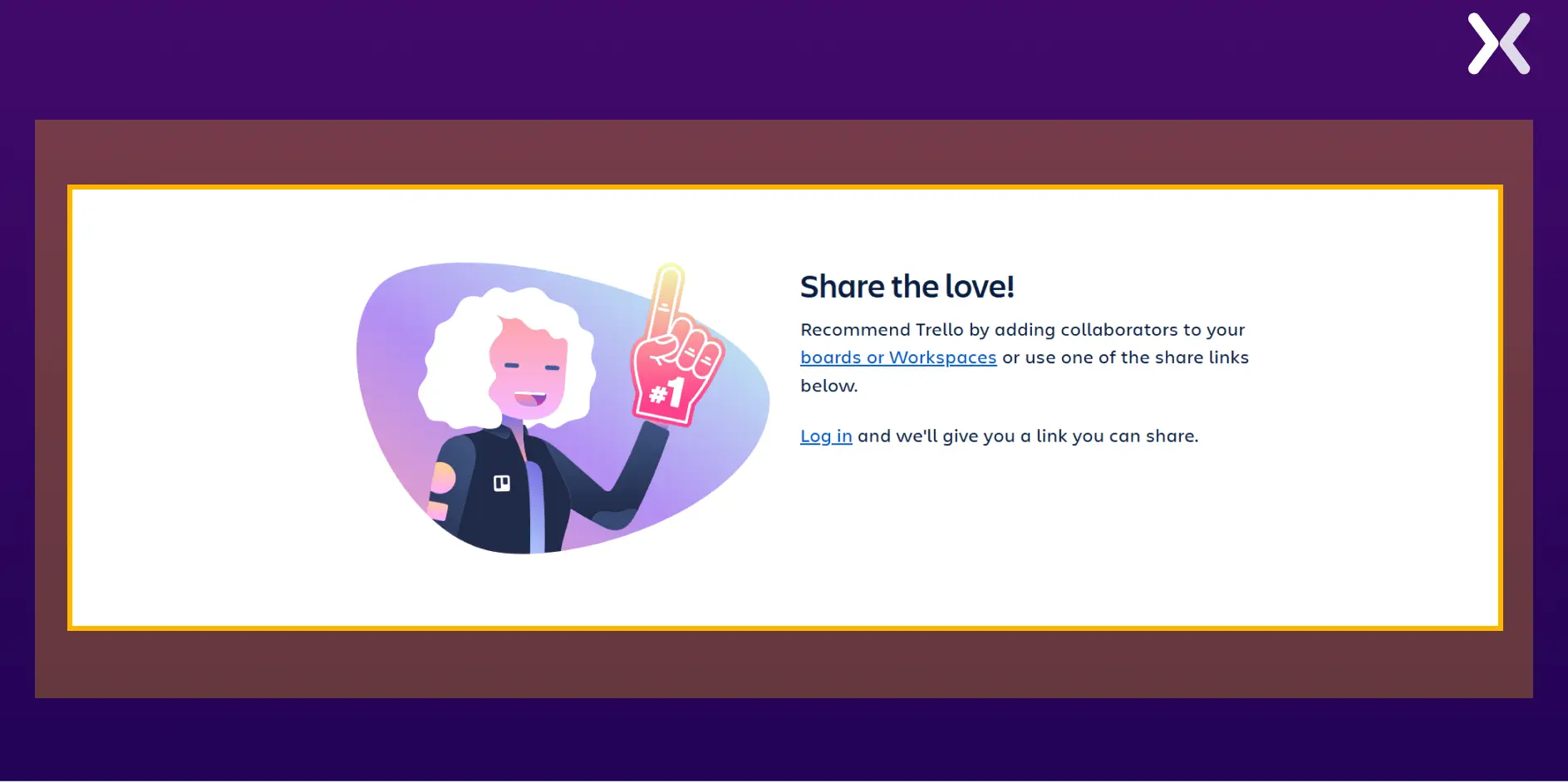 If you want to build a highly accessible referral landing page. You should consider adding this customized referral URL generator and social sharing buttons.
3. Unbounce
Unbounce is a landing page builder designed to help marketers create, publish, and test landing pages without needing a developer. Their referral/ affiliate landing page has much to offer, yet never skips a beat in clarity.
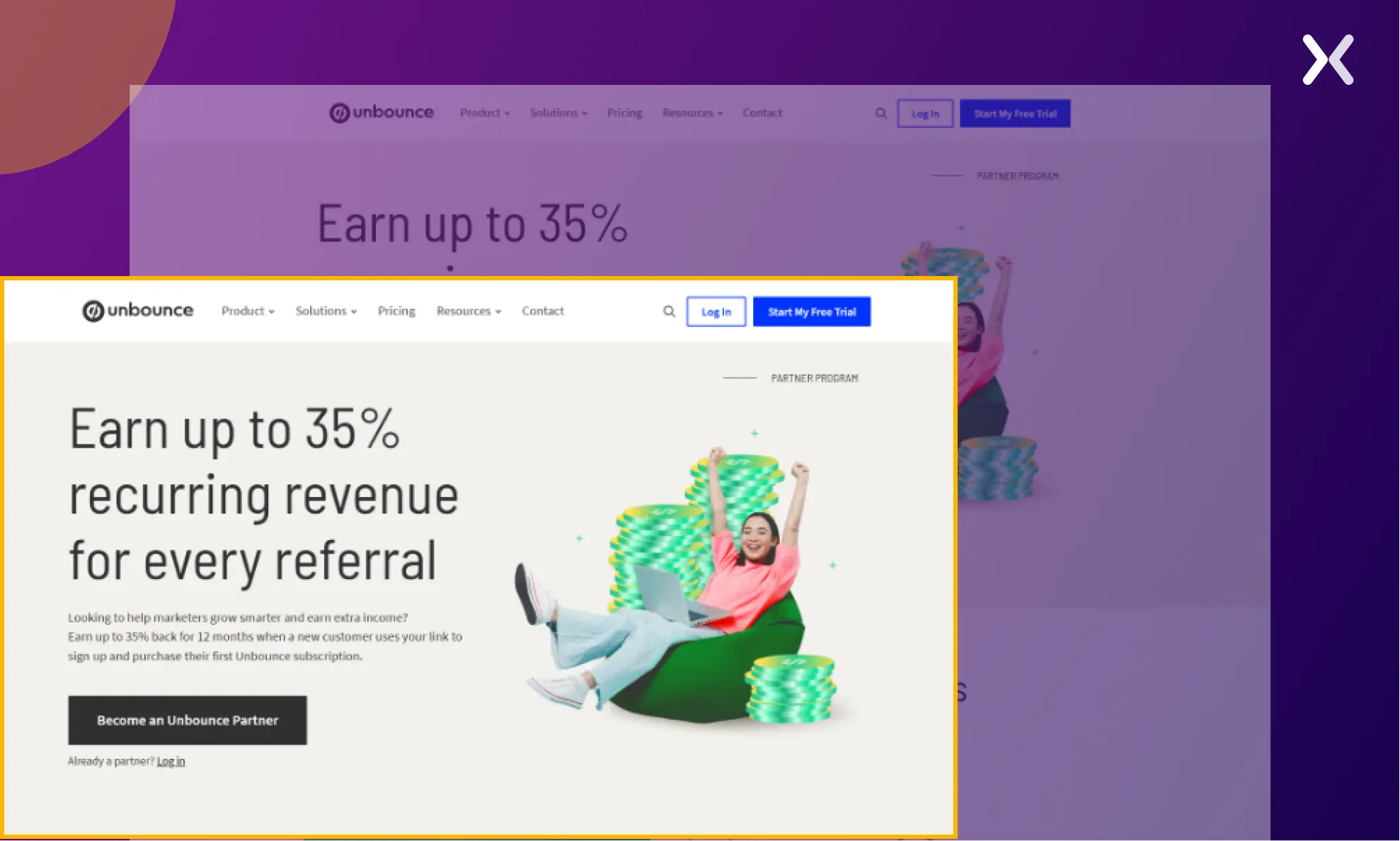 The heading copy with the “35% recurring revenue” offer is enough to catch user attention. The page has a section communicating who can benefit from this referral program.
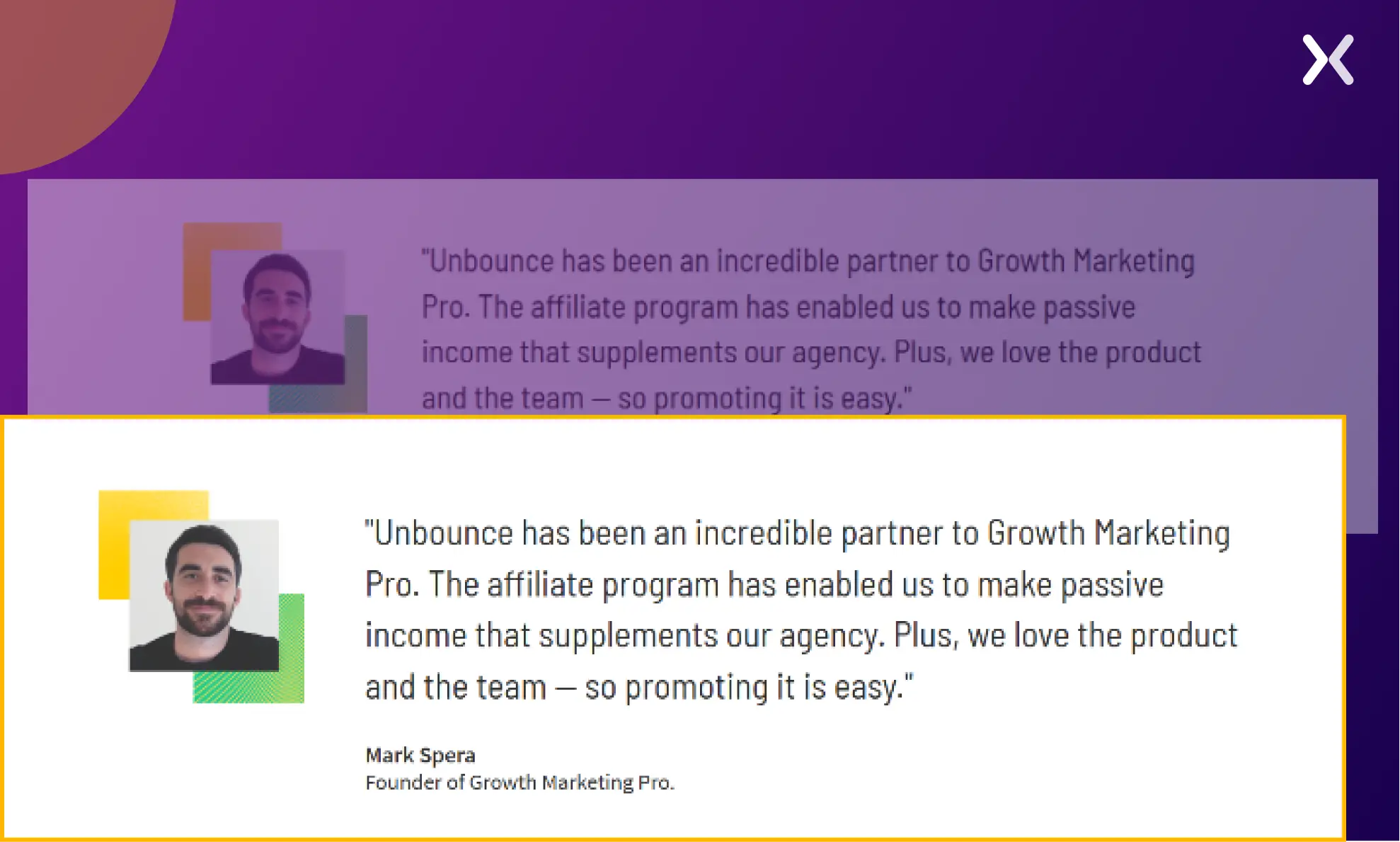 It also presents estimates of the cash rewards referrers can earn if a certain amount of people sign up, which motivates them to participate. We also have social proof in the form of partner companies and testimonials. All these elements combine to make an effective referral landing page by Unbounce.
4. ClickUp
ClickUp is a full project management tool that enables teams to plan, track, and collaborate on tasks. Its referral landing page is minimalistic and provides information section by section, making it easy to grasp. The landing page uses two sections well. The first is “Guidelines for Success,” which accents the referral program’s dos and don’ts. It helps referrers understand clearly what they need to do to earn the referral incentive.
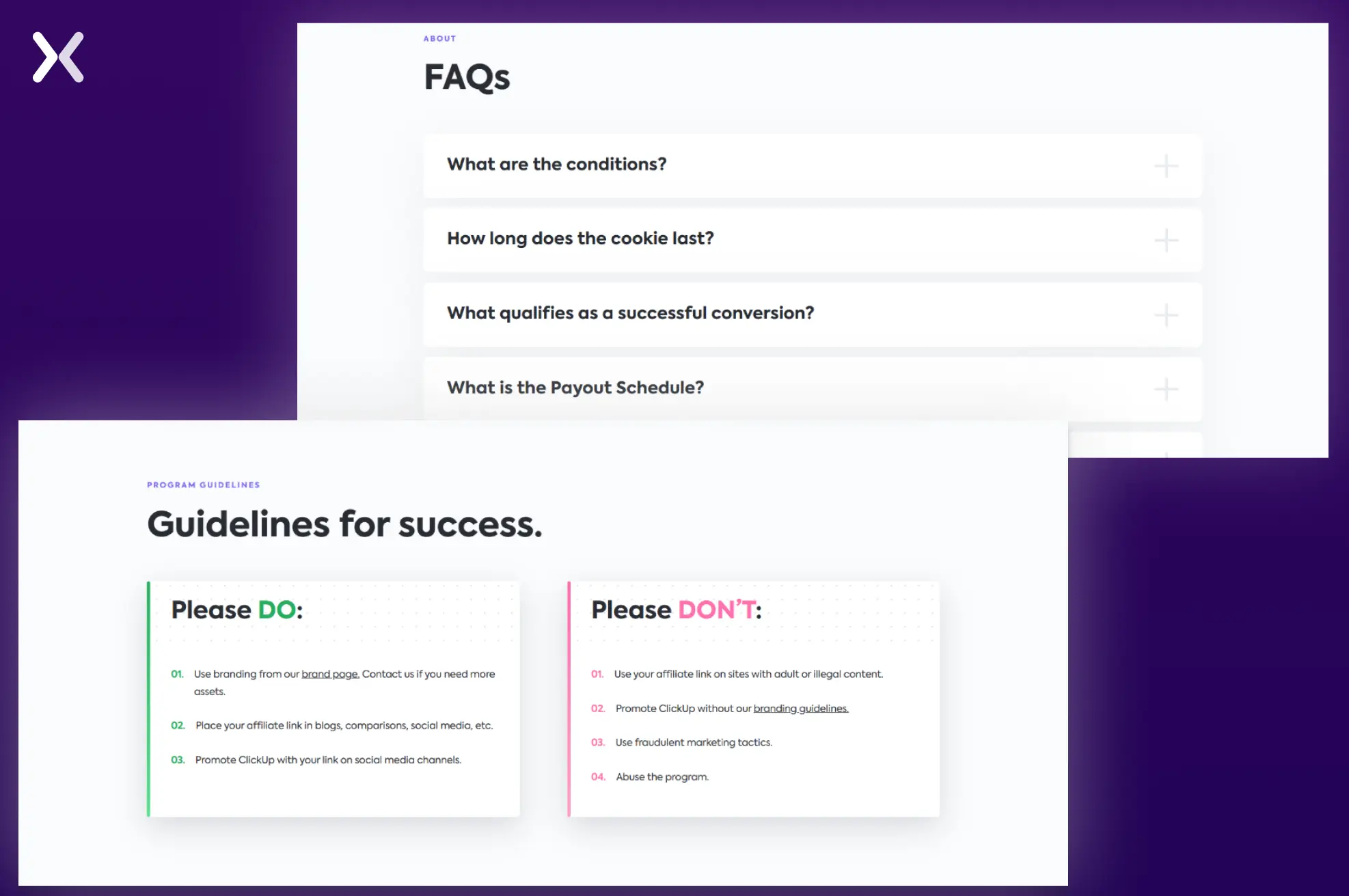 The second section is the FAQs part, which uses questions to share the terms and conditions of the referral campaign.
5. Zoho
Zoho is a cloud-based software suite for businesses that offers CRM tools. It is designed to simplify operations and improve productivity.
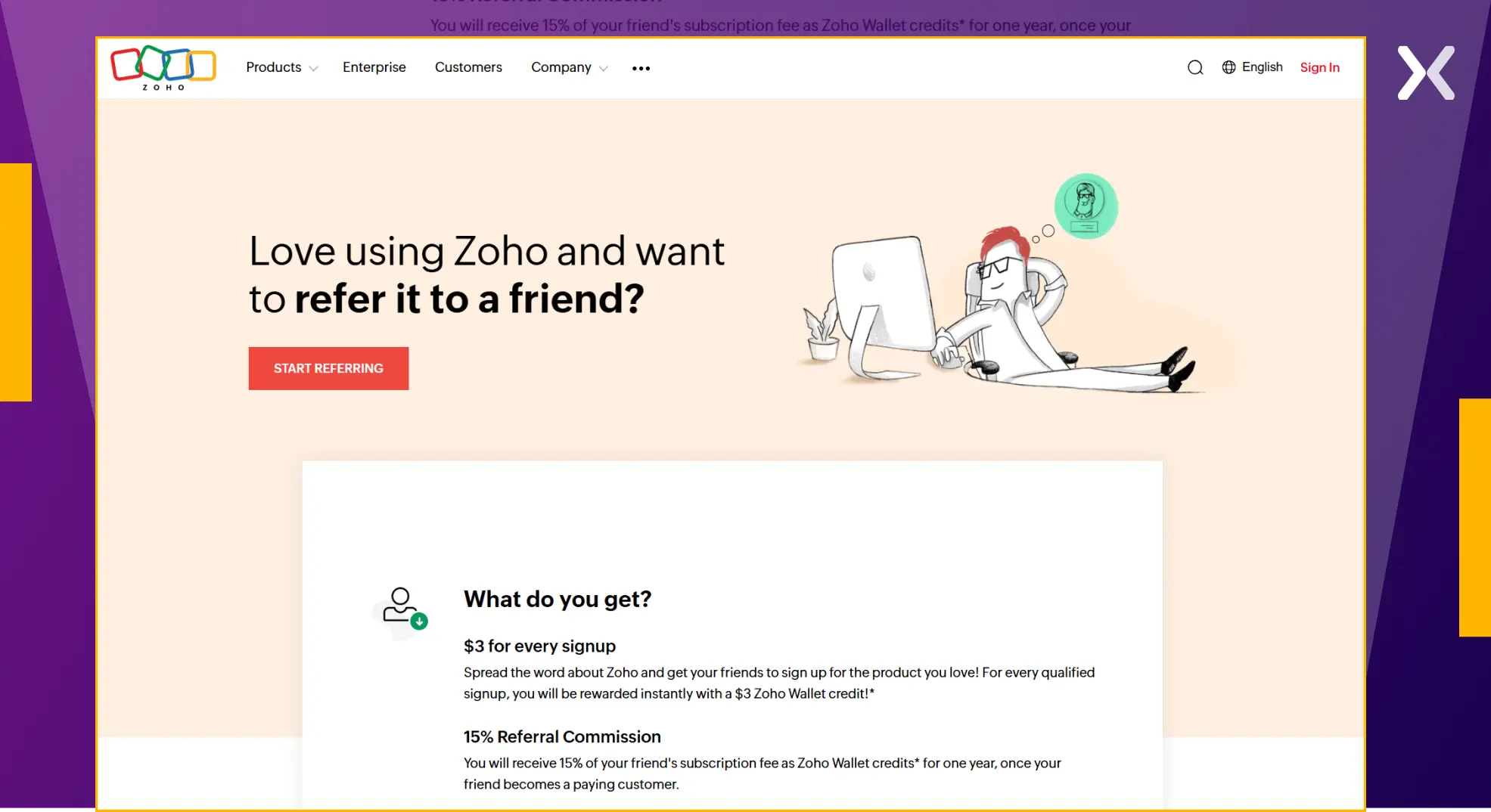 They have a to-the-point referral landing page. Without wasting time, the page directly shares the rewards to be earned once the referral is complete.
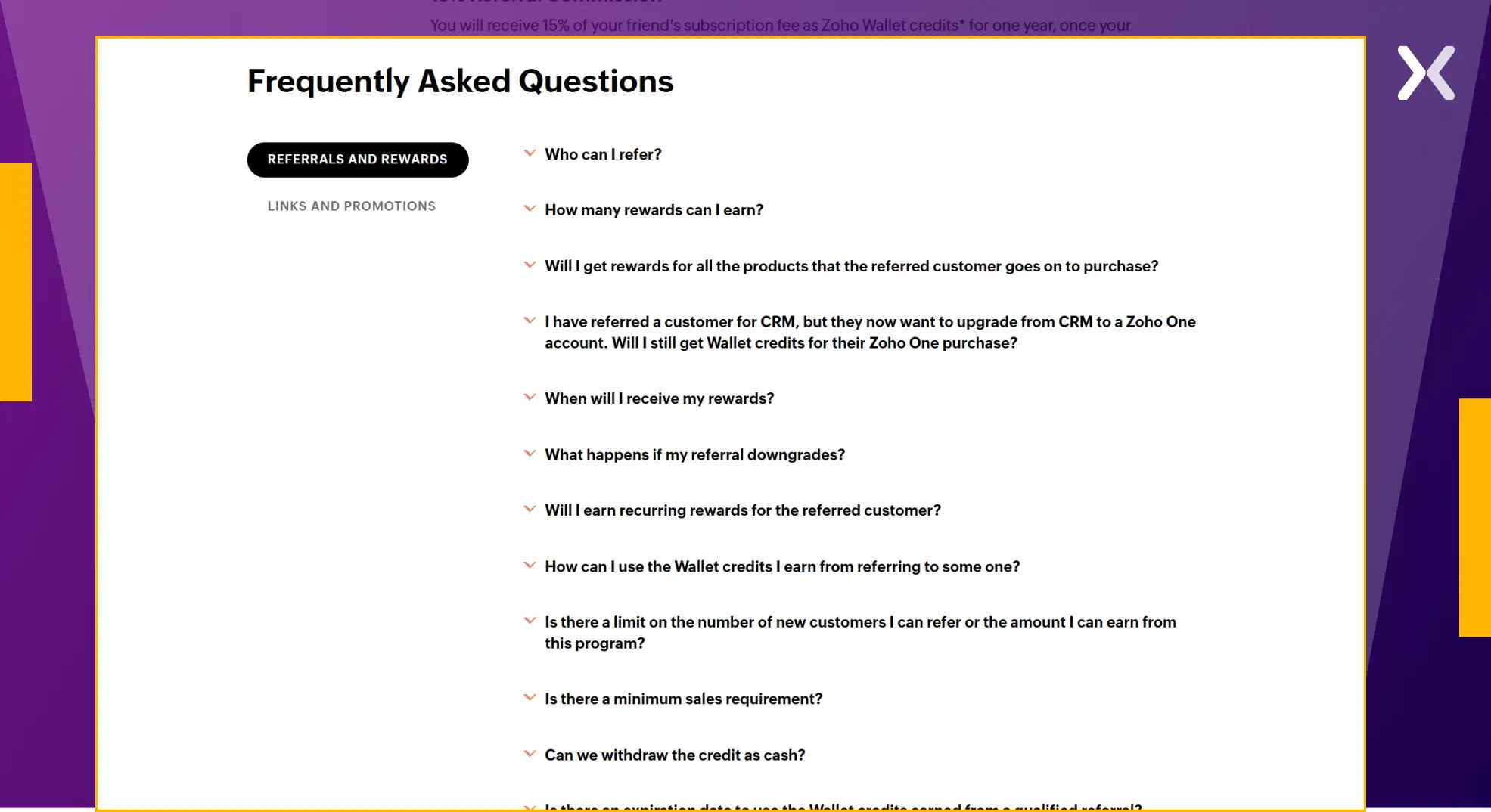 Like ClickUp’s referral page, Zoho’s FAQs share its terms and conditions in a simple question-and-answer format.
6. Hubspot
HubSpot is an all-in-one marketing, sales, and service platform that helps businesses attract, engage, and delight customers through various tools. The platform’s referral/ affiliate landing page uses a video, social proof, and other elements to present the value of becoming a referrer.
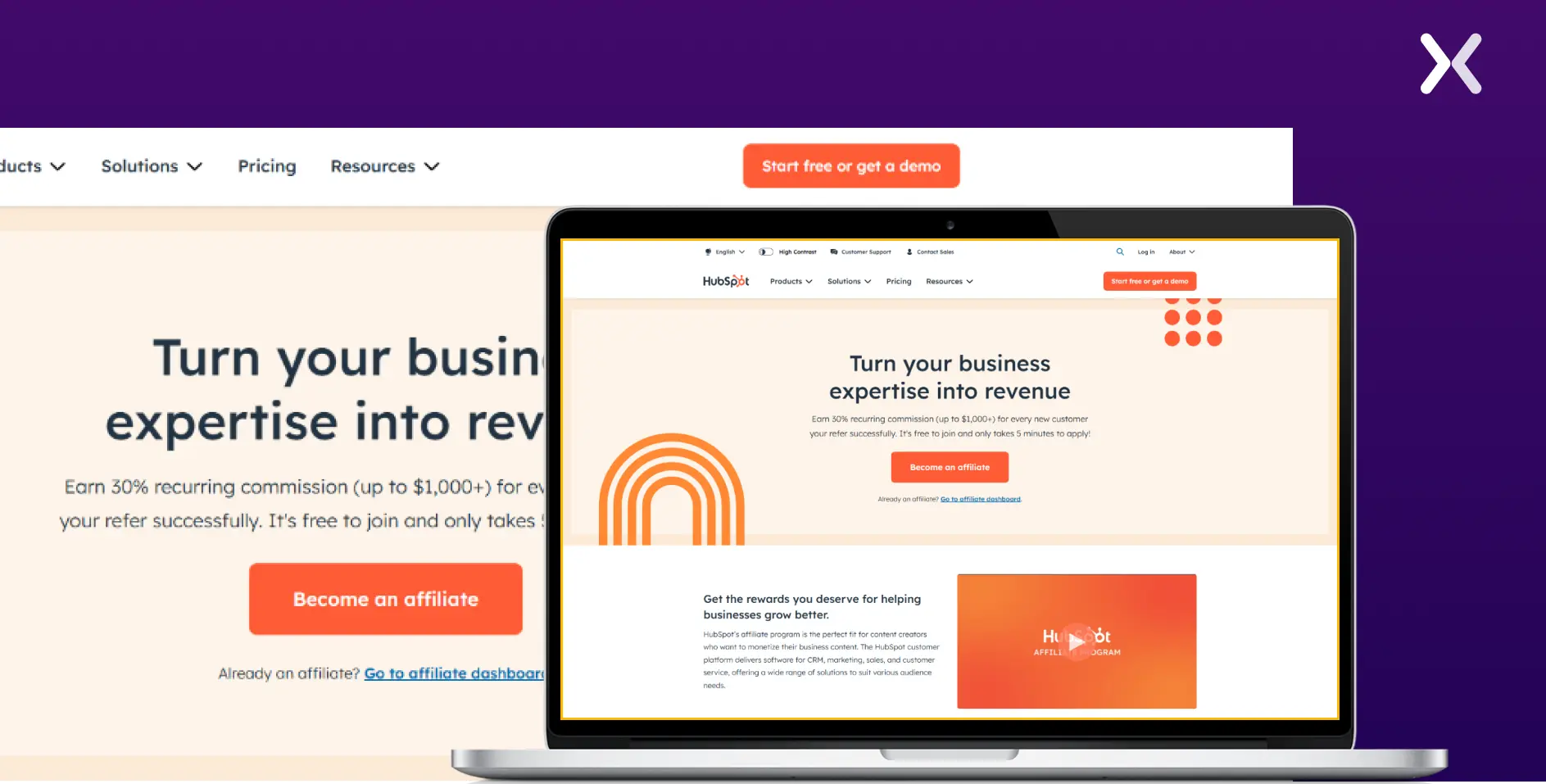 The page has a tier comparison table marking how affiliates reward their referrers.
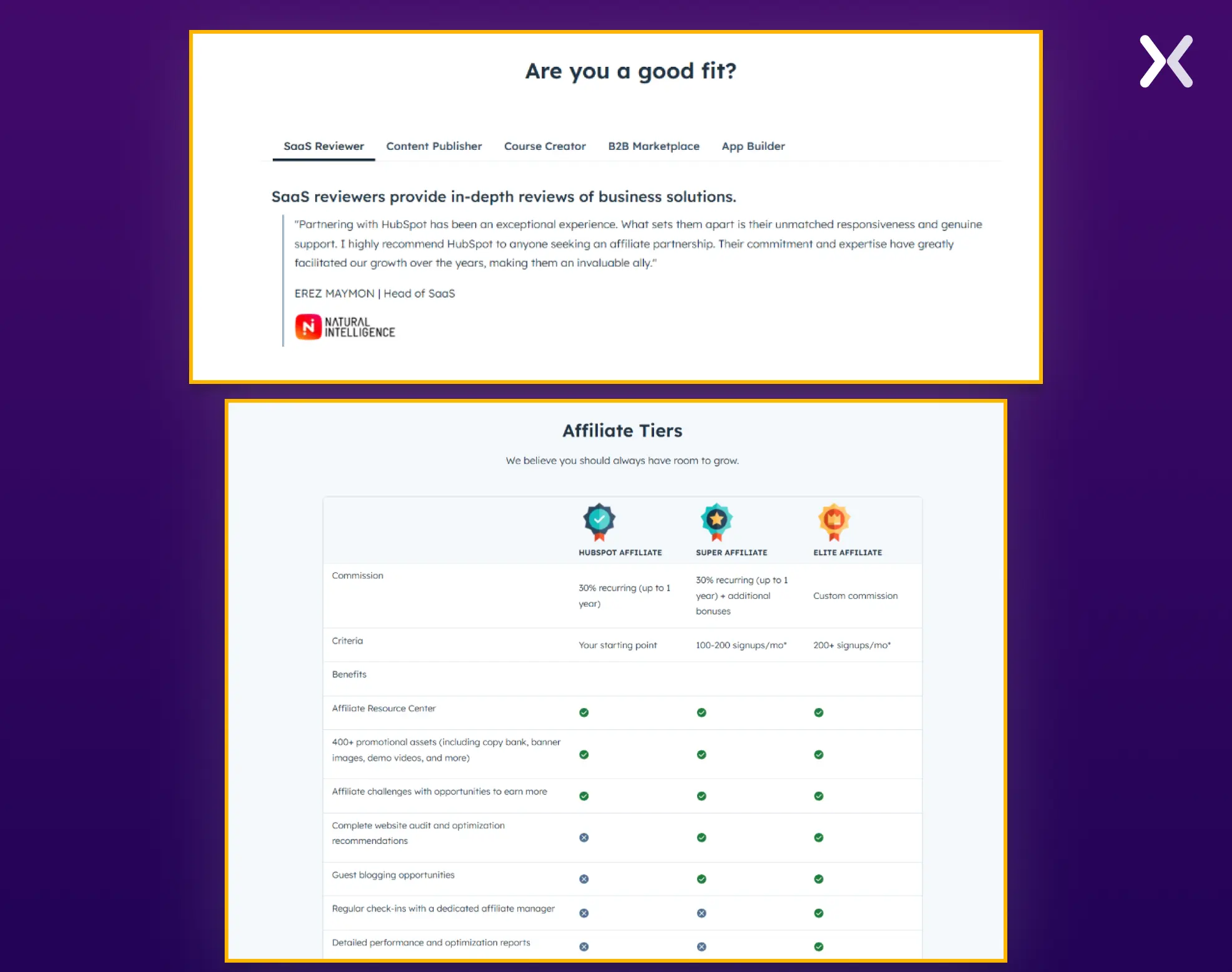 The “Are You a Good Fit?” section accents the types of professionals who should participate in the referral program, supported by social proof from similar professionals. This adds a personal touch to the page and ties everything together cohesively.
7. TimeCamp
TimeCamp is a time-tracking software that helps businesses and individuals track work hours, generate reports, and analyze productivity. Their referral landing page employs the brand colors to build an impact. The referral page’s copy and design are clean, and the accent is the step-by-step process for earning a referral.
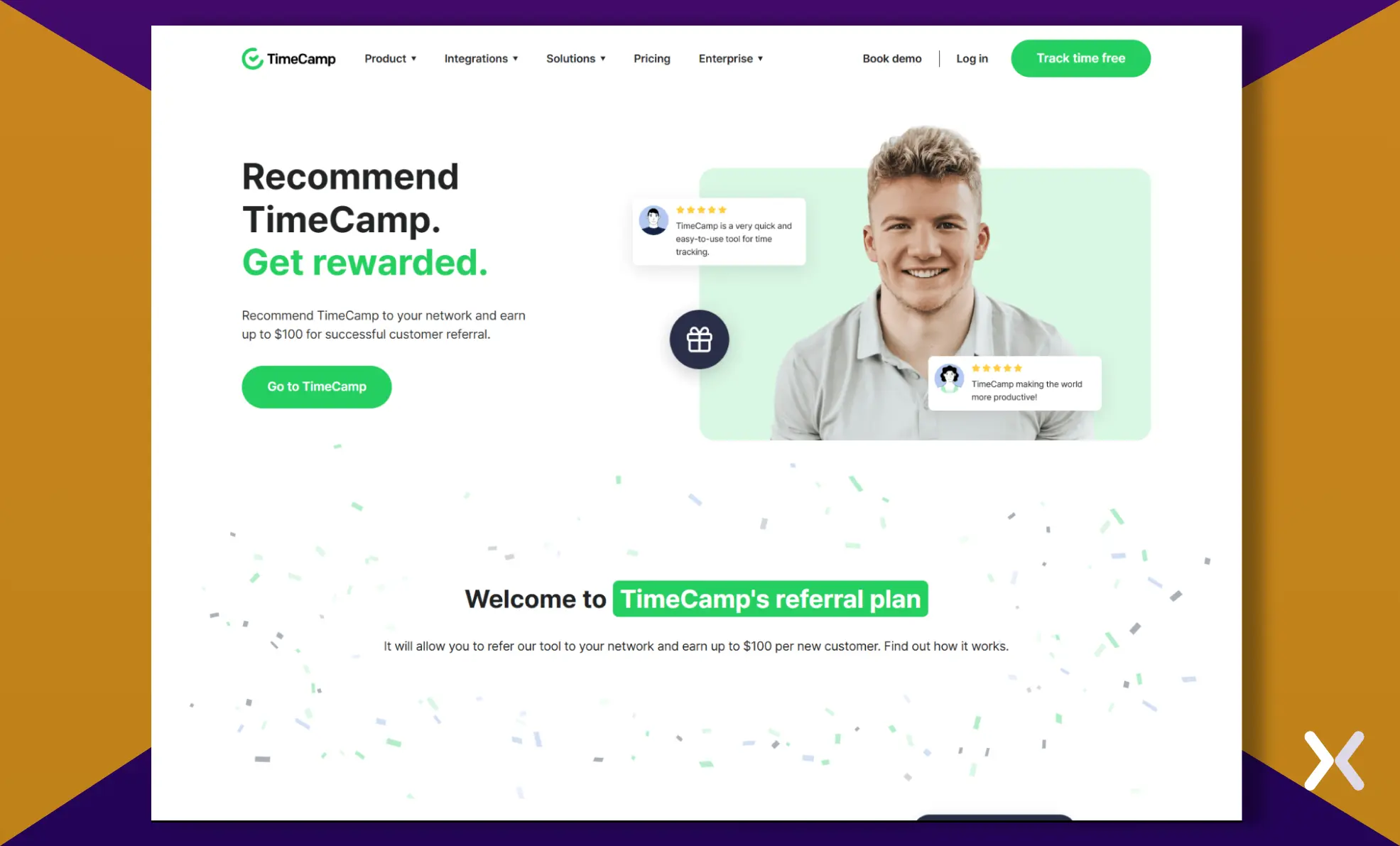
The process effectively communicates where to find the referral link once a user has logged in to the dashboard. The offer is shared multiple times across the page to motivate visitors to participate.
8. Bench
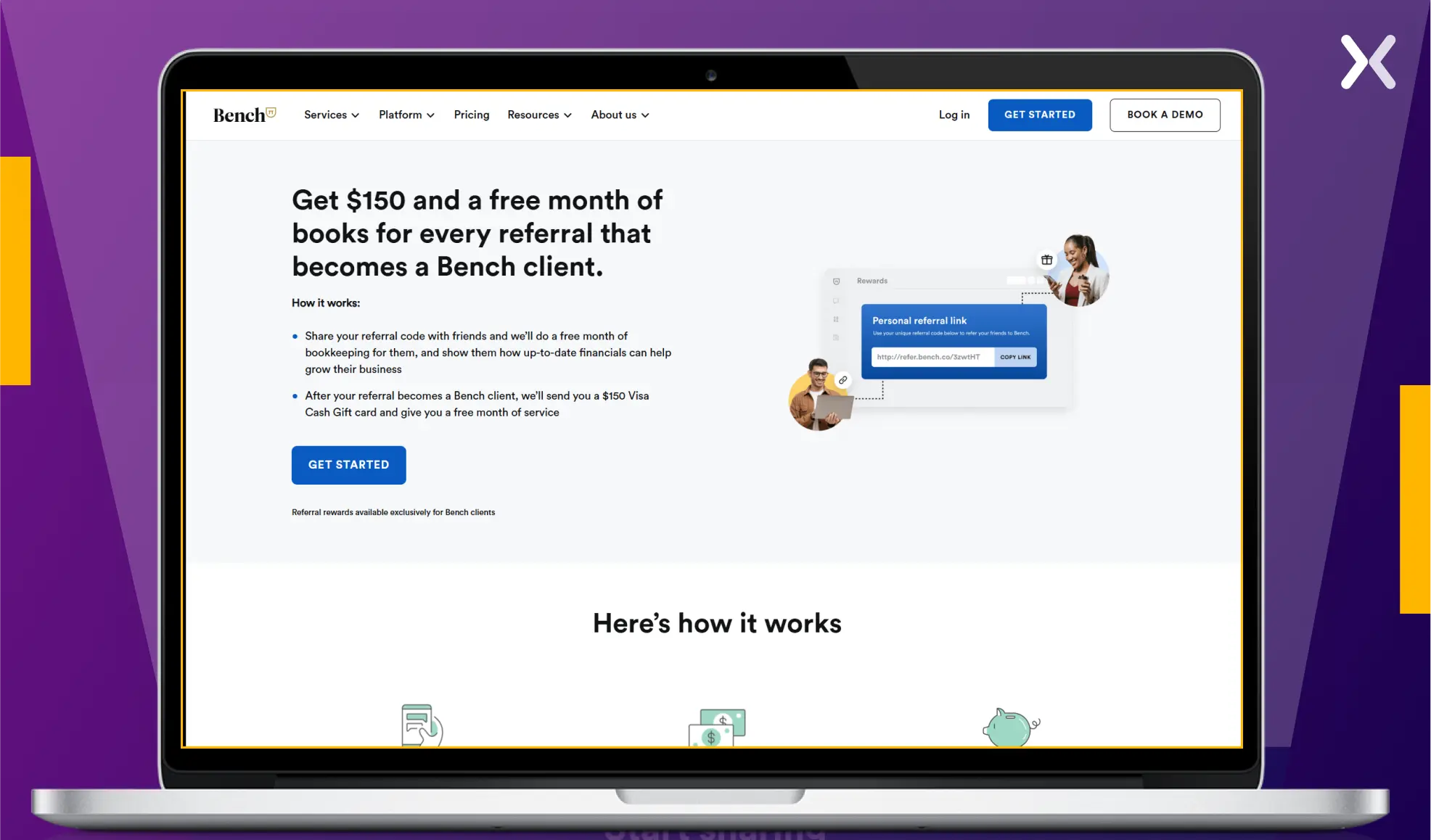
Bench is a platform that simplifies bookkeeping and tax filing for small businesses through expert support and easy-to-use software. On their referral landing page, they made a smart move by sharing all the critical information about the referral program in the first fold. The rest of the page only complements the first fold’s copy.
 We also need to pay close attention to the social proof used on this referral page. Instead of picking a generic testimonial, Bench’s landing page uses a testimonial that specifically talks about its referral program.
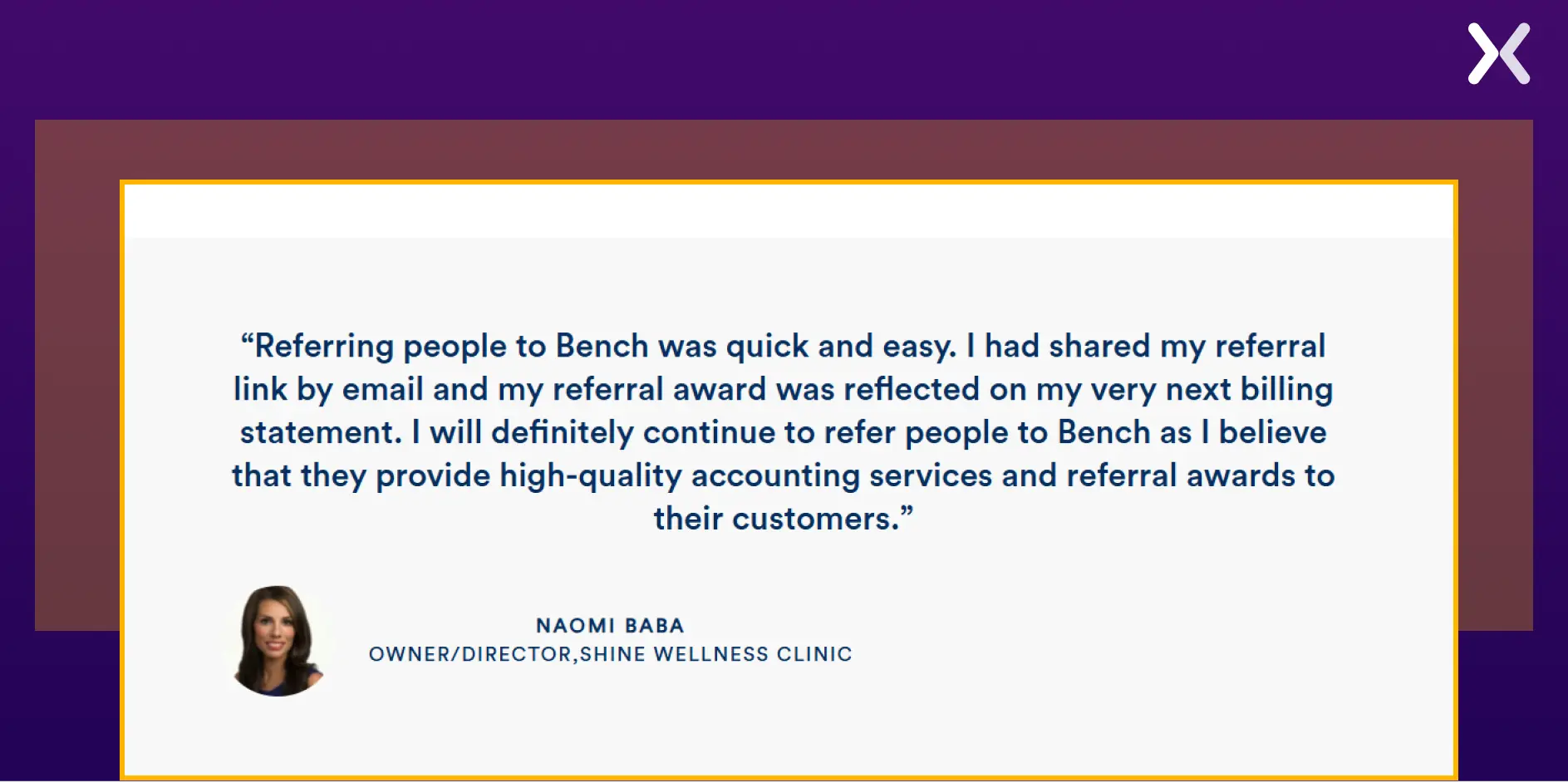 It helps build trust with the visitors, encouraging them to become referrers.
9. ActiveCampaign
ActiveCampaign is a customer experience automation platform that offers businesses email marketing, CRM, and sales automation. Its referral landing page presents information aesthetically. Without overcrowding the page, every section is dedicated to sharing information about the referral program with visitors.
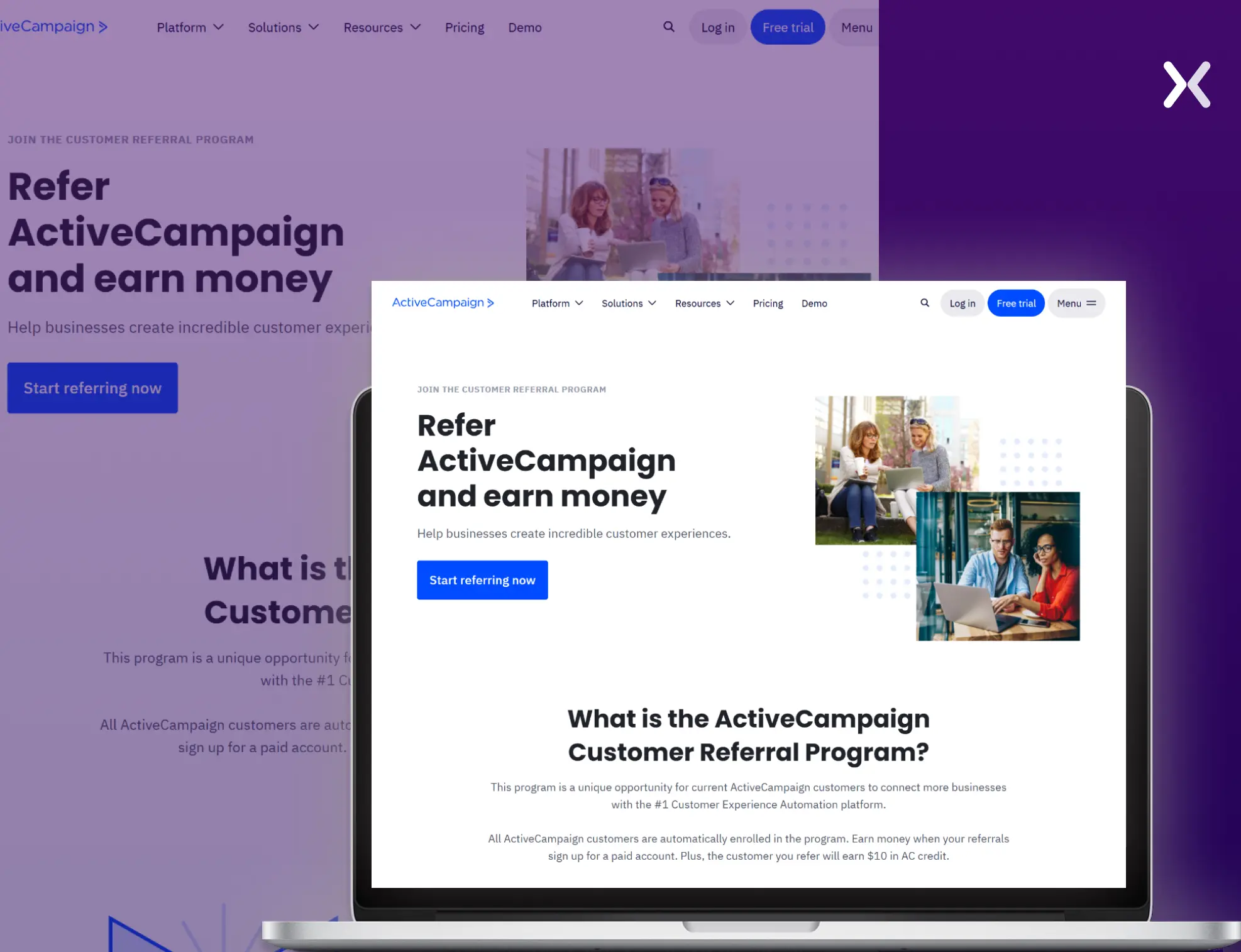 The referral page has a simple top fold supported by segments like “How it works” and “How to earn.”
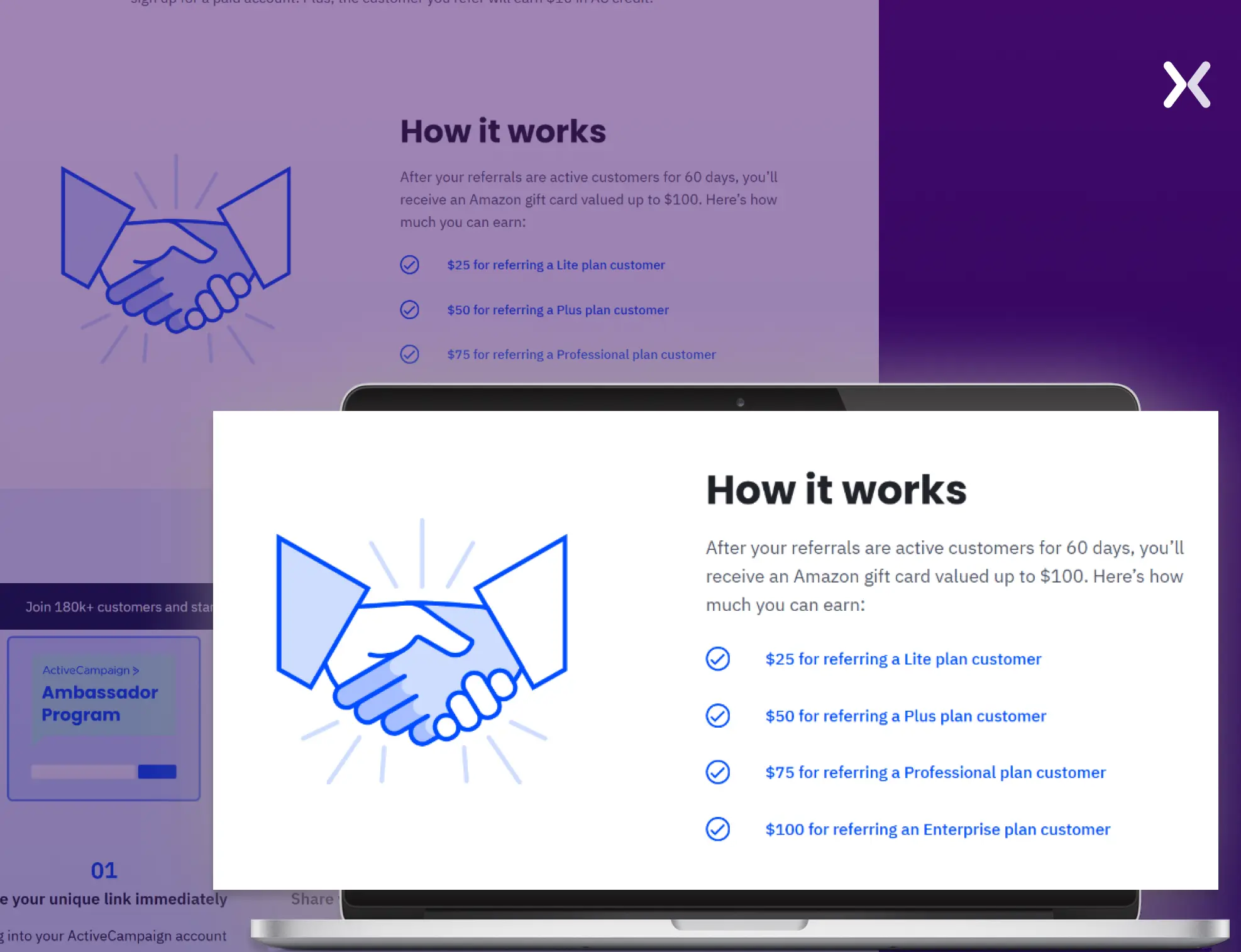 The “How it works” section provides the most necessary information about the referral program in bullet points, making it easier to grasp.
10. Hiver
Hiver is a Gmail-based help desk solution that enables customer service teams to manage email communication, collaborate, and automate workflows directly from their inbox. Everything fits perfectly into this referral landing page, from the color palette to the copy. With such an amazing page, it is hard to say which stands out the most, but it has to be the rewards section hands down.
 The referral page’s reward segment features copy that powerfully presents how every milestone helps referrers win rewards.
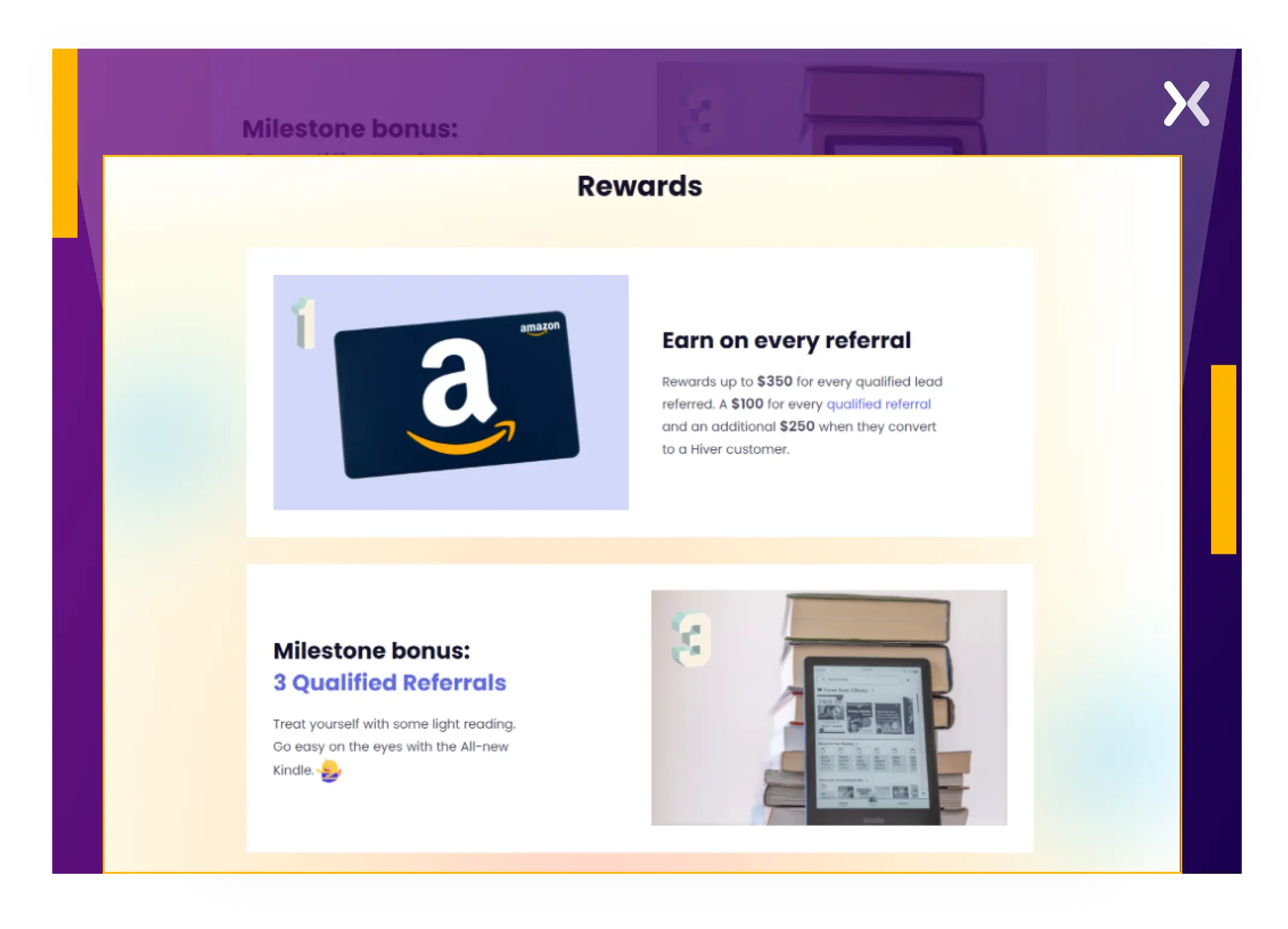 One thing to notice in their “how it works” section is the use of specific terms like “qualify your leads,” which can confuse some visitors.
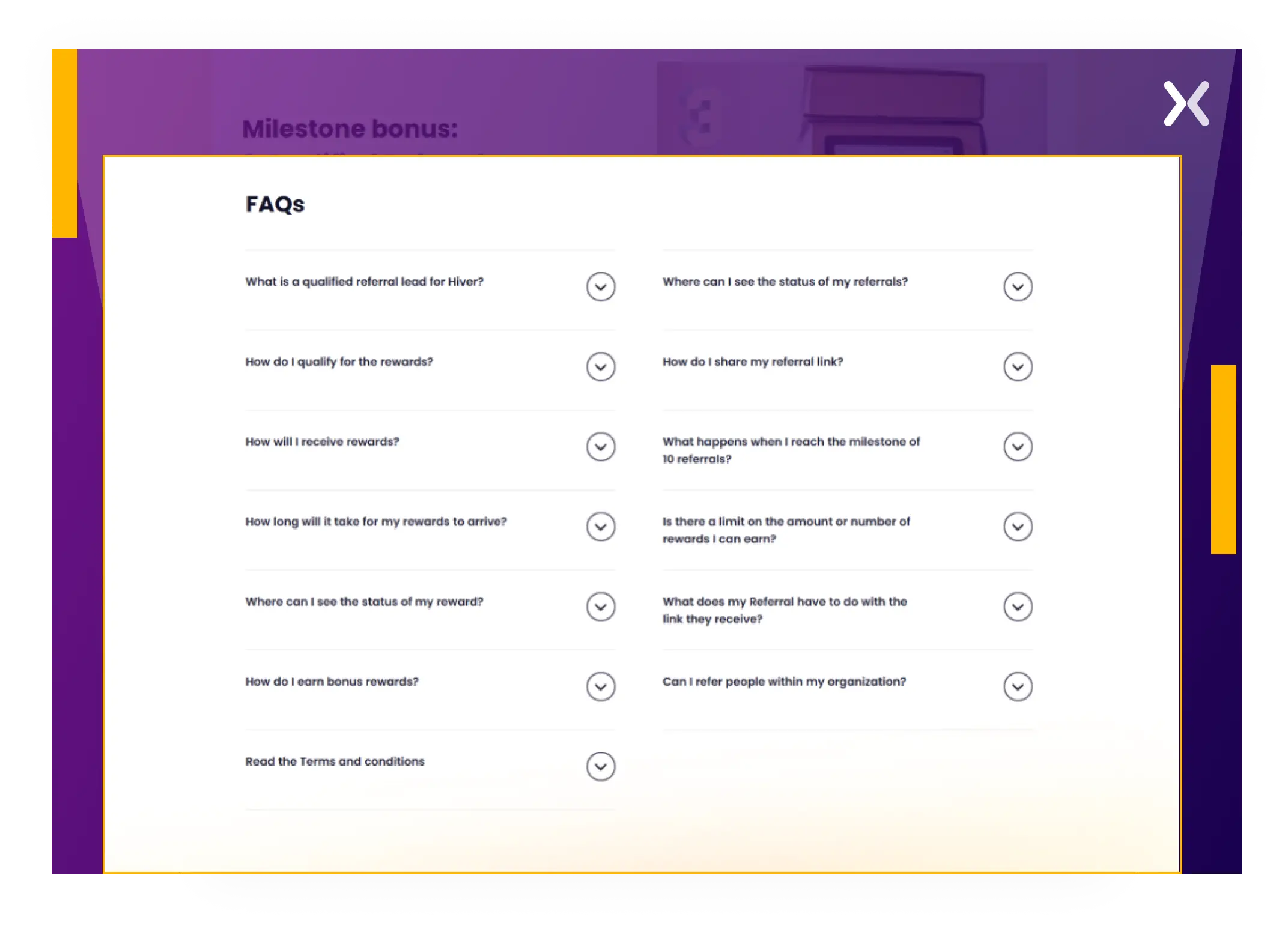 These terms are well-defined in the FAQs at the end of the page to clear the confusion.
11. TheraNest
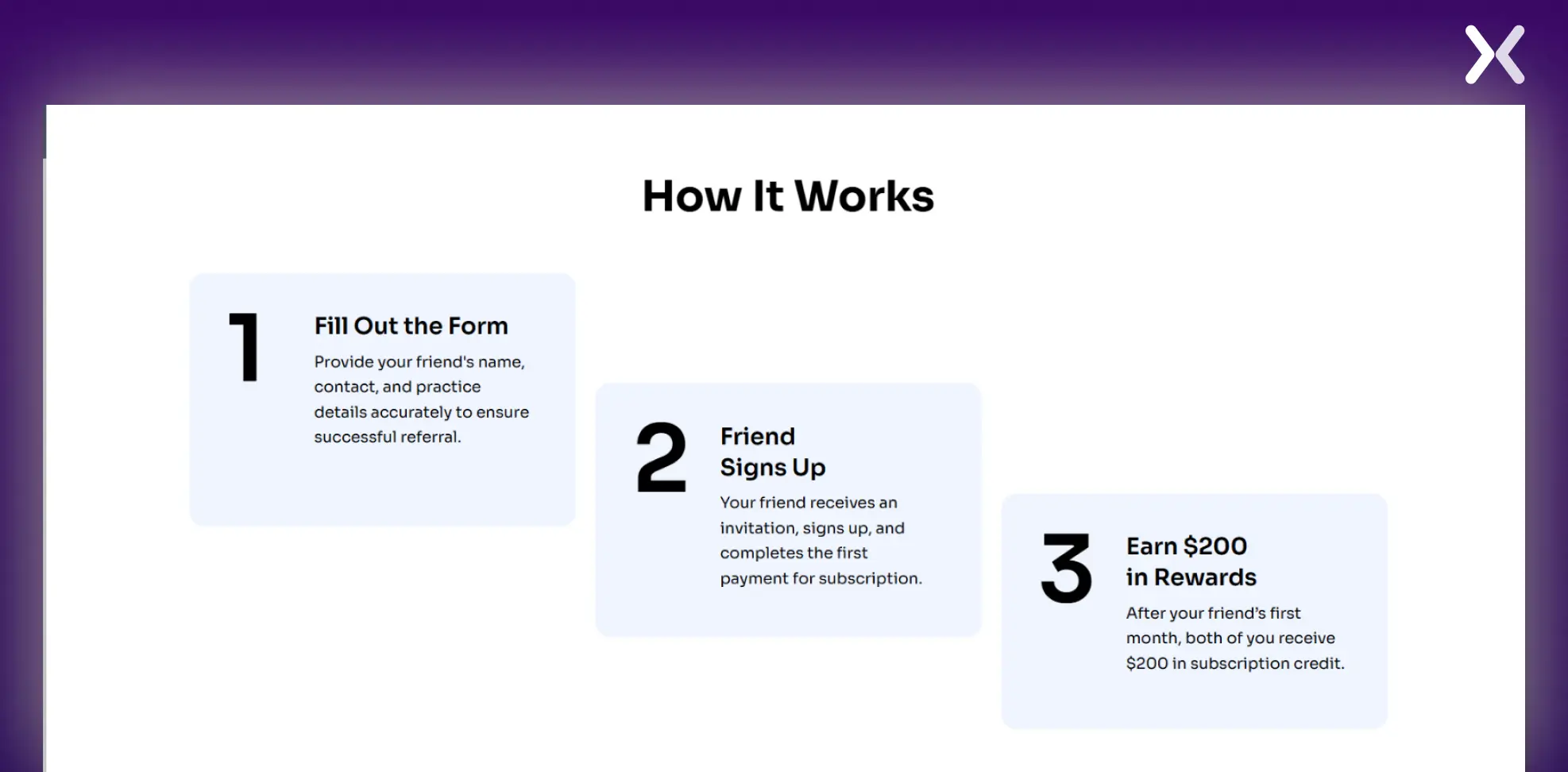
TheraNest is a full practice management software for mental health professionals and small practices. Its referral page is minimalistic and focuses on simplifying the referral process. The layout guides users through each step without clutter, making it easy to understand how to refer a friend and earn rewards.
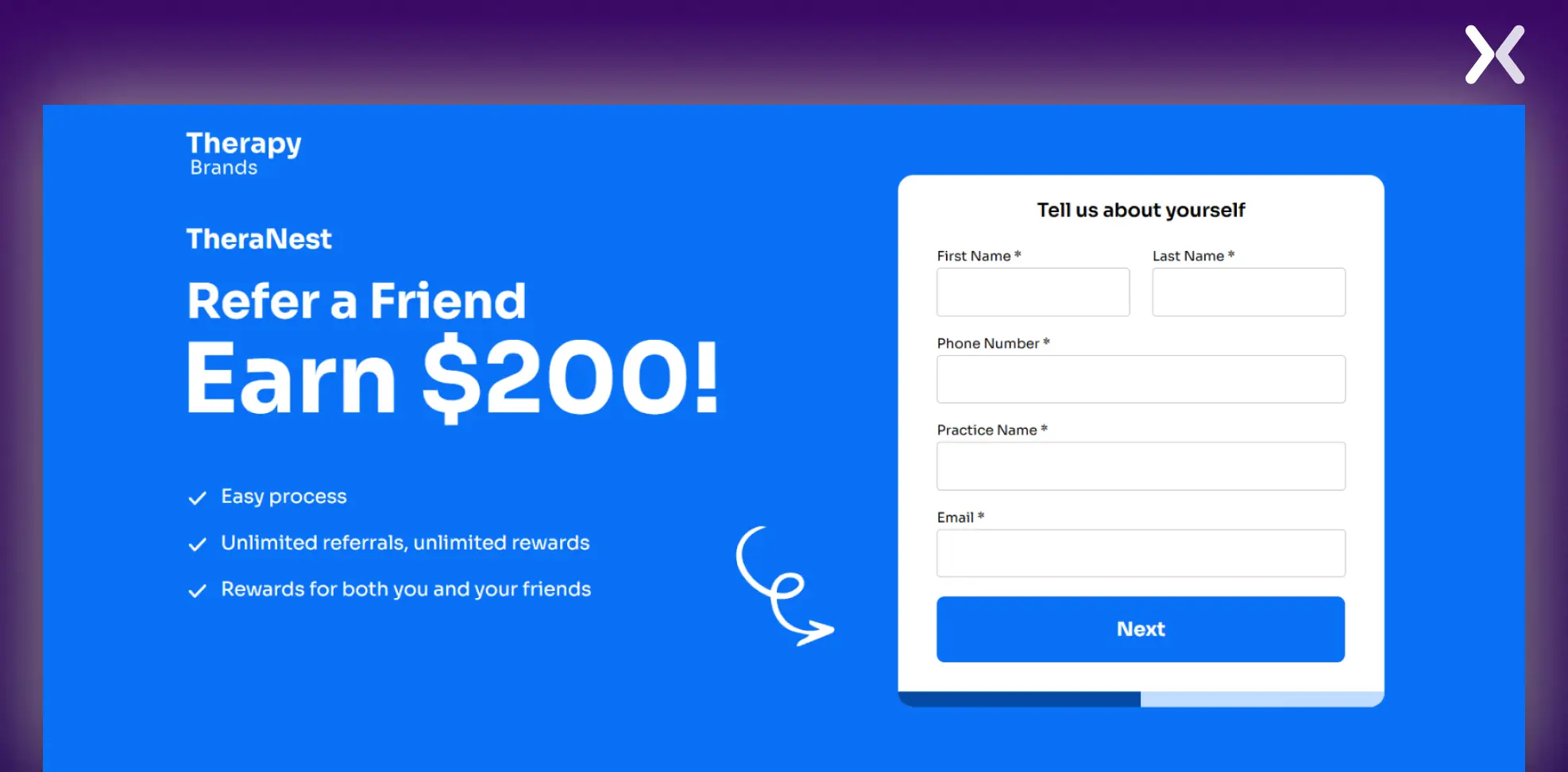 The page communicates the eligibility requirements and explains when credits are awarded, making sure transparency and helping participants understand how the reward system works.
 Also, the top fold accents in bullet points how the referral program can benefit the user.
How to set up a referral program with a landing page?
Setting up a referral program using a landing page can be a smart and cost-effective way to grow your audience and reward existing customers. Here’s how you can approach this using two methods:
1. Using referral program tools
Referral program tools simplify the process and often come with advanced features. They can help you automate tracking, reward distribution, and analytics. Here are two popular options:
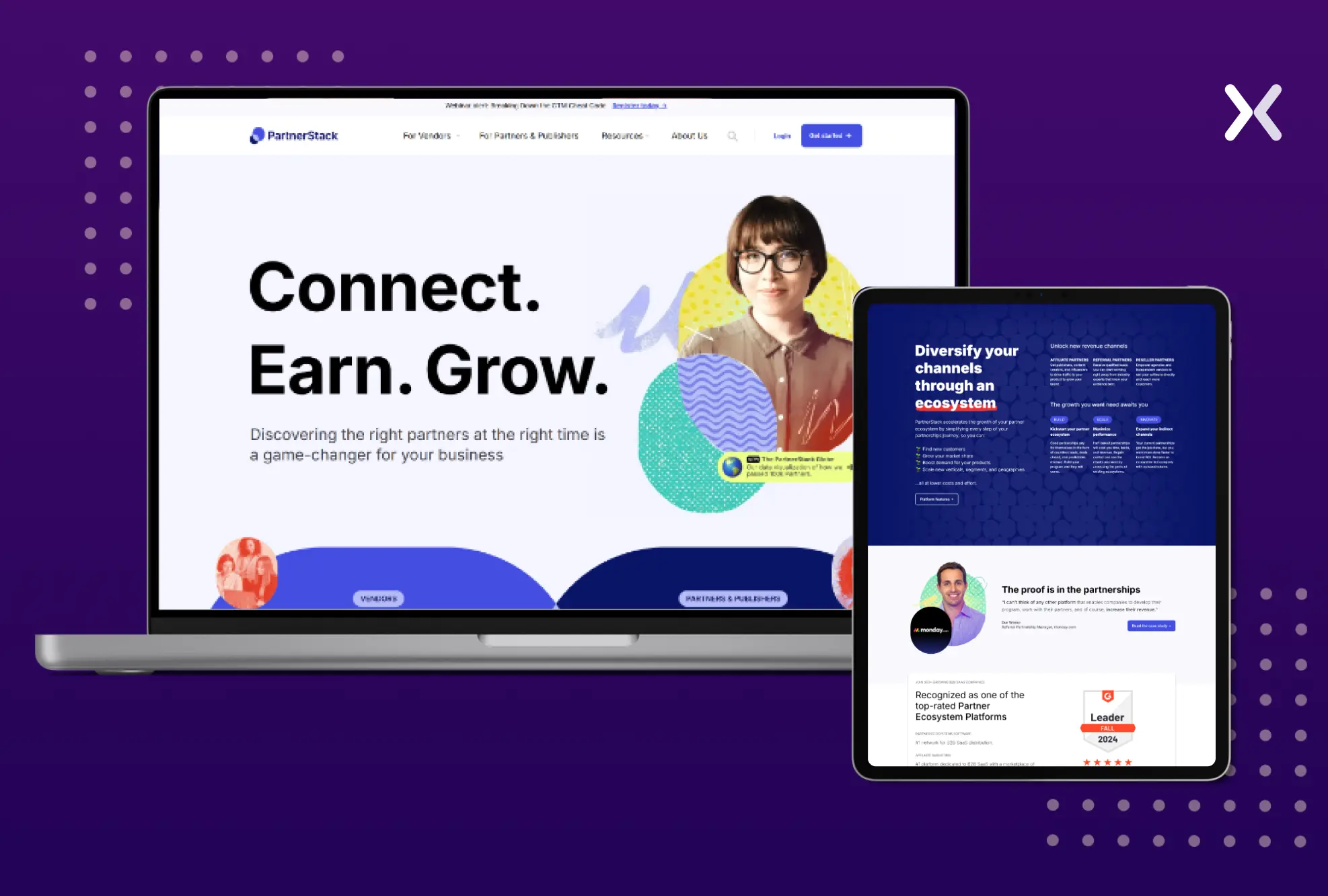
- PartnerStack is a powerful referral platform designed for B2B and SaaS companies, enabling businesses to manage referrals, affiliates, and reseller partnerships all in one place. It integrates smoothly with popular CRMs like HubSpot and Salesforce, making sure smooth tracking and analytics. PartnerStack also provides a dedicated partner portal, making it easy for users to manage their referrals and rewards, which is ideal for businesses with complex sales cycles or needing to scale their referral efforts. They offer free demos and trials to check out the tool.
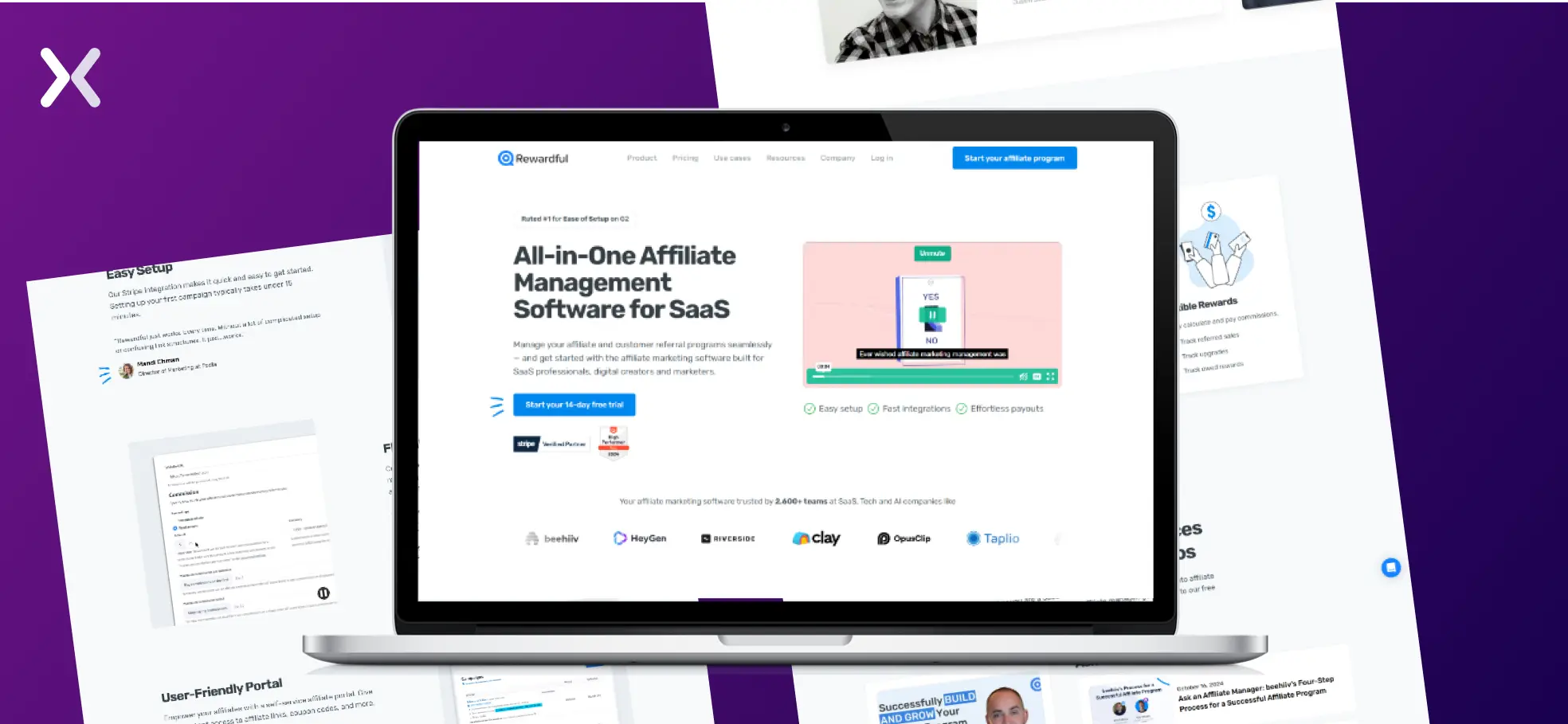
- Rewardful is explicitly tailored for subscription-based businesses, offering a simple yet effective way to manage referral and affiliate programs. It integrates directly with payment platforms like Stripe and Paddle, allowing companies to reward customers through flexible structures such as recurring commissions or one-time payouts. Its lightweight design and real-time analytics make Rewardful a practical choice for SaaS businesses looking to simplify their referral operations.
 While these tools often require a subscription and are expensive, they save time and make sure accuracy in tracking. For businesses prioritizing scalability, they can be effective.
2. Creating a referral program with a landing page
A referral landing page can work wonders if you prefer a more hands-on and cost-effective approach. Here’s how to set it up:
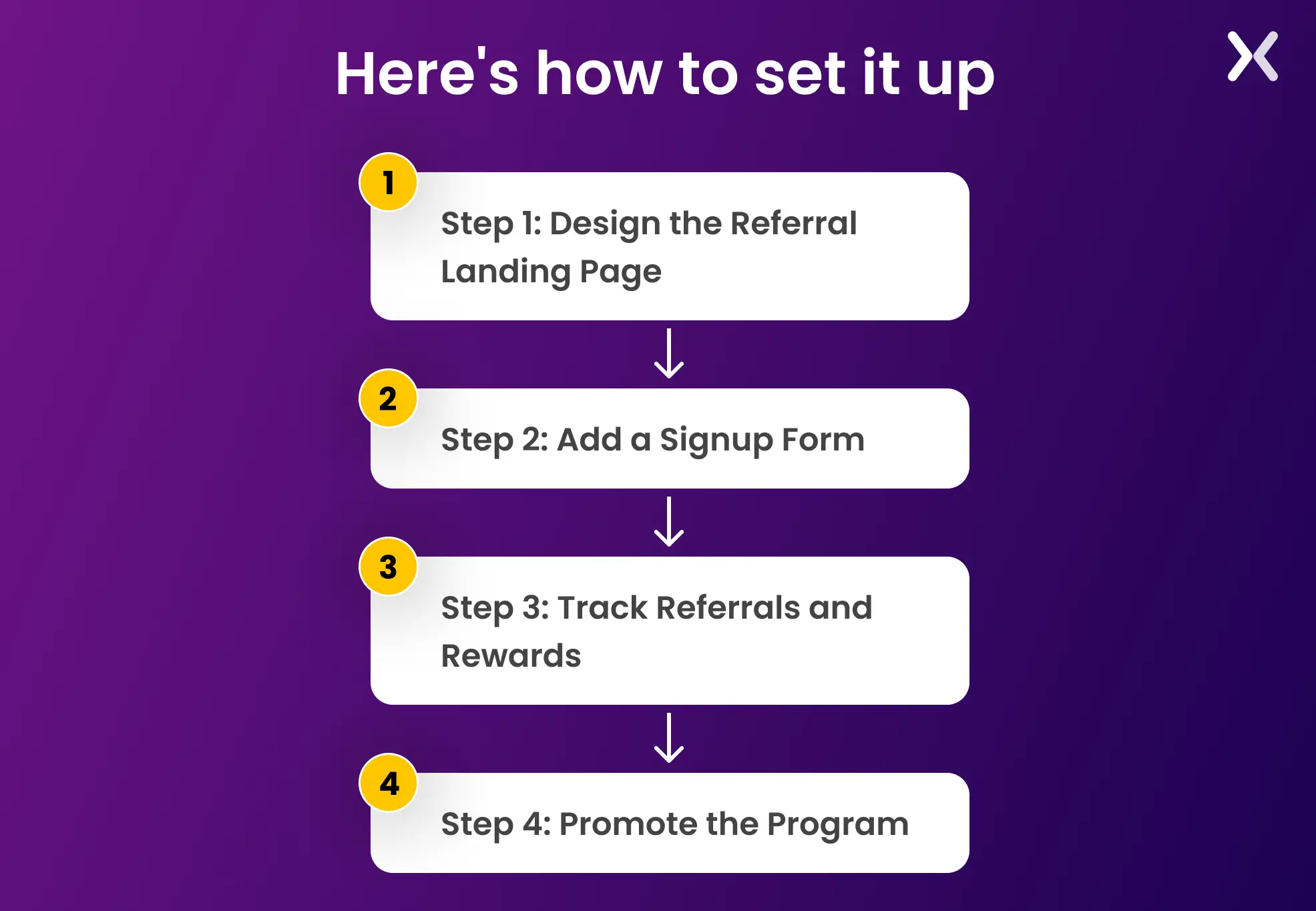
Step 1: Design the Referral Landing Page Create a clear and attractive landing page. Use a catchy headline like “Invite Friends, Earn Rewards!” and a short description explaining how the program works. Add visuals or icons to make the process easy to follow.
Step 2: Add a Signup Form Include a simple form where users can enter their name and email. After signing up, they should get a unique referral link or code to share. Keep it quick and user-friendly. Don’t forget to add a thank you page after the signup form.
Step 3: Track Referrals and Rewards Track referrals using tools like Google Analytics or custom scripts. Automate rewards, such as sending discount codes or cashback, to keep the process smooth for everyone.
Step 4: Promote the Program Share the referral page via email, social media, and website pop-ups. Make it easy for users to find and join the program, making sure maximum participation.
Ready to build a referral landing page?
To wrap up, a good referral landing page is critical to getting the most out of your referral program. By making things clear and easy to use, you can present the perks of your program while getting customers to join. The examples discussed show different effective methods, such as clear messages, good rewards, and simple designs, which can increase the number of people who use your page and sign up. If you’re starting or want to improve your current program, paying attention to these main points will help you create a strong tool that grows your business through people telling others about it.
Related Articles: