Key Takeaways
- Landing pages drive conversion with a single CTA and minimal navigation. Homepages introduce your brand with broad exploration paths.
- Rule of thumb: paying for traffic → landing page. Earning traffic → homepage.
- Sending PPC traffic to your homepage instead of a dedicated landing page wastes ad spend — when DOOR3 switched, their cost per lead dropped 76%.
- Landing pages and homepages are not interchangeable. Each serves a specific role in your marketing funnel.
Spoiler alert: Simply redirecting your PPC ads to a homepage doesn’t magically change it into a landing page. What is the difference between a landing page and a homepage? A simple business ideology settles the landing page vs homepage argument: intention. These two serve different purposes, each tailored to achieve specific business goals. Here’s the simplest rule to remember:
If you’re paying for the traffic → use a landing page. If the traffic is finding you → use your homepage.
We’re breaking down the key difference between a landing page vs homepage in practical terms, definitions, essential elements, and how to position them in your marketing funnel for maximum results. Starting with the basics.
What’s the difference between a landing page and a homepage?
The key difference between a landing page and a homepage is that landing pages drive conversion, while homepages focus on brand awareness. That’s why:
-
Landing pages have a single CTA, but homepages have many.
-
Landing pages have no external links, but homepages have many.
-
You can have plenty of landing pages but only one homepage.
-
Landing pages are for targeted marketing; homepages are for everyone. Think of it this way: a homepage is like a hotel lobby information desk, it helps people find what they’re looking for across the entire building. A landing page is the room itself, purpose-built for one specific guest with one specific need. In the example, you can see how DOOR3’s homepage significantly differs from its landing page.
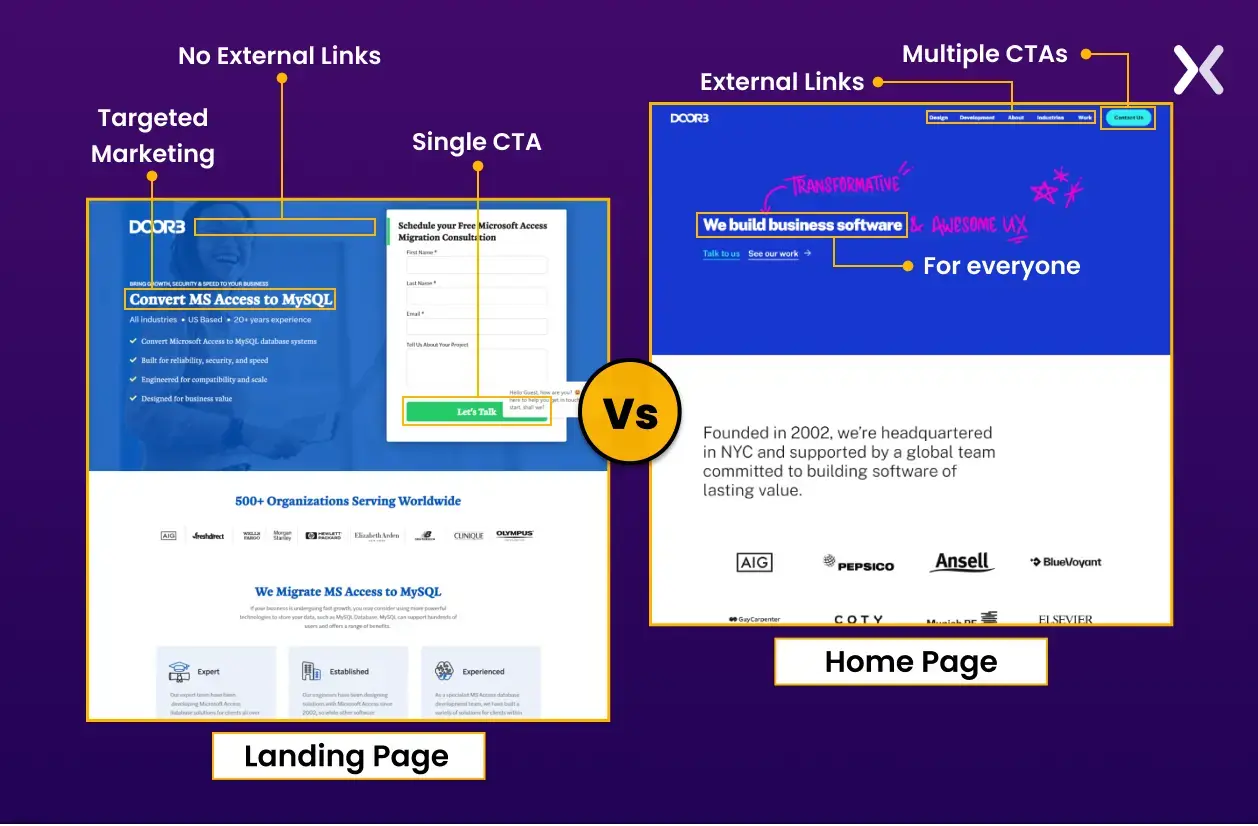 If a few points are still puzzling you, no sweat. We’ve broken them down into different sections for a straightforward ride. !
Landing page vs homepage through definitions
It is fundamental to understand the definitions of a landing page vs homepage. This will are our jumping-off point.
What is a landing page?
A landing page is a standalone web page designed for a specific marketing or advertising campaign. It’s crafted to prompt a targeted action, often featuring a single call-to-action (CTA), such as filling out a form, making a purchase, booking a demo, or signing up for a newsletter. Landing pages are purpose-built to improve conversion rates and are a focused entry point for visitors from various sources like online ads, emails, or social media. Another way to think about it: a landing page is like a pop-up shop, it exists for one purpose, one promotion, and one audience. When the campaign is done, you can take it down or swap it out.
What is a Homepage?
A homepage is a website’s main or introductory page, the starting point for navigation. It typically provides an overview of the site’s content and directs users to various sections or pages. Search results and SEO efforts often drive homepage traffic. By contrast, a homepage is like a department store, it serves many types of visitors, offers many paths, and helps people discover products and services they didn’t even know they needed.
Goal of a landing page vs homepage
A successful marketing campaign hinges on well-defined goals. The distinct objectives of landing pages and homepages are key, deeply influencing their content, context, and design. The clarity of these goals is the compass guiding the trajectory of a campaign’s success.
What is the goal of a landing page?
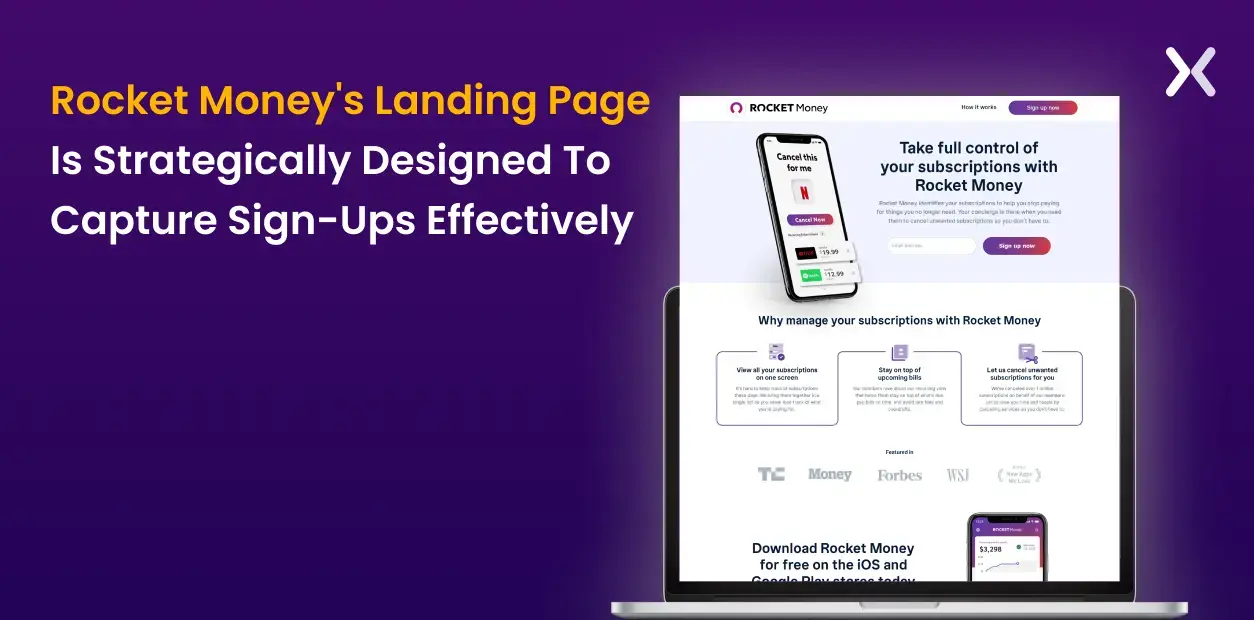
Conversions. Plain and simple. Landing pages aren’t about boosting brand awareness or presenting accomplishments. Their sole purpose is conversion, turning visitors into leads, leads into clients, and clients into advocates. Whether it’s a pre-launch sign-up or newsletter subscription, a dedicated landing page outperforms a homepage in driving both micro and major conversions. It’s a non-negotiable asset for any conversion-centric marketing campaign. Check out RocketMoney’s landing page built by Apexure. Did you notice how simple and clean we have kept the form and design?
What is the goal of a homepage?
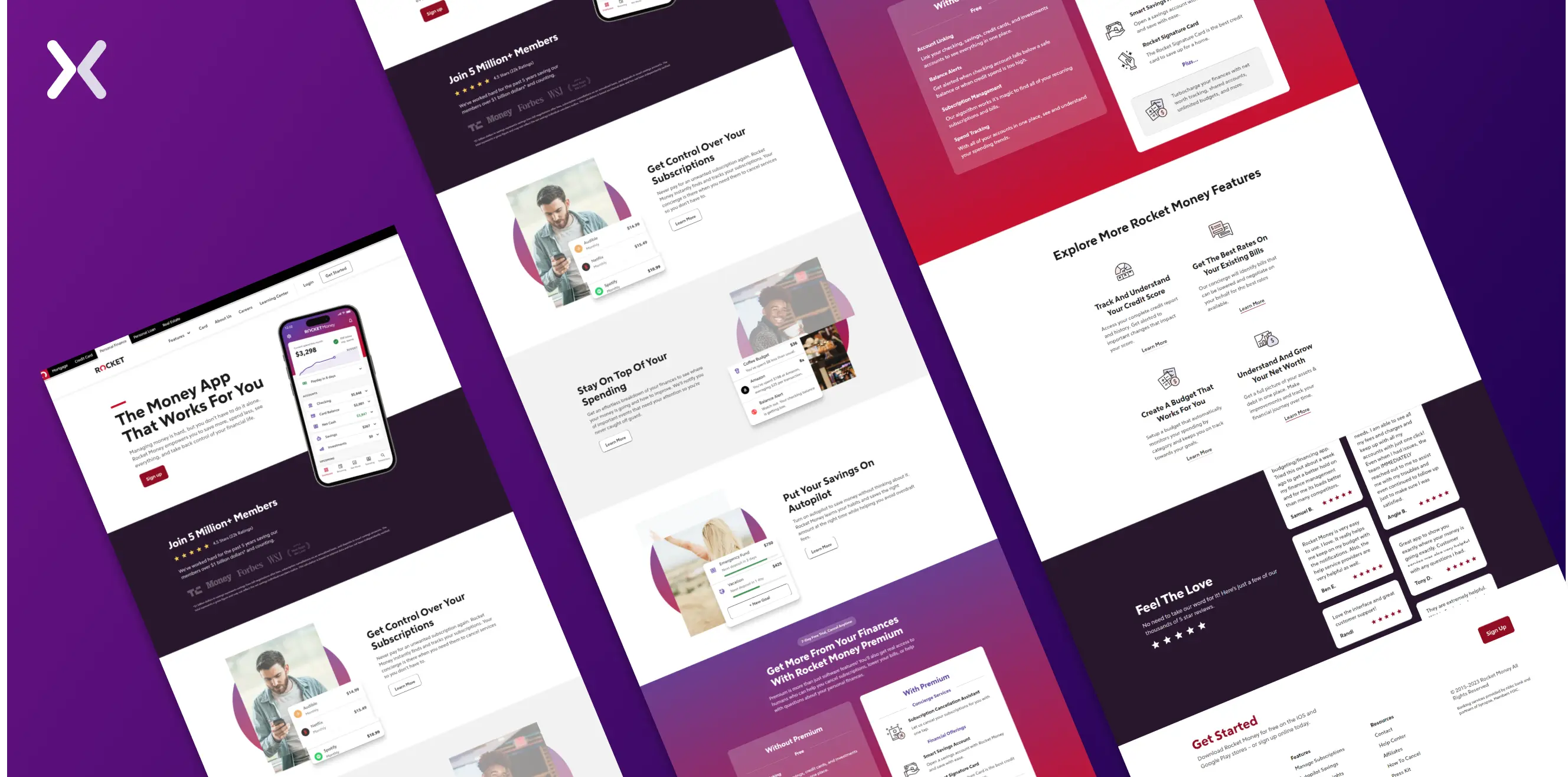
Inspire exploration. Think of the homepage as your digital storefront in the market. Just like in a physical shop, visitors judge your brand based on appearance and content. It’s the starting point where the story unfolds, introducing visitors to your brand, services, and mission. The homepage is the gateway to your brand’s content, building a connection with your clientele. Here, check out the homepage of RocketMoney, which is all about encouraging visitors to explore the website and learn everything about the brand and its products.
Target audience of a landing page vs homepage
Designing homepages and Landing pages involves aligning them with the needs of your target audience. The specific types of audiences these two web pages target.
Who is the target audience of a landing page?
A specific audience segment. Every brand serves a diverse target audience, each with unique characteristics, varying from geographical locations to job profiles. Each segment possesses unique pain points and triggers for converting. Attempting to address all on a single page falls short. Landing pages, being standalone, provide the flexibility to create dedicated pages for diverse audience segments. It improves personalization, significantly increasing the chance of conversions by respecting diverse opinions and tailoring experiences accordingly. In short, targeting the right intent.
Here is how Apexure applies the above in its projects:
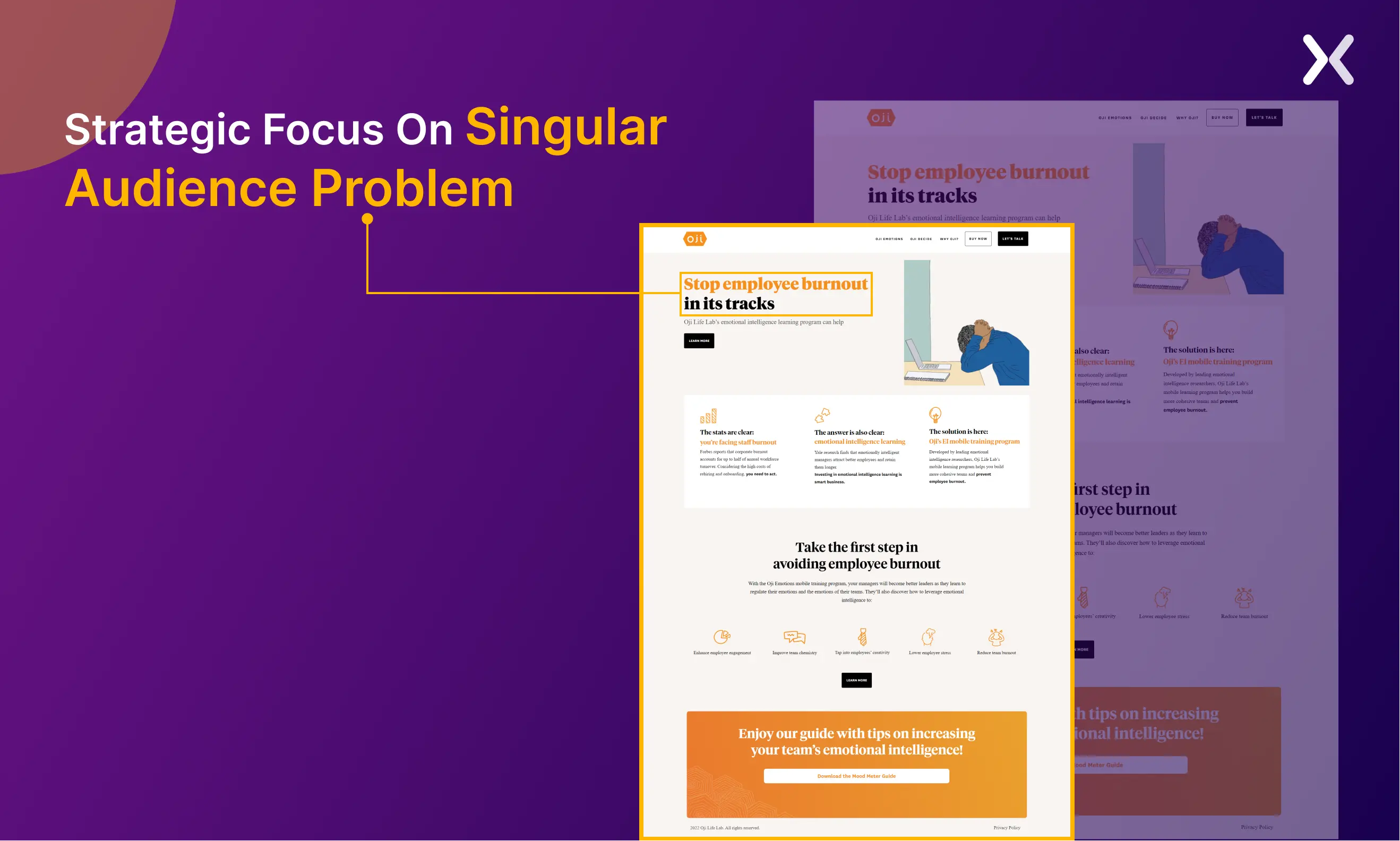
At Apexure, we’ve built over 1,000 landing pages, and one pattern we see repeatedly is that the more targeted the page, the higher the conversion rate. For example, when we worked with Wealth Hub Australia. We didn’t build one landing page. We built 8 different variations, each targeting a different audience segment with different messaging, imagery, and CTAs. The result? Each page spoke directly to its intended audience instead of trying to be everything to everyone. Similarly, for Flare. We created 5 landing page variations for the same product, each tailored to a different buyer persona. Oji Life Labs is a standout in corporate training. In a recent campaign addressing employee burnout, we built a landing page for them that marked the necessary role of strong managerial soft skills in overcoming the challenge and demonstrating how Oji Life Lab can assist companies in training their managers accordingly. This strategy revolves around honing in on a specific problem that strongly matches their audience. As one of our clients at Device42 put it:
“Waseem went above and beyond for us, producing stellar landing pages that will boost conversions.”
Who is the target audience of a homepage?
Anyone. The target audience of a homepage is broad, covering all visitors who land on the main page of a website. Unlike the specialized focus of landing pages tailored to specific campaigns, homepages serve a diverse range of users seeking an introduction to the overall content and offerings of the website. The target audience for a homepage is anyone who initiates their journey on the site and seeks a full overview. In contrast to their landing page, Oji Life Lab’s homepage offers a full introduction to the company’s varied services, with a specific emphasis on individuals in leadership roles and companies of diverse sizes, ranging from 10 to 50 employees.

Ad relevancy: why landing pages win for paid campaigns
Here’s something most marketers overlook: ad relevancy. Imagine someone searches for “Nike Air Force 1 white” and clicks your ad. If that ad sends them to Nike’s homepage, what happens? They land on a page featuring the latest Jordan collection, seasonal promotions, and navigation to 50 product categories. The visitor has to hunt for the exact shoe they searched for. Now imagine that same click goes to a landing page featuring only the Nike Air Force 1 in white, with pricing, sizing, reviews, and a single “Add to Cart” button. The match between search intent, ad copy, and page content is perfect. That’s ad relevancy, and it’s why Google rewards dedicated landing pages with higher Quality Scores and lower cost per click. The landing page matches the promise made in the ad. The homepage doesn’t.

Dynamic content for different audiences
This is also where landing pages give you an unfair advantage over homepages: dynamic content. With a landing page, you can swap headlines, hero images, and CTAs based on the traffic source. A visitor from a Google Ad searching “accounting software demo” sees a headline about demos. A visitor from a LinkedIn campaign sees a headline about enterprise pricing. Same product, different entry points. You can’t do that with a homepage without breaking the experience for your organic visitors. We do this regularly at Apexure across industries, from financial services to SaaS to healthcare. Browse our full portfolio of 1,000+ landing pages to see how we tailor pages for different audiences and industries.
Traffic on a landing page vs homepage
The audiences for your landing page and homepage reside in distinct phases of the conversion funnel, drawing traffic from both organic and paid sources. While organic traffic may be cost-effective, paid ads need to deliver results. The landing page addresses this challenge effectively.
Traffic on a landing page
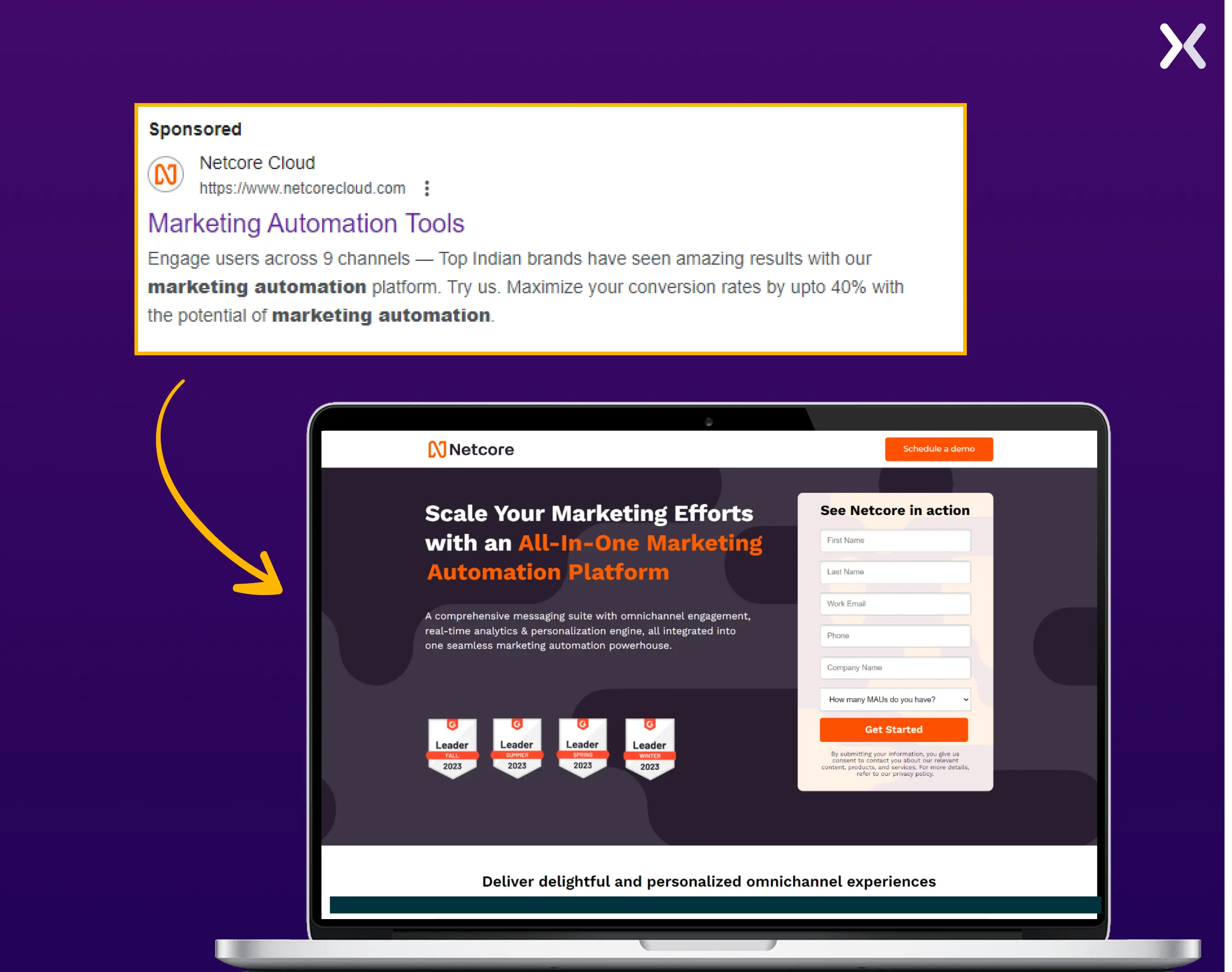
Landing pages, designed for optimal conversions, are deliberately employed with paid ads to raise conversion rates, commonly known as PPC landing pages. However, the versatility extends beyond PPC, as businesses can also optimize them for search engines, attracting organic traffic effectively.
Traffic on a homepage
Homepages attract traffic through various channels, including direct visits where users type in the URL, search engines where they discover the site through relevant queries, referrals from other websites or social media platforms, and engagement via online advertising. This diverse mix of sources stresses the importance of a full online presence and effective digital marketing strategies.
Navigation on a landing page vs homepage
Clear navigation is necessary for a positive user experience, accessibility, content discovery, conversion optimization, SEO performance, and brand credibility. It acts as a virtual roadmap, guiding users through the digital space efficiently. But then, why should a landing page not have navigation?
Navigation on a landing page
It is deliberately simplified and focused. A landing page navigation menu should differ from the rest of the site. Unlike a website’s homepage, which typically has extensive navigation menus, a landing page aims to guide visitors toward a specific action. The navigation is often minimal, stressing a singular call-to-action (CTA) to improve clarity and reduce distractions. Navbars typically brim with links to various pages, but on landing pages, the goal is to retain visitors for conversion. Hence, external navigation is removed. Every link on a landing page that isn’t your CTA is a leak in your conversion bucket. The only navigation that should occur is to a thank you page, and even that happens only after a successful conversion.
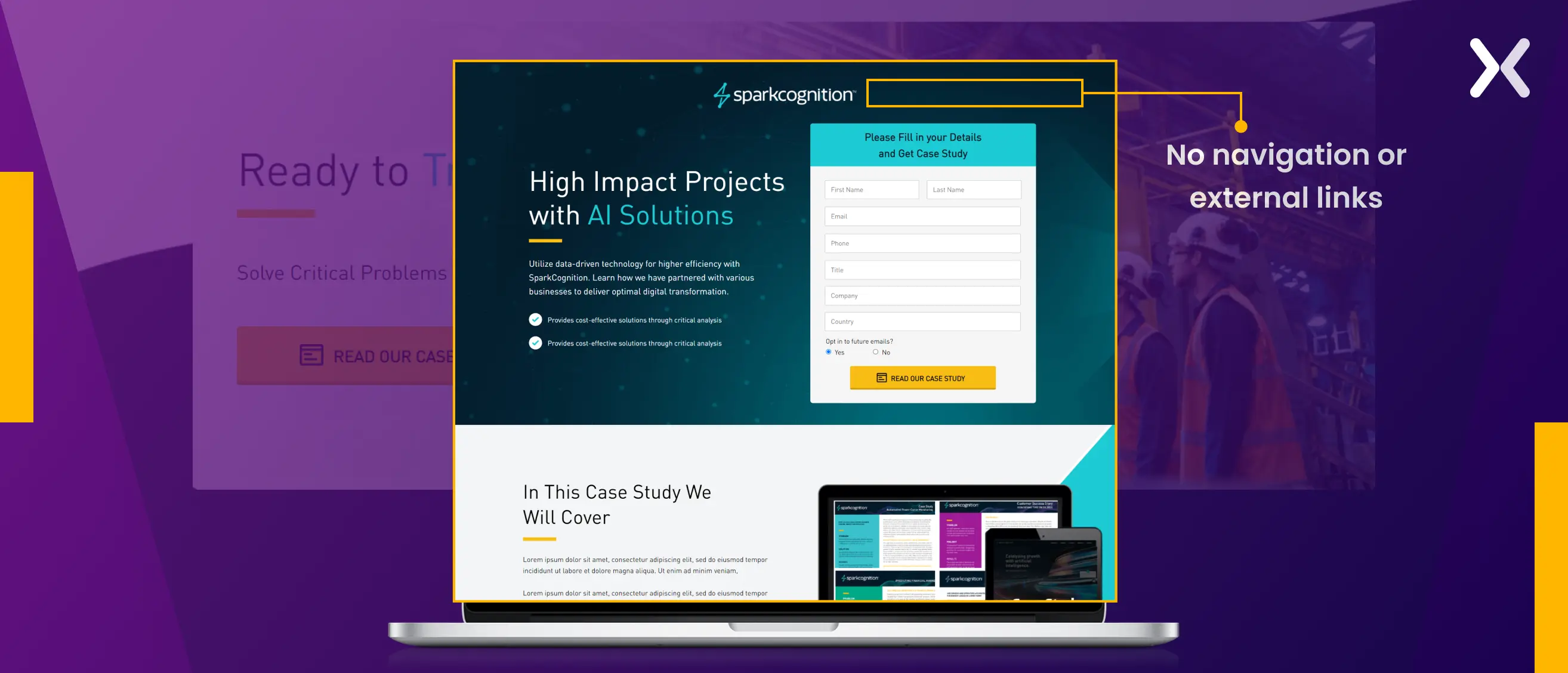 It holds particularly true for short-form landing pages.
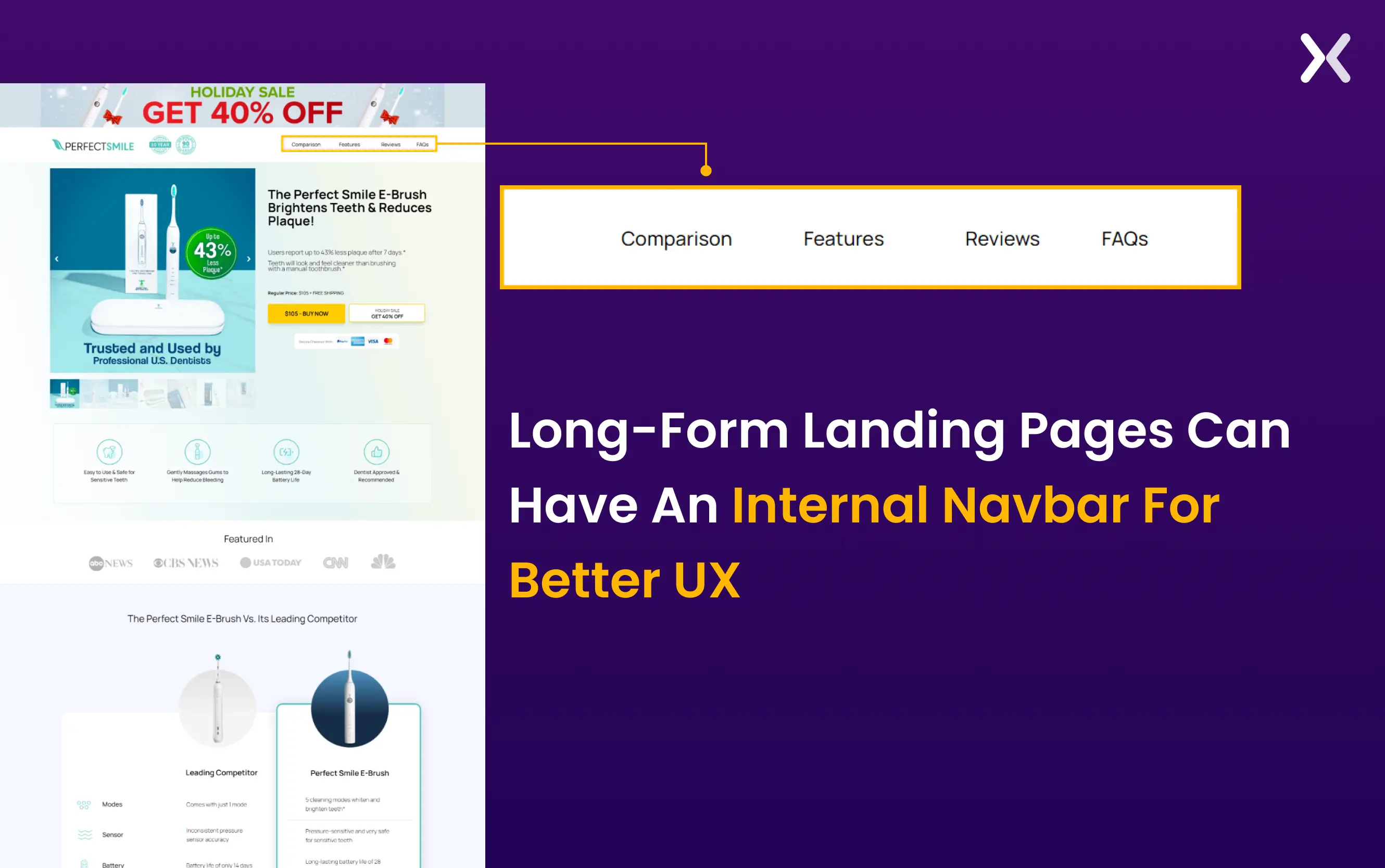
However, for longer ones with multiple sections, an internal navbar is introduced for easy exploration within the page. It makes sure a user-friendly experience on extended landing pages.
It holds particularly true for short-form landing pages.
However, for longer ones with multiple sections, an internal navbar is introduced for easy exploration within the page. It makes sure a user-friendly experience on extended landing pages.
Navigation on a homepage
Homepage navigation (featuring a menu bar, direct links, call-to-action buttons, a search bar, and visual elements) is complemented by a dedicated footer and header. These sections share links that aid users in getting acquainted with the brand, building a full experience. In Apexure’s homepage designs, navigation is key, we view the homepage as an information desk where visitors enter, seeking specific brand-related queries, and smoothly proceed to the relevant page. For this to work well, the homepage navigation has to be clear and easy to understand.
Structure of a landing page vs homepage
Understanding the structural differences helps you see why these pages convert so differently.
Structure of a landing page
A high-converting landing page follows a deliberate, linear structure:
- Hero section, headline matching the ad or campaign promise, supporting subheadline, and a primary CTA above the fold
- Problem/solution, articulate the pain point your audience feels, then position your offer as the solution
- Social proof, testimonials, logos, case study results, or trust badges
- Benefits & features, what the visitor gets, framed around outcomes not features
- CTA repetition, the same call-to-action repeated 2-3 times as the visitor scrolls
- Objection handling, FAQ or guarantee section to address last-minute hesitation There’s no sidebar, no footer full of links, no “About Us” section, everything funnels toward one action.
Structure of a homepage
A homepage has a more expansive structure:
- Header with full navigation, links to every major section of the site
- Hero section, brand-level messaging (who you are, what you do)
- Service/product overview, snapshots of your key offerings with links to learn more
- Social proof, client logos, press mentions, awards
- Content hub, links to blog posts, resources, case studies
- Footer, contact info, sitemap, legal links, social media The homepage serves multiple visitor intents simultaneously, which is its strength for organic traffic and its weakness for paid campaigns.

SEO for landing page vs homepage
Search engine optimization (SEO) is a necessary term for organic traffic. Let’s try to understand what value it holds for landing pages and homepages.
SEO for landing page
It is advisable not to mix them up. SEO allows you to rank at the top of the SERPs, which ultimately invites a broad audience to your web page. You certainly don’t want that for your landing page. A landing page is like a testing ground where you can change an element, monitor it for some time, and decide whether that element adds value to your TARGET AUDIENCE’s user experience or not. You can replicate such elements on your main website. An indexed landing page restricts your flexibility by surrendering control over your traffic sources. While it provides a wealth of data, this information may not necessarily be valuable due to the constrained control over traffic origins.
SEO for homepage
These are best friends. You need to SEO your homepage as it improves visibility, attracts organic traffic, and establishes credibility. Contrary to landing pages, which may focus more on specific campaigns or offers, a homepage is the virtual front door to your entire website. Therefore, it’s necessary to implement SEO strategies on your homepage for various reasons. SEO is the key to making sure your homepage is easily discoverable by everyone.
Necessary metrics for landing page vs homepage
Like any marketing campaign, homepages and landing pages have KPIs and metrics that demand close attention. Tracking and analyzing these key performance indicators are essential for evaluating the effectiveness of the pages and optimizing them for desired outcomes.
Metrics for landing page
Can you guess the most necessary metric for a landing page? Undoubtedly. It’s the conversion rate. No matter which industry the landing page belongs to be it SaaS, finance, or any other, the ultimate measure of a it’s success lies in the number of conversions it generates for the business. The engagement rate of a landing page is a valuable indicator of its UI/UX status, providing insights into whether design adjustments are necessary. Beyond conversion rate, here are the landing page metrics that matter most:
- Cost per conversion, what you’re actually paying for each lead or sale
- Scroll depth, how far visitors get before dropping off (are they even seeing your CTA?)
- Form completion rate, for lead gen pages, the percentage who start vs. Finish the form
- Heatmap data, where visitors click, how far they scroll, and where they rage-click
- Bounce rate, the percentage leaving without any interaction
- A/B test lift, the percentage improvement from your variant over the control
 In the comparison above, we observe how landing page metrics vary based on specific needs. Austin at Loomly prioritizes optimizing ROI in PPC campaigns, centering on the analysis of landing page metrics necessary from a PPC perspective, like bounce rate and ad strength.
In contrast, a landing page agency places emphasis on identifying specific issues through tools like heatmaps, examining scroll depth, rage clicks, and other factors to improve the overall effectiveness of a landing page.
In the comparison above, we observe how landing page metrics vary based on specific needs. Austin at Loomly prioritizes optimizing ROI in PPC campaigns, centering on the analysis of landing page metrics necessary from a PPC perspective, like bounce rate and ad strength.
In contrast, a landing page agency places emphasis on identifying specific issues through tools like heatmaps, examining scroll depth, rage clicks, and other factors to improve the overall effectiveness of a landing page.
Metrics for homepage
When assessing a homepage’s effectiveness, two critical metrics are Bounce Rate and Average Session Duration.
 The bounce rate, representing the percentage of visitors departing without further interaction, is a litmus test for content and relevance. Simultaneously, the average session duration gauges user engagement, with a longer duration signaling active exploration.
These metrics provide vital insights for refining the homepage, making sure it captivates users and fits desired goals.
The bounce rate, representing the percentage of visitors departing without further interaction, is a litmus test for content and relevance. Simultaneously, the average session duration gauges user engagement, with a longer duration signaling active exploration.
These metrics provide vital insights for refining the homepage, making sure it captivates users and fits desired goals.
When should you use a landing page vs a homepage?
Both homepages and landing pages are vital components of your online strategy. But using the wrong one at the wrong time wastes budget and kills conversions.
Use a landing page when:
- You’re running paid ads (Google Ads, Facebook, LinkedIn). This is non-negotiable
- You’re launching a specific campaign with one offer and one audience
- You want to A/B test messaging, design, or CTAs without affecting your main site
- You’re promoting a webinar, ebook, free trial, or demo
- You need to create audience-specific messaging (e.g., 8 variations like we did for Wealth Hub Australia)
- You want to measure ROI precisely, one traffic source, one conversion goal, clean data
Use your homepage when:
- Visitors arrive via organic search or direct traffic (typing your URL)
- You want to establish brand credibility for first-time visitors
- You need a hub that connects all your services, content, and resources
- You’re building SEO authority through internal linking and content hierarchy
Where NOT to use a homepage:
- PPC campaigns, sending paid traffic to a homepage is like paying for a billboard that says “come inside and look around.” You’re paying per click; make every click count.
- Email campaigns with a specific offer, if your email promotes a specific discount or resource, the landing page should deliver exactly that, not a general brand overview.
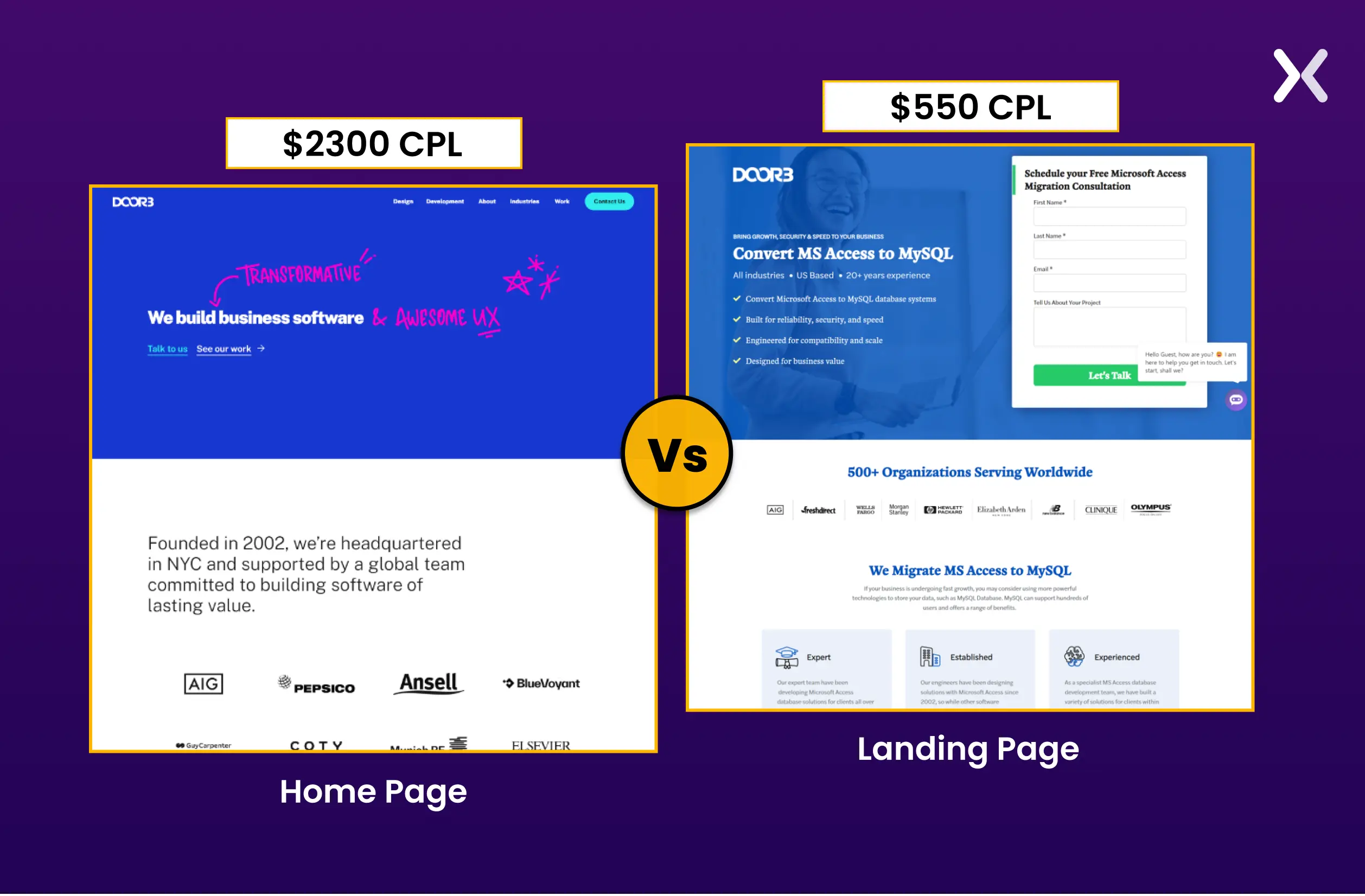 Let’s dig into a strong case study that stresses the impact of strategic landing page use on your marketing budget. Take the example of DOOR3, a tech consulting company that initially directed all their paid traffic to their website, resulting in a staggering cost per lead of $2,300.
Upon joining forces with Apexure, a major shift occurred. By deliberately introducing well-crafted landing pages and offering full support for landing page optimization, the cost per lead plummeted to $550, a 76% reduction. The results speak volumes about the potency of using dedicated landing pages to improve marketing efficiency.
And DOOR3 isn’t an outlier. Here are two more results from our landing page projects:
Let’s dig into a strong case study that stresses the impact of strategic landing page use on your marketing budget. Take the example of DOOR3, a tech consulting company that initially directed all their paid traffic to their website, resulting in a staggering cost per lead of $2,300.
Upon joining forces with Apexure, a major shift occurred. By deliberately introducing well-crafted landing pages and offering full support for landing page optimization, the cost per lead plummeted to $550, a 76% reduction. The results speak volumes about the potency of using dedicated landing pages to improve marketing efficiency.
And DOOR3 isn’t an outlier. Here are two more results from our landing page projects:
- Board Agenda, a B2B publication that achieved a 27.89% conversion rate on their landing page. That’s nearly 6x the average B2B conversion rate.
- Radicle Science, a clinical trials platform where our landing page hit a 51.78% conversion rate. More than half of all visitors converted. These numbers are impossible with a homepage. When you strip away the distractions and match the page to one specific intent, conversions follow.
 Distinguishing the intentions behind a landing page and a homepage is necessary. The homepage is the face of your brand, tailored to provide information for new visitors, typically covering your general background, recent news, or notable achievements.
Do you need a website to have a landing page?
No, and this is one of the most common misconceptions we hear.
A landing page is a standalone page. It doesn’t need to live inside a website. You can host it on platforms like Unbounce, Instapage, Swipe Pages, or even on a subdomain (like lp.yourbrand.com) without having a full website built.
This is especially useful for:
- Startups that need to validate an idea before investing in a full site
- Event promoters running a one-time campaign
- Businesses testing new markets before committing to a full web presence At Apexure, we’ve built landing pages on virtually every major platform, Unbounce, HubSpot, Webflow, WordPress, Shopify, Instapage, LeadPages, Wix, Swipe Pages, and GoHighLevel. The platform doesn’t matter as much as the strategy behind the page.
Landing page vs homepage vs website
These three terms often get conflated, so let’s clarify:
- Website, A collection of interconnected pages (homepage, about, services, blog, contact, etc.) that represent your entire online presence.
- Homepage, The front door of your website. One page. Introduces your brand, links to everything else.
- Landing Page, A standalone page. One goal. One CTA. Often exists outside your website’s navigation entirely. Here’s how they relate: your website is the whole building, your homepage is the lobby, and your landing pages are private meeting rooms, each set up for a specific conversation with a specific visitor. You need all three working together. The website builds authority. The homepage builds trust. The landing pages close deals.
The big question: is a landing page the same as a homepage?
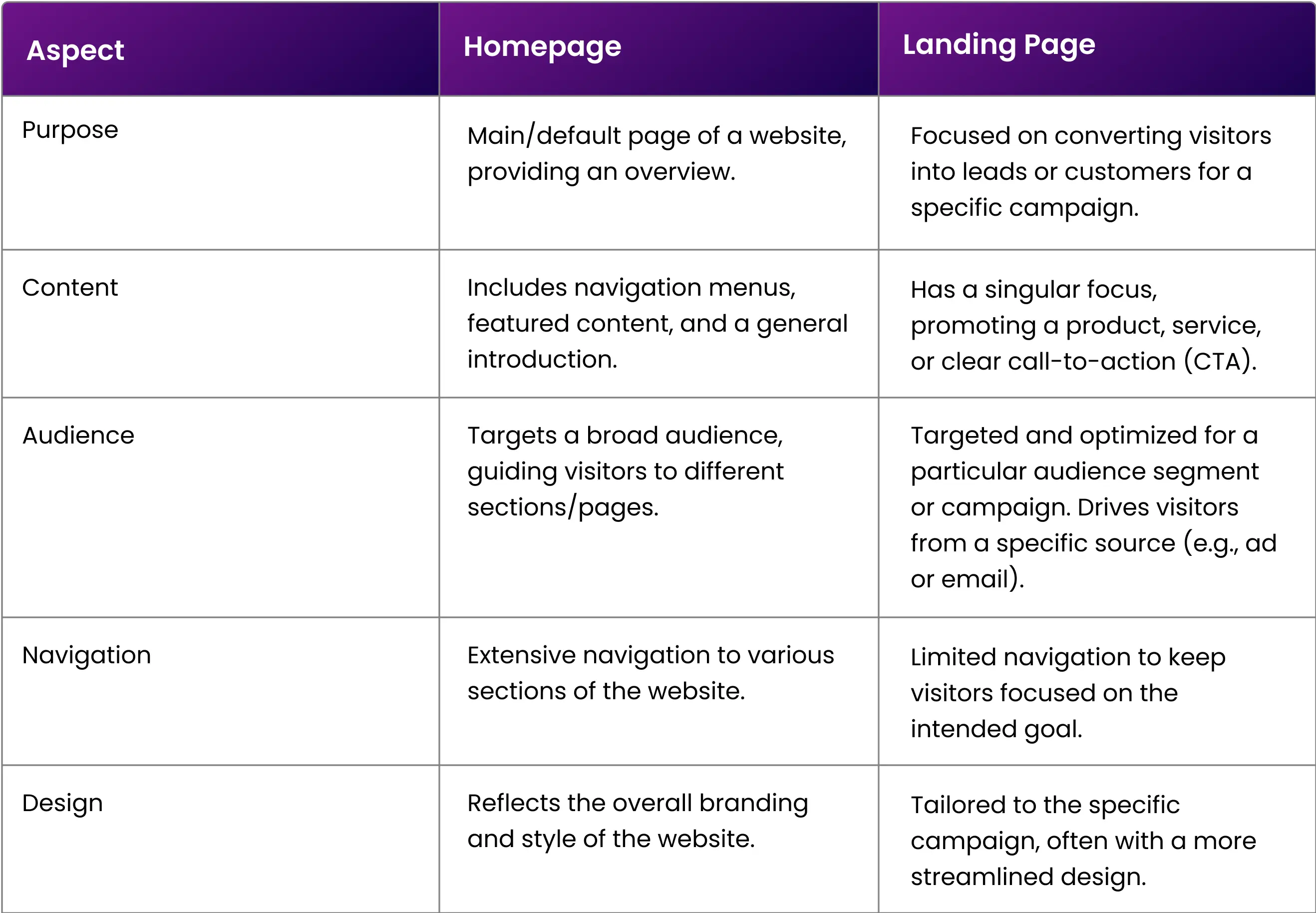
No, a landing page is not the same as a homepage. Here is a table to help you understand:
Can a landing page be a homepage?
While it’s technically possible for a landing page to are a homepage. They are typically designed for different purposes and have distinct characteristics. Both scenarios:
Landing page as homepage:
-
In some cases, especially for small businesses or single-product websites, a landing page may function as the homepage.
-
The content on this landing page would need to serve the dual purpose of introducing visitors to the overall brand and providing a specific call-to-action (CTA).
-
Designing a landing page that accommodates both general brand information and a specific campaign goal can be challenging. It may result in a cluttered or less effective page. If you’re in the early stages of launching your startup and find yourself short on time or lacking a precise understanding of your target audience, we recommend considering either a landing page as your homepage or vice versa. Such a simplified approach can be particularly beneficial in the initial phases of your venture.
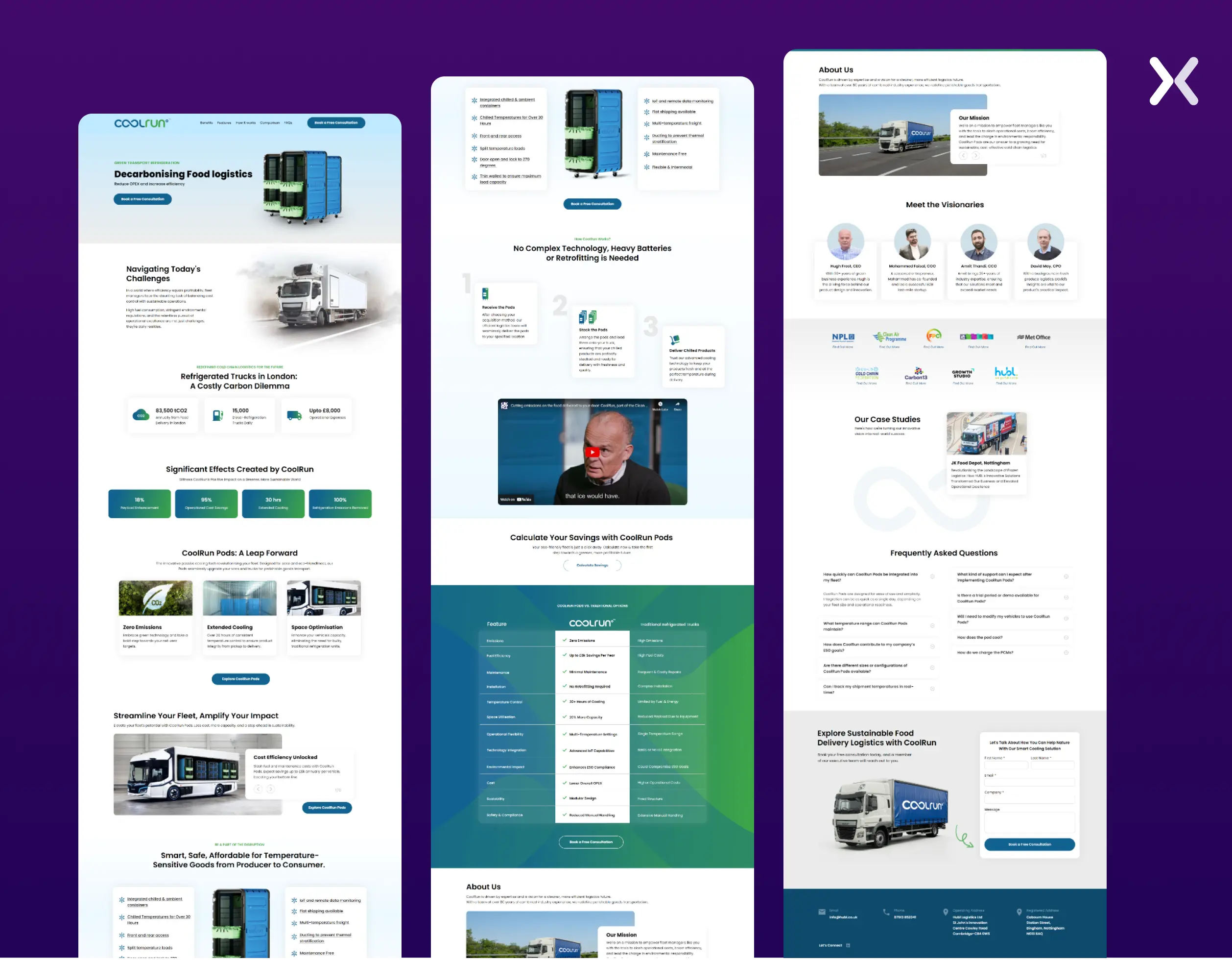
CoolRun does something similar. They’ve crafted an extensive landing page that offers full details about the company and its services. A top-mounted navigation bar improves navigation across the entire page, culminating in a single, deliberately placed call-to-action (CTA). (We built this page, see it in our portfolio.)
Dedicated landing page:
-
More commonly, a landing page is a standalone page created for a specific marketing campaign or promotion.
-
The landing page has a singular focus, aiming to convert visitors for a particular purpose, such as making a purchase or signing up for a service.
-
Landing pages often have limited navigation to keep visitors focused on the campaign goal.
Ready to choose between a landing page vs homepage?
The distinction between landing pages and homepages is key for every marketer. Landing pages are precision tools for targeted conversions, synced with PPC ads for optimal results. Homepages, on the other hand, are the welcoming face of your brand, offering a full exploration of your offerings. Redirecting PPC ads to a homepage won’t optimize conversion magic. The verdict is clear: landing pages and homepages are distinct entities designed for specific purposes, craft landing pages for focused conversions and homepages for broad brand exploration. Remember the rule: paying for traffic → landing page. Earning traffic → homepage. Get this right, and you’ll stop wasting ad spend and start converting more visitors into leads.
Need a Landing Page That Converts?
We build conversion-focused landing pages for PPC, social, and email campaigns. 3,000+ projects, 200+ five-star reviews, clients from startups to Fortune 500.
Book a Free Landing Page Audit →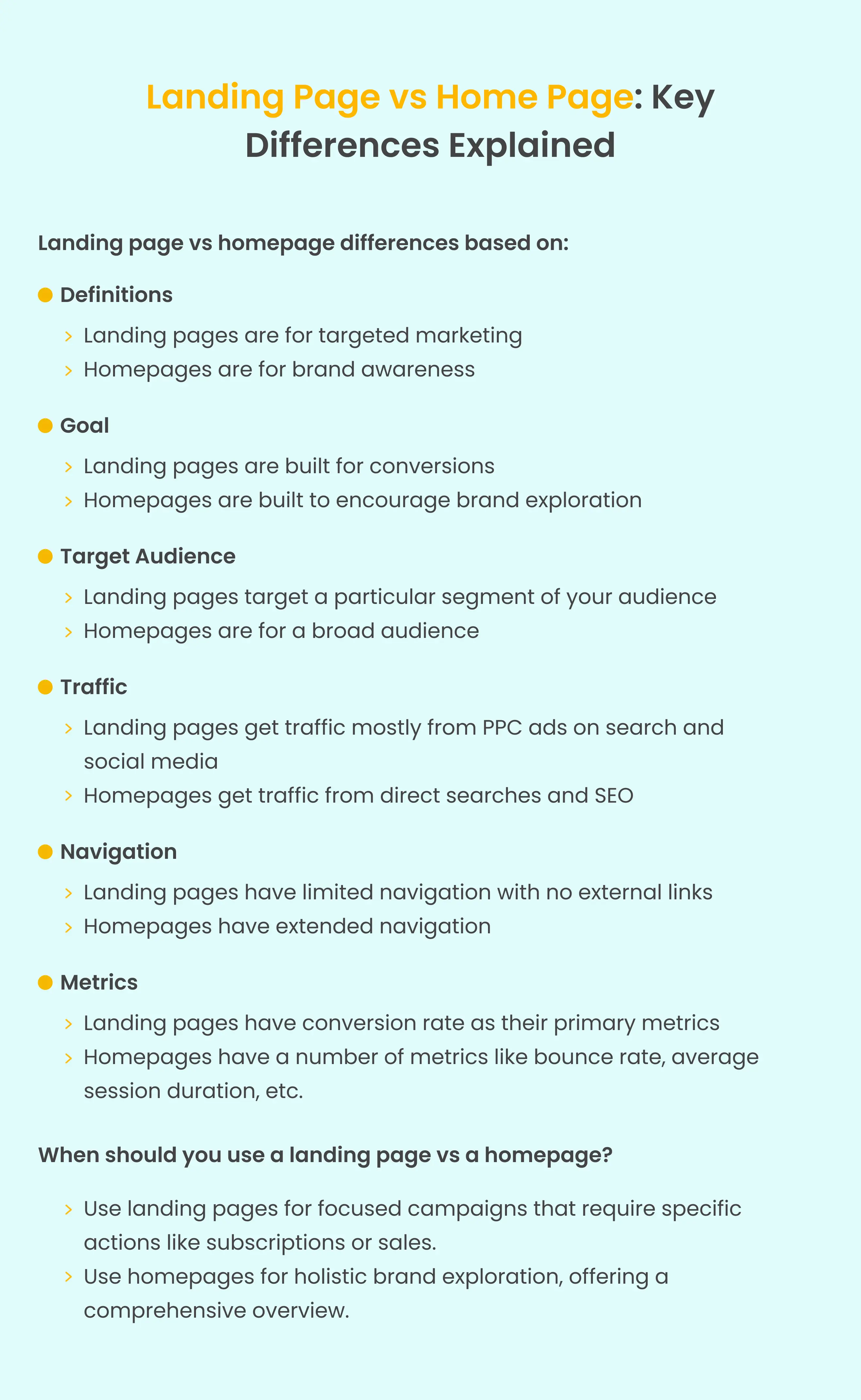
Check out our “Landing Page vs” Series: