A below-average Google Ads landing page experience can turn each click into a costly affair. It leaves you with a disappointing return on investment. Basically, more spending, less winning. Landing pages rank high among the top three must-haves for a successful PPC campaign. However, not many marketers understand which attributes describe a good landing page experience. We are here to help you with that. Ready for the basics?
What makes a good landing page experience?
Landing page experience refers to the overall satisfaction and relevance a user feels when they click on an ad and get directed to a specific landing page. Picture it as a key player in determining your quality score (stay tuned for more on that).
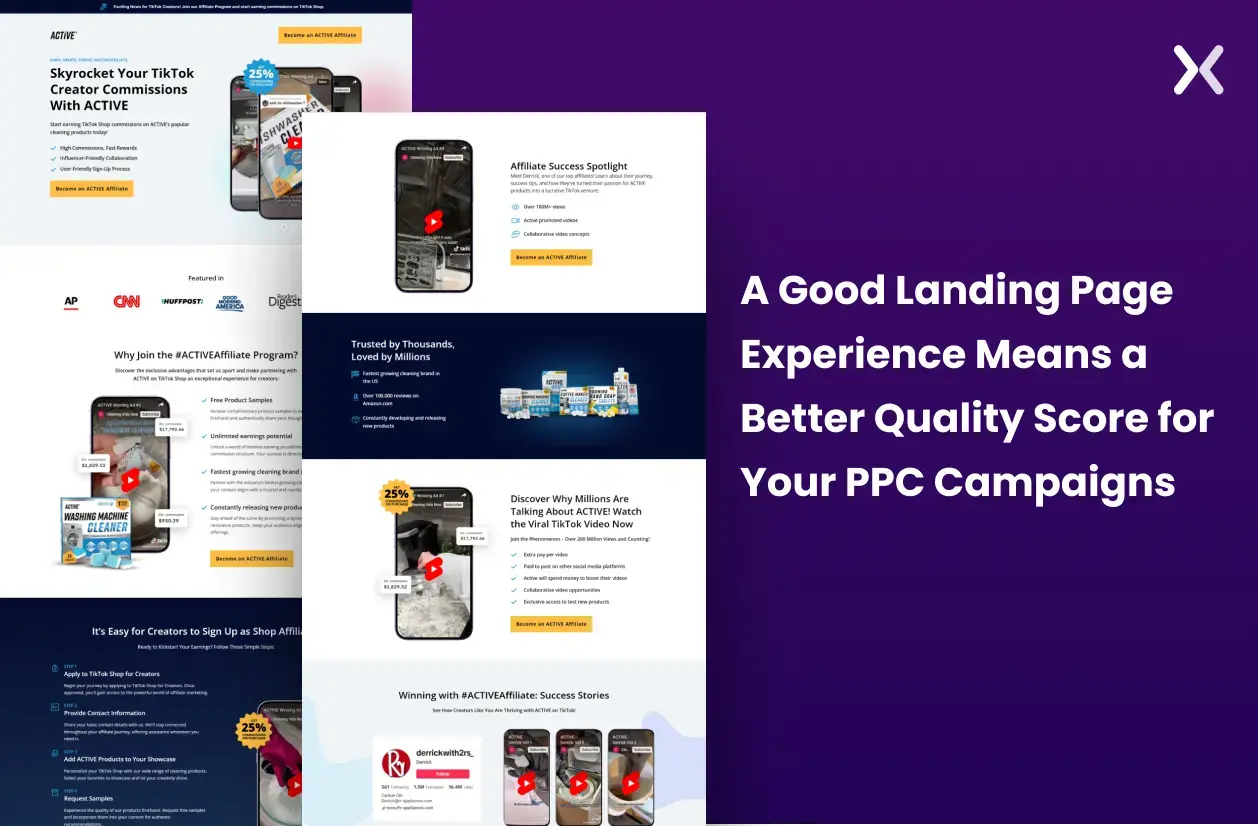 Popularly known as pay-per-click (PPC) landing pages, their experience is graded into three categories: “below average,” “average,” or the coveted “above average.”
Nail these four aspects, and you have created a winning landing page experience.
What is quality score?
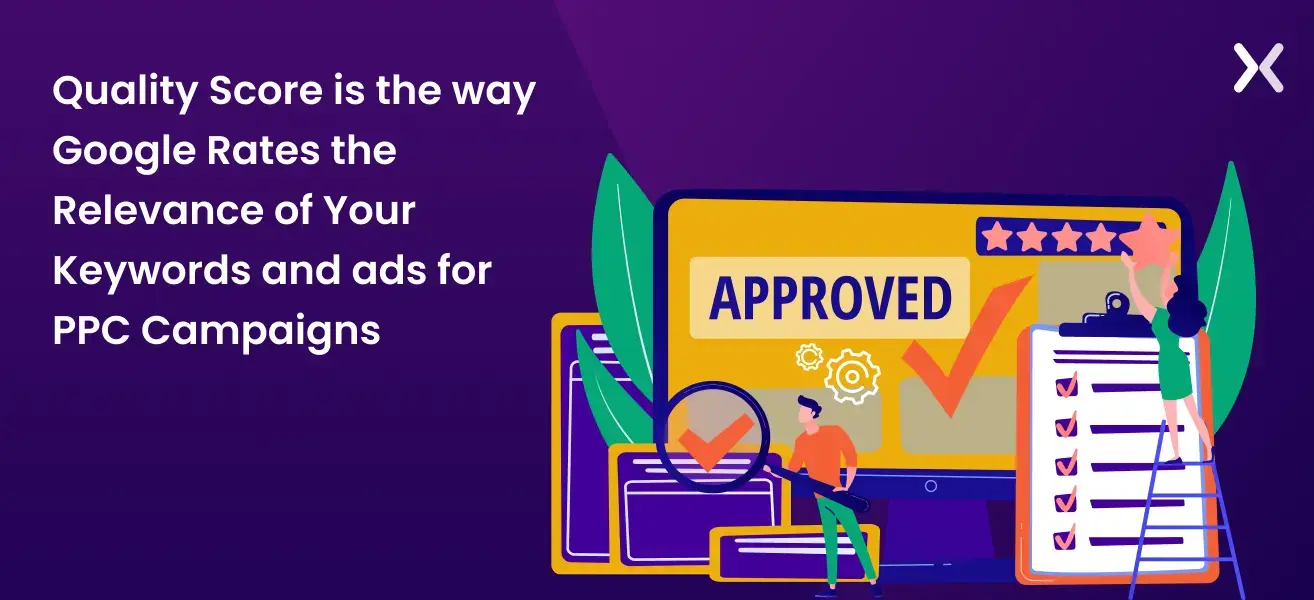
In a nutshell, Quality Score is how Google rates both the relevance and quality of your keywords and ads in PPC campaigns. This score determines your cost-per-click (CPC) in combination with your maximum bid.
 To determine CPC and ad rank in the ad auction process, Google Ads (or formerly AdWords) multiply your specified bid by your quality score.
Unfortunately, no one outside of Google knows exactly how the Quality Score is calculated, but we do know that it depends on three factors:
To determine CPC and ad rank in the ad auction process, Google Ads (or formerly AdWords) multiply your specified bid by your quality score.
Unfortunately, no one outside of Google knows exactly how the Quality Score is calculated, but we do know that it depends on three factors:
-
Expected click-through rate (CTR)
-
Ad relevance to users’ search intent
-
Landing page relevance and quality While these factors comprise the core of your quality score, we still have no idea how each factor is weighted in the algorithm.
Why is a good quality score important? A high-quality score means higher ad rankings and lower costs. It is than complmented with your investment in a good landing page.
What makes Google Ads landing page experience below average?
A bad landing page experience is made up of many factors. Some of the major ones are listed below:
-
Irrelevant content
-
Slow page load speed
-
Mobile unfriendliness
-
Confusing navigation
-
Too many links
-
Mismatched ad copy
-
Lack of clear call-to-action (CTA)
Let’s expand on how to correct the above in the next section.
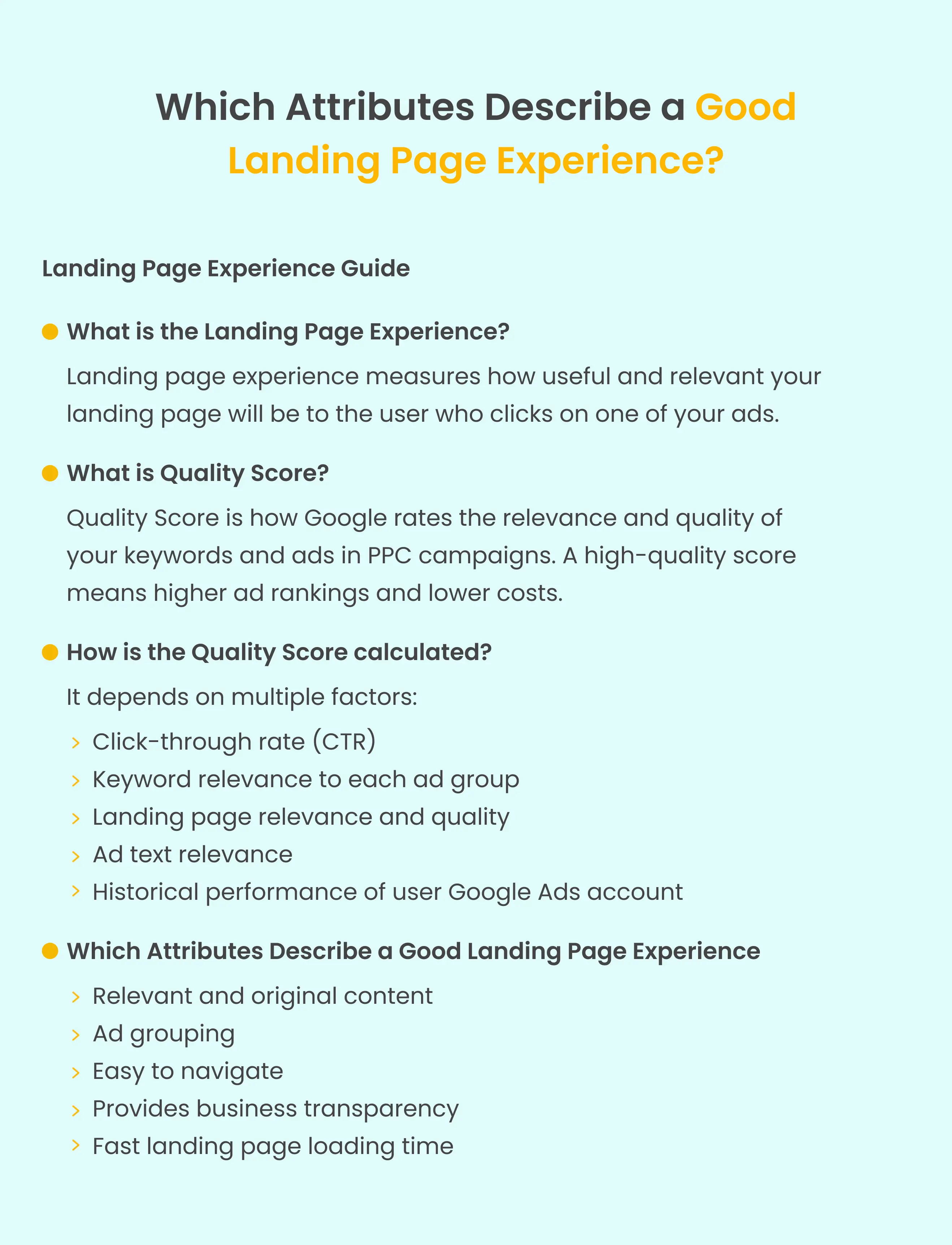
Which attributes describe a good landing page experience?
A good landing page experience gives you an “above average” rating on Google Ads (formerly AdWords). It also improves user engagement and conversions. Don’t worry if your Google Ads landing page experience is below average. With the right knowledge, you can quickly make improvements. Whether you are running ads for free trials, demo bookings, or your services., these tips will help you raise your quality score. Ultimately, it is all about building great user journeys and experiences.
1. Relevant and original content
If you’re trying to create a good landing page experience, make sure your content is relevant and original.
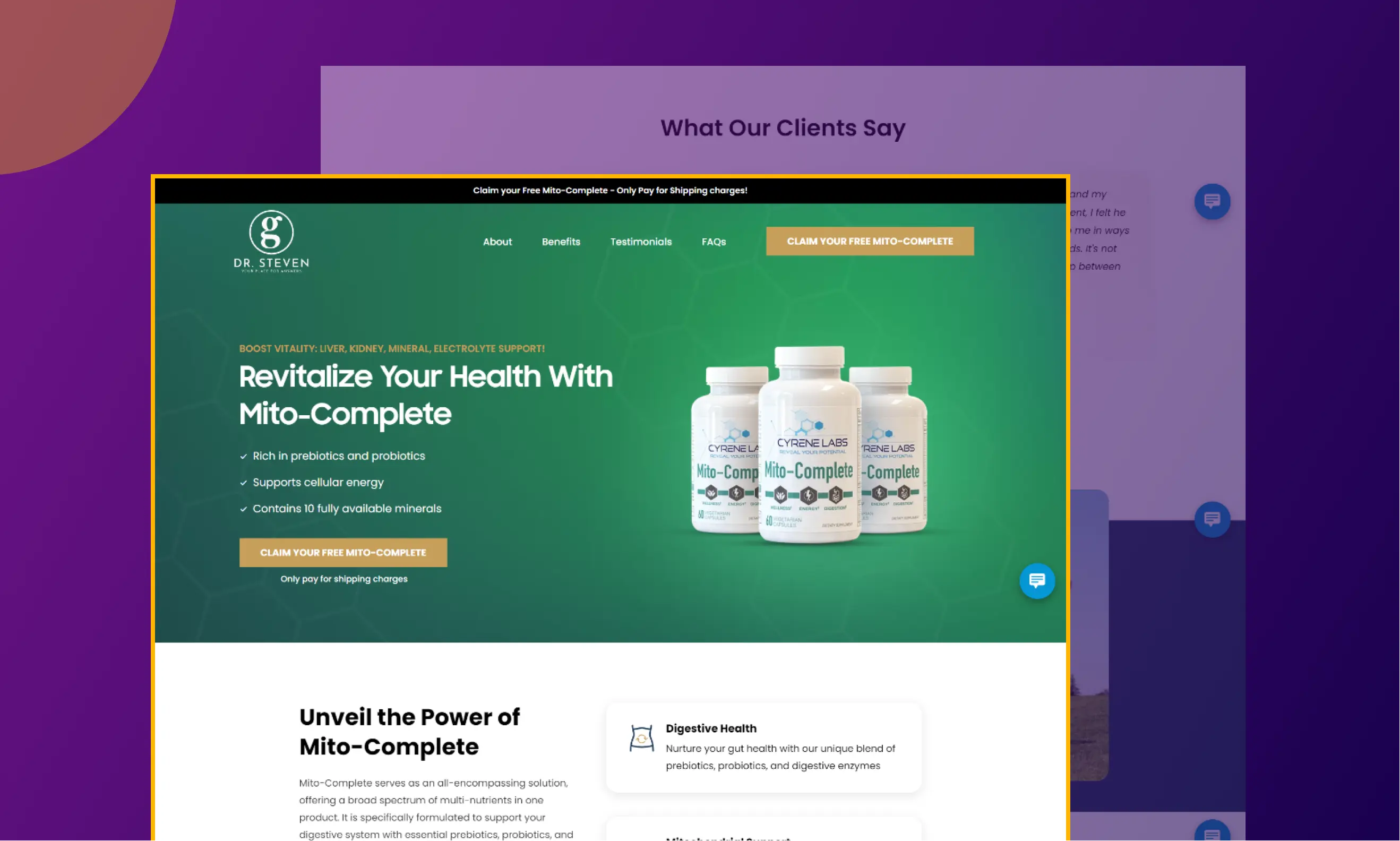
Make sure that your page is directly related to keywords and ad text
When measuring relevance, first, measure the relevance of your landing page to your keywords. Then, measure your keywords’ relevance to your ads. Your landing page should show the keywords and, more importantly, the search query that led users to your page. Having the exact search query, or parts of it, within your landing page can improve relevance.
How to include keywords in your landing page?
By including the keywords in your page title, meta tags, headlines, alt tags, and copy. But maintaining originality here may become more difficult. We recommend adding keywords semantically. Semantic keyword optimization involves using words and phrases that are contextually relevant and conceptually related to the primary keywords. For example, with a primary keyword like best pasta recipe, semantic keywords like best homemade pasta recipe, best pasta recipes, etc., work well.
understand user intent
User intent refers to the specific goal or purpose a person has in mind when performing a search. It’s about understanding why a user is conducting a particular search and what they hope to achieve or find. Recognizing and serving user intent is necessary for providing relevant and satisfactory search results.
-
Be specific when users are looking for a particular thing. If your keywords are related to “women’s white tennis shoes,” don’t direct users to a landing page focusing on all types of shoes.
-
Be general if they want options. If a user is looking to compare laptop models or searching for laptops in general. Don’t direct them to a landing page with only one specific laptop model. Make sure there is a direct link between what the user is looking for, the ad copy, and where the user lands after clicking on an ad.
2. Ad grouping
To boost your ads’ performance, make sure the keywords in your ads match those in your landing pages. It keeps your message consistent and relevant for potential customers. One effective method is using Single Keyword Ad Groups (SKAGs). In SKAGs, each ad group centers around a single main keyword, sharing the same or similar keywords. It allows you to connect particular landing pages with each ad group. It makes sure the page content aligns closely with the chosen keyword. This targeted strategy helps your ads target similar keywords and search intent all through the same landing page.
3. Easy to Move through
When someone visits your landing page. It’s essential to make sure they can easily find their way around. Distractions on the page can cause problems and make it harder for visitors to take the desired action, like making a purchase or signing up.
 Here are some tips to make sure you have a distraction-free landing page experience:
-
Choose a clean and organized layout with only essential elements. It creates a user-friendly interface. It helps visitors easily locate relevant information.
-
Craft concise call-to-action (CTA) buttons. Guide users smoothly through the desired actions, eliminating confusion and building a sense of direction.
-
Use pop-ups thoughtfully and deliberately. Opt for well-timed and non-intrusive pop-ups. Such elements complement the user journey, providing valuable information or incentives without annoying.
-
Use bullet points instead of large paragraphs. It will improve readability and convey information in a more digestible format.
Should I include a navigation menu on my landing page?
A navigation menu proves beneficial on a landing page with multiple sections. Adding a navbar that guides visitors to internal sections improves the overall landing page experience. It assists visitors in moving around the page smoothly. However, employing traditional navigation bars, the typical ones seen on websites with links to other pages is discouraged on a landing page.
How do external links affect my landing page experience?
External links can divert visitors’ attention from your primary message or call-to-action. Users who click links leading to other pages move through away from your page. It reduces the chances of them converting or engaging with your content. Introducing exit points on your landing page can lead users away from their conversion path. It undermines the fundamental purpose of a landing page: conversion. For visitors seeking to deepen their engagement with your brand, a more effective strategy is to guide converted visitors toward your website on the thank-you page. This approach encourages further exploration in a manner that fits your conversion objectives.
4. Provide business transparency
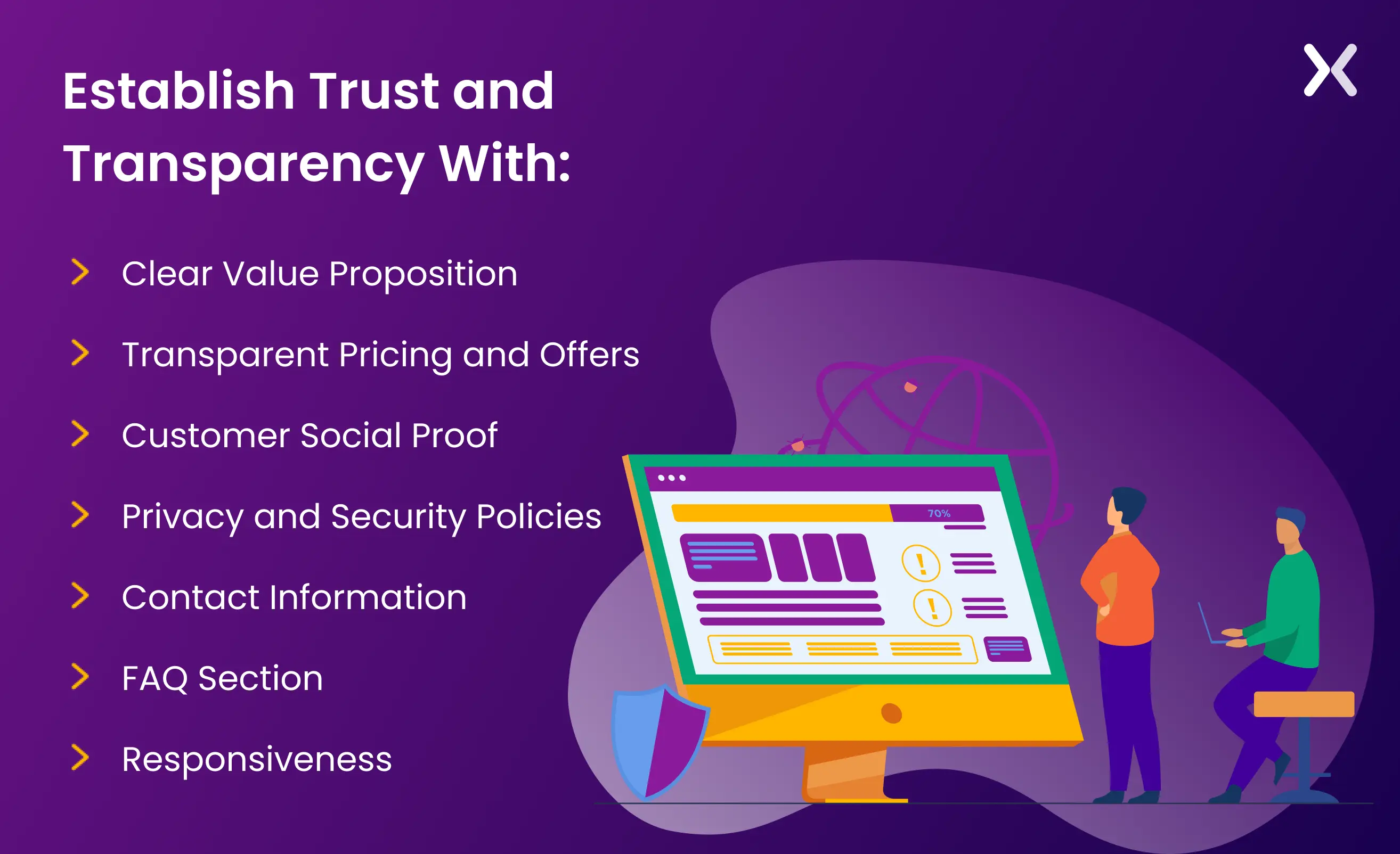
Incorporating business transparency is a powerful strategy for improved landing page experience. It helps establish trust and credibility with your audience. Here’s how you can implement transparency on your landing page:
-
Clearly communicate your service or product’s unique value proposition. Make sure that visitors understand the purpose and values that your brand can provide.
-
Be upfront about pricing and any special offers. Avoid hidden fees or unclear terms that could create mistrust. A transparent approach to pricing builds confidence in potential customers.
-
Present authentic customer testimonials and reviews on your landing page. Such social proof provides real-world examples of positive experiences, reinforcing trust.
-
Clearly state your privacy and security policies. Assure visitors that their data is handled responsibly and securely. This transparency is especially necessary for businesses dealing with sensitive information.
-
Provide easily accessible contact information. A visible customer support link or contact form reassures visitors they can reach out if needed. It establishes a sense of openness. A click-to-call button is a significant element to add.
-
Include a frequently asked questions (FAQ) section addressing common queries. It demonstrates a proactive approach to addressing customer concerns and provides valuable information.
-
If you have a chat or messaging feature, make sure timely responses. Responsiveness on the landing page shows your commitment to customer engagement and satisfaction. Integrating these elements into your landing page design creates a transparent and trustworthy online presence. It, in turn, improves the likelihood of conversions, as visitors feel more confident engaging with a business that openly communicates.
5. Decrease your landing page load time
There is nothing worse than a landing page that takes forever to load. Think about all the times you visited a web page that took too long to load. Did you wait around, or did you just bounce away?
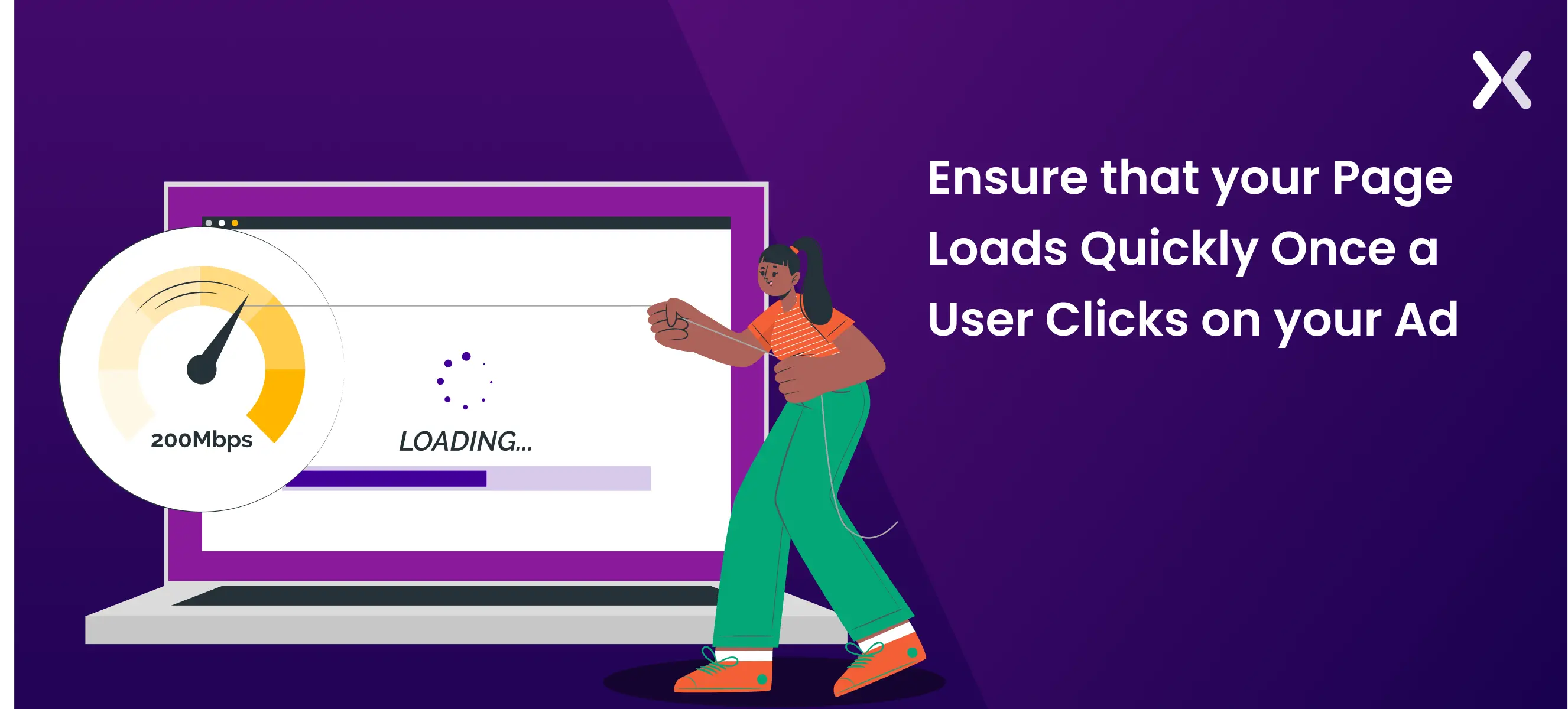 Most users don’t want to wait for your landing page to finish loading. If it takes too long, they’ll often just hit the back button and click on another link.
There’s no point in perfecting your landing page copy and images if it takes too long to load and the users don’t even get a chance to experience it. Google penalizes web pages that have long load times. It harms your landing page experience status and, therefore, your quality score.
You can use tools such as the Page Insights Tool to evaluate your landing page’s loading speed and identify areas for improvement.
Most users don’t want to wait for your landing page to finish loading. If it takes too long, they’ll often just hit the back button and click on another link.
There’s no point in perfecting your landing page copy and images if it takes too long to load and the users don’t even get a chance to experience it. Google penalizes web pages that have long load times. It harms your landing page experience status and, therefore, your quality score.
You can use tools such as the Page Insights Tool to evaluate your landing page’s loading speed and identify areas for improvement.
6. Mobile-Friendly Design
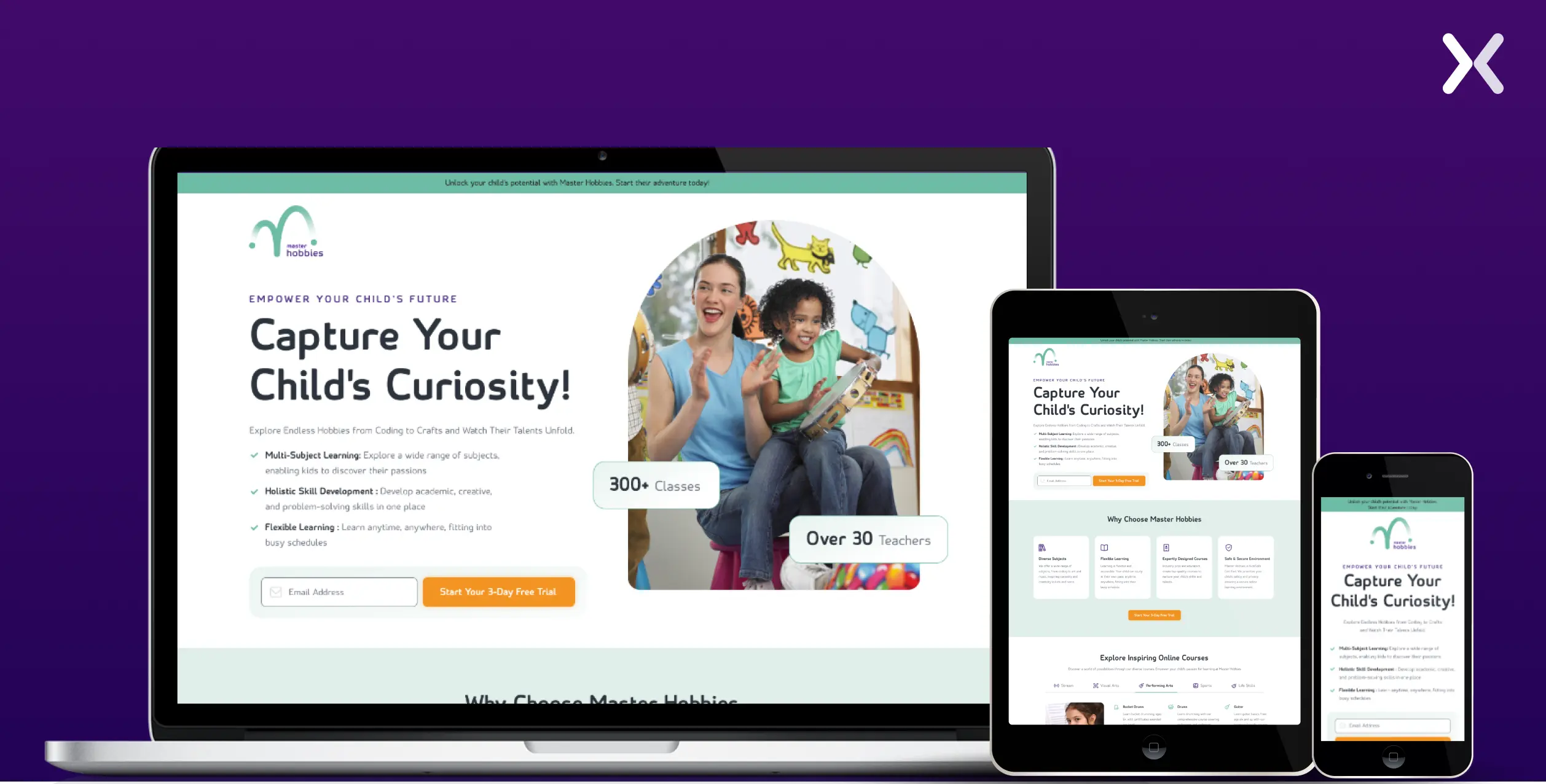
Designing a mobile-friendly landing page is necessary today. As more users access the internet on mobile devices, marketers need to optimize their landing page experience for all types of screens. Here are considerations associated with mobile-friendly landing page design:
-
Implement a responsive design that adapts to various screen sizes and orientations. It delivers a smooth user experience regardless of whether the visitor uses a smartphone or tablet.
-
If your landing page includes forms, optimize them for mobile use. Use shorter forms when possible and make sure that input fields and buttons are appropriately sized for touch interactions.
-
Design navigation elements with touch-friendly sizes and spacing to accommodate users’ thumbs. It improves ease of navigation and reduces the likelihood of accidental clicks on smaller screens.
How to implement a good landing page experience?
Landing page experience is more than just how well your landing page works. Specific attributes will define how your landing page gets ranked. These attributes also play a role in determining your quality score, which affects your ad costs and overall ROI. To achieve a good landing page experience, make sure your landing pages feature relevant and original content, are easy to move through, and promote transparency. By keeping these attributes in mind, you can create a good landing page experience. It will positively point toward your quality score, taking your Google ad landing page experience from “below average” to “above average.”
Learn More About Landing Pages: