When your website’s conversion rate isn’t properly tracked, it can lead to wasted ad spend, poor ROI, and strategies that fail to convert visitors into customers. Even with tools like Google Analytics, many business owners still focus on the wrong metrics or misunderstand what is website conversion. Mismeasuring website conversions can mess up how you see your growth and cause a domino effect of misguided marketing decisions. Whether you want to boost sales or feel frustrated by low engagement. It’s critical to understand, track, and improve website conversions to drive meaningful business results. Here is a blog post to help you understand the true meaning of what is website conversion and how you can measure and improve it.
What is website conversion?
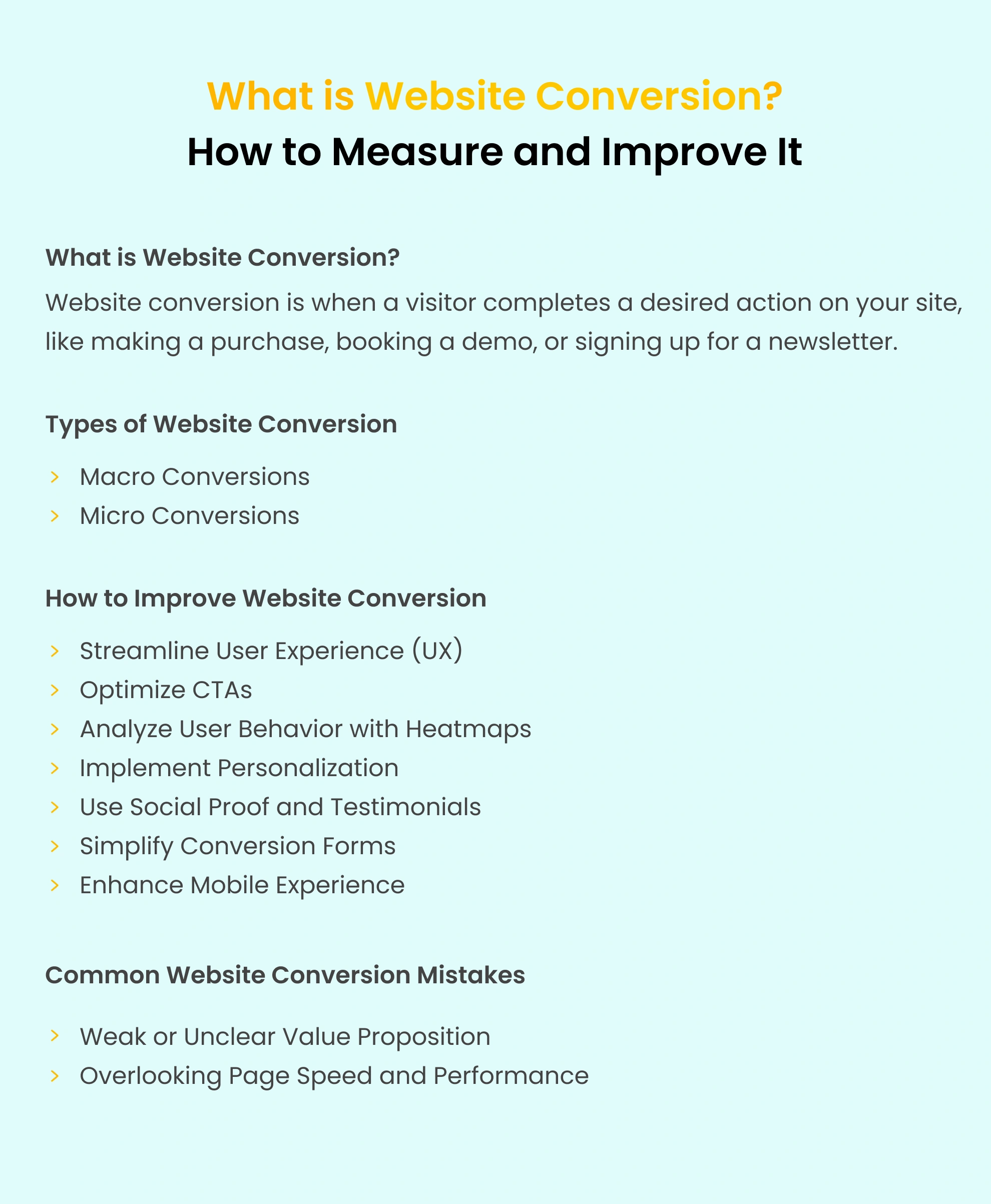
Website conversion refers to when your website visitors perform a desired action, these actions, known as “conversion” change based on your business goals. A website conversion happens when a visitor completes a critical action that brings them closer to becoming a customer or results in a valuable interaction with your brand. The conversion rate shows the percentage of visitors who take a desired action, and it’s a key metric for measuring how well your website achieves business outcomes.
What is an example of a website conversion?
Let’s look at HubSpot as an example. HubSpot has a newsletter subscription page and a “Book a Demo” page, these pages aim to create conversions but play different roles in the buyer journey.
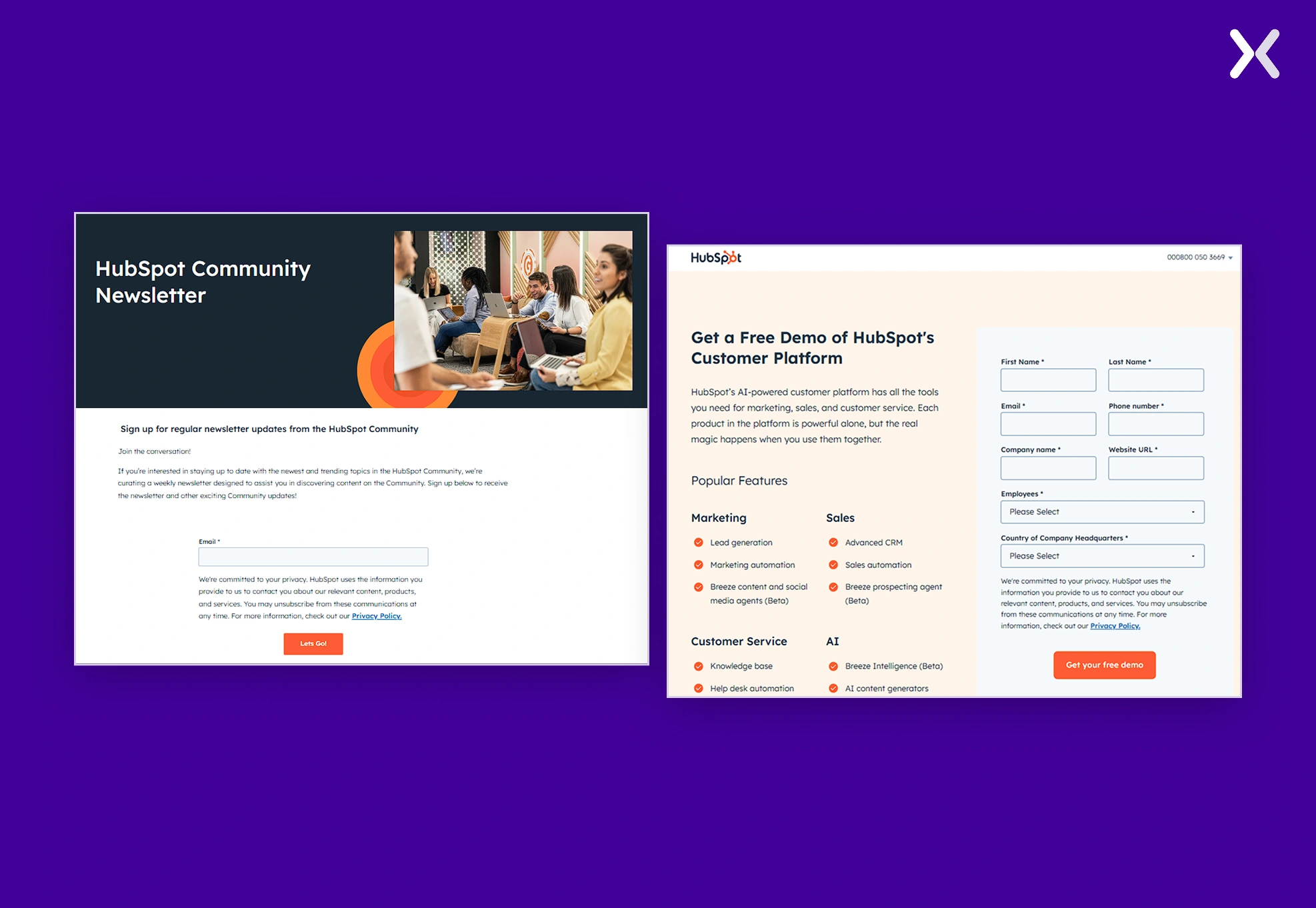 This raises a fundamental question: do these conversions hold the same value within HubSpot’s funnel? Does signing up for a newsletter contribute as much as requesting a demo towards the company’s end goals?
What are the types of website conversions?
Signing up for a newsletter shows visitors’ interest in receiving ongoing updates and resources. It is a softer commitment that builds awareness and trust over time. On the other hand, clicking “Book a Demo” shows stronger intent, indicating the visitor already sees HubSpot as a possible solution and wants to look closer. We can group these conversions into two main types: macro and micro website conversions.
What are website macro conversions?
Website macro conversions are the main high-impact actions that match your website’s core business goals. These are the end objectives you want visitors to complete and significantly impact revenue and lead generation. Macro conversions are the key signs of your website’s success, as they stand for the primary outcomes that drive business growth, like sales or new client acquisition.
Examples of website macro conversions
-
Completing a purchase
-
Submitting a request for a demo or quote
-
Signing up for a service or subscription
-
Booking a discovery call Let’s take a look at Recruit Rockstars’ website. Their homepage has a CTA, “Book a Free Consultation,” which is a macro conversion.
 Now, say a visitor doesn’t perform the macro conversion on Recruit Rockstars’ website. This is where having a micro conversion can help.
What are website micro conversions?
Website micro conversions are small actions that show a visitor’s interest but don’t always immediately lead to the primary conversion goal. These small steps bring users closer to the final desired outcome, such as buying something or submitting their information, and help track their conversion journey through the sales funnel. Even though they’re not the ultimate goal (macro conversions), micro conversions matter because they reveal positive user interactions and give insights into what’s effective on your site. Keeping an eye on them helps improve user experience and can result in more macro conversions. So, Recruit Rockstars offers a lead magnet when the user is going to leave their website without performing the macro conversion. The lead magnet micro conversion aims to secure the visitor’s information to get inside the sales funnel and is nurtured until they become potential buyers.

Other examples of website micro conversions
-
Subscribing to a newsletter
-
Downloading a whitepaper or case study
-
Viewing multiple product pages
-
Watching a product demo video
What is the difference between micro and macro conversion?
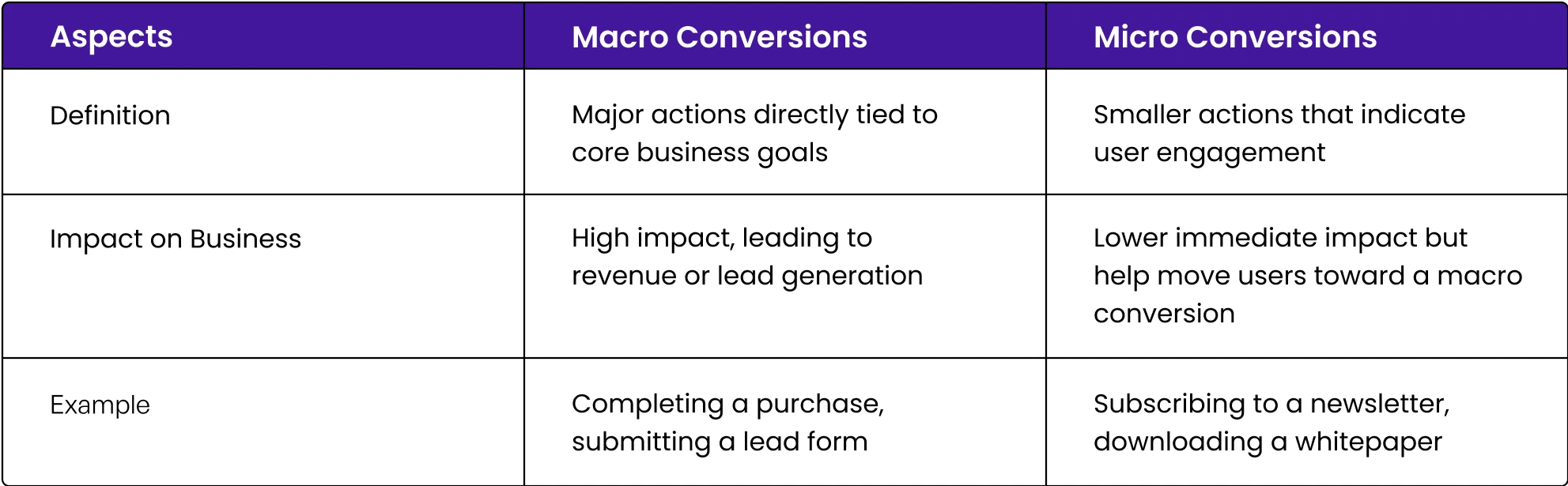
Here’s a comparison table that you can use to differentiate between macro and micro website conversions.
How to measure website conversion?
To measure website conversions, keep it simple, track conversions as a single metric. Don’t split them into small and big groups right away. It gives you a broad view of your website’s performance. Once you get the hang of tracking conversions, you can split them into micro and macro website conversions. It will help you better understand specific actions at each funnel stage. A widely used formula to measure website conversion is:
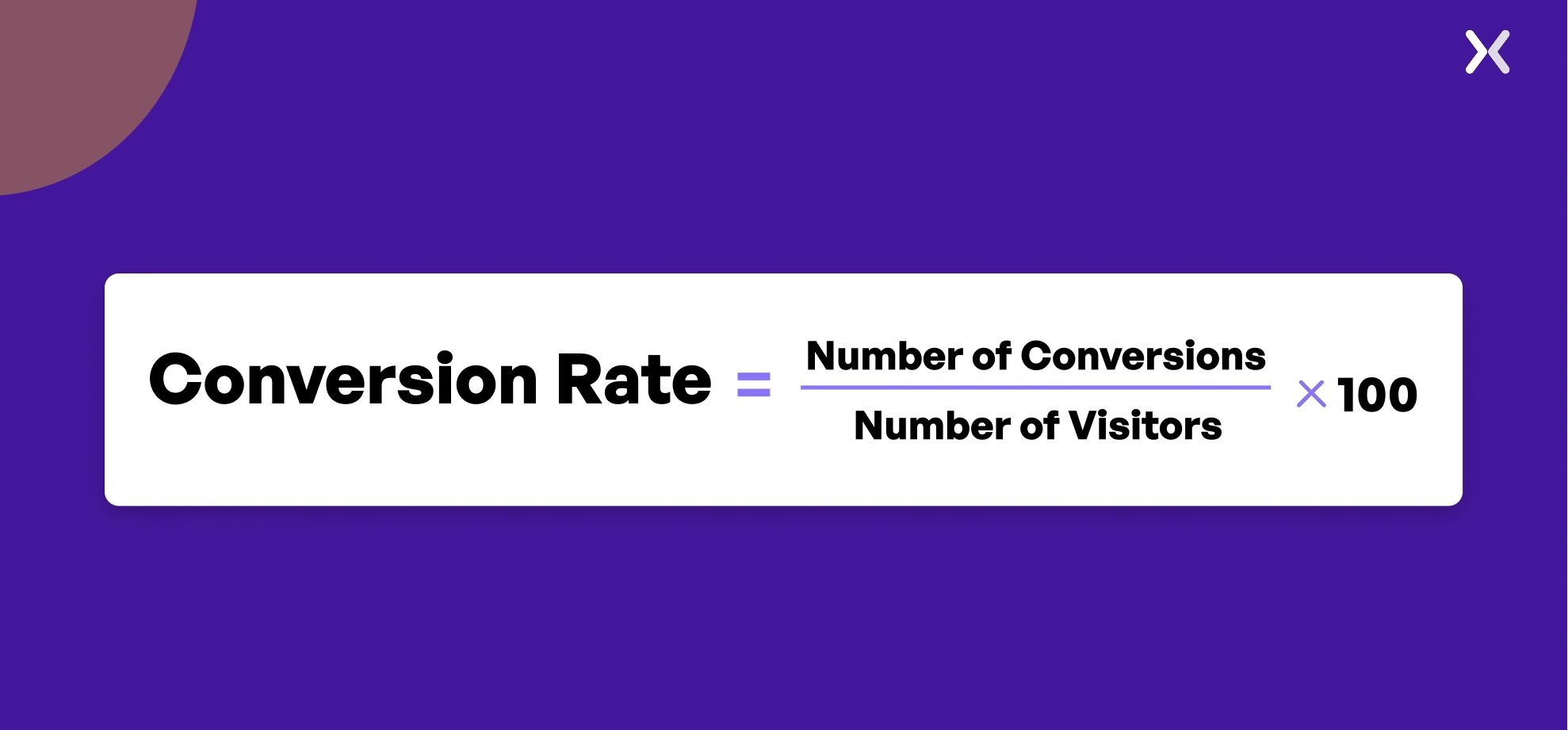 Let’s break down each term:
-
It is the number of times visitors complete a desired action on your website, such as signing up for emails, booking a demo, or buying something. Tracking these helps you see how well your website engages users and how effective your calls to action are.
-
It counts the number of people who visit your website within a certain period. Looking at unique visitors (instead of repeat visits) gives you a better idea of how many people might convert. For example, if 100 visitors visit your site and 4 visitors convert, what is your web conversion rate? Total Conversions = 4 Total Visitors = 100 Conversion rate = 4% You can secure the data for total conversions and visitors with the help of Google Analytics.
Tool to track website conversions
To acquire data for Total Conversions and Total Visitors in GA4, follow these steps:
-
Total Conversions:
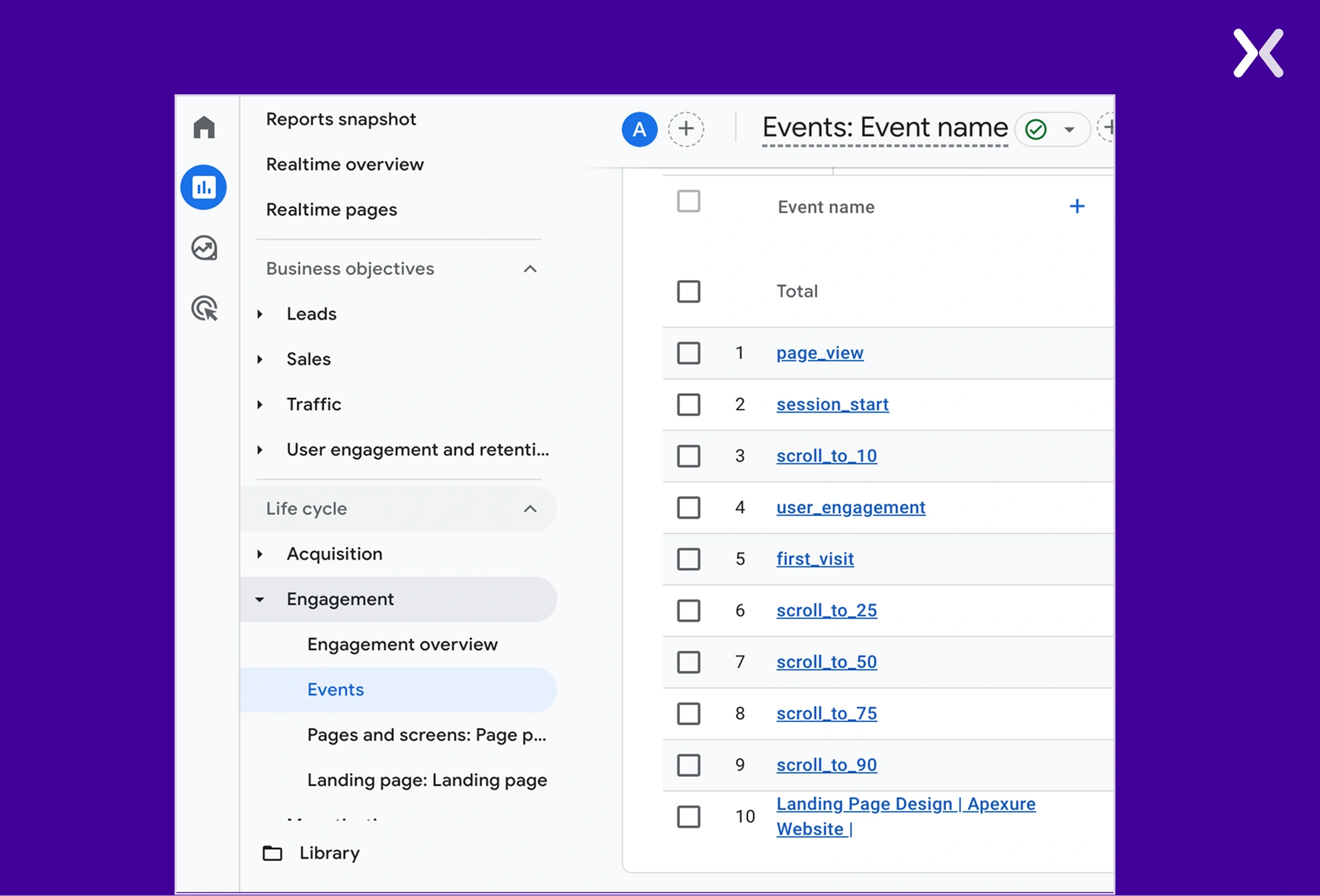
GA4 tracks conversions as events. To set this up, you need to define the actions you want to track (such as “newsletter signup” or “book a demo”) as conversion events. Move through to Events in GA4, mark the events you want as conversions, and they’ll appear in your conversion reports. It lets you see how many times visitors completed each action.
-
Total Visitors:
GA4 shows “Total Visitors” as “Users.” This number counts unique visitors during a set time. The “Users” metric gives you a clear snapshot of unique visitors, helping you determine your conversion rate.
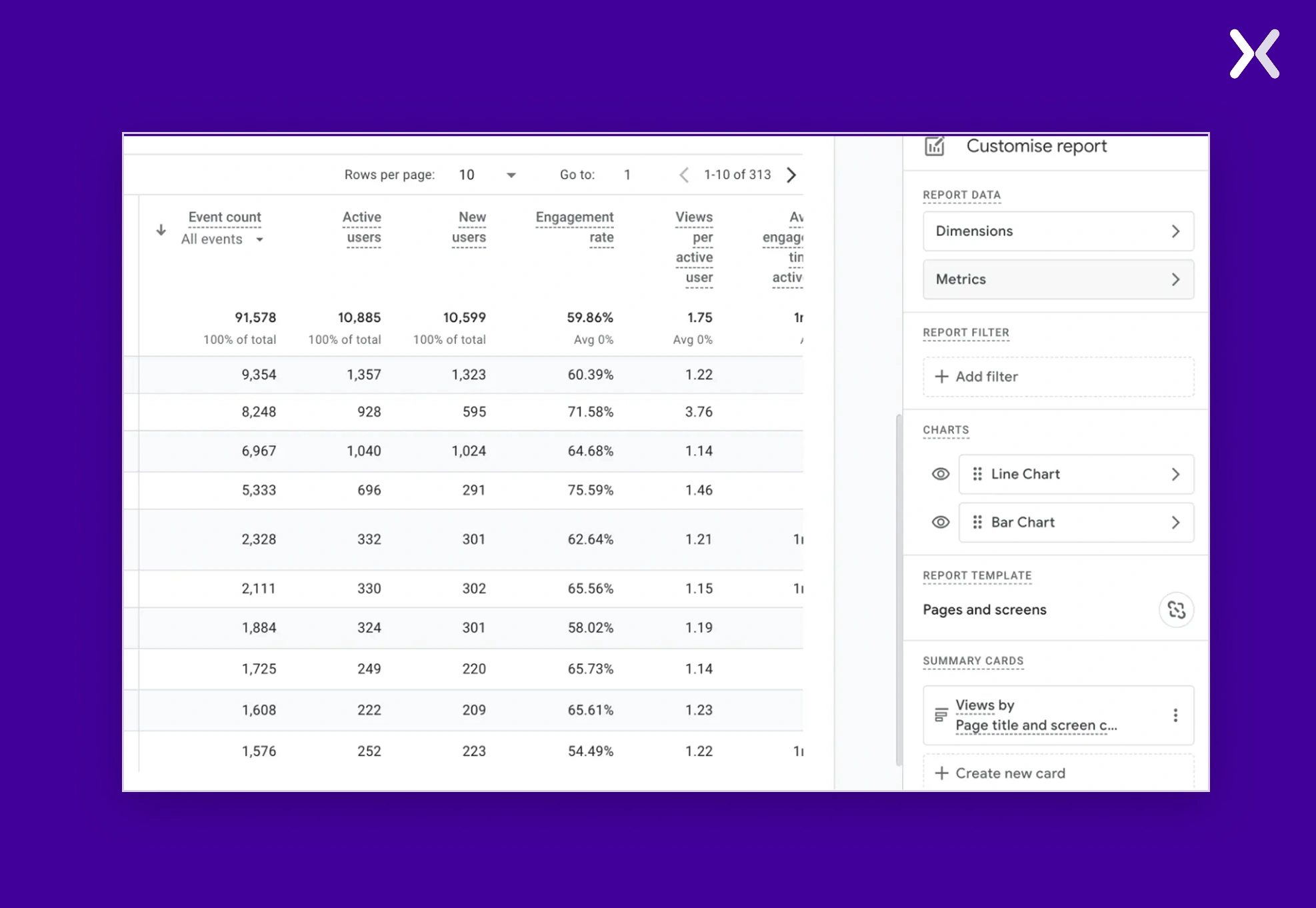 These GA4 metrics provide a complete picture of website conversions and let you monitor user behavior on your site.
What is a good website conversion rate?
A good website conversion rate is between 2% and 5%. However, this range can vary due to industry type, marketing approach, and lead quality. Thus, the range is a helpful benchmark, but in the end, a site’s conversion rate hinges on its unique goals and the characteristics of its target audience.
How to improve website conversions?
Here are some tips to improve your website conversions.
-
Simplify Your User Experience (UX)
Improving website conversions begins with crafting a smooth and intuitive user experience. A well-designed site site helps visitors easily find what they want and take action. Make sure your navigation bar is easy to understand, your pages load fast, and your site structure is logical. Cut down on clutter and distractions, and guide users to key actions with a clean design and clear paths. When you offer a smooth journey from the first page to the end goal, visitors stay engaged and complete a desired action, leading to higher conversion rates. For instance, sticky navigation bars can raise user experience, especially on websites with long web pages.
-
Optimize Call-to-Actions (CTAs)
Effective CTAs matter in boosting website conversions. To improve them, make sure your CTAs catch the eye with bold colors and smart placement across your website. Use simple, direct words that create a sense of urgency, such as “Start Now,” “Book a Demo,” or “Get Your Free Trial.” Tailoring CTAs to match user actions or preferences can also boost engagement. Keep the number of CTAs on a page low to avoid confusing visitors and guide them to the most necessary next step.
-
Analyze User Behavior with Heatmaps
Heatmaps give you valuable insights into how people use your website. They show where visitors click, scroll, or stop the most. When you look at this data, you can spot areas of friction, such as parts that go unnoticed or points where users leave. You can use this information to improve your layout, place CTAs in better spots, and simplify content presentation. Heatmaps help you see how visitors move around your site, letting you make data-driven adjustments to website elements that stop conversions and steer users towards desired actions more efficiently.
-
Implement Personalization
Personalizing your website can increase conversions by giving each visitor a custom experience. You can do this by tailoring website pages according to user pain points, suggesting products, or offering deals based on how users behave, who they are, or how they’ve interacted with the website. For example, consider the navigation bar on Rosenblum Law’s website. They’ve tailored the practice areas section to clearly outline their areas of expertise and the types of cases they handle. They go a step further by specifying which types of court cases they manage across various states. This thoughtful organization makes it easy for users to determine whether the firm can handle their case.
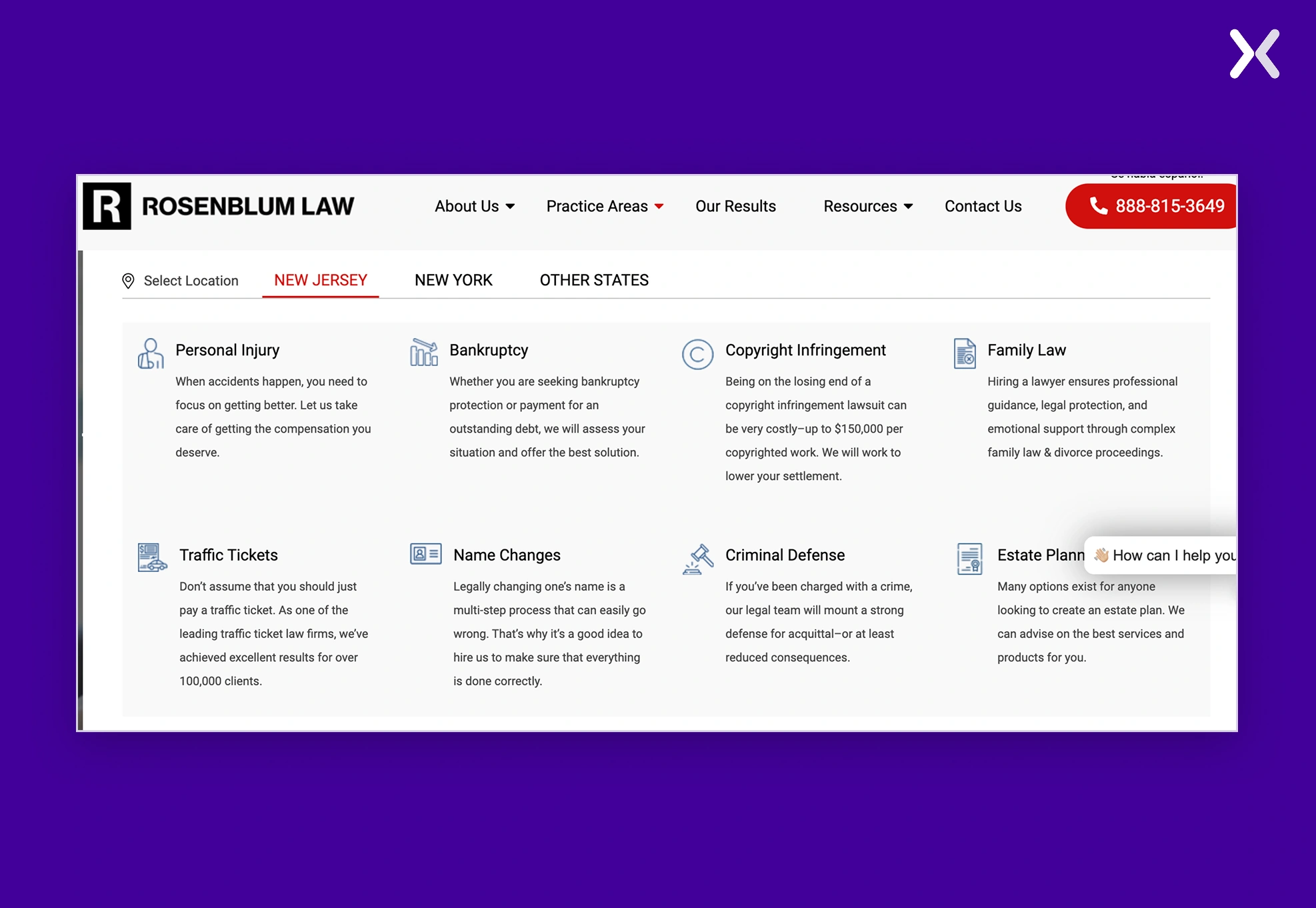 When you personalize, it makes visitors feel valued and understood, it creates a more relevant journey that encourages them to take action. When visitors have experiences that matter to them. They’re more likely to do what you want, like sign up or purchase.
-
Use Social Proof and Testimonial
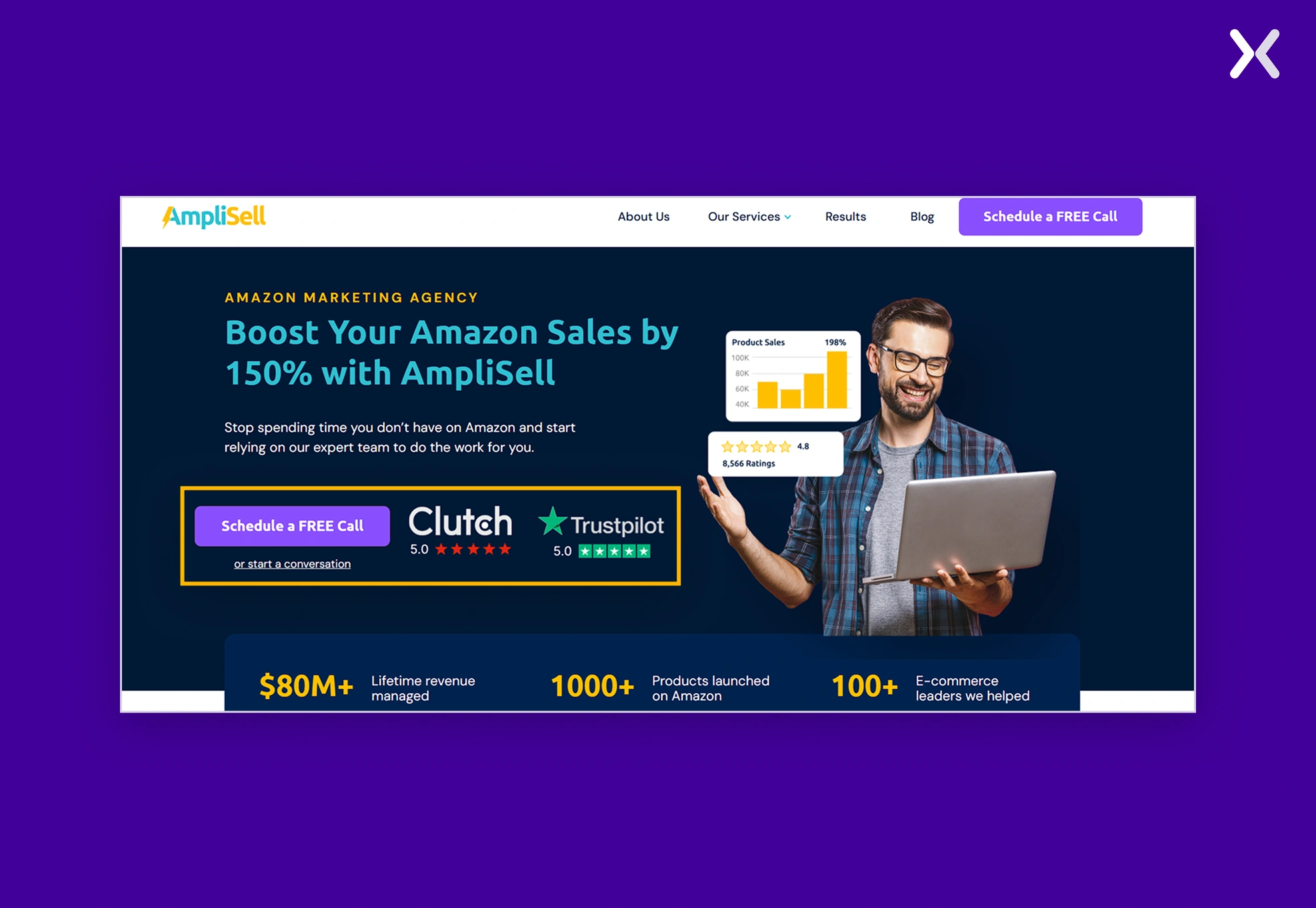
Using social proof has a substantial impact on website conversions. Customer feedback, reviews, case studies, or client logos help prospects trust you more. When people see others have had good experiences with what you offer, they doubt less and feel more sure about taking action. Adding user-generated content, like reviews or success stories, can make your offer more valid. It reassures people and eases the decision-making process since folks often do what others do, which leads to more conversions on your site. Amplisell does it best on its website, with relevant social proof spread throughout the homepage and service pages. This presents that social proof should not be limited to a single page but should be shared throughout the site.
-
Simplify Conversion Forms
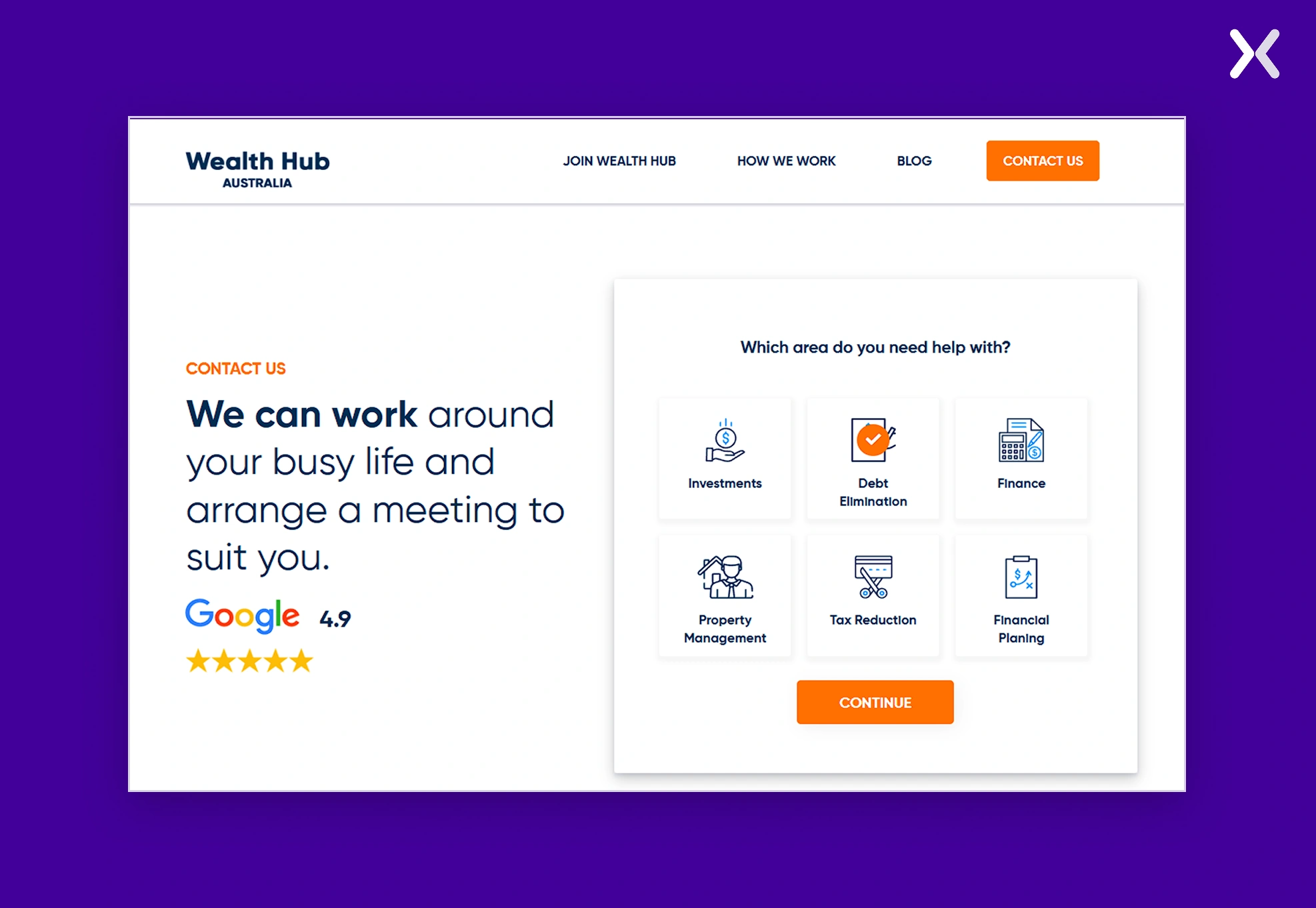
Hard-to-fill forms can deter people from taking action. Make your forms easier to fill out by asking for the essential details. Reduce the number of fields to smooth things out, and consider using autofill to make it even quicker. A neat, mobile-ready design makes sure that forms work well on all devices. Multi-step forms help you split forms into smaller chunks to avoid overwhelming people. By simplifying sign-up forms, you lower the chances of people giving up halfway and boost the odds they’ll complete the desired action.
-
Improve Mobile Experience
Most website visits now come from mobile devices, so improving the mobile experience significantly increases conversions. Make sure your site is fully optimized for small screens and is easy to use. Put buttons, forms, and critical info where people can find them without scrolling. Reduce pop-ups and other distractions on mobile to help users focus on converting. When you give visitors a user-friendly mobile experience. They’re more likely to stick around and take the actions you want.
Two common mistakes to avoid in website conversion optimization
Avoid these website optimization mistakes:
-
Unclear or Weak Value Proposition
An unclear value proposition can seriously reduce your conversion rates. When people visit your site and can’t grasp how your product or service helps them. They are unlikely to take any action, even the micro ones. To fix this, put your value proposition back and the center and spell out what sets you apart. It must tackle questions like “How does this fix my problem?” or “What makes this better than other options?” A good value proposition grabs visitors’ attention immediately and makes them want to check out more of your site, leading to more conversions in the long run.
-
Overlooking Page Speed and Performance
Slow loading websites are a common and critical error in website optimization. Page speed has a direct link to user experience, if your site takes too long to load, visitors will leave before they even engage with your content, which can lower conversion rates. To stop this, strengthen your website’s performance by shrinking images, using browser caching, and cutting unnecessary code. Making sure your site loads fast on desktop and mobile devices boosts user satisfaction, keeps visitors interested, and increases the chances of conversion.
Take the first steps to increase your website conversions
Improving website conversions begins with analyzing performance metrics, focusing on unique visitors and relevant conversion actions. Use tools like GA4 to gain insights into user behavior and identify areas for improvement. Better content, design, and calls to action can significantly impact user experience. You can test different versions to see what your audience likes most. Website optimization is an ongoing process. You must check your data often, improve your plans, and keep up with what’s new in your industry. These actions lay the groundwork for turning more visitors into customers and scaling your business.
Related Articles: