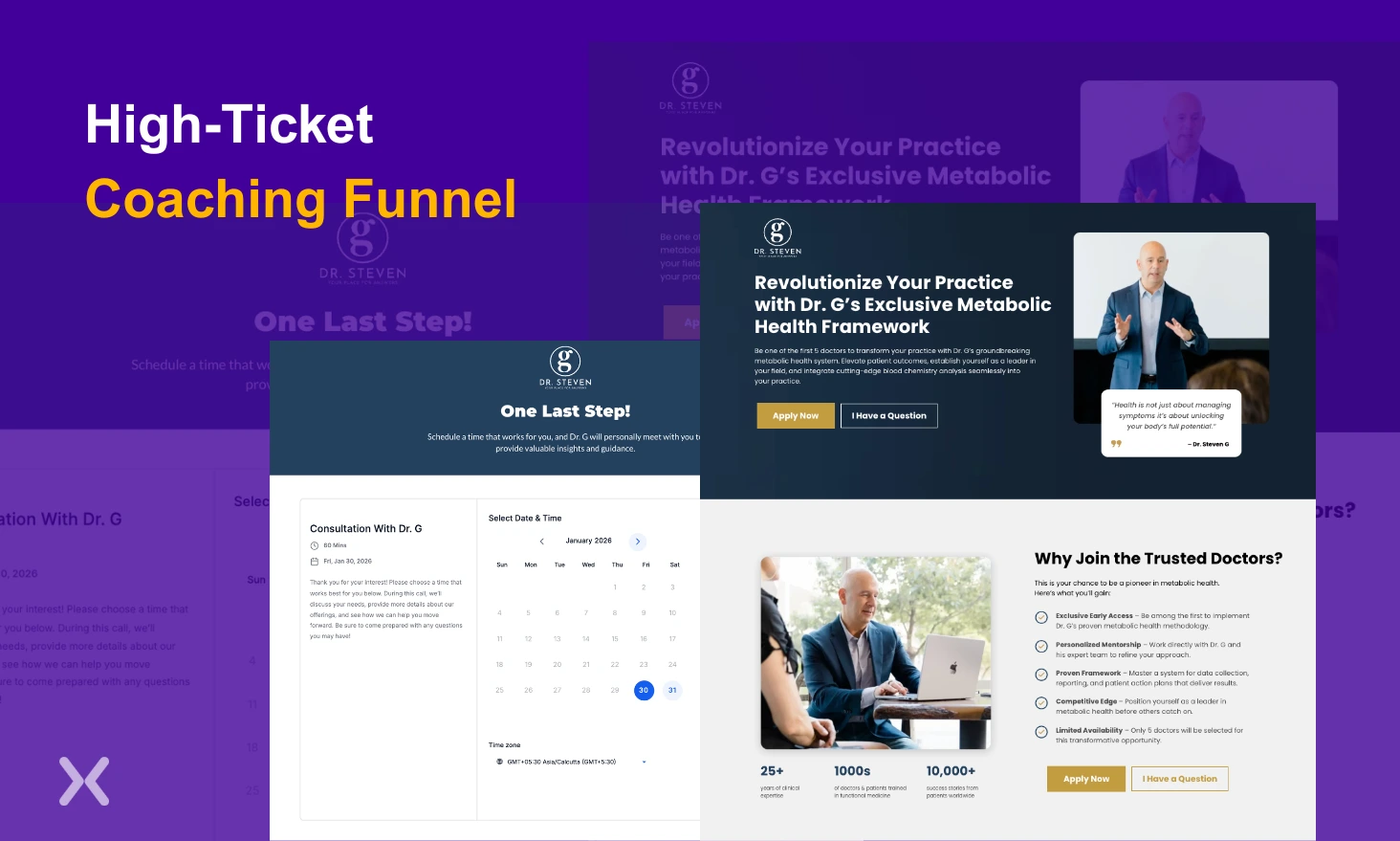
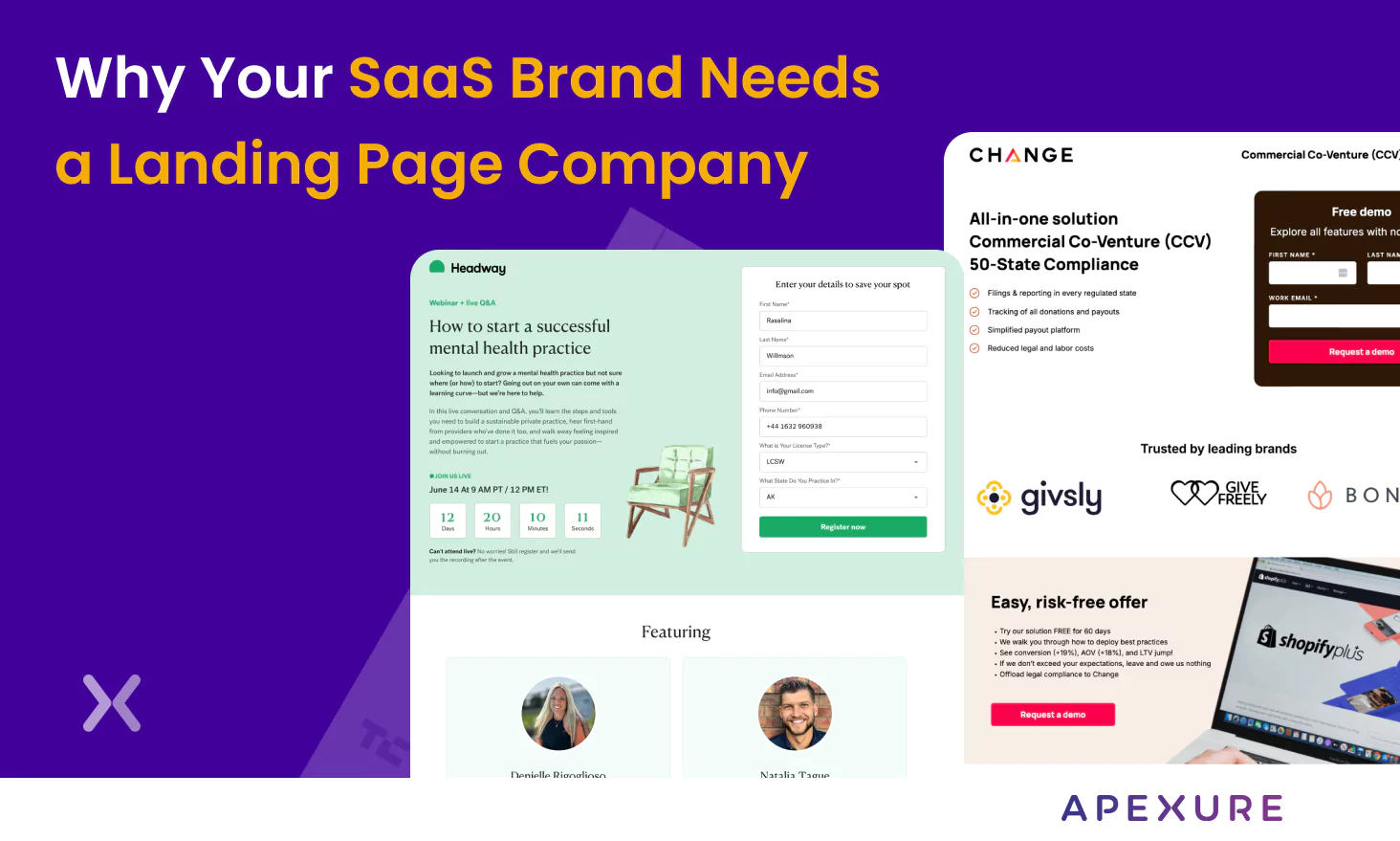
Most B2B SaaS companies start lead generation with cold outreach. Some run paid ads. A few invest in content. But the ones that scale are the ones that build a system, testing multiple channels, measuring what produces qualified leads (not just volume), and doubling down on what works. We have built lead generation landing pages and funnels for SaaS companies, B2B consultancies, fintech startups, and enterprise software firms. Across 460+ projects, the pattern keeps repeating: the channel matters less than the execution. A well-built landing page with matched messaging will outperform a bigger budget dumped into a generic homepage every single time. Here are 12 strategies that are working right now, what has shifted since last year, and the benchmarks you should actually be measuring against.
How B2B SaaS lead generation differs from B2C
B2B and B2C SaaS funnels differ in three fundamental ways: decision complexity, sales cycle length, and what it takes to earn trust. In B2C, a single person decides, the purchase is usually low-risk, and the buying cycle might be minutes. Influencer mentions, social ads, and a well-designed pricing page can close the deal. B2B is a longer, messier process. The software gets used by teams, approved by managers, and purchased by procurement. You are selling to a committee, sometimes 6-10 stakeholders, and the cycle can drag on for 3-9 months.
Decision maker: Individual user
Sales cycle: Minutes to days
Key tactics: Social ads, influencer, viral loops
Trust signals: Reviews, star ratings, free tier
Decision maker: Committee (6-10 people)
Sales cycle: 3-9 months
Key tactics: Content, demos, ABM, outreach
Trust signals: Case studies, ROI data, security docs
This means B2B SaaS lead generation needs different infrastructure: demo landing pages, in-depth content that educates buying committees, case studies with real numbers, and a follow-up process that nurtures leads over weeks and months.
What you need before starting lead generation
Jumping into lead gen without foundations is how most SaaS companies burn through their first marketing budget with nothing to show for it. Get these right first.
Use your MVP as a research tool
Your MVP is not just a prototype. It is your best source of persona data. Pay attention to who signs up, what questions they ask, where they get stuck, and what language they use to describe their problems. That feedback shapes everything downstream: your ad copy, your landing page messaging, your email sequences. We see this constantly in our pipeline. When a SaaS client comes to us with detailed user feedback from their MVP, we build better landing pages faster because we know exactly what objections to address and what language matches.
Run a Pre-Launch campaign if you are still building
If your product is not ready, start building demand anyway. Create a pre-launch landing page to capture early interest. Share your building process on LinkedIn, Reddit, and Indie Hackers. The “build in public” approach creates an audience that is ready to convert on day one.
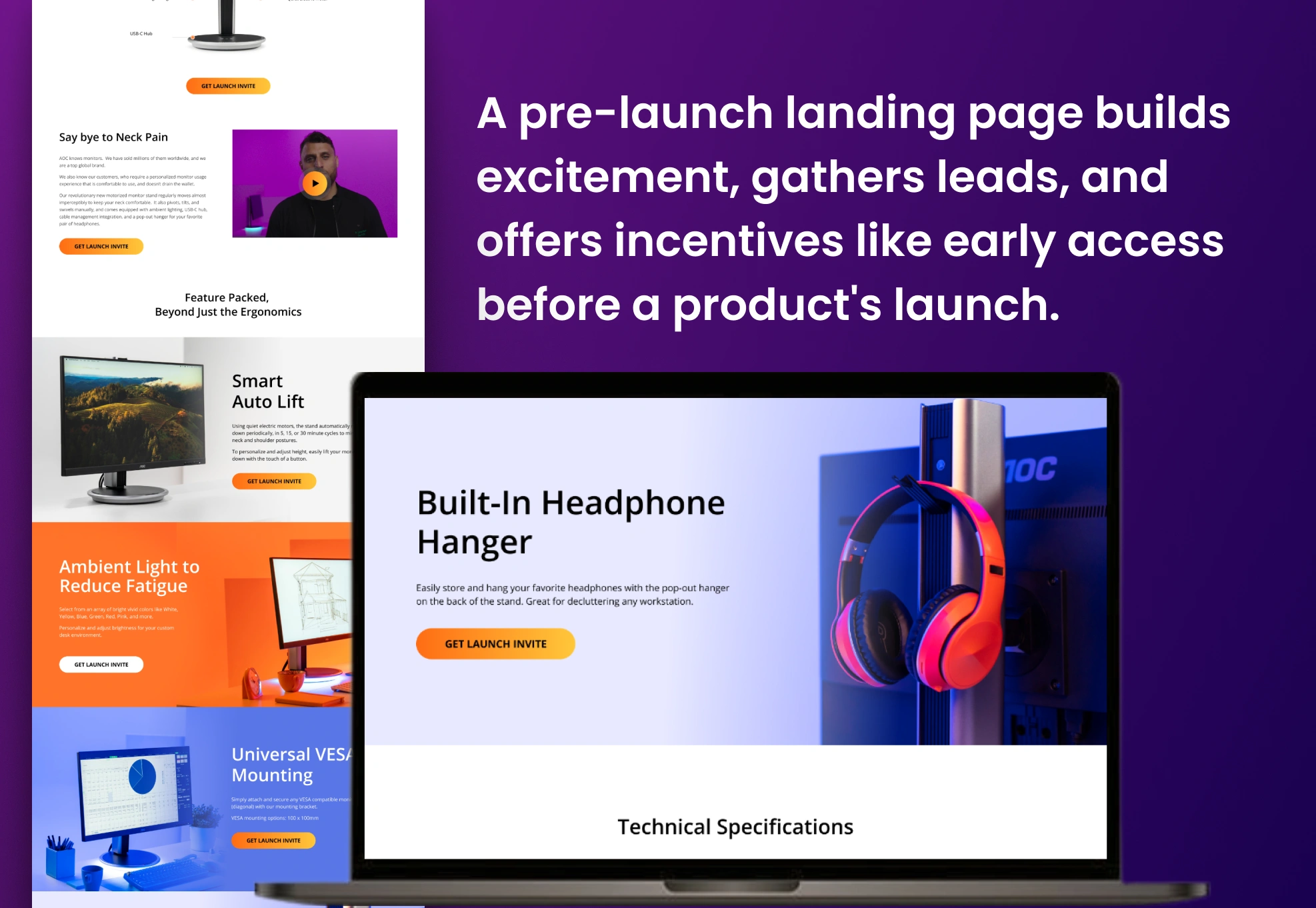
The goal at this stage is data acquisition, not revenue. Every email address you collect before launch reduces your cost-per-acquisition after launch.
Define your ICP (even a rough draft)
You need a clear picture of who you are selling to before you write a single email or build a landing page. What company size? What roles? What pain points? What does their current workflow look like without your product? Start with your best guess and tighten it as you learn from real conversations. A rough ICP is better than no ICP.
Be ready to test: not choose
There is no right channel to pick from the start. You might think cold email will work, but content ends up performing better. Paid ads might flop while LinkedIn comments bring in demo bookings. Treat the first 90 days as a testing phase.
How To Generate Leads With B2B Landing Pages
A deep dive into building landing pages that turn B2B visitors into qualified leads — buyer journey mapping, page anatomy, and conversion tactics.
12 proven B2B SaaS lead generation strategies
We have split these into organic, paid, and AI-driven categories. Most successful SaaS companies use a mix of all three.
The Three-Layer System
Organic channels build long-term pipeline. Paid channels accelerate what is working. AI and intent-based approaches multiply your team's output. Run all three layers in parallel.
Organic Foundation (Strategies 1-6)
SEO, cold email, LinkedIn, webinars, free trials, community. Low cost, high effort, compounds over time. Start here.
Paid Acceleration (Strategies 7-9)
Search ads, social ads, influencer. Higher cost, faster feedback. Use to scale what organic has validated.
AI + Intent Layer (Strategies 10-12)
AI agents, signal-based selling, ABM. Multiplies your team's reach. The fastest-growing layer in 2026.
Organic B2B SaaS lead generation strategies
These strategies require time and effort rather than large budgets. They compound over months and build a defensible pipeline that does not disappear when you stop spending.
1. SEO and content marketing
SEO and content marketing are still the most cost-effective long-term lead generation channels for B2B SaaS, but the playbook has changed. In 2026, generic “what is X” articles are getting summarised by AI Overviews before visitors even reach your page. Three out of four B2B websites lost roughly 34% of their organic traffic year over year between 2024 and 2025 (Martal Group, 2026). The pages that held ground were the ones offering something an AI summary cannot replicate: original data, practitioner frameworks, detailed case studies, and tools. What works now:
- Bottom-of-funnel content first. Write comparison pages, “alternative to” posts, and ROI calculators before top-of-funnel guides. These pages convert at 3-5x the rate of awareness content.
- Build content clusters. One pillar page supported by 8-15 related posts. Link them together. Google rewards topical depth.
- Include original data. Your own benchmarks, A/B test results, client outcomes. This is the one thing AI cannot summarise away from you.
Practitioner note: We write 100+ blog posts on landing pages and conversion topics. The posts that drive the most leads are not the ones with the highest traffic. They are the ones targeting bottom-of-funnel keywords where the reader is already looking for a solution. A post about best SaaS landing pages drives more demo bookings than a post with 10x the traffic about general marketing tips.
2. Cold email outreach
Cold email still works. But the bar is higher than it was two years ago. Reply rates have dropped from 8.5% in 2019 to roughly 3-5% in 2025 (Snovio, 2026). The top quartile of cold email campaigns still achieves 15-25% reply rates, but the gap between top performers and the rest has widened significantly. What separates the top quartile:
- Research before you write. Spend 5-10 minutes on each prospect. Reference something specific, a recent LinkedIn post, a job listing, a product update.
- A/B test everything. Subject line, preview text, sender name, send time, email length. Small changes in open rate compound into large differences in pipeline.
- Multi-touch sequences. One email is not outreach. It is spam. Build 4-6 touch sequences that add value at each step.
Stat sourcing matters. Many "B2B lead gen" articles cite conversion benchmarks sourced through ChatGPT or secondary aggregators. We have seen stats that were 2-3 years old presented as current. Always check the original source and publication date before building your strategy on a number.
3. LinkedIn outreach and content
For B2B, LinkedIn is still where the money is, you can see prospects’ roles, companies, interests, and what content they engage with, all before your first message. LinkedIn’s 2026 platform updates have changed how outreach works. The new AI Sales Assistant in Sales Navigator helps with prospect research and messaging. The “Depth Score” system prioritises content engagement depth over simple likes, which means thoughtful comments and long-form posts now get significantly more distribution. Build a LinkedIn lead gen engine:
- Post consistently. Share insights from your work, not promotional content. Lessons learned, process breakdowns, honest results.
- Comment with substance. Leave 3-5 thoughtful comments per day on posts from your ICP. This builds visibility faster than connection requests.
- Combine with email. View profile → engage with content → connect → DM → email follow-up. Multi-channel outreach converts at 2-3x single-channel.
4. Webinars and live demos
Asking a B2B prospect to “book a demo” is asking for a commitment. What works better is offering value first through webinars, live Q&As, or interactive product tours. Create an interactive demo that accents your SaaS product’s most critical USPs in action. Accent the user interface and make it easy for viewers to request a personalised demo with a clear CTA.
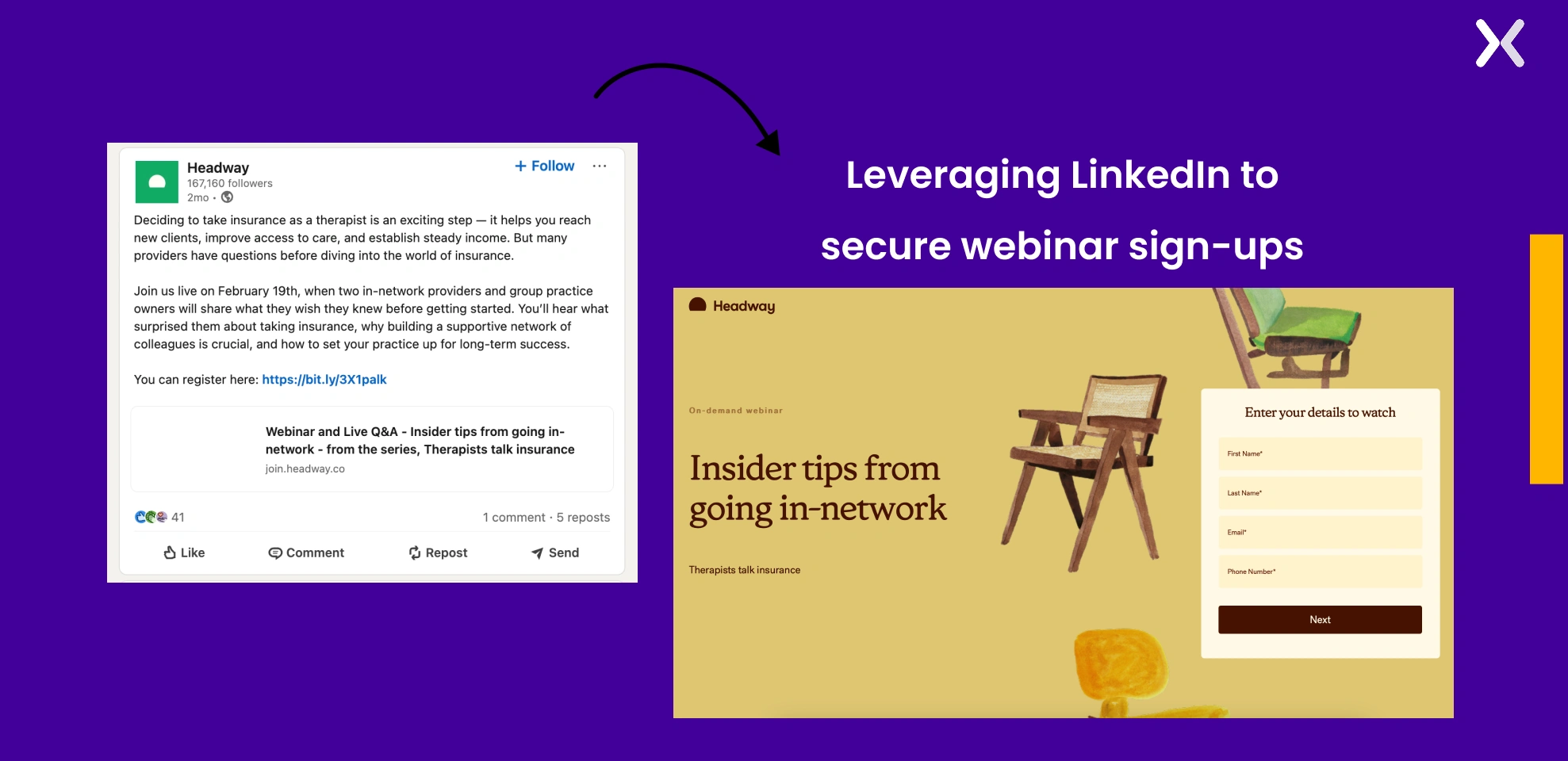
This approach works on both your homepage and dedicated demo landing pages. We have built webinar and demo landing pages for B2B analytics firms and enterprise software companies, the pages with embedded interactive demos consistently outperform those with static screenshots.
5. Free trials and freemium models
Free trials and freemium models let prospects experience your product before committing. The data on trial conversions tells a clear story, but the commonly cited numbers are outdated.
Two findings worth noting: 7-day trials convert at 40.4% compared to 30.6% for trials lasting 61+ days. Shorter urgency drives action. And opt-out trials (requiring a credit card upfront) convert at nearly 3x the rate of opt-in trials, but they attract fewer sign-ups, so total revenue can go either way. For SaaS businesses, creating a free trial landing page with clear value propositions and friction-free sign-up is essential. We have built trial and subscription landing pages that increased sign-up rates by removing unnecessary form fields and making the trial value immediately clear.
6. Product hunt: review sites, and community
Review platforms and communities like Product Hunt, G2, Capterra, and Reddit give your SaaS visibility in places where buyers actively compare solutions.
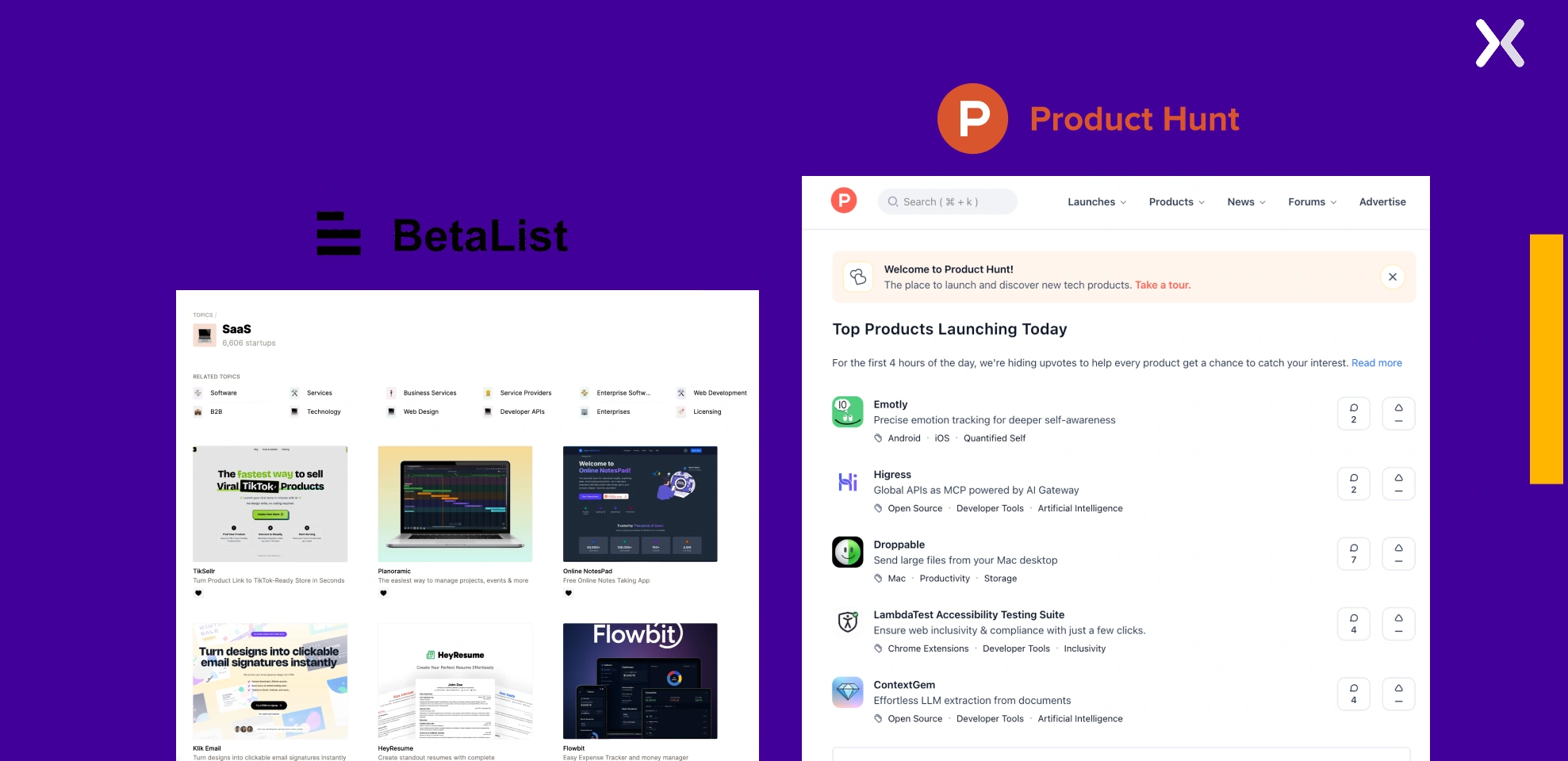
But listing your product is not enough. Your profile needs optimised messaging, real customer reviews, and clear USPs. Many B2B buyers search “[your category] vs [competitor]” on G2 before starting a sales conversation. Community-led growth is an underused channel for B2B SaaS. Slack communities, Discord servers, and subreddits in your niche are where your prospects ask peers for recommendations. Being genuinely helpful in these spaces builds trust that no ad can replicate. This is sometimes called “dark social”, word-of-mouth that does not show up in your analytics but drives real pipeline.
Paid B2B SaaS lead generation strategies
Paid channels accelerate what organic has validated. If you do not know your messaging or ICP yet, paid ads will burn budget fast.
7. Paid search and social Ads
Paid ads work across Google, LinkedIn, Facebook, and Instagram. For B2B SaaS, LinkedIn and Google typically produce the highest-quality leads, though they come at a higher cost per lead. Start with small budgets to test messaging and targeting. Run retargeting campaigns for visitors who engaged with your content or visited key pages. Use conversion-focused landing pages instead of sending traffic to your homepage. Growth teams running paid spend often work with a landing page agency for growth marketers to keep up with the test cadence paid channels demand.
A global technology consulting company wanted to grow their sales pipeline through paid search. We rebuilt their landing pages, restructured their PPC campaigns, and implemented conversion tracking. The result: cost per lead dropped from $2,300 to $550, and they gained 580 subscribers from a content-driven lead magnet.
8. Influencer and partner marketing
Influencer marketing is not just for consumer brands anymore. B2B SaaS companies are working with industry thought leaders, YouTube creators, and niche newsletter writers to reach buyers in places ads cannot. Look for influencers who are trusted voices in your space, whether they are LinkedIn creators with engaged B2B audiences, YouTube educators who review SaaS tools, or respected bloggers. The right partnership boosts credibility, expands reach, and drives qualified leads. Referral and partner programmes also fall here. Set up a formal referral programme with clear incentives. Partner with complementary (non-competing) SaaS products for co-marketing campaigns, joint webinars, or shared audiences. Referred leads have the highest close rates of any channel because they come with built-in trust.
9. Dedicated landing pages
Paid ads or organic traffic, every B2B SaaS lead generation strategy requires one essential element: a dedicated landing page built for conversions. Landing pages match your campaign messaging to the visitor’s intent. If someone clicks an ad for a specific feature, the landing page should speak directly to that feature and the pain point it solves.
- Match the message. The landing page headline should mirror the ad or email that drove the click. Message mismatch is the #1 reason for high bounce rates on campaign pages.
- Include social proof. Testimonials, case studies, trust badges, and client logos build credibility fast, especially for visitors who have never heard of your brand.
- One CTA per page. Whether it is "Start free trial", "Book a demo", or "Download the guide", pick one action and design the entire page around it.
- Optimise for mobile. Over 50% of B2B research happens on mobile. If your form is hard to fill out on a phone. You are losing leads.
- A/B test continuously. Headlines, CTAs, form length, social proof placement. Small improvements compound into significant conversion lifts over time.
Guide B2B SaaS Landing Pages: The Complete Strategy to Drive Sign-Ups and Demo Bookings →
A B2B cybersecurity SaaS company needed a "Book a Demo" landing page that converted enterprise security buyers. We designed and built a focused landing page with clear value propositions, security trust badges, and a simplified booking flow. The page delivered a 65% increase in demo conversions.
AI and Intent-Based strategies (what is new in 2026)
These three strategies represent the fastest-growing area in B2B SaaS lead generation. A year ago, most of these were experimental. In 2026, they are becoming core infrastructure for growth teams.
10. AI-Powered sales agents and outreach
AI sales agents now autonomously handle prospect research, data enrichment, and real-time lead routing. The impact on speed-to-lead, the time between a prospect showing interest and your team responding, has been dramatic. What used to take hours now happens in seconds. What AI agents do well in 2026:
- Automated research and enrichment. AI crawls LinkedIn, company websites, job boards, and funding announcements to build prospect profiles before your team writes a single email.
- Real-time lead routing. When a visitor fills out a form or engages with content, AI scores and routes the lead to the right rep immediately, not the next business day.
- Personalised outreach at scale. AI-generated emails that reference specific company context (recent product launches, hiring patterns, tech stack) outperform generic templates.
Reality check: AI-driven hyper-personalisation can drive 202% more conversions compared to generic outreach (Gravitate Design, 2026). But the tools are only as good as your ICP definition and data quality. "AI-powered" outreach built on a bad prospect list just sends bad emails faster.
11. Signal-Based selling and intent data
Signal-based selling replaces static lead scoring with real-time buyer signals. Instead of scoring leads based on job title and company size, you prioritise outreach based on what prospects are actually doing: visiting your pricing page, downloading a competitor comparison, searching for solutions on G2, or hiring for roles that use your category. Intent data sources include:
- Website visits, content downloads, email opens, product usage patterns
- Platforms like Bombora, 6sense, and G2 Buyer Intent track research behaviour across thousands of B2B websites
- LinkedIn engagement, community participation, job postings AI-assisted account scoring combined with intent signals lifts opportunity creation by 38% (Span Global Services, 2026). The key shift: instead of asking “does this lead match our ICP?”, signal-based selling asks “is this lead actively looking for a solution right now?”
12. Account-Based marketing (ABM)
ABM flips traditional lead generation. Instead of casting a wide net and qualifying inbound leads, you identify target accounts first and build campaigns specifically for them. For B2B SaaS companies with annual contract values above $10K, ABM is increasingly the primary growth motion. You select 50-200 target accounts, create personalised content and ads for each segment, and coordinate outreach across sales, marketing, and customer success. What makes ABM work:
- Tight ICP definition. You need a clear profile of your best-fit accounts, industry, company size, tech stack, buying signals.
- Personalised landing pages. Some ABM campaigns create account-specific landing pages showing relevant case studies and messaging for that company’s industry. We have built these for enterprise software clients, each landing page speaks directly to the target account’s industry and challenges.
- Multi-channel coordination. LinkedIn ads + email sequences + direct mail + sales calls, all targeting the same accounts with consistent messaging.
- Long timeline. ABM campaigns run for 6-12 months. This is not a quick-win tactic. It is an investment in your highest-value accounts.
What has changed in B2B SaaS lead gen (2025 vs 2026)
If you are still running the same playbook from 2024, some of this will be uncomfortable. The environment has shifted fast.
Cold email is harder: not dead
Reply rates dropped from 8.5% (2019) to 3-5% (2025). Inbox providers are more aggressive with spam filtering. But the top 25% of cold email campaigns still achieve 15-25% reply rates (Snovio, 2026). The difference is research depth and personalisation quality, not volume.
AI overviews are reshaping organic traffic
AI Overviews appeared on 18.76% of US search results by November 2024, and the number has grown since. For B2B SaaS lead generation queries, this means generic list posts get summarised directly in the SERP. To earn the click, your content needs something the AI cannot replicate: original data, real case studies, practitioner frameworks, and actionable tools.
Linkedin’s platform has evolved
LinkedIn’s 2026 updates include an AI Sales Assistant in Sales Navigator, a new “Depth Score” system for content distribution, and a Company Intelligence API. In beta, the Company Intelligence API showed a 287% increase in companies reached (NiuMatrix, 2026). The platform now rewards depth of engagement over surface-level likes.
B2B web traffic is declining
Three out of four B2B websites lost approximately 34% of their traffic year over year between 2024 and 2025 (Martal Group, 2026). Click-through rates are falling roughly 30% across B2B software categories. This makes conversion optimisation more important than ever, if fewer visitors are arriving, each one needs to count.
What this means for your strategy: The era of "drive traffic, convert a percentage" is narrowing. B2B SaaS companies that invest in conversion rate optimisation (better landing pages, stronger CTAs, faster follow-up) will outperform competitors who only invest in traffic acquisition.
B2B SaaS funnel conversion benchmarks (2026)
The right benchmarks help you identify where your funnel leaks. These are updated for 2026, sourced from primary research.
| Funnel Stage | Benchmark | Top Performers | Source |
|---|---|---|---|
| Visitor → Lead | 1.4% - 2.5% | 8% - 15% | First Page Sage, 2026 |
| MQL → SQL | 15% - 21% (general B2B) | ~40% (SaaS-specific) | Data-Mania, 2026 |
| Free trial → Paid (opt-in) | 18.2% | 25% - 30% | Userpilot, 2025 |
| Free trial → Paid (opt-out) | 48.8% | 55% - 65% | First Page Sage, 2026 |
| Freemium → Paid | 3% - 7% | 10% - 15% | First Page Sage, 2026 |
The SaaS-specific MQL-to-SQL rate (~40%) is significantly higher than the often-cited 16-20% general B2B benchmark. This is because SaaS MQLs tend to be self-qualified. They have already tried the product, engaged with content, or requested a demo.
Tools for B2B SaaS lead generation
Prospecting and lead discovery
- Finding and enriching contact data with built-in email sequencing. Strong for US data; consider Cognism for European markets or ZoomInfo for enterprise.
- Identifying decision-makers. The 2026 AI Sales Assistant and Depth Score features make prospecting more efficient, but the learning curve has increased.
Landing page builders
- Drag-and-drop builder with A/B testing. Solid choice for SaaS landing pages, though pricing has increased, watch the visitor caps.
- Lightweight and fast for simple MVP pages or one-page lead funnels. We have built landing pages across Unbounce, WordPress, Instapage, Webflow, Kajabi, and custom Jekyll setups. Honestly, the platform matters far less than people think. A well-built page on Carrd will outperform a sloppy page on an enterprise platform every time.
Portfolio Jobheron, B2B SaaS Recruitment Landing Page (Unbounce) →
Forms and lead capture
- Interactive forms that capture lead info in a user-friendly way.
- Free alternative to Typeform, quick to set up and embed.
- Adds popups, forms, and CTAs to your site with smart targeting. We integrate landing pages with HubSpot, Marketo, and custom CRM setups regularly. For one SaaS client, we built multi-step HubSpot forms that reduced form abandonment by breaking a 12-field form into three conversational steps.
Analytics and attribution
- Essential for tracking lead sources and campaign performance.
- Understanding how users interact with your landing pages. Session recordings show exactly where visitors hesitate, scroll back, or abandon.
"We have seen growth in our lead gen volume and also better quality leads. Apexure has strong expertise in their space."
"Built me a bottom-of-the-funnel landing page that converted above 4%, double the industry average."
"Did a great job listening to our needs and providing a landing page template that used industry best practices. Learned our Marketing Automation system to implement the landing pages."
Ready to build your B2B SaaS lead generation system?
A steady B2B SaaS lead generation funnel is not built in a week. It takes months of testing, measuring what actually moves pipeline, and cutting what doesn’t, even when it feels like it should work. Start with the organic foundations: content, cold email, LinkedIn. Validate your messaging and ICP before you scale into paid. Layer in AI and intent-based approaches once your team and data are ready. And put a dedicated, conversion-optimised landing page at the end of every campaign. We cannot stress that last point enough. We have watched clients double their conversion rates just by switching from homepage traffic to matched landing pages. The companies that win at B2B SaaS lead gen are not the ones with the biggest budgets. They are the ones that test ruthlessly, measure honestly, and fix the leaky parts of their funnel instead of pouring more traffic into it.
Get a Lead Generation Landing Page That Converts
We build SaaS landing pages with matched messaging, A/B testing, and CRM integration. Tell us about your campaign. We will design a page that turns your traffic into qualified leads.
Get Started →What you should do now
Found this blog post helpful? Here are more ways in which we can help you with B2B SaaS Lead Generation:
- Build a lead-generating SaaS landing page
Apexure has 100+ blog posts on landing pages — from creation to testing, analysis to optimisation. Read them before you build your SaaS landing page.
- Get expert help
Building a high-converting SaaS landing page on your own takes time. Our team has built 460+ landing pages and websites across SaaS, fintech, and B2B. Book a call and one of our experts will contact you.
- See what great SaaS pages look like
Check out our landing page portfolio to see conversion-focused designs filtered by industry. Find what is working for SaaS companies right now.
Frequently asked questions
Start with two or three organic tactics, content marketing, cold email, and LinkedIn outreach. Run them in parallel for 60-90 days, measure which channels produce qualified leads (not just volume), and double down on what works. Avoid spreading budget across paid channels until you have validated your messaging and ICP through organic feedback.
B2B SaaS deals involve longer sales cycles (3-9 months), multiple decision-makers, and higher contract values. Leads need more education through demos, case studies, and ROI calculators before converting. B2C SaaS can rely on impulse-driven tactics like social ads and influencer marketing, while B2B requires relationship-building and proof of business impact.
Visitor-to-lead conversion rates for B2B SaaS typically range from 1.4% to 2.5%, with top performers reaching 8-15%. Free trial to paid conversion averages 18.5%, and MQL-to-SQL conversion for SaaS specifically runs around 40%. These benchmarks vary by pricing model, target market, and sales motion.
AI is compressing speed-to-lead from hours to seconds through automated research, enrichment, and routing. Signal-based selling uses intent data and behavioural signals to prioritise outreach rather than static lead lists. AI-personalised cold emails are outperforming generic templates, but the shift also means prospects expect more relevant, personalised outreach — generic volume plays are declining.
Yes. Sending paid traffic or campaign-specific visitors to your homepage wastes budget. A dedicated landing page matches the visitor’s intent, removes navigation distractions, and focuses on a single conversion action. We have seen conversion rates double when clients switch from homepage traffic to dedicated landing pages with matched messaging.
Partnerships and referral programmes produce the highest-quality leads because they come with built-in trust. Set up a formal referral programme with clear incentives, partner with complementary (non-competing) SaaS products for co-marketing, and make it easy for existing customers to refer others. Referred leads typically convert faster and have higher lifetime value.
How to design a SaaS homepage for conversions, CTA placement, social proof, and feature sections that drive sign-ups.
View all sources
B2B SaaS Funnel Conversion Benchmarksfirstpagesage.com
SaaS Average Free Trial Conversion Rate Benchmarksuserpilot.com
MQL to SQL Conversion Rate Benchmarks (2026)data-mania.com
Cold Email Statistics and Benchmarks (2026)snov.io
Lead Generation Statistics (2026)martal.ca
LinkedIn Sales Navigator 2026 Complete Guideniumatrix.com
B2B SaaS Lead Generation Strategies for 2026gravitatedesign.com
How AI Is Changing B2B Lead Generation (2026)spanglobalservices.com
AI Overviews: 50 Statistics for Marketing Leadersgenesysgrowth.com
Top B2B Lead Generation Trends of 2026dwmedia.com
The 50-point landing page checklist
Everything we check before a page goes live: copy, layout, forms, trust, speed and tracking. One PDF, sent by email.
Need a page built instead? Get a fixed quote.

Waseem founded Apexure in 2015 and has led its work on 3,000+ pages for 300+ clients since. He writes about what the team sees after the click, which is pages, forms, tracking and the systems behind them.