A B2B SaaS company spends $30,000 per month on Google Ads and Meta Ads. Both campaigns drive traffic to the same landing page. Google traffic converts at 3.8%. Meta traffic converts at 1.2%.
The instinct is to blame Meta. The real problem is the landing page.
(Quick note before we go further: Meta Ads is the platform formerly known as Facebook Ads, so every reference to Meta Ads here applies equally to Facebook Ads. The Facebook Ads vs Google Ads debate is the same conversation, different branding, identical mechanics.)
Google Ads traffic arrives with intent. Someone typed "CRM software for small business" and clicked an ad. They already know what they want. Meta Ads traffic arrives mid-scroll. Someone was watching dog videos and your ad interrupted them. They might be curious, but they haven't decided anything yet.
Sending both audiences to the same page is the most expensive mistake in paid media. At Apexure, we've built over 3,000 landing pages across both platforms. The pattern is consistent: businesses that build platform-specific landing pages outperform a shared page across channels.
What follows is the playbook we use internally at Apexure, side-by-side architecture comparisons, conversion benchmarks by industry, and the decision framework for when a shared page is fine versus when it's costing you money.
The Core Difference: Intent vs. Interruption
Every landing page decision flows from one question: what was the visitor doing five seconds before they arrived? That question, not the Google Ads vs Meta Ads platform debate, decides whether a page converts.
Google Ads visitors were searching. They typed a query, read your ad headline, and clicked because your ad matched their need. They arrive with purchase intent already formed. Your landing page's job is to confirm they're in the right place and remove friction from the conversion.
Meta Ads visitors were scrolling. Your creative caught their attention in a feed full of distractions. They might be interested, but they haven't committed to anything. Your landing page's job is to build desire from scratch and educate before asking for a commitment.
This isn't a minor subtlety. It changes everything, headline strategy, page length, form placement, proof positioning, and even above-the-fold design.
Google landing pages confirm intent. Meta landing pages create it. Building one page for both is like writing a cold email and a proposal in the same document.
Google Ads Landing Page Architecture
Google's Quality Score algorithm evaluates landing page experience as one of three core components (alongside expected CTR and ad relevance). A poor landing page experience increases your CPC and drops your ad position, even if your bid is competitive. This makes quality score calculation a direct ROI lever, not just a vanity metric.
We structure every Google Ads page around five layers, top to bottom:
1. Keyword Echo in the Headline
If someone searches "B2B landing page agency," your headline needs to contain those words. Not a clever rewrite. Not a benefit-first headline. The exact query, or something close enough that the visitor instantly confirms "yes. This is what I searched for."
This is where dynamic keyword insertion becomes a competitive advantage. Instead of building 50 separate pages for 50 ad groups, DKI lets you swap headline text dynamically based on the matched search term.
2. Short Pages, Fast Conversions
Google searchers have already done their research. They compared options, read reviews, checked pricing. By the time they click your ad. They're in decision mode, not discovery mode.
Shorter pages win. A single-screen layout with a clear headline, 3-4 bullet points of differentiation, a trust bar, and a visible form consistently outperforms long-scroll pages for high-intent search traffic. (We used to build longer Google Ads pages by default. The data changed our minds.)
Board Agenda, a UK-based corporate governance media brand, needed a landing page for a paid search campaign targeting senior executives. Apexure built a focused single-purpose page with a multi-step registration form designed to reduce friction for a time-pressed audience. The form asked for information progressively rather than front-loading all fields.
"The landing page design Apexure created was first-rate and well-suited to our target audience. The attention to detail on messaging and layout was of a very high standard."
Trevor Pryer, CEO, Board Agenda3. Quality Score Is a Pricing Lever
Google assigns a Quality Score from 1-10 based on three factors: expected click-through rate, ad relevance, and landing page experience. A landing page score of "above average" drops your CPC by 16-50%, according to Google's own documentation. A "below average" score inflates it by the same margin.
The specific signals Google evaluates: page speed (Core Web Vitals), mobile responsiveness, content relevance to the search query, navigation simplicity, and transparency about what happens after conversion. Read the full breakdown in our PPC landing page optimization guide.
Page speed matters more for Google Ads than Meta Ads. Google's crawler evaluates load time as part of Quality Score. A landing page that loads in 1.5 seconds on 4G scores higher than one loading in 3 seconds, even if the content is identical. Compress images, defer non-critical JavaScript, and eliminate render-blocking resources.
4. Google Ads Landing Page Optimization Checklist
Google Ads landing page optimization is less about clever copy and more about removing friction between intent and conversion. Use this as the final pass before a campaign goes live:
- Keyword-matched headline, the first three words confirm the search query.
- LCP under 2.5 seconds on mobile, audited in PageSpeed Insights, not guessed.
- Form above the fold, 3-5 fields, no optional questions.
- Trust signals before scroll, logo bar, rating, or "Trusted by X" line.
- Single CTA, no top navigation, no secondary links, no footer menu.
- Message match with the ad, if the ad says "free trial," the page says "free trial," not "get started."
Miss two or more of these and Quality Score quietly taxes every click for the life of the campaign.
Meta Ads Landing Page Architecture
Meta doesn't have a Quality Score equivalent that affects ad pricing. But Meta's algorithm does optimise delivery based on post-click behaviour. If visitors bounce within 2 seconds, Meta learns that your landing page doesn't match the creative promise and reduces delivery to high-value audiences.
The page structure flips almost entirely:
1. Visual Continuity From Ad to Page
On Meta, the creative is the hook. If your ad shows a bold product shot with orange branding, the landing page needs to visually continue that story. A jarring disconnect between the ad creative and the landing page is the fastest way to lose someone who was only half-interested to begin with.
This applies to colour, imagery style, and tone. We learned this the hard way on a healthcare client project, the ad was warm and approachable, the landing page was clinical and corporate. Bounce rate was 78%. Matching the visual tone brought it under 50% within a week.
2. Longer Pages That Educate
Cold traffic from Meta doesn't know you. Doesn't trust you, and didn't ask for you. The landing page has to do the work that Google searchers already did themselves, research, compare, and validate.
That means longer pages with more sections: problem agitation, education, social proof blocks, objection handling, and a graduated CTA strategy. The post-click experience for Meta traffic is essentially a mini-sales page.
Affordable Health Coverage Today needed a custom-built landing page (no third-party page builder) for health insurance lead generation. Apexure built a page with dynamic address field prefilling using GeoTargetingWP, auto-populating zip, state, and city fields to reduce form friction. The page was designed for cold traffic from paid social campaigns where visitors needed education about coverage options before converting.
3. Social Proof Density Is Higher
A Google Ads page might need one trust bar and one testimonial. A Meta Ads page needs three to four proof touchpoints spread throughout the scroll. Cold audiences are sceptical by default. They need repeated reassurance before committing.
This is why we front-load client logos, embed review quotes between content sections, and place case study snippets before the form, not after. The proof needs to arrive before the ask.
"Honestly, if you're looking for someone to build you a high-converting landing page, then look no further. The Apexure team built me a bottom-of-the-funnel landing page that converted above 4%, double the industry average."
Harry Haines, Cahill Corporation LimitedMeta landing pages need 2-3x more social proof than Google pages. Cold traffic trusts data over claims, embed real metrics, real names, and real logos throughout the scroll.
Side-by-Side: Platform Design Decisions
This is the scoping checklist our team references when a client asks for pages on both platforms. Every row represents a design decision that changes based on the traffic source.
| Design Element | Google Ads Landing Page | Meta Ads Landing Page |
|---|---|---|
| Headline | Keyword echo, mirrors search query | Benefit/curiosity hook, continues ad creative |
| Page length | Short (1-2 scrolls) | Long (3-5 scrolls) |
| Form placement | Above fold, visible on load | Below education section (mid-page or lower) |
| Form length | 3-5 fields (name, email, company) | 2-3 fields or multi-step (lower commitment first) |
| CTA tone | Direct: "Get a Quote," "Start Free Trial" | Soft: "See Examples," "Get the Guide," "Watch Demo" |
| Social proof | 1 trust bar + 1 testimonial | 3-4 proof sections distributed throughout |
| Hero image | Product/service focused | Matches ad creative exactly |
| Navigation | Remove, single action only | Remove or minimal, single action only |
| Page speed priority | Critical (affects Quality Score and CPC) | Important (affects UX, not ad pricing) |
| Content strategy | Confirm and convert | Educate, build trust, then convert |
Conversion Benchmarks: What the Data Shows
Before comparing platforms, a caveat: benchmarks are directional, your numbers depend on industry, offer, targeting quality, and the landing page itself. That said, the cross-industry patterns are consistent enough to calibrate expectations.
The headline numbers are misleading. Meta's higher average CVR includes low-friction actions (email signups, content downloads) where a 5-8% rate is normal. Google's average is weighted toward higher-friction conversions (demo requests, quote forms) where 2-4% is strong. When you compare like-for-like conversion actions, Google search traffic converts at a higher rate for bottom-of-funnel actions.
| Industry | Google Ads CVR (Search) | Meta Ads CVR | Key Pattern |
|---|---|---|---|
| B2B SaaS | 2.4% | 2.1% | Google wins on demo requests; Meta wins on content downloads |
| Ecommerce | 2.8% | 4.1% | Meta's visual format drives impulse purchases |
| Healthcare | 3.4% | 2.8% | Google captures active care-seekers; Meta builds awareness |
| Financial Services | 3.1% | 1.9% | High-trust decisions favour search intent |
| Legal | 4.2% | 1.4% | Urgent need drives Google; Meta struggles with cold legal leads |
| Education | 2.6% | 3.8% | Meta's targeting excels at reaching aspirational learners |
The pattern: Google dominates for urgent, high-intent categories (legal, healthcare, financial). Meta dominates for visual, aspirational categories (ecommerce, education). B2B sits in the middle, where the landing page design makes the difference more than the platform itself.
Google Ads vs Facebook Ads Cost: Where the Money Actually Goes
Cost is the second question we get after conversion rate. The Google Ads vs Facebook Ads cost comparison isn't a clean apples-to-apples, the two platforms price attention differently.
| Cost Metric | Google Ads (Search) | Facebook/Meta Ads |
|---|---|---|
| Average CPC | $2.69 (cross-industry) | $0.97 (cross-industry) |
| Average CPM | $38.40 | $7.19 |
| Average CPA | $48.96 | $18.68 |
| Legal / Insurance CPC | $6-$50+ | $1-$3 |
| Ecommerce CPC | $1.16 | $0.70 |
Meta/Facebook looks cheaper on CPC and CPM, but the volume of low-intent impressions inflates the real cost per qualified lead. Google's higher CPC buys conversion-ready traffic; Meta's cheaper clicks often need remarketing touches before they convert. A $50 CPC on a $15,000 product is rational. A $1 CPC on the same product, compounded across 5,000 unqualified clicks, is not.
Facebook Ads vs Google Ads Performance: Reading the Numbers Correctly
The Facebook Ads vs Google Ads performance question depends on the attribution window and the funnel stage you're measuring. Last-click attribution flatters Google, it captures the final search that precedes a purchase. Multi-touch attribution shows how often Meta initiated the journey that Google later closed.
When clients run both Google Ads and Facebook Ads together, we typically see:
- Google Ads wins on last-click ROAS (usually 3-5x for B2B, 4-7x for ecommerce).
- Facebook Ads wins on assisted conversions, view-through attribution, and new-customer acquisition cost.
- Combined budgets outperform either platform alone, pausing one typically drops the other's performance within 2-4 weeks.
The honest answer to "which performs better" is: they measure different things in the same funnel. Use Google Ads and Facebook Ads as sequential stages, Facebook warms the audience, Google harvests the intent, and optimise the landing page for whichever stage the visitor is entering.
"The Apexure team went above and beyond on our landing page, and I'm thrilled with the results. We've gotten great feedback from our peers and they made us look so good. Our landing page was custom and their dev skills made easy work of our requests."
Curtis Boyd, The Transparency CompanyWhen Shared Landing Pages Actually Work
Not every campaign needs two separate pages. Shared pages can work when three conditions are true simultaneously:
- The offer is simple and universally understood
A free ebook download, a webinar registration, or a straightforward product purchase. If the conversion requires no explanation, a shared page can handle both traffic sources. - Both audiences are at the same funnel stage
If your Google Ads target top-of-funnel informational queries (not high-intent commercial terms) and your Meta Ads target interest-based audiences, the intent gap is small enough for a shared page. - You're testing, not scaling
In the early stages of a campaign, running both traffic sources to one page gives you a baseline. Once you have enough data to see the platform-level conversion gap. That's when you split into dedicated pages.
The Debate: Should you always build separate landing pages?
For separate pages: Platform-specific design converts more of each audience. Intent mismatch is the top conversion killer. Dedicated pages let you optimise messaging per audience.
For shared pages: Building and maintaining two pages doubles production cost. Small-budget campaigns may not justify the investment. Some offers convert equally regardless of traffic source.
Verdict: Separate pages for any campaign spending over $5,000/month. Below that threshold, start with one page and split once you see a 2x+ conversion gap between platforms.
The "Same Offer, Two Pages" Playbook
When a client runs both Google and Meta campaigns for the same product. This is the framework we follow. It's the same process whether the page is for a Series A startup or a large enterprise's regional campaign.
This dual-page approach compounds over time. As you collect platform-specific conversion data, you can run A/B tests on each page independently, testing headlines on the Google page while testing proof placement on the Meta page. Shared pages force you to compromise on every test.
Apexure designs platform-specific landing pages built on conversion data from 3,000+ projects. If your paid campaigns drive traffic to a single page, we'll show you exactly where conversions are leaking, and build the pages that fix it.
Get a Landing Page AuditMeasuring What Matters: Platform-Specific KPIs
One mistake we see repeatedly: marketers applying the same KPI thresholds to both platforms, then drawing the wrong conclusions from the data.
| KPI | Google Ads Priority | Meta Ads Priority |
|---|---|---|
| Primary conversion rate | Form submission / purchase | Micro-conversion first (click, scroll), then form |
| Bounce rate threshold | <40% (intent mismatch signal) | <60% (expected for cold traffic) |
| Time on page | Less is better (fast decisions = high intent) | More is better (education is working) |
| Scroll depth | Less relevant (form is above fold) | Critical (tracks engagement through education) |
| Cost metric | CPA (cost per acquisition) | CPL (cost per lead) at top, CPA for retargeting |
Understanding ROI vs ROAS becomes critical when comparing platform performance. Google Ads often shows higher ROAS on last-click attribution because it captures bottom-of-funnel intent. Meta frequently initiates the customer journey but doesn't get credit in last-click models. Multi-touch attribution paints a more accurate picture.
The attribution trap: Pausing Meta Ads because Google Ads "converts better" often causes Google Ads performance to drop within 2-4 weeks. Meta builds the awareness that Google captures. They're not competitors, they're sequential stages in the same funnel.
Advanced Tactics: What Top Performers Do Differently
Google Ads: Dynamic Personalisation
The highest-performing Google Ads pages we manage go beyond keyword echo. They use UTM parameters and dynamic text replacement to personalise the entire page based on ad group, campaign, or audience segment.
A visitor who searched "enterprise CRM pricing" sees different headline text, proof points, and form fields than someone who searched "small business CRM free trial." Same product, different page experience, dramatically different conversion rates.
We build this using personalised landing page systems that swap content blocks based on URL parameters. It's the efficiency of a shared page with the relevance of dedicated pages.
Meta Ads: Retargeting-Specific Pages
First-touch Meta traffic gets the education-heavy page. But retargeting traffic, people who visited your site, watched 50%+ of your video ad, or engaged with a previous campaign, deserves a different landing page.
Retargeting visitors already know you. They visited, considered, and left. The retargeting page should be shorter, more direct, and focused on the specific objection that stopped them converting the first time. This is where a strong conversion rate optimisation strategy compounds: optimising not just one page, but the sequence of pages a visitor encounters across multiple touchpoints.
Craver, a restaurant technology startup, needed a landing page system that worked across both Google search campaigns and Meta retargeting. Apexure built a primary acquisition page in HubSpot with clean design, strong CTAs above the fold, and high-quality imagery, then created a shorter retargeting variant focused on objection handling and social proof. The page architecture followed the education-first principle for cold traffic and the confirmation principle for warm traffic.
"The Apexure team have been a real pleasure to work with, they deliver high-quality work and can work to tight timelines. They communicate frequently and clearly and are really easy to work with!"
Zuki Majuqwana, Director of Marketing, CraverThe Future: AI Optimisation and Platform Convergence
Performance Max and Advantage+ are automating the targeting layer. Audience selection, bid management, creative rotation, Google and Meta are both moving these into black-box AI. What they're not automating is the landing page.
That changes the competitive equation. When every advertiser in your category uses the same AI to find the same audience, the post-click experience is what separates a $40 CPA from a $120 CPA.
As AI commoditises ad targeting, the landing page becomes the last remaining lever for competitive advantage. Invest in platform-specific post-click experiences now, before your competitors do.
The distinction between SEO and PPC landing pages is well-established. The next frontier is the same split applied within paid media itself, building architecturally different pages for Google Ads and Meta Ads. That's where the conversion gains are hiding right now.
Landing Pages We've Built for Paid Campaigns
Here are real examples from our portfolio, a mix of B2B and B2C pages designed for different ad platforms. Each links to a full CRO breakdown with design decisions and conversion architecture analysis.



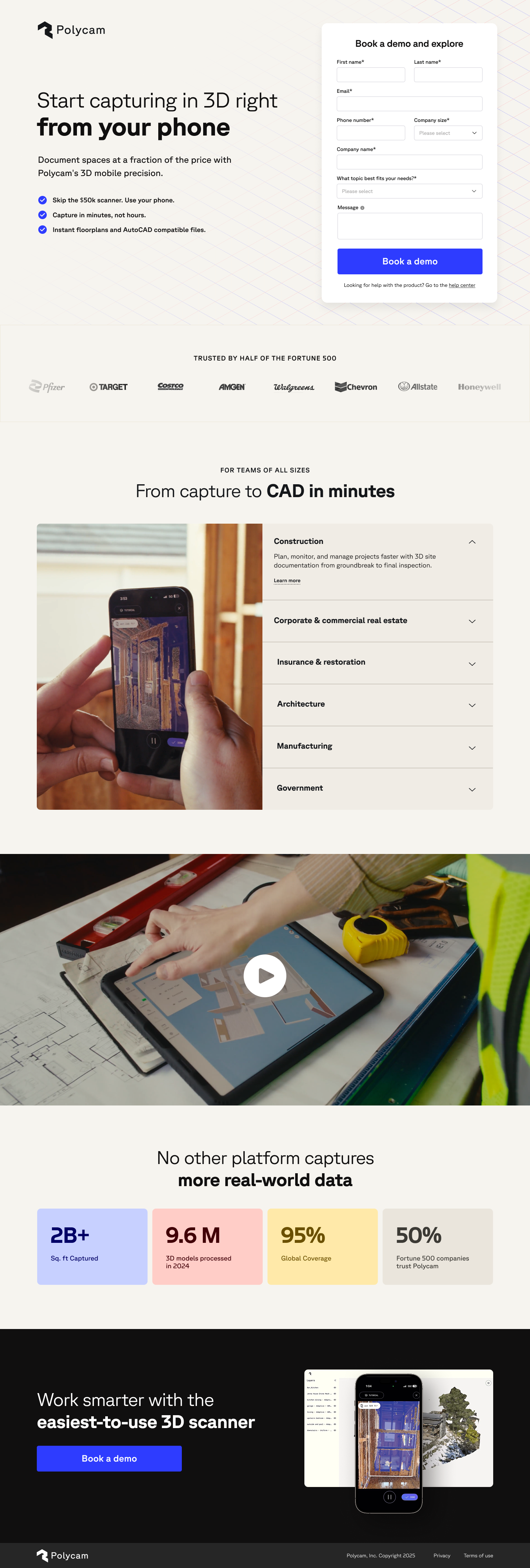
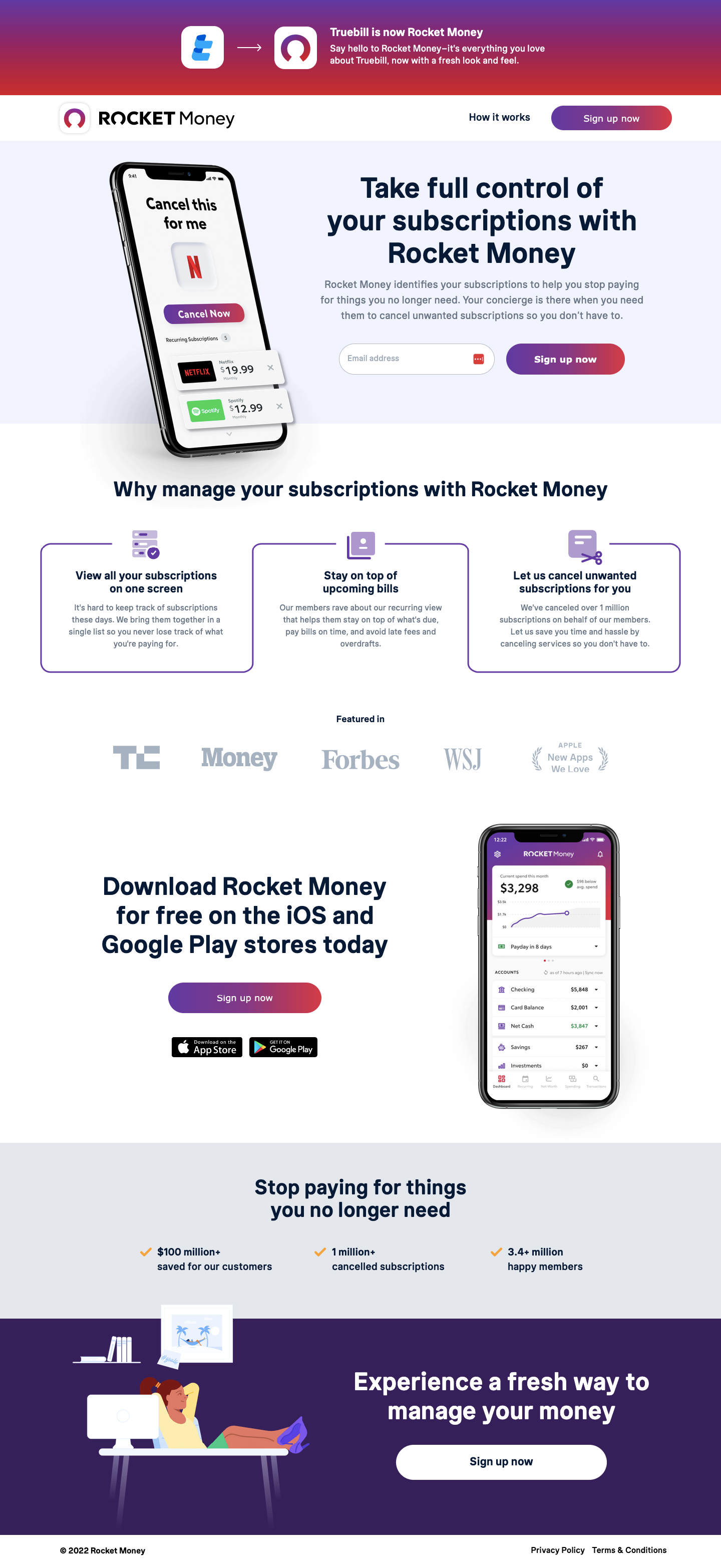
See all 50+ examples in our landing page examples portfolio.
Apexure builds platform-specific landing pages backed by conversion data from 3,000+ projects. Whether you're running Google Ads, Meta Ads, or both, we'll design the pages that turn clicks into revenue.
Talk to Our TeamGoogle Ads Industry Benchmarkswordstream.com
About Quality Score, Official Documentationsupport.google.com
Conversion Benchmark Reportunbounce.com
Apexure Reviews (5.0/5, 33 verified reviews)clutch.co
Core Web Vitalsweb.dev
The 50-point landing page checklist
Everything we check before a page goes live: copy, layout, forms, trust, speed and tracking. One PDF, sent by email.
Need a page built instead? Get a fixed quote.

Waseem founded Apexure in 2015 and has led its work on 3,000+ pages for 300+ clients since. He writes about what the team sees after the click, which is pages, forms, tracking and the systems behind them.