LinkedIn Ads is the most expensive mainstream ad platform. Average CPCs sit between $8 and $14 in the US. Target C-suite decision-makers in SaaS or finance and you're looking at $20-$35 per click.
That changes the maths entirely. A 2% conversion rate on Google Ads, where clicks run $2-$5, is tolerable. That same 2% on LinkedIn? You're burning $500-$1,750 per lead before anyone picks up the phone.
We've built over 3,000 landing pages at Apexure, including hundreds specifically for B2B teams running LinkedIn Ads. And we keep seeing the same thing: the pages that pull their weight on Google fall flat on LinkedIn. Different audience. Different intent. Stakes per click that run 3-5x higher.
So the question isn't just "how much do LinkedIn Ads cost". It's how to use LinkedIn to generate leads at a cost per lead your CFO will sign off on. The honest answer: the ad platform is only half the equation. The other half is the LinkedIn landing page sitting behind every click.
What follows is the playbook we use internally, specific strategies for converting LinkedIn's expensive traffic, real benchmarks from our client campaigns, and the page architecture that reliably delivers 4-9% conversion rates.
Why LinkedIn Ads Landing Pages Are Different From Everything Else
The people clicking your LinkedIn Ads aren't browsing casually. They're marketing directors, VPs of engineering, CFOs, professionals who were mid-scroll through their feed when your ad stopped them. You've got maybe 8 seconds to justify that interruption.
Three things make LinkedIn traffic essentially different from Google or Facebook traffic:
1. Professional context, professional expectations. These visitors just came from a platform where they were reading industry articles and peer updates. Your landing page needs to match that tone. Aggressive countdown timers and "LAST CHANCE!!!" copy that works on Facebook will tank your conversion rate on LinkedIn. Trust signals, client logos, social proof on landing pages, specific metrics, carry more weight than urgency tactics.
2. Mobile-dominant traffic. Over 85% of LinkedIn usage happens on mobile. Your page must render perfectly on a phone screen. Not "acceptable", perfectly. Text that requires pinch-zoom, forms that need horizontal scrolling, or hero images that push your CTA below the fold will kill conversions before visitors even read your headline.
3. Higher intent but longer sales cycles. LinkedIn visitors are typically mid-funnel B2B buyers. They're researching, not impulse-buying. Your page needs to give them enough to take the next step (download, demo, consultation) without demanding a commitment they're not ready for.
"If you're looking for someone to build you a high-converting landing page, look no further. They converted above 4%, double the industry average."
Harry Haines, Cahill Corporation, Upwork ReviewLead Gen Forms vs. Landing Pages: The Decision Framework
Every LinkedIn advertiser hits this question early. Most guides frame it as either/or. That's wrong. The answer shifts based on where the prospect sits in your funnel, what you're offering, and whether you're optimising for lead volume or pipeline quality.
The Debate: Lead Gen Forms or Landing Pages?
For Lead Gen Forms: 10-15% conversion rates | Pre-filled fields reduce friction | 30-50% lower CPL | Native LinkedIn experience
For Landing Pages: 20-40% higher SQL rates | Full tracking and attribution | Richer storytelling | Custom qualification logic
Verdict: Use Lead Gen Forms for top-of-funnel content offers. Use landing pages for mid-funnel demos, consultations, and high-commitment offers where lead quality matters more than volume.
The hybrid approach outperforms both individual strategies. Run Lead Gen Forms for your top-of-funnel content offers (eBooks, reports, webinar registrations) to build your retargeting pool cheaply. Then retarget those leads with landing page campaigns for demo requests and consultations, where lead quality directly impacts pipeline revenue.
LinkedIn's native CRM integration (launched mid-2025) makes this easier to track. You can now see real-time pipeline and revenue attribution inside Campaign Manager, which means you can finally measure which path, Lead Gen Form or landing page, produces more closed revenue, not just more leads.
Key Takeaway
Lead Gen Forms cut CPL by 30-50% but produce leads with 20-40% lower SQL rates. Use them for volume at the top of your funnel. Use landing pages wherever lead quality drives revenue.
The Anatomy of a High-Converting LinkedIn Ads Landing Page
We've run this exercise across hundreds of B2B landing page optimization projects. The gap between 2% and 6-9% conversion rates on LinkedIn traffic almost always comes down to the same structural elements. Here's what separates the pages that pay for themselves from the ones that drain budget.
1. Headline That Mirrors the Ad Copy
Message match is the single highest-use element on a LinkedIn Ads landing page. When someone clicks an ad that says "Reduce your sales cycle by 40%" and lands on a page headlined "Welcome to Our Platform," you've broken the promise that earned the click. On a $20 CPC platform, that broken promise costs real money.
The rule: your landing page headline should use the same language, same promise, and same specificity as your ad. If your ad mentions a number, your headline mentions that number. If your ad names a pain point, your headline names that pain point.
Apexure's post-click landing page strategy starts with ad-to-page message mapping. Before designing the page, we map every ad variant to its corresponding headline and subhead. This prevents the "generic landing page" problem that kills conversion rates on high-CPC campaigns.
2. Trust Architecture for Professional Buyers
LinkedIn visitors are sceptical by default. They've seen hundreds of B2B landing pages. Logos alone won't convince them. You need layered trust signals:
- Client logos from recognisable brands (6-8 logos, not 20)
- A specific metric from a real engagement ("4.2% conversion rate for Cahill Corporation")
- Third-party validation (Clutch rating, G2 badge, industry award)
- Named testimonial with title and company, not "Marketing Manager, SaaS Company"
- Exact numbers, not ranges ("3,000+ projects" beats "thousands of projects")
Board Agenda needed a landing page to convert UK board directors and senior executives, a notoriously difficult audience with zero tolerance for generic marketing. Apexure built a multi-step form landing page that reduced friction by breaking the registration into progressive stages, each revealing more value before asking for more information.
27.89% on C-suite executives. That number only makes sense when you understand the mechanics: every step in the form gave something before asking for something. By step three, the visitor had already invested enough attention that completing the form felt like the natural next move, not a leap of faith.
3. Form Design That Respects the CPC
Every unnecessary form field on a LinkedIn Ads landing page has a quantifiable cost. If your CPC is $15 and an extra field drops your conversion rate from 7% to 5%, that field just increased your cost per lead from $214 to $300. Over a $10,000 monthly spend. That's an extra $5,700 in wasted budget per month.
The principles that work on LinkedIn traffic specifically:
- Ask only what you can't get from enrichment
LinkedIn already has their job title, company, and seniority. Tools like Clearbit or ZoomInfo can append this data post-submission. Ask for email and one qualifying question. That's it. - Use multi-step forms for high-commitment offers
Breaking a 6-field form into two 3-field steps consistently lifts conversion rates by 15-25%. The first step should ask for low-friction information (name, email). The second asks qualifying questions. - Match form length to offer value
A 30-page industry report can justify 4-5 fields. A one-pager or checklist should need only email. If the form asks for more than the content delivers, visitors leave. - Pre-fill where possible
LinkedIn's URL parameters can pass UTM data. Use hidden fields to capture campaign, ad, and audience segment data without making the visitor type it.
These aren't theoretical recommendations. Our landing page form design best practices are drawn from A/B tests across hundreds of B2B landing pages where form changes directly moved conversion rates.
"Went above and beyond on our landing page. Custom and their dev skills made easy work of our requests."
Curtis Boyd, The Transparency Company, Upwork ReviewLinkedIn Ads Landing Page Benchmarks You Actually Need
Benchmark data for LinkedIn Ads is scattered and often misleading because different sources use different attribution windows. The two numbers that actually matter for B2B teams: LinkedIn Ads conversion rate by format, and LinkedIn Ads cost per lead B2B by industry. Here's what we've compiled from our client work and industry data for 2025-2026:
| Metric | Lead Gen Forms | Landing Pages | Hybrid (LGF → LP retarget) |
|---|---|---|---|
| Average conversion rate | 10-15% | 4-9% | 6-12% blended |
| Cost per lead (B2B SaaS) | $60-$120 | $150-$400 | $90-$200 |
| SQL rate | 15-25% | 35-55% | 30-45% |
| Cost per SQL | $300-$600 | $350-$700 | $250-$500 |
| Mobile conversion rate | 12-18% (native) | 3-6% (if not optimised) | Varies by page quality |
Attribution window matters. LinkedIn's default 7-day click-through window under-reports conversions for B2B sales cycles that run 30-90 days. Always compare both 7-day and 30-day windows before declaring a campaign "not working." The 30-day window typically shows 40-60% more conversions for enterprise campaigns.
The YoY cost increase matters for planning. LinkedIn Ads CPCs have risen roughly 8% year-over-year, which means your landing page conversion rate needs to improve by at least that much annually just to maintain the same cost per lead. Standing still means falling behind, particularly on LinkedIn Ads cost per lead B2B campaigns, where CFOs are already scrutinising the $150-$400 range against pipeline contribution.
Industry-Specific CPL Benchmarks and Landing Page Strategy
Not all LinkedIn Ads landing pages face the same economics. A fintech company targeting CFOs has a essentially different cost structure than an HR tech startup targeting recruiters. Here's how CPL and strategy shift by industry:
The pattern is clear: the more expensive your CPL, the more your landing page needs to do. Finance and enterprise SaaS landing pages need ROI calculators, detailed case studies, and multi-step qualification forms. HR and education can get away with shorter pages and Lead Gen Forms because the cost of a bad lead is lower.
Therapy Brands needed a dedicated free-trial landing page with API-powered form integration for their practice management platform. The challenge: healthcare buyers are risk-averse and need compliance signals before they'll hand over their email. Apexure built a landing page that led with HIPAA compliance messaging and embedded niche-specific USPs that matched with therapy practice owners, not generic SaaS copy.
1.99% looks unremarkable until you check the baseline. Healthcare B2B landing pages targeting practice owners convert at roughly 1.2% on average. A 66% lift in a vertical where compliance anxiety kills most conversions tells you something important: "good" is relative to the audience you're selling to.
Apexure has built 3,000+ landing pages for 300+ clients since 2015. If your LinkedIn Ads are driving traffic to a page that isn't converting. We can diagnose exactly why, and fix it.
Get a Free Landing Page Audit7 Conversion Tactics Specific to LinkedIn Ads Traffic
Skip this section if you want "use a clear CTA" advice, you've read that a hundred times. What follows are tactics that address the specific ways LinkedIn traffic behaves differently from every other paid channel, pulled from our work across hundreds of B2B landing page conversion rate optimisation projects.
Tactic 1: Match Your Content Offer to the Audience Segment
LinkedIn's targeting is the platform's greatest strength. You can target by job title, seniority, company size, and industry, which means you should be building different landing pages for different segments, not sending everyone to the same page.
A CMO doesn't want the same content as a marketing coordinator. The CMO wants an executive brief with ROI projections. The coordinator wants a tactical playbook they can implement. Sending both to the same landing page means at least one of them bounces. On a $20+ CPC platform. That's expensive waste.
This is where personalised landing pages by audience segment become essential. Build 2-3 landing page variants per campaign, each speaking directly to one audience segment's priorities.
Tactic 2: Use Document Ads + Landing Page as a Hybrid
LinkedIn Document Ads have a 22.73% lead form completion rate compared to 2.26% for video ads. That's a 10x difference in engagement. The smart play: use Document Ads to deliver a preview of your content (first 3-5 pages of a report), then gate the full version behind a landing page.
This pre-qualifies interest before the visitor reaches your page. Anyone who clicks through from a Document Ad has already consumed part of your content and wants more, which means your landing page conversion rate jumps because you're only sending high-intent visitors.
Tactic 3: Build a Retargeting Sequence, Not a Single Page
The highest-performing LinkedIn Ads strategies don't rely on a single page to convert. They build a sequence:
Tactic 4: Use LinkedIn's Audience Warming for Trust
Visitors who arrive from a LinkedIn retargeting ad have already seen your brand 3-5 times in their feed. They've read your Thought Leader Ads (which average a 2.68% CTR and $2.29 CPC, far cheaper than Sponsored Content). By the time they reach your landing page, they know who you are.
That pre-built familiarity means your landing page can be more direct. Less "about us" preamble, more "here's exactly what you'll get." Shorter pages with stronger CTAs outperform long explainer pages for warm audiences.
Tactic 5: Design for the LinkedIn Mobile Experience
When 85%+ of your traffic comes from mobile, your landing page architecture needs to account for it:
- Hero section must load meaningful content within 1.5 seconds on 4G, our analytics show a 22% lower bounce rate when this threshold is met
- Form fields must be full-width with 48px minimum tap targets
- CTA button must be visible without scrolling on standard phone screens (375px width)
- No horizontal scrolling, tables must stack vertically on mobile
- Images compressed to WebP with lazy loading below the fold
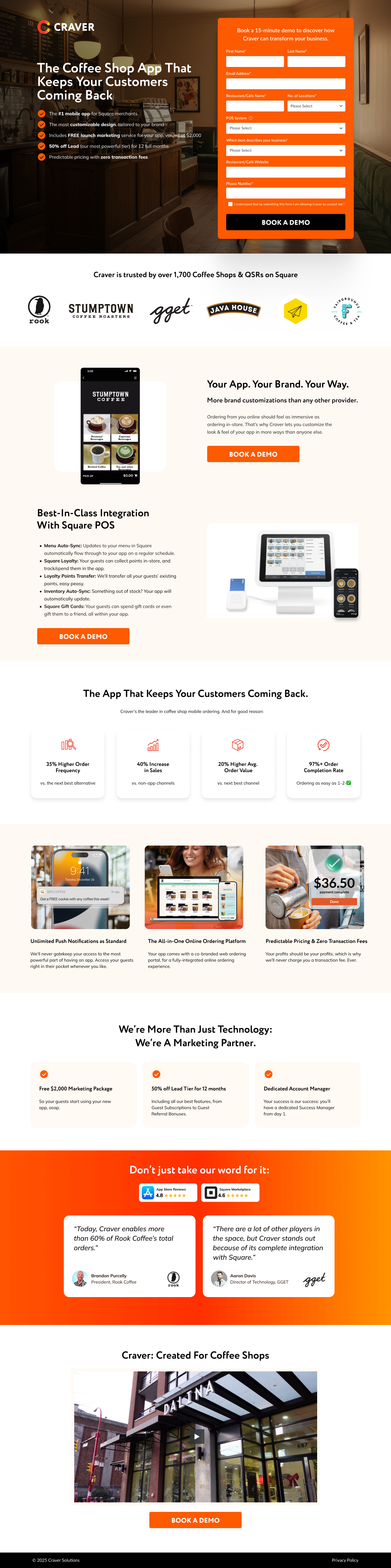
Craver required a fast-loading, conversion-optimised landing page for their restaurant mobile app platform. Speed was critical, their audience of restaurant owners often browses on mobile between service hours. Apexure prioritised page load time and single-column mobile layout with progressive form disclosure.
Tactic 6: Use Quality Score Mechanics to Lower Costs
LinkedIn has its own relevance score that directly affects your CPC. A higher relevance score means LinkedIn shows your ads more often at lower costs. Your landing page experience is a factor in that score.
Pages with fast load times, low bounce rates, and strong engagement signals (scroll depth, form interactions) send positive quality signals back to LinkedIn's algorithm. Over time, this creates a compound effect: better pages → higher relevance scores → lower CPCs → even better landing page quality scores → lower CPCs.
The practical implication: investing in landing page quality doesn't just improve conversion rates. It reduces your cost per click over time.
Tactic 7: Build Post-Click Attribution That Actually Works
Here's a frustrating pattern we see constantly: a team builds a solid landing page, runs LinkedIn Ads to it for 30 days, sees a $400 CPL in Campaign Manager, and kills the campaign. Then they check their CRM three months later and find 15 closed deals that originated from LinkedIn, but got credited to "direct" because the attribution window was too short.
LinkedIn's default 7-day click-through attribution window misses most B2B conversions. A CMO who clicks your ad on Monday might visit your site three more times over the next month before requesting a demo. Under 7-day attribution, that conversion gets attributed to direct traffic, not your LinkedIn campaign.
Set up 30-day click-through and 7-day view-through attribution windows. Layer on UTM parameters captured in hidden form fields. And connect LinkedIn Campaign Manager to your CRM to track not just leads but pipeline revenue, which is the revenue attribution work most teams skip. Understanding the real ROI vs ROAS for ad campaigns requires this full-funnel visibility.
Key Takeaway
A 1% conversion rate improvement on a $200 CPL campaign saves thousands per month. On LinkedIn, landing page quality is the highest-use optimisation available, more effective than bidding adjustments, audience tweaks, or creative changes.
The LinkedIn Ads Landing Page Testing Framework
You can't afford to guess when each click costs $15+. But here's the catch: you can't test everything either. LinkedIn campaigns generate less traffic than Google Ads campaigns at the same spend, so reaching statistical significance takes longer and wastes more budget on losing variants.
This is the testing priority order we follow internally, ranked by how much conversion rate movement we typically see per test:
| Priority | Test Element | Expected Impact | Min. Traffic to Test |
|---|---|---|---|
| 1 | Headline (message match) | 20-40% CVR change | 500 visitors per variant |
| 2 | Form length (fields removed) | 15-30% CVR change | 400 visitors per variant |
| 3 | Social proof placement | 10-20% CVR change | 600 visitors per variant |
| 4 | CTA copy and colour | 5-15% CVR change | 800 visitors per variant |
| 5 | Page length (short vs. Long) | 5-15% CVR change | 600 visitors per variant |
| 6 | Hero image/video | 3-10% CVR change | 1,000 visitors per variant |
Start with headline testing. It's the highest-impact, fastest-to-implement change. Most teams waste months testing button colours when their headline doesn't match their ad copy. That's optimising the wrong thing. For a structured approach to testing, see our A/B testing framework for landing pages.
"Truly a master of their craft. Exceeded every task I gave them no matter how big or small."
Dan Helinski, Affordable Health Coverage Today, Upwork ReviewWhat the Future Holds for LinkedIn Ads Landing Pages
Three shifts are already changing what works, and two popular predictions that haven't materialised the way people expected:
The companies that will win on LinkedIn in 2026-2027 are those building landing pages as revenue infrastructure, not campaign afterthoughts. When each click costs $20+, your landing page isn't a nice-to-have. It's the most expensive piece of marketing collateral you operate.
Key Takeaway
AI Overviews, rising CPCs, and native CRM attribution are converging to make landing page quality the primary competitive advantage in LinkedIn Ads. The brands that invest in conversion infrastructure now will compound that advantage as costs continue to rise.
Quick-Start Checklist: Your LinkedIn Ads Landing Page
Before you launch your next LinkedIn Ads campaign, run through this checklist. Each item directly impacts your cost per lead.
- Headline matches the ad copy word-for-word (or near-identical)
- Page loads meaningful content within 1.5 seconds on mobile
- Form has 3 fields or fewer (use enrichment for the rest)
- At least one specific metric from a real client engagement is visible above the fold
- Client logos include at least 2 recognisable brands in the visitor's industry
- CTA button is visible without scrolling on 375px mobile screens
- No horizontal scrolling on any device
- Third-party validation visible (Clutch, G2, or industry award badge)
- 30-day click-through attribution window is configured in Campaign Manager
- UTM parameters and hidden form fields are capturing campaign data
- Separate landing pages exist for each major audience segment
- Retargeting pixel is firing on the landing page and thank-you page
If your pages aren't meeting these standards. You're leaving leads on the table with every campaign. Our landing page analysis framework can help you diagnose exactly where the conversion leaks are.
Why Apexure Builds LinkedIn Ads Landing Pages Differently
Most agencies hand you a landing page and move on. It's a deliverable, a Figma file that becomes an Unbounce page that sits there collecting dust. We treat landing pages as conversion infrastructure. They get measured, tested, and improved quarter after quarter.
With 3,000+ projects and a 5.0/5 Clutch rating from 33 verified reviews, we've built a practice specifically around the pages that sit between your ad spend and your pipeline.
Our portfolio includes dedicated B2B PPC landing pages for companies like DOOR3 (IT Services), SYSUSA (Cyber Security), and hundreds of B2B SaaS companies running campaigns on LinkedIn, Google, and Meta. The common thread: every page is built for conversion first, aesthetics second.
We've seen this pattern across hundreds of LinkedIn Ads campaigns: the gap between a $400 CPL and a $120 CPL is almost never the campaign settings. It's the page. That's what we obsess over.
"First-rate and well-suited to our target audience. The attention to detail on messaging and layout was of a very high standard."
Trevor Pryer, CEO, Board AgendaLinkedIn Landing Page Examples: B2B Pages We've Built for Paid Campaigns
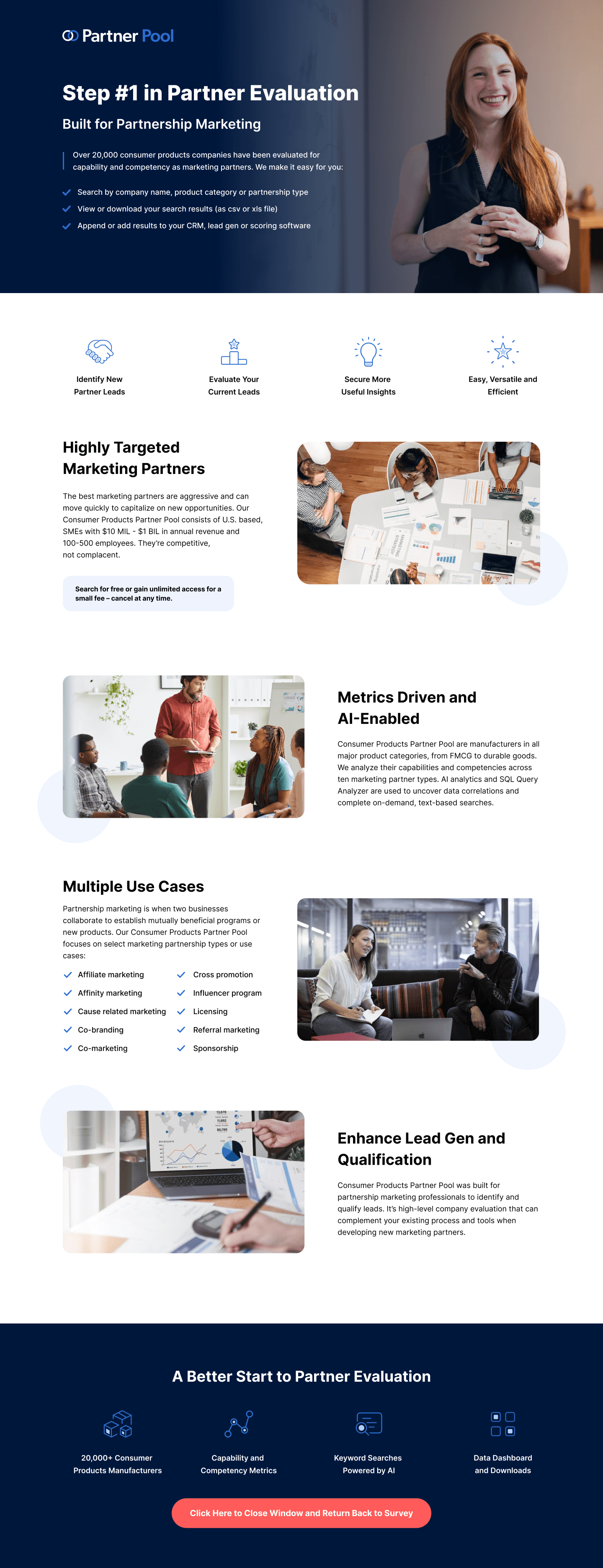
Here are real LinkedIn landing page examples from our portfolio, pages designed specifically for B2B paid traffic (LinkedIn Ads, Google Ads, and Meta). Each LinkedIn landing page below links to a full CRO breakdown with design decisions and conversion architecture analysis.


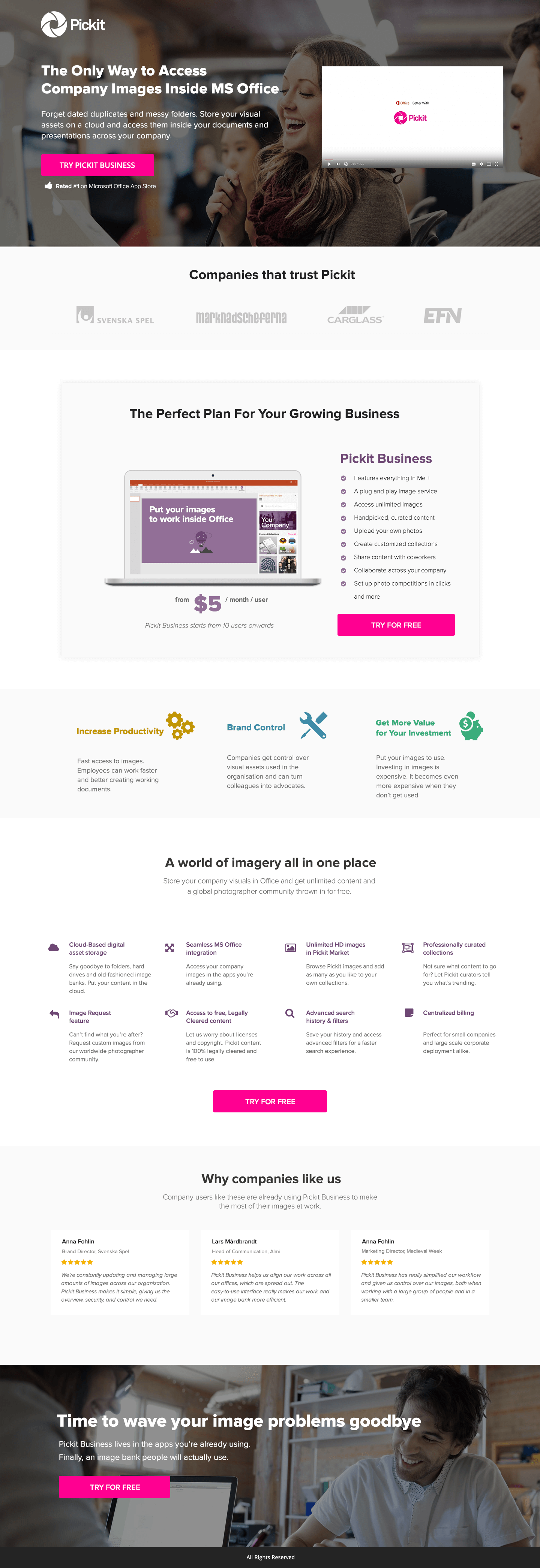
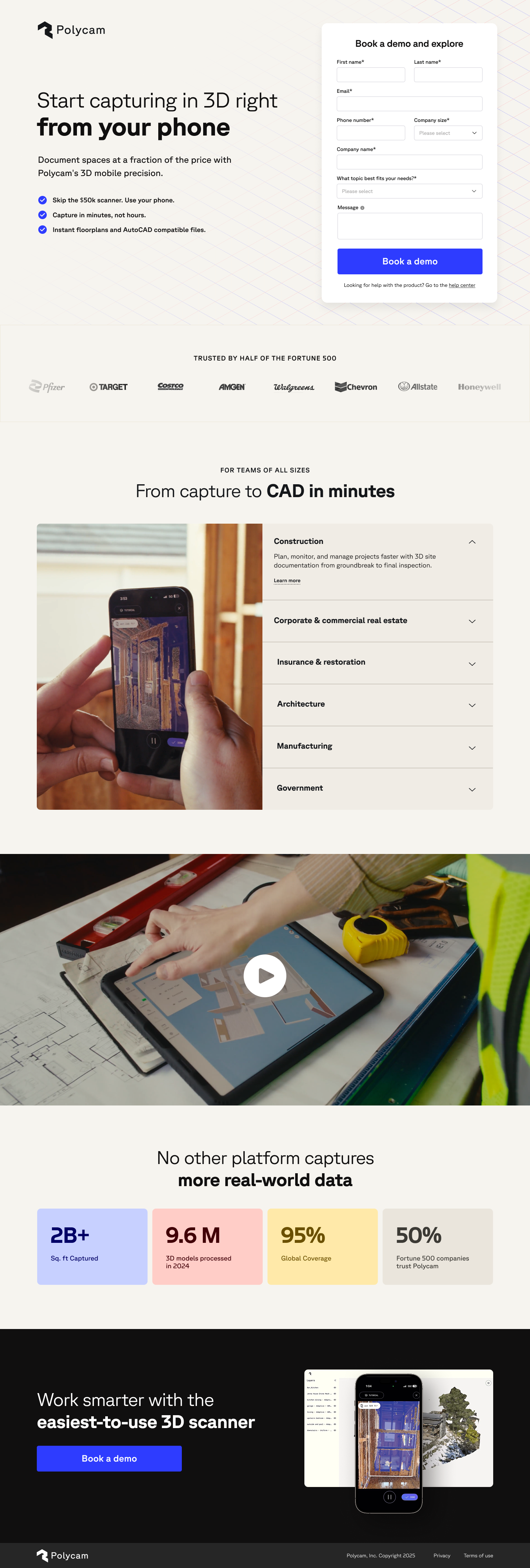
See all 50+ examples in our landing page examples portfolio.
Stop burning $20+ clicks on pages that don't convert. Apexure designs and builds LinkedIn Ads landing pages backed by conversion data from 3,000+ projects. Get a free audit of your current landing page, we'll show you exactly what's costing you leads.
Get Your Free Landing Page AuditLinkedIn Ad Benchmarks 2026theb2bhouse.com
LinkedIn Advertising Costs 2026: CPC, CPM, CPL & ROAS Benchmarkspostiv.ai
LinkedIn Ads Benchmarks 2026: CPC, CPM, CVRmeet-lea.com
How Much Does LinkedIn Lead Generation Really Cost?cleverly.co
LinkedIn Lead Gen Forms vs Landing Pagesnav43.com
5 B2B LinkedIn Ads Tests to Run in 2026searchengineland.com
LinkedIn Lead Gen Forms: Quality vs Quantitygracker.ai
The 50-point landing page checklist
Everything we check before a page goes live: copy, layout, forms, trust, speed and tracking. One PDF, sent by email.
Need a page built instead? Get a fixed quote.

Waseem founded Apexure in 2015 and has led its work on 3,000+ pages for 300+ clients since. He writes about what the team sees after the click, which is pages, forms, tracking and the systems behind them.
 T4Media
 24hour-AR
 IDEXX VetSoft
 Chicken Dinner
 ZIAAS
ZIAAS YVRBet Existing Business