A landing page with payment gateway can help you maximize your sales opportunities. Having a simplified payment process is essential for any business or individual looking to sell products or services online. Nobody likes to miss out on potential purchases. Whether you’re a seasoned sales funnel user or just getting started, integrating a payment gateway into your landing page is necessary. A payment landing page can help open extra sales strategies. You can offer additional products at the checkout, use one-click upsells, and provide a smoother user journey. Don’t get stuck at the starting line. Learn how to integrate a landing page with payment gateway the right way with this blog post.
What is a landing page with payment gateway?
A landing page with a payment gateway is a specific type of webpage designed to convert visitors into customers by helping the purchase of products or services directly from the page. While landing pages are tailored for conversions, a payment landing page serves to smoothly assist clients in completing purchases of your goods.
 The payment gateway lets customers securely enter their payment information, such as credit card details, and complete the transaction without leaving the landing page. This setup simplifies the purchasing process, reducing friction and increasing the likelihood of conversion.
What is a payment gateway?
A payment gateway is like a digital cashier for online stores. It securely takes your payment information, like credit card details, and sends it to the bank to make sure you have enough money. Once approved, it completes the purchase, allowing you to buy things online safely.

Where to use payment landing pages?
Landing pages with payment gateways are most effective at the bottom of sales funnels, where they play a necessary role in helping leads become customers. Such landing pages are necessary for all industries be it SaaS, finance, ecommerce, etc. They bring together all the necessary elements for making a purchase decision and provide a smooth transition for leads who have progressed through earlier stages of the funnel like free trial or demos.
 For example, engaging with competitor comparison landing pages or service pages.
The versatility of payment landing pages extends across various industries and business models:
-
SaaS companies use them to simplify subscription sign-ups.
-
E-commerce businesses use them to help hassle-free online purchases.
-
Freelancers and service providers use payment landing pages to secure bookings and appointments.
-
Educational platforms employ them to process course enrollments.
-
To sell digital products quickly and easily.
How to integrate landing page with payment gateway?
When integrating a landing page with payment gateway, there are two primary approaches to consider. First, if you have your own landing page hosted directly on your domain (as a subdomain or subdirectory), or second, if you use a dedicated landing page builder or tool. In both scenarios, having a dedicated landing page with a payment gateway is necessary to completing your sales funnel from top to bottom. Such pages need to be simple in design and hence. Aren’t costly. These situations in detail and discuss the steps to effectively integrate a landing page with payment gateway.
payment gateways on Self-Hosted landing pages
If you have your landing page directly on your domain without using a builder or tool, integrating a payment gateway involves a more hands-on approach. You’ll need to work with your web developer or use plugins to incorporate secure payment processing directly into your existing landing page infrastructure. If you’re familiar with popular CMS tools like WordPress, Shopify, or Wix for creating landing pages, adding payment gateways is a breeze with the assistance of plugins.
payment gateways on landing page builder
Alternatively, integrating a payment gateway is often more simplified if you’re using a dedicated landing page builder or tool. Many popular landing page builders offer built-in payment gateway integrations or smooth compatibility with third-party payment processing services. This allows you to easily add a payment section to your landing page without the need for extensive coding or technical expertise.
What are the best landing page creators with payment gateways?
Having the right tools can make all the difference when creating landing pages with payment gateways. In this segment, we’ll explore some paid and free options to help you find the best fit for your needs.
paid tools to build payment landing page
1. Unbounce
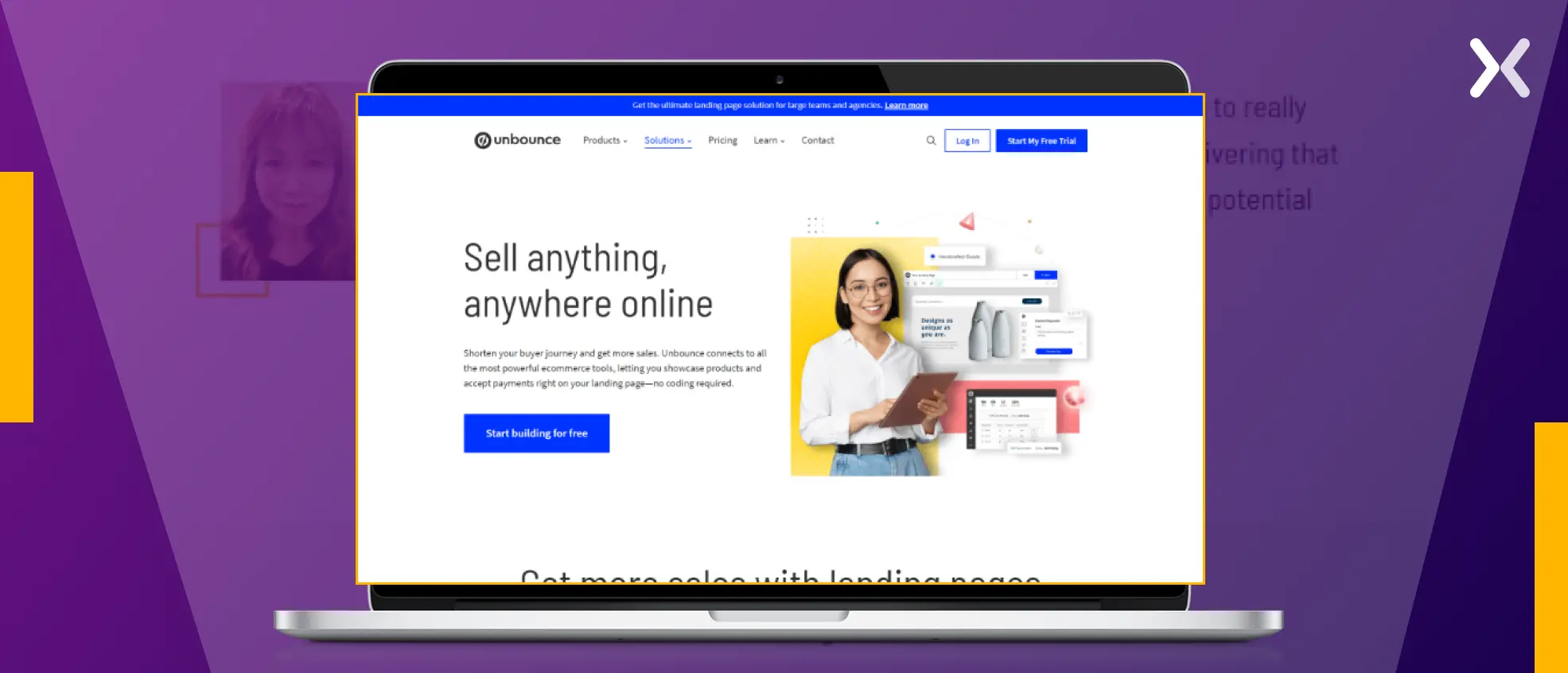
Unbounce is a popular choice among marketers for its drag-and-drop editor and extensive library of templates. With features like A/B testing and analytics, Unbounce helps optimize conversion rates. It offers smooth integration with various payment gateways, such as PayPal and Stripe, allowing you to easily collect payments directly on your landing pages.
2. Leadpages
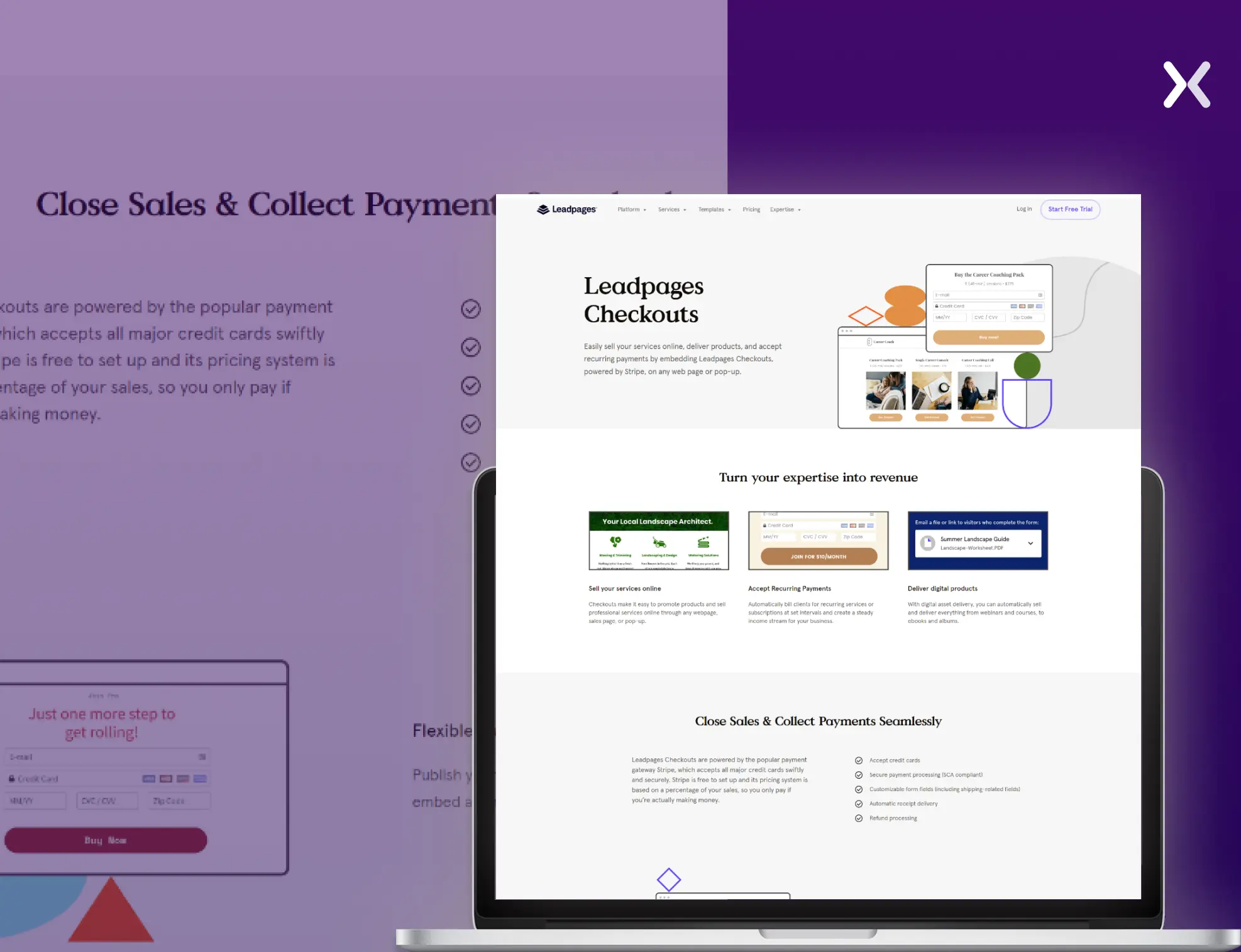
Leadpages is well-known for its user-friendly interface and customizable templates; it is a budget-friendly option for building landing pages. Leadpages offers strong tracking and analytics tools to monitor the performance of your landing pages. It provides built-in payment integration options, enabling you to accept payments effortlessly.
free tools to build landing page with payment gateway
1. WordPress
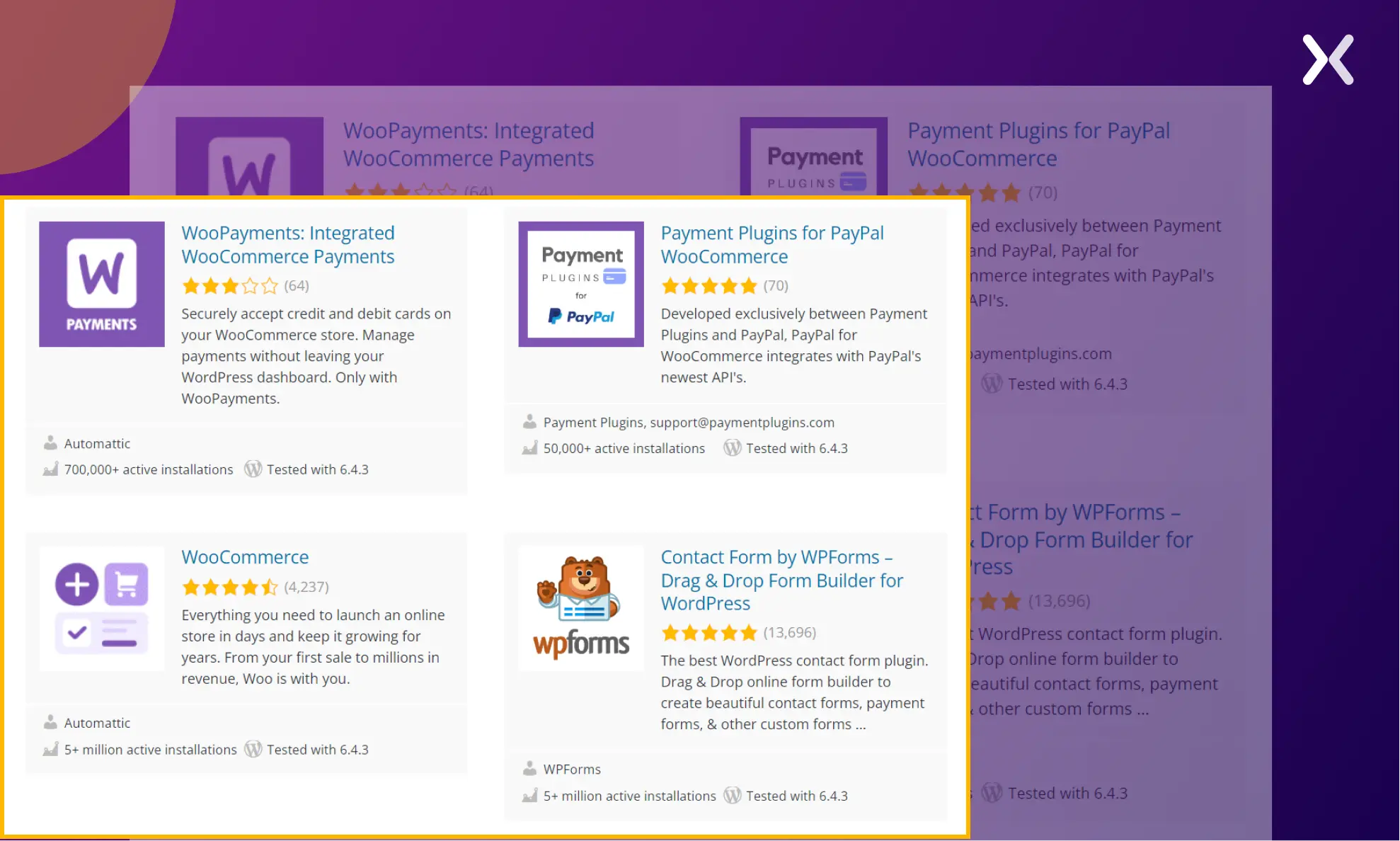
WordPress is a versatile platform that offers numerous plugins and themes for building landing pages. While WordPress requires some technical know-how, its flexibility and extensive community support make it a popular choice among businesses of all sizes. With plugins like WooCommerce and WP Simple Pay, you can integrate payment gateways like PayPal and Stripe into your payment landing page on WordPress for free.
2. Mailchimp
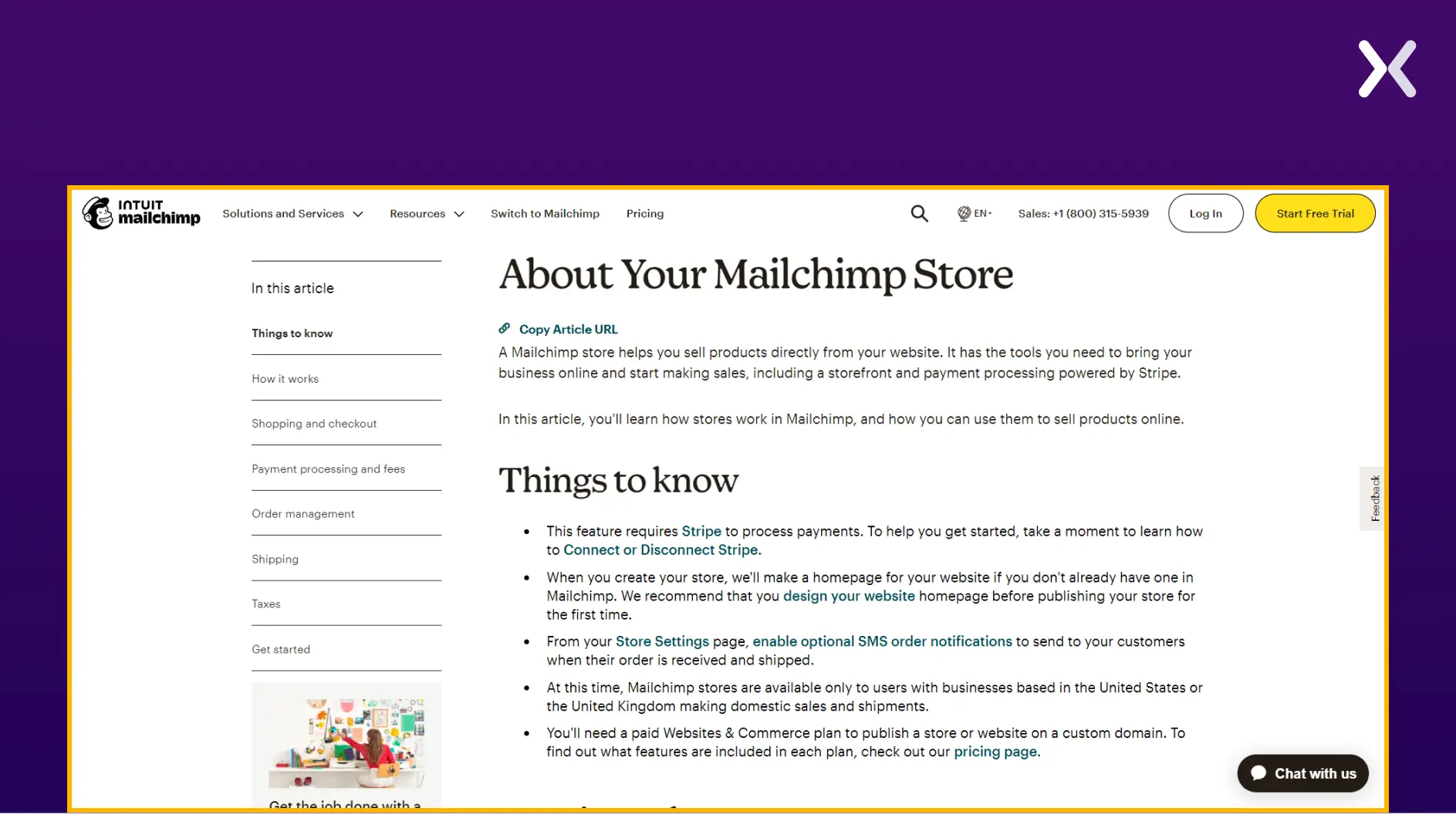
Mailchimp’s landing page builder allows you to create simple yet effective landing pages for free. It smoothly integrates with Stripe to accept payments directly on your landing pages. While Mailchimp’s functionality may be somewhat limited compared to dedicated landing page builders. It’s a great option for those on a tight budget.
Elements of a landing page with payment gateway
A payment landing page is the final step in the buyer’s journey, instilling confidence in your leads and affirming their decision to proceed with the purchase. To achieve this, certain essential elements must be present on your landing page with payment gateways:
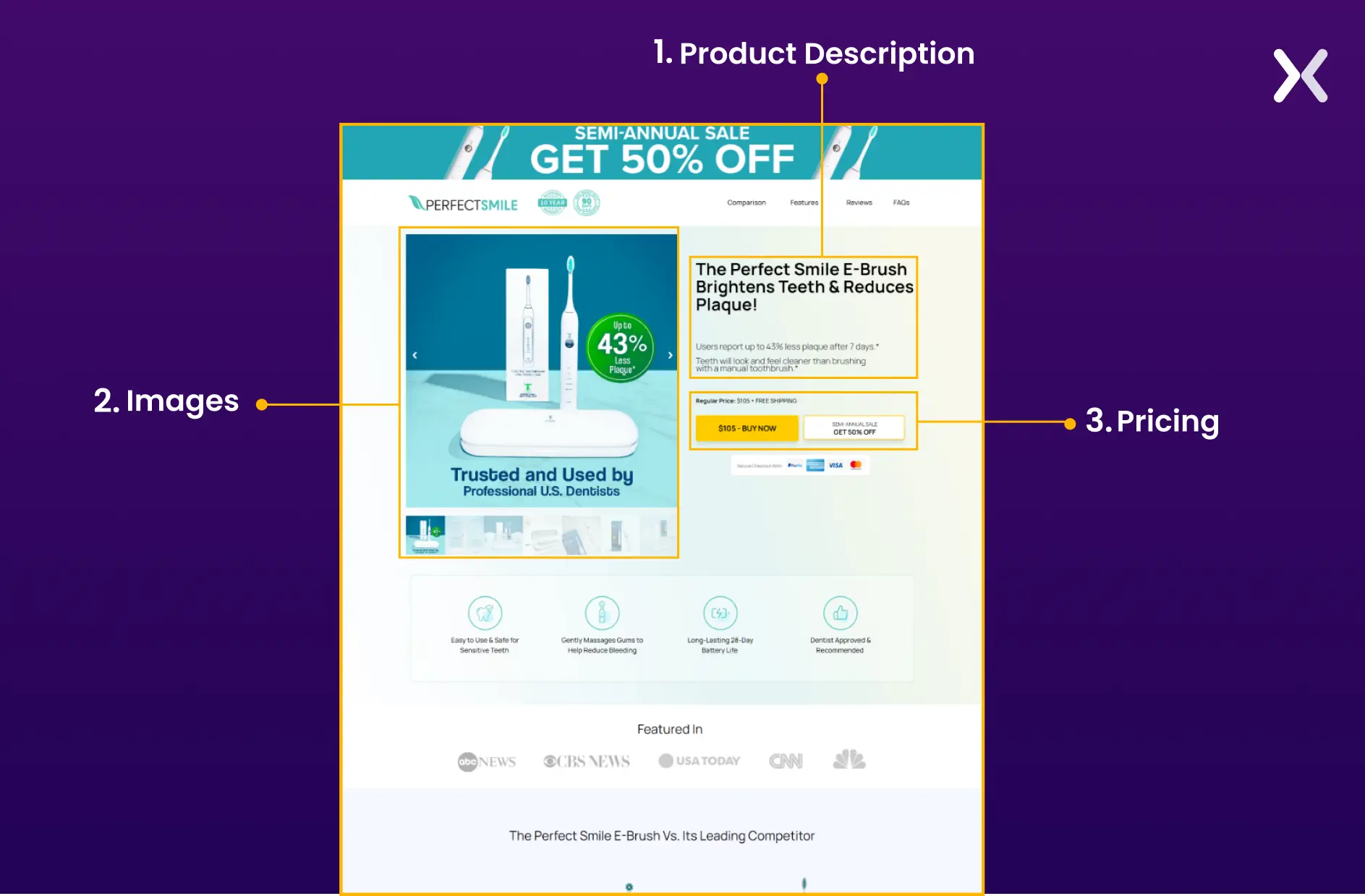
1. Product Description
Leads arriving at your landing page with payment gateway are already well-informed about your product or service, having progressed through earlier stages of the buying journey. Now, your focus shifts to providing a succinct overview of the unique selling points (USPs) and key benefits your offering provides. By effectively marking these USPs and benefits, you reinforce the value proposition and reassure leads that they’re making the right decision.
2. Pricing
Providing transparent pricing information is essential for establishing trust with potential customers. When visitors can easily see the cost of the product or service upfront. They are helped to make informed decisions about whether to proceed with a purchase.
It is beneficial to share full information with your leads, including all associated costs such as shipping fees, taxes, and any other applicable charges. Doing so will simplify the decision-making process and make sure transparency throughout the customer journey. Avoid withholding this information until the final payment stage, as it can disrupt the purchasing flow and make leads second-guess.
3. Images
It’s important to present all the deliverables the lead will receive upon becoming a customer, providing a full view of the expected value. Utilizing high-quality images or visuals is essential for presenting your product or service in its most favorable light. Great visuals in the background and supporting the text help visitors visualize the product and its benefits, making the landing page more engaging and persuasive. Present all the deliverables the lead will get once converted into a customer.

4. Call-to-action (CTA)
The call-to-action button is the focal point of the landing page and encourages visitors to take the desired action, such as making a purchase or signing up for a service. It should be prominently displayed, and clear communication should be made about what action visitors should take next.
“Buy Now,” “Add to Cart,” “Checkout,” etc., are some of the most common CTA buttons on landing pages with payment gateways.
5. Clear terms and conditions (t&c)
Providing transparent and easily accessible terms and conditions helps build trust with potential customers. This section outlines essential details such as refund policies, shipping information, subscription conditions, and other relevant details to make sure visitors understand the terms of the purchase. If you’re offering a guarantee. It’s necessary to make it clear. This not just builds trust but also earns support from people. For example, a 10 or 14-day guarantee can significantly improve trust.
6. Say thank you
After the payment landing page, a thank you page is necessary for confirming the transaction and expressing gratitude to customers. It’s also an opportunity to guide them to other areas of your brand, such as your website or social media. This reinforces your brand identity and keeps customers engaged post-purchase.
7. Multiple payment gateways
Integrating multiple payment gateways gives customers flexibility and convenience when purchasing. Offering various payment options (such as credit card, PayPal, or alternative payment methods) increases the likelihood of completing a sale and reduces the risk of abandoned purchases due to payment method limitations.
**Pro Tip: **Keep the URLs of your landing page with payment gateway simple and short, avoid using anything spammy looking symbols in them.
8. A Simple Form
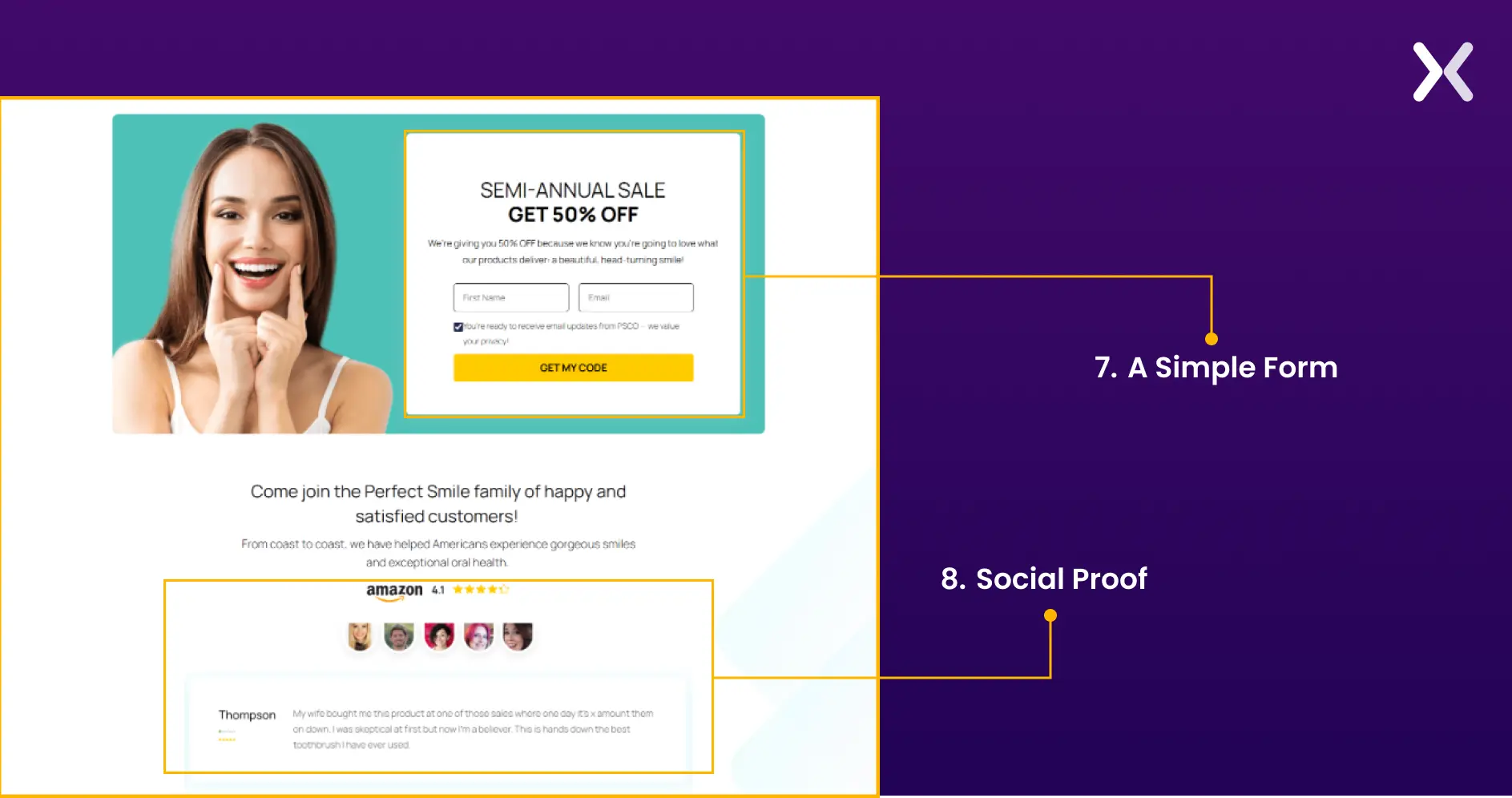
For a payment checkout page. It’s vital to simplify the form and minimize the number of required details. If you’re selling physical products, you must ask for both delivery and billing details. However, simply requesting the name and email address suffices for digital products.
It’s necessary to simplify the credit card information entry process and include trust logos. Indicating the supported credit card types improves transparency and reassures customers during payment.
9. Social Proof
Social proof, such as customer testimonials and user reviews, is vital in landing pages with payment gateways. These elements provide evidence of a product or service’s value and reliability, reassuring potential buyers and increasing their trust in making a purchase.
Displaying social media metrics and trust badges further solidifies credibility, helping to alleviate concerns about security and authenticity.
How do you quickly create a simple landing page with payment gateway?
You can use many combinations of products to set a landing page with payment gateways. For this, you need two tools, you can do this with either paid tools or free tools. Here are some options you have for creating a payment landing page quickly. Here, we also have two options: one where you can use all free tools and one where you can use all paid tools.
free tool to build landing page with payment gateway
An excellent tool worth exploring is Square, a versatile platform designed to offer payment solutions for diverse businesses.
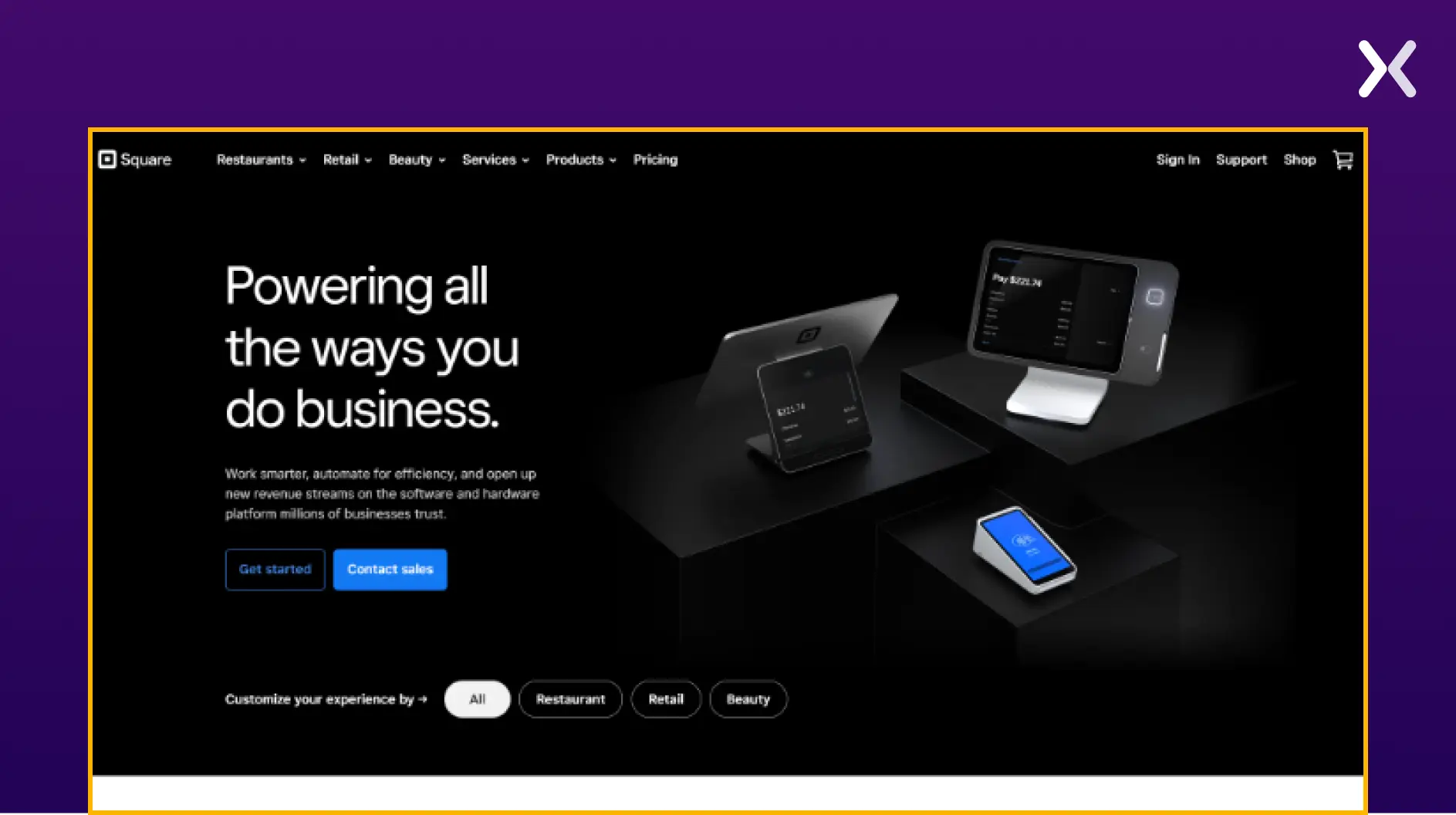 Beyond its primary function, Square extends its capabilities through its subsidiary, Weebly, allowing users to effortlessly build websites and landing pages. The best part? It’s all free of charge.
If you already have a landing page and aspire to initiate sales, Square will help the creation of payment links at zero cost. Their fee structure is straightforward: you’re only charged for the sales you make, while the rest remains free of charge.
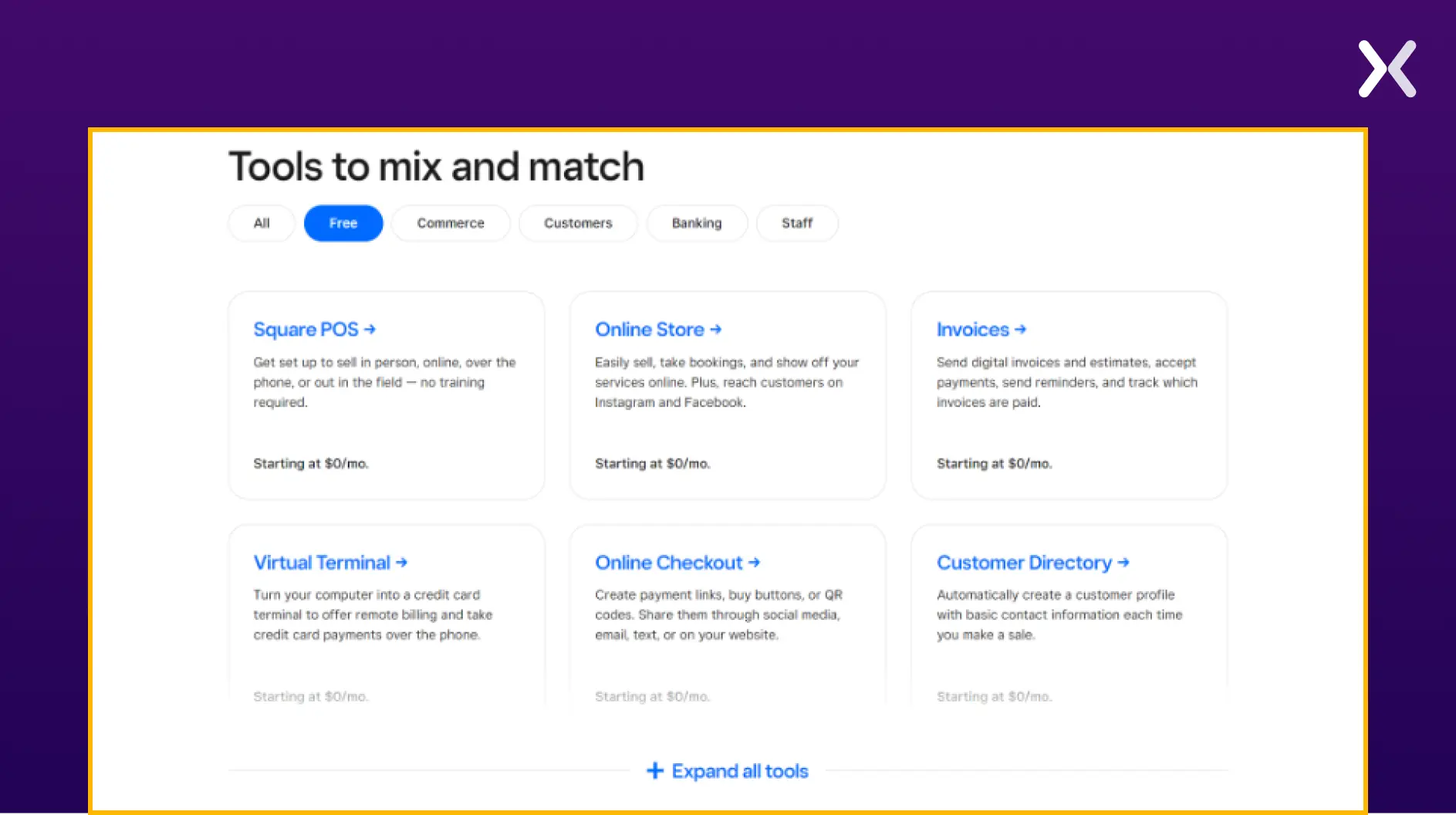 Another valuable suggestion is to use Canva to craft your landing page and integrate it smoothly with a payment link from Square to make sure functionality.
paid tools to build landing page with payment gateway
Consider creating landing pages by using premium tools such as Unbounce, ClickFunnels, and Leadpages. These platforms offer dedicated landing page building capabilities along with integrated payment gateways, simplifying the process for your business. Your primary focus should be on selecting the ideal landing page builder tailored to your specific business needs. For self-hosted landing pages, you can integrate payment links using Square or use another favored tool like:
-
ThriveCart
-
SamCart
ThriveCart
ThriveCart is an innovative page creation platform designed for businesses selling online. It simplifies the process of accepting payments by offering dedicated checkout pages and links.
Its versatile features, like popups and embeddable checkout options, smoothly integrate with your website or sales pages.
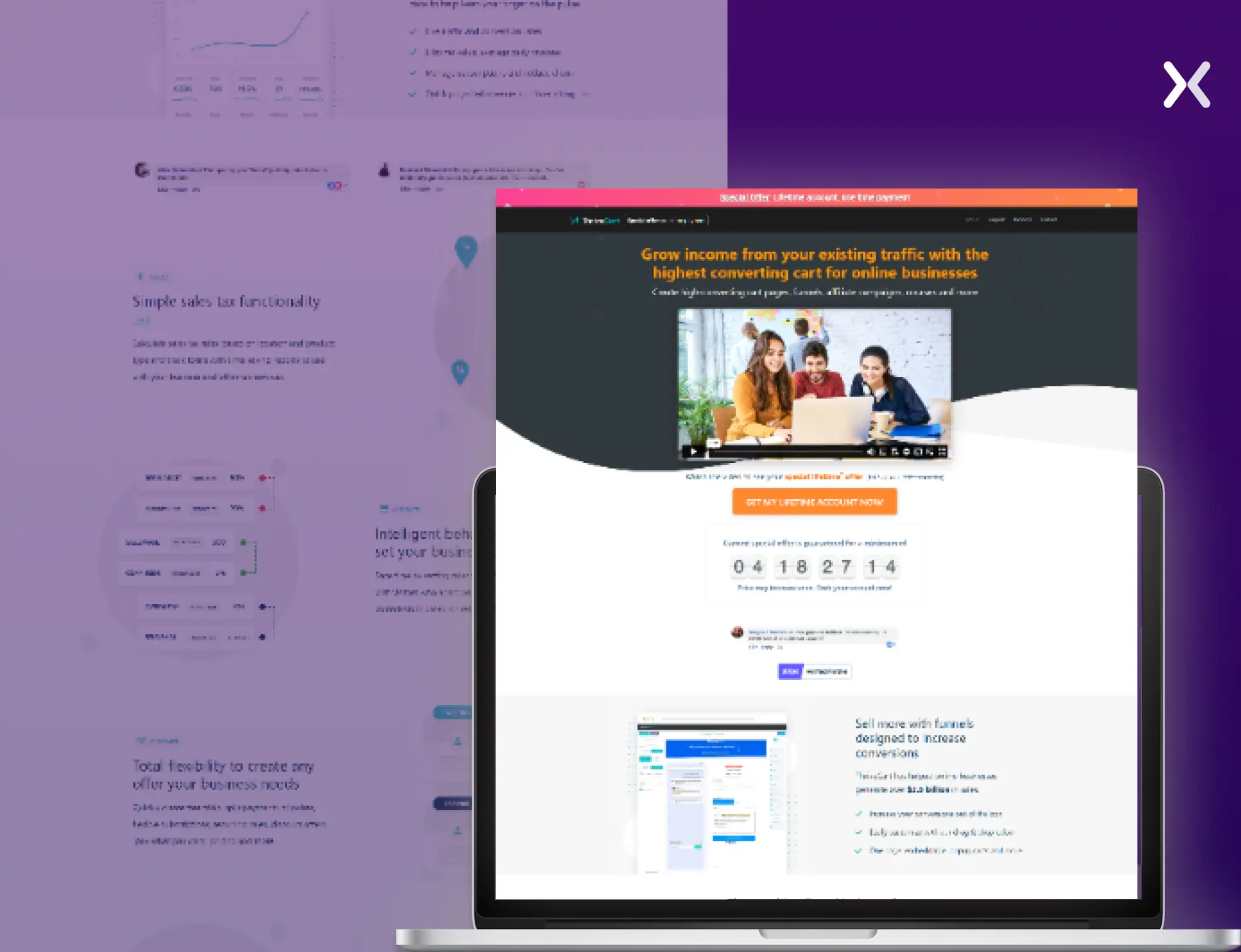 This platform helps you create smooth cart pages and simplify your sales funnel. It also assists in managing pricing structures and sales tracking while offering strong affiliate management and course creation capabilities.
ThriveCart can be purchased through a one-time payment option, making sure clarity and simplicity in securing its benefits. Its significant value lies in helping you to create personalized payment forms tailored to your offers. This improves your flexibility in building a payment gateway that suits your business needs perfectly.
This platform helps you create smooth cart pages and simplify your sales funnel. It also assists in managing pricing structures and sales tracking while offering strong affiliate management and course creation capabilities.
ThriveCart can be purchased through a one-time payment option, making sure clarity and simplicity in securing its benefits. Its significant value lies in helping you to create personalized payment forms tailored to your offers. This improves your flexibility in building a payment gateway that suits your business needs perfectly.
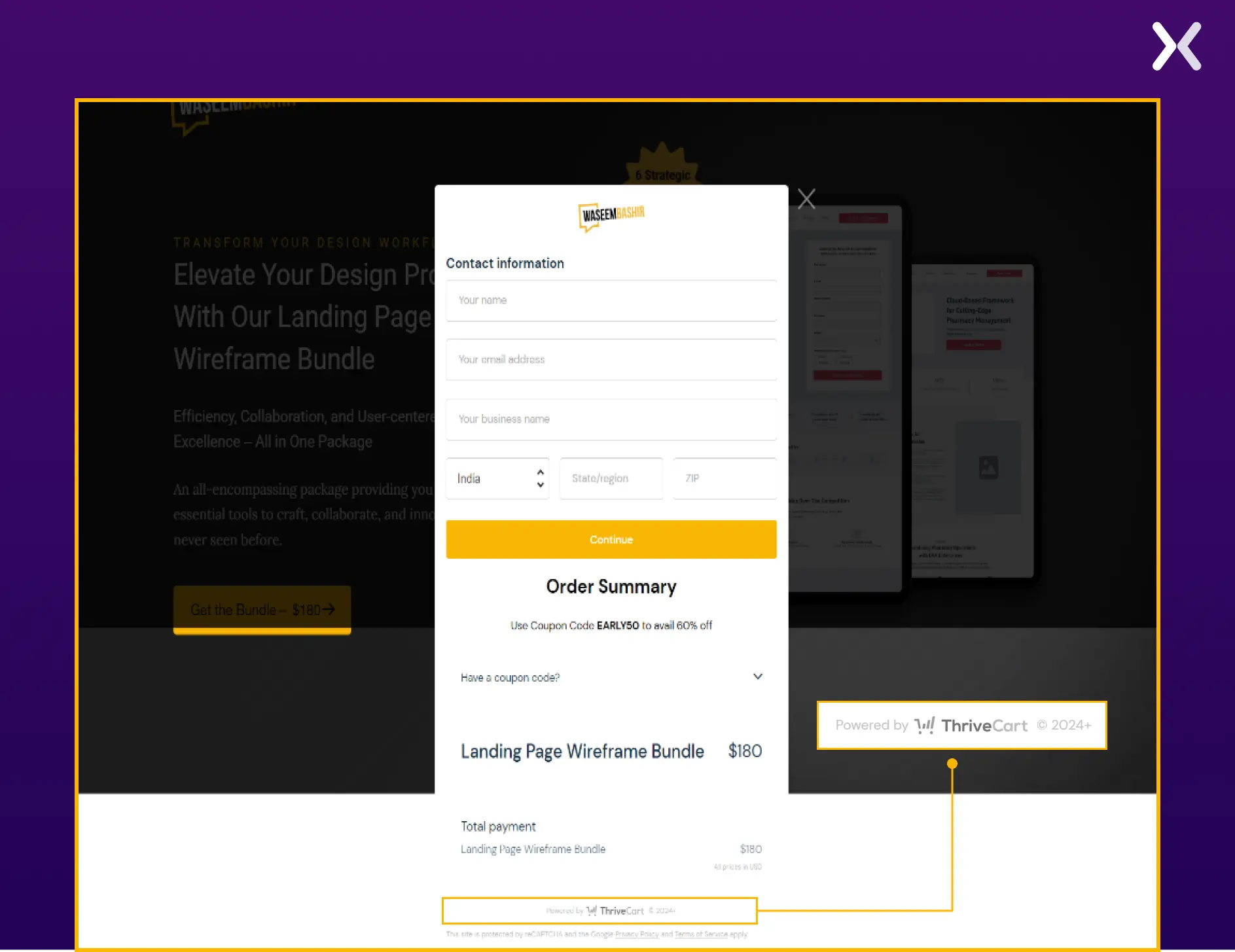 You can create your landing pages independently and add a ThriveCart check popup at the end to make the whole purchasing process smooth.
SamCart
SamCart is a user-friendly shopping cart platform tailored to simplify online selling for businesses. It offers various features designed to simplify the sales process and maximize revenue potential.
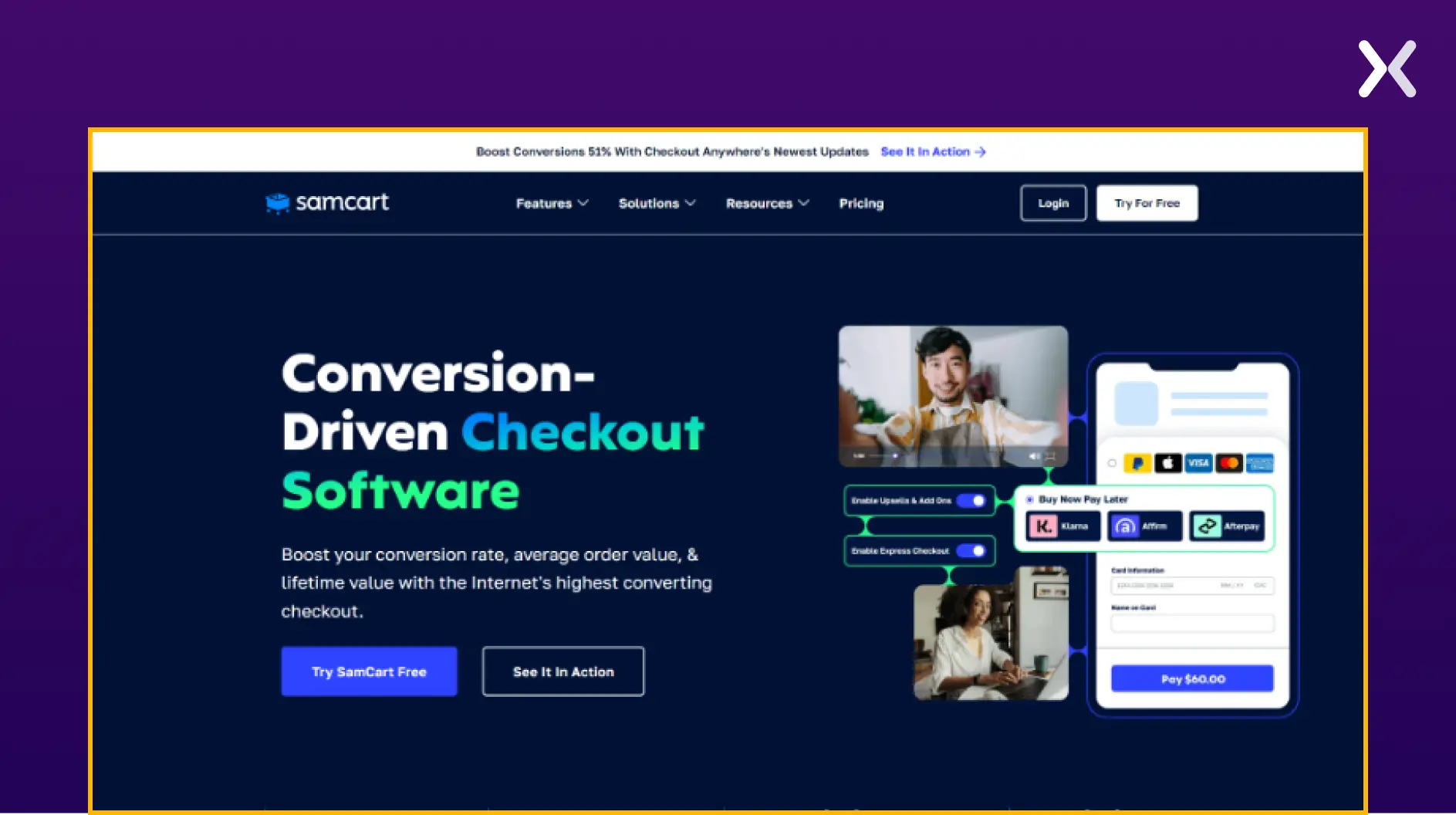 One of SamCart’s notable features is its customizable checkout pages, allowing businesses to create tailored customer checkout experiences.
The platform provides various page templates for checkout pages, one-click upsells, and more, making professional-looking page design effortless. The platform supports multiple payment gateways, making sure secure transactions. It also has a built-in affiliate program feature that enables businesses to use affiliate marketing for expanded reach and increased sales.
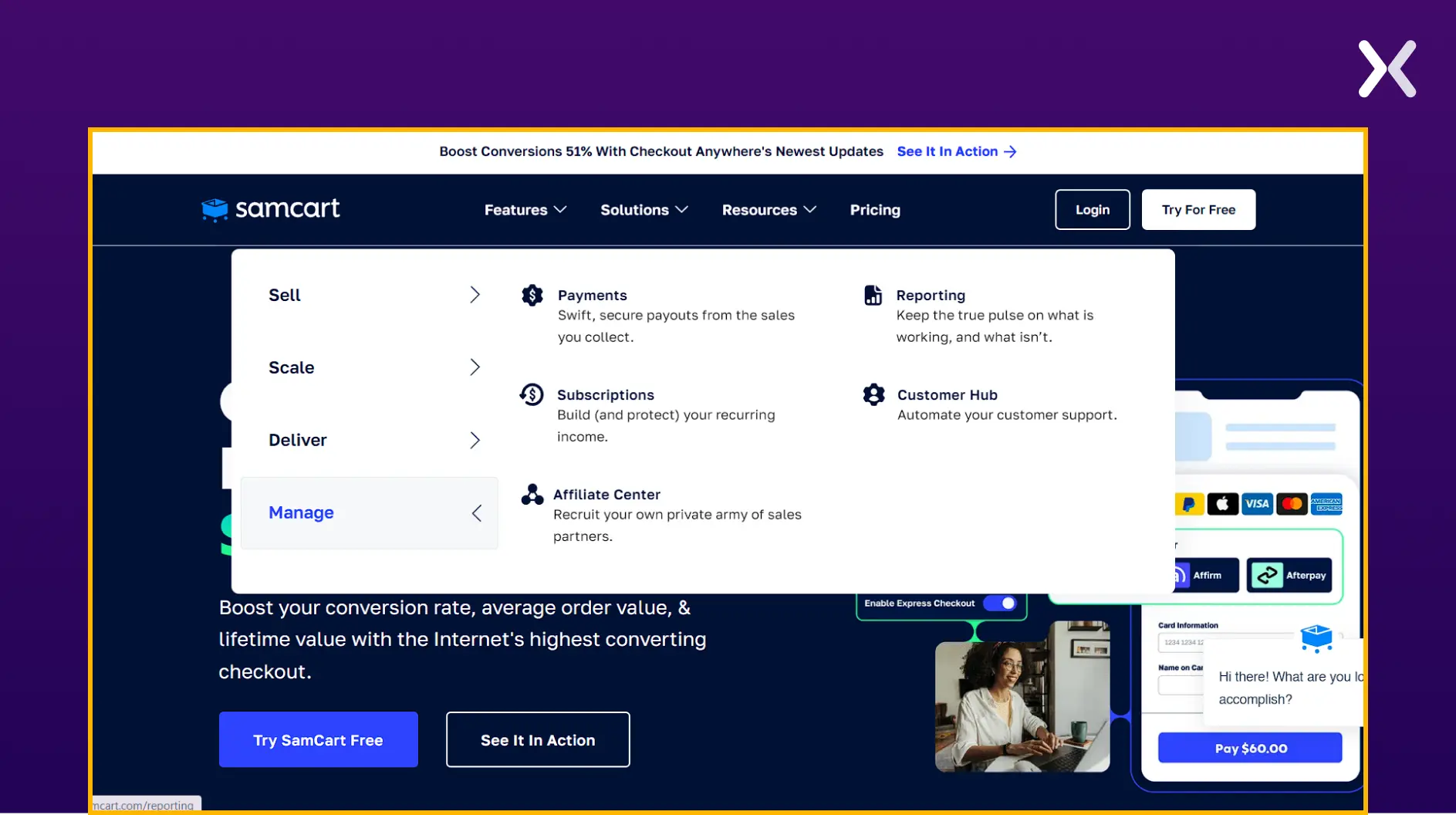 SamCart’s focus on maximizing sales and its beginner-friendly interface sets it apart.
SamCart includes abandonment cart recovery features, helping businesses recover potential lost sales by targeting customers who abandon their carts during checkout.
SamCart’s focus on maximizing sales and its beginner-friendly interface sets it apart.
SamCart includes abandonment cart recovery features, helping businesses recover potential lost sales by targeting customers who abandon their carts during checkout.
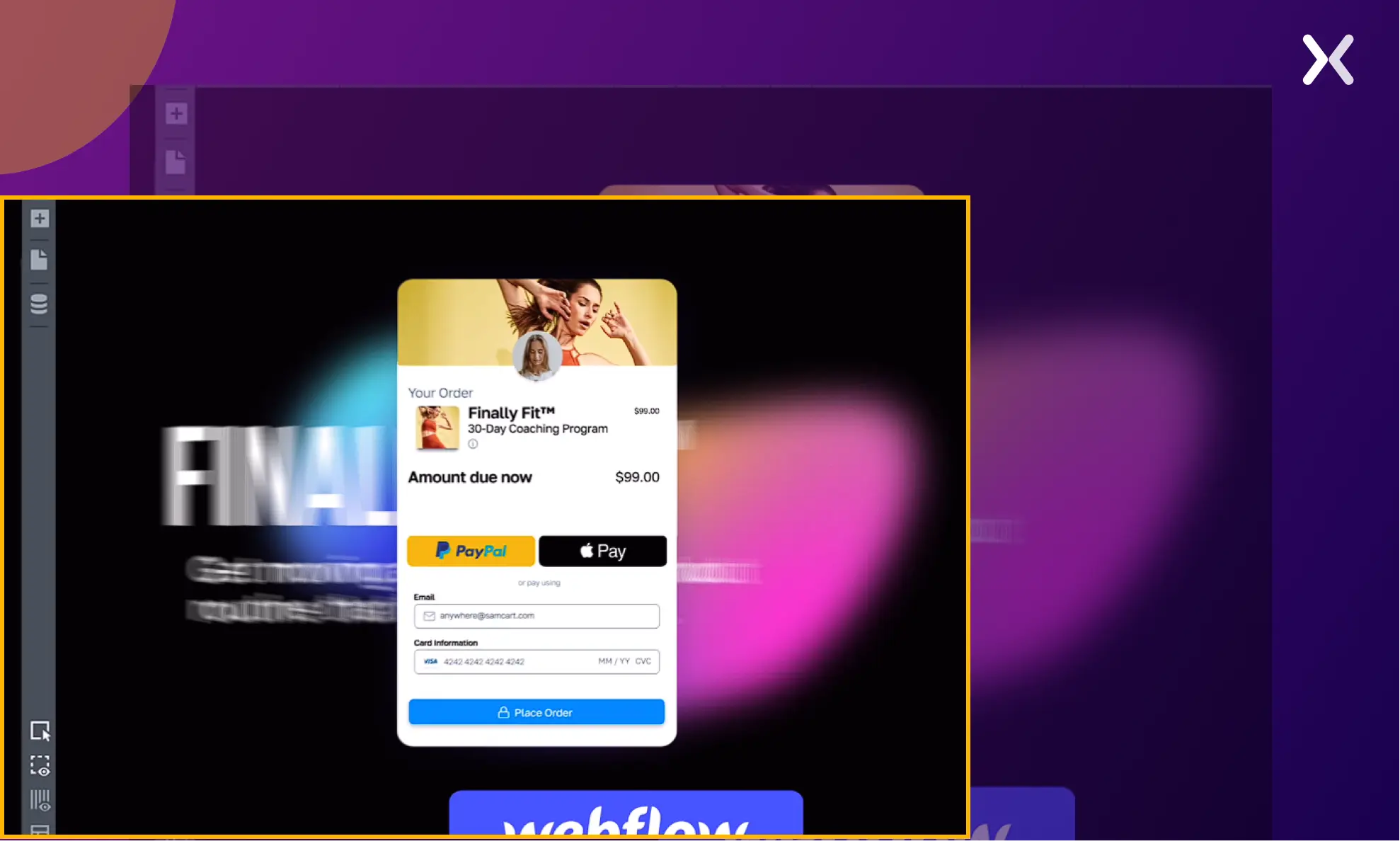 SamCart is an invaluable tool for businesses seeking to optimize their online sales efforts. It offers user-friendly features that drive revenue growth and customer satisfaction.
How does Apexure use payment landing pages for its clients?
We recently designed a full funnel for our esteemed client, Agency 2.0. This funnel uses the power of a landing page smoothly integrated with a smooth payment gateway. This setup is carefully crafted on WordPress, using Stripe checkout functionality to make sure a smooth payment experience.
 The funnel begins with an engaging pre-launch landing page that deliberately presents the product’s unique selling points (USPs). It encourages visitors to reserve the product with a nominal $1 deposit, accompanied by transparent terms and conditions smoothly integrated into the call-to-action (CTA) section, leaving no room for uncertainty.
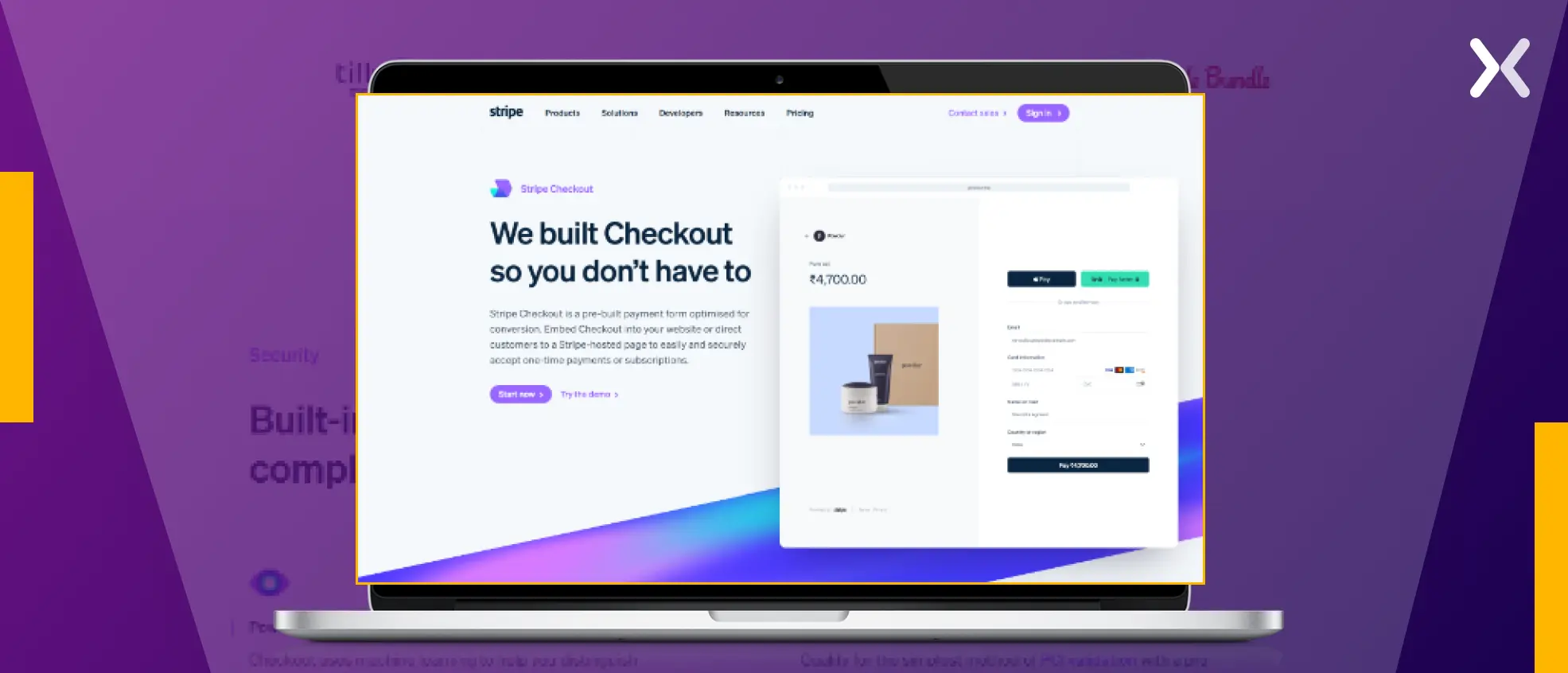
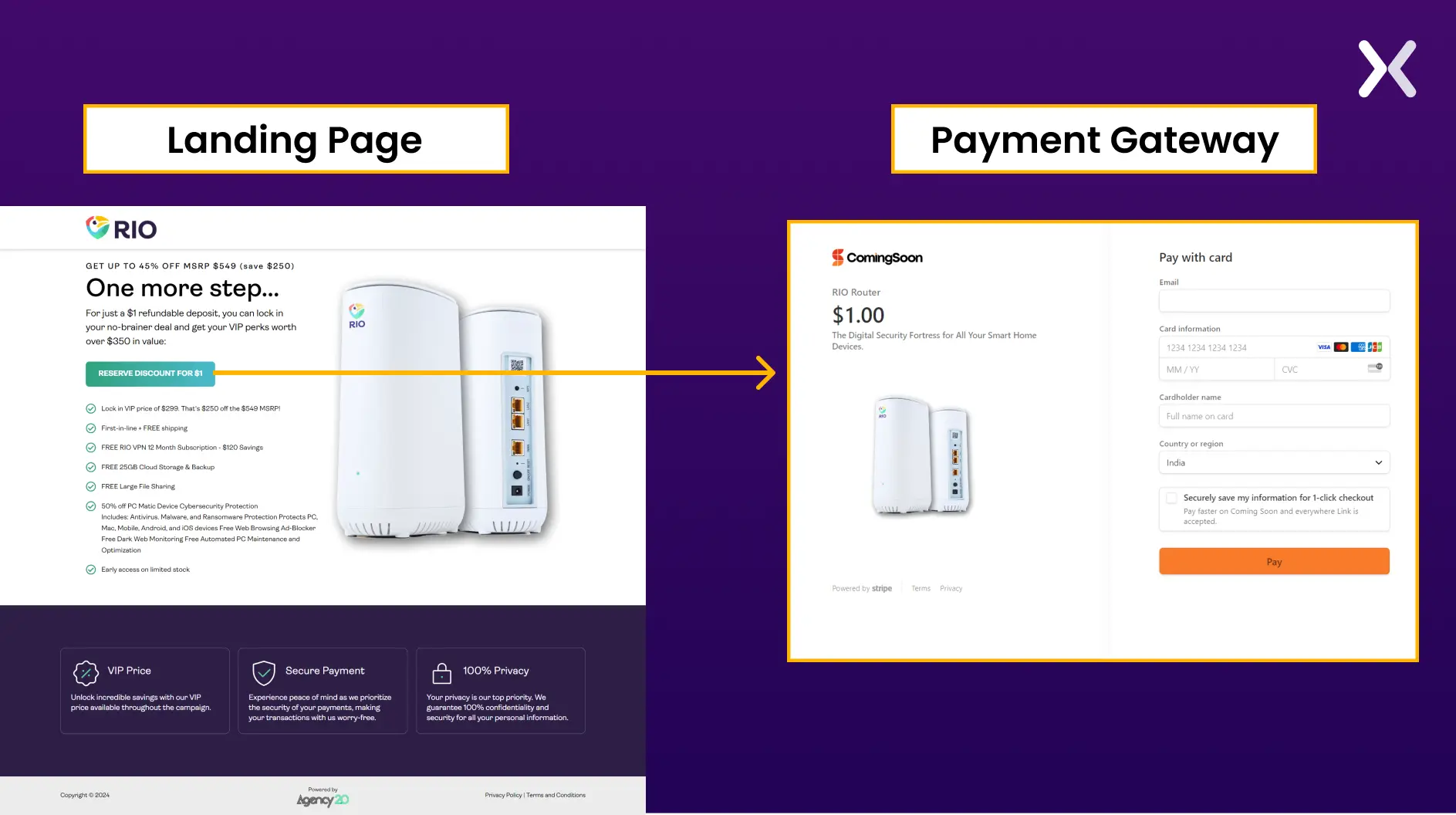 Upon clicking the CTA, users are smoothly redirected to a payment landing page powered by Stripe checkout. This page offers a variety of payment options and provides a straightforward and user-friendly interface that promptly guides users through the payment process. From the moment users land on the page. They’re presented with a clear path to completing their transaction, making sure a frictionless experience from start to finish.
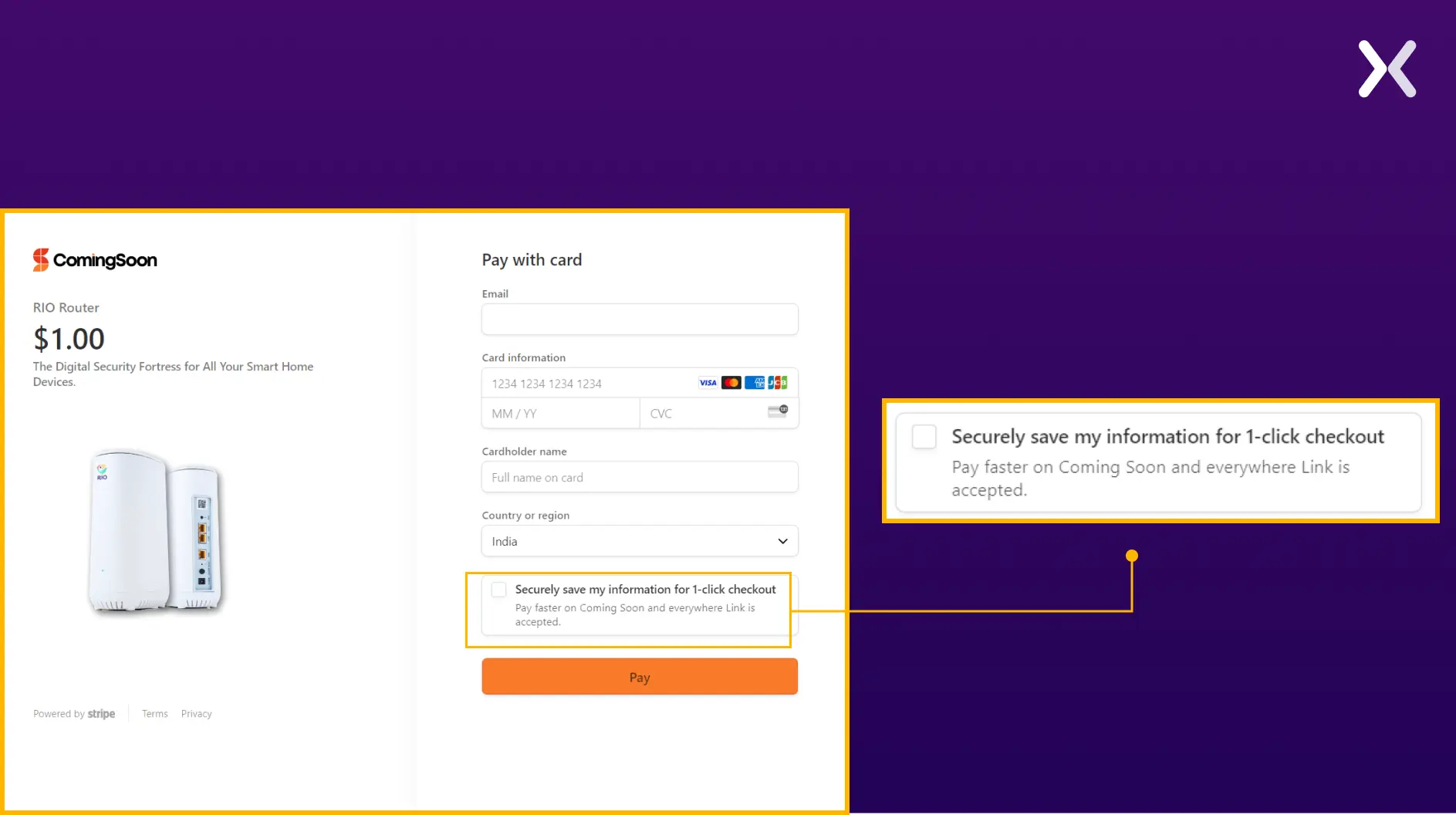 What’s more, at the end of the payment process. There’s an option that asks for consent from the payer to securely save their information for future payments. This helps the payer by giving them a choice to opt in or opt-out, making sure they have complete control over their payment preferences. It’s all about providing options to the customer, ultimately improving their overall experience and satisfaction.
What’s the easiest way to collect payments on landing pages?
Integrating a landing page with payment gateways is the most straightforward method for collecting payments. With many paid and free platforms, you can effortlessly embed payment forms or links directly onto your landing page. Such a simplified approach helps smooth customer transactions and improves user experience. Providing a convenient and secure payment process instills trust and encourages higher conversion rates. Therefore, whether you opt for a paid solution or explore free options, integrating payment gateways makes sure that your landing page effectively drives sales and maximizes revenue.
Related Articles: