Key Takeaways
- Every ad group needs its own landing page, one page per intent, not one page for everything
- Message match between ad copy, headline, and CTA is the single biggest driver of Quality Score and conversion rate
- Remove all navigation and exit links, distraction-free pages convert 20-30% better than pages with nav bars
- Trust signals (testimonials, ratings, logos) placed near the CTA reduce friction at the decision point
- Mobile optimisation is non-negotiable, over 60% of paid search clicks now happen on mobile devices
- Track everything with pixels, UTMs, and event-based analytics, you cannot optimise what you cannot measure
- The thank you page is an underused conversion asset, use it to deepen engagement after the initial conversion
You are spending real money on every click. If the page behind that click is not built to convert. You are burning budget and handing leads to competitors. Across 500+ PPC landing page projects, we have seen the same patterns repeat. The teams that follow a disciplined set of best practices consistently outperform those that treat landing pages as an afterthought. This guide covers the 7 critical mistakes that tank paid search performance and the 6 proven practices that lift conversion rates, backed by real campaign data and examples from pages we have built.
Paid search landing pages vs organic landing pages
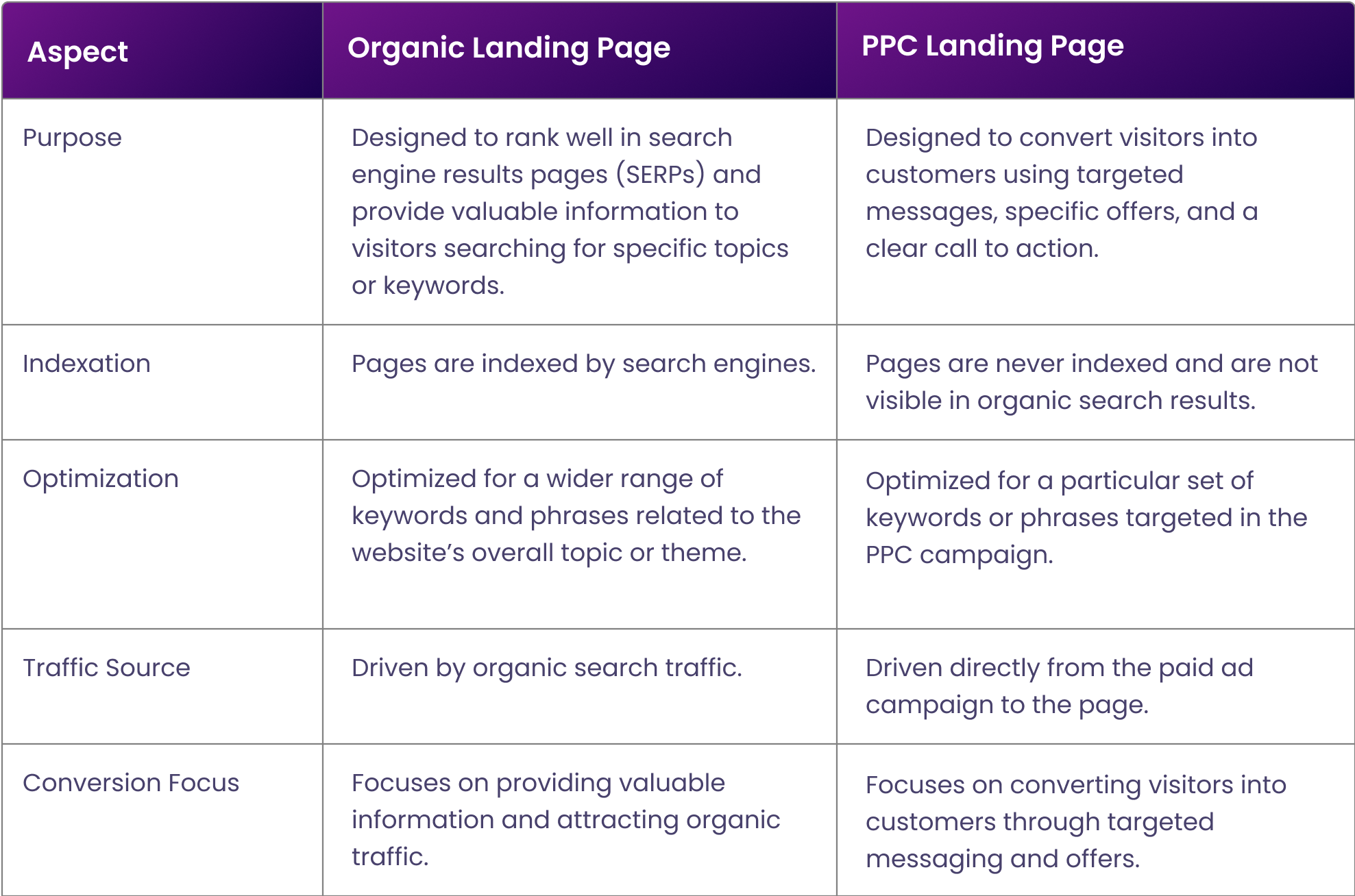
Before diving into best practices, it helps to understand why PPC landing pages play by different rules than organic pages.
| Factor | PPC Landing Page | Organic Landing Page |
|---|---|---|
| Primary goal | Single conversion action | Broad engagement and ranking |
| Traffic source | Paid ads (Google, Bing, Meta) | Organic search results |
| Keyword targeting | Narrow, matched to ad group | Broad, clusters and long-tail |
| Navigation | Removed or minimal | Full site navigation |
| Indexing | Noindex recommended | Indexed and crawlable |
| Content depth | Focused and concise | Full and detailed |
| Testing cadence | Frequent A/B tests | Slower, SEO-safe changes |
| Lifespan | Campaign-dependent | Evergreen, updated periodically |
In short, paid search landing pages are built for speed and focus. Organic pages are built for depth and discoverability. Using your homepage or a blog post as a PPC destination almost always underperforms a purpose-built landing page.
Why dedicated landing pages matter for Google Ads
Understanding the difference between organic and paid traffic is the first step. Here is why dedicated PPC landing pages are worth the investment:
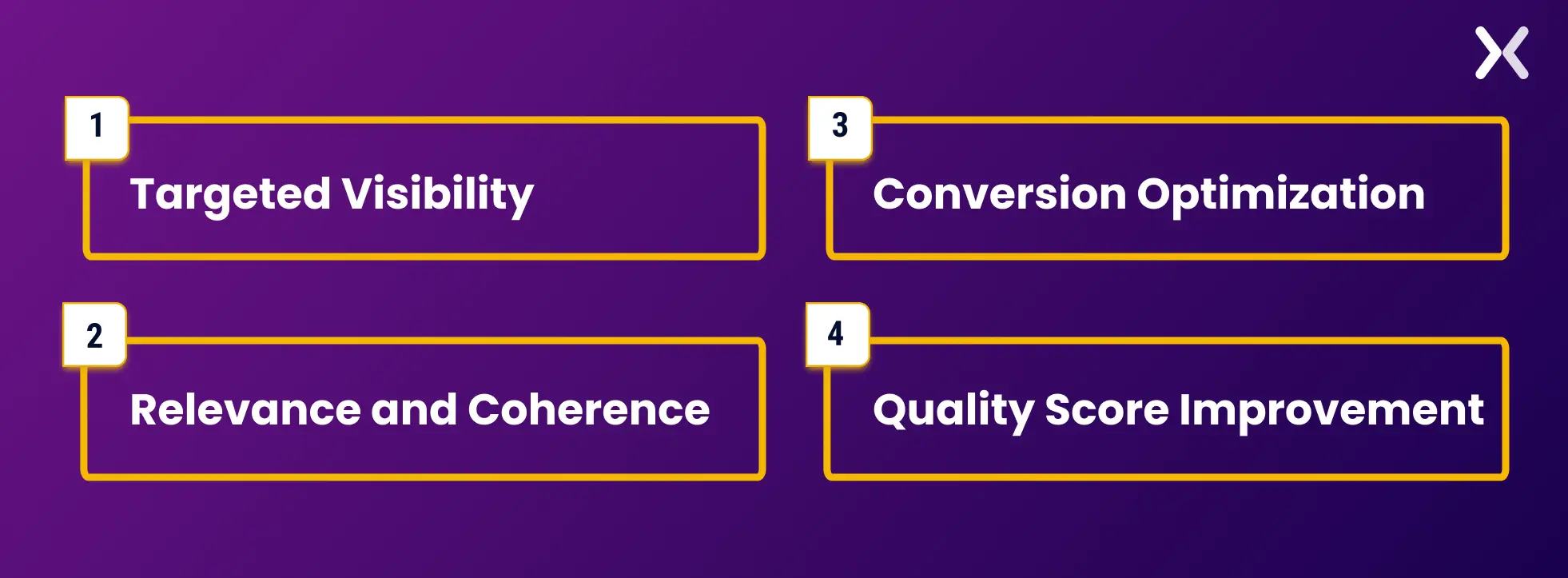
Targeted Visibility
PPC landing pages let you control exactly which page appears for a specific query, bypassing the organic ranking cycle entirely.
Message Relevance
A homepage serves every audience. A PPC landing page delivers the exact information the ad promised, reducing bounce rates and cost-per-click.
Conversion Optimisation
PPC landing pages are easier to track and optimise than multi-purpose website pages. Every element can be tested.
Quality Score Impact
Google Ads rewards relevance between keywords, ads, and landing pages. A well-optimised landing page directly improves Quality Score and lowers CPC.
See exampleWagepoint, B2B SaaS PPC Landing Page→
13 paid search landing page best practices
Generating leads with paid search becomes much easier once you follow a disciplined approach. Below are the 7 don’ts that consistently kill performance, followed by the 6 dos that move the needle.
The 7 don’ts: mistakes that tank PPC performance
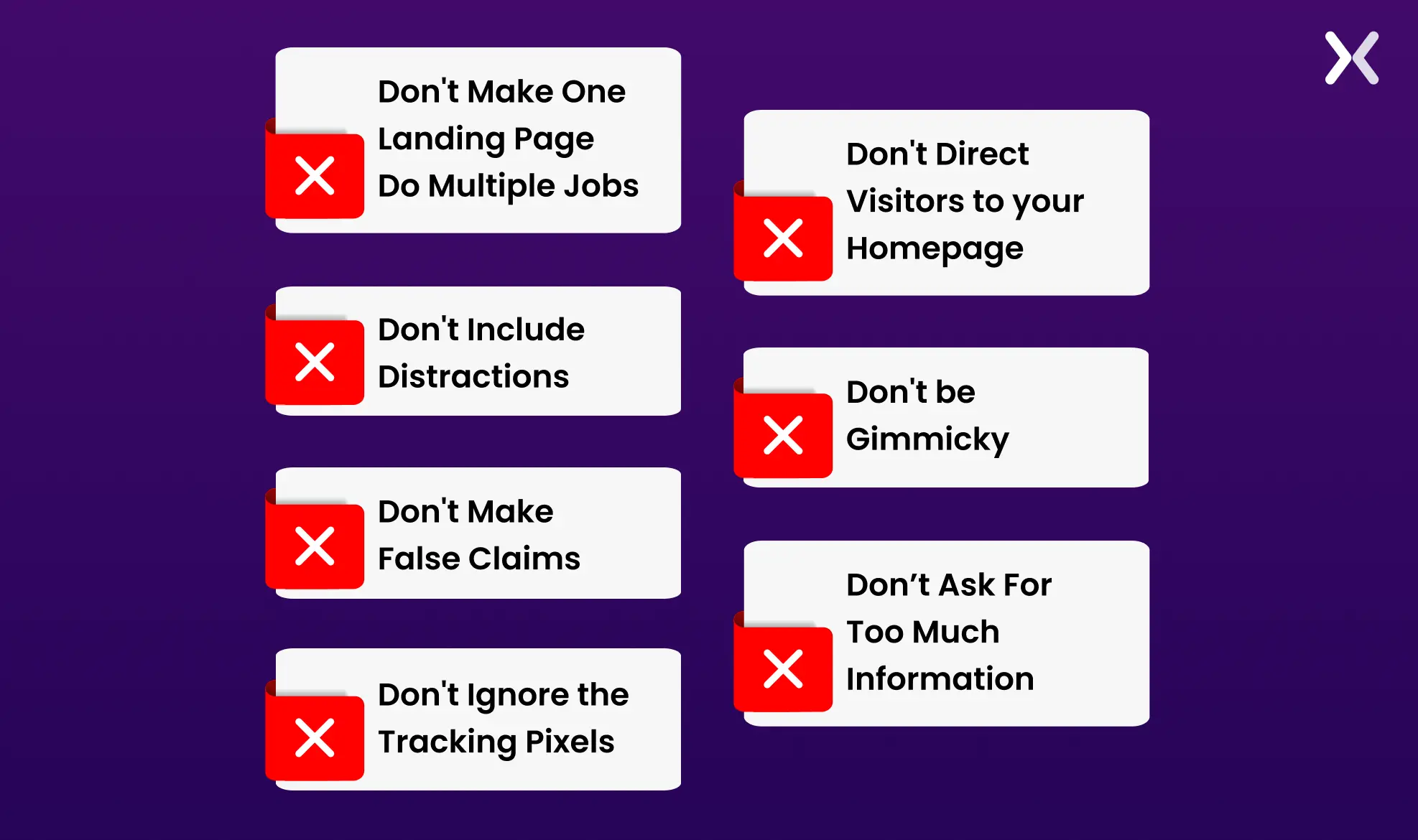
1. Don’t make one landing page do multiple jobs
Your landing page should serve a single purpose. Different post-click experiences have different goals. In B2C, that might mean purchasing a product or signing up for a trial. In B2B, it could be registering for a webinar, downloading a product sheet, or submitting a contact form. When you ask a prospect to convert, browse your blog, check out a new offering, and find your contact page, all on the same page. You are splitting their attention and killing conversion rates.
Businesses with 10-15 landing pages generate 55% more leads than those with fewer than 10. Each ad group deserves its own dedicated landing page.
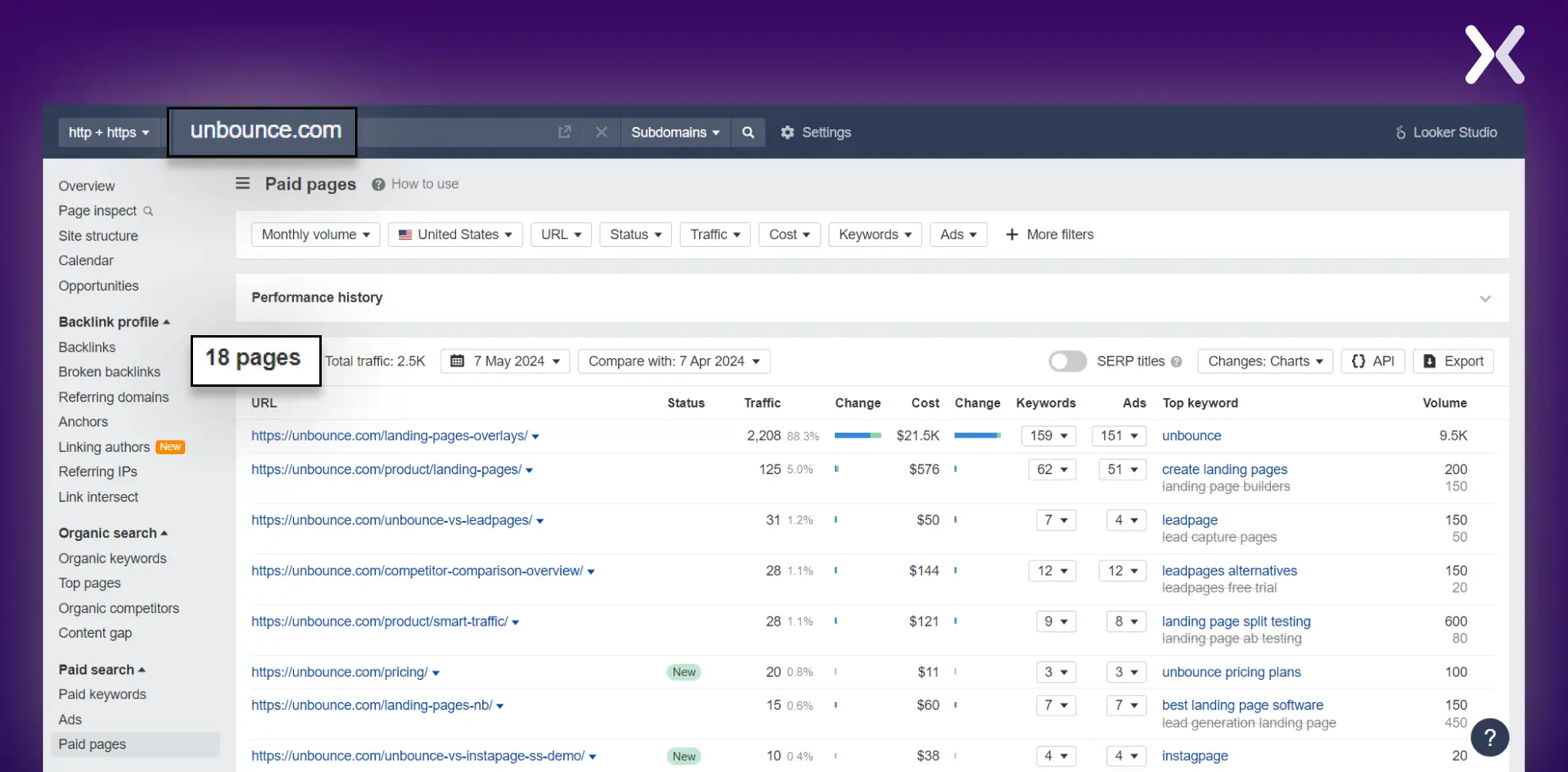 Brands like Unbounce run 10+ PPC landing pages, each one tailored to a specific keyword cluster and audience segment.
2. Don’t Include Distracting Navigation or Exit Links
Your conversion path must be free of escape routes, no navigation bars, no footer links, no sidebar widgets. Every link or button that leads away from your CTA is an invitation for the prospect to leave and never come back.
What we see on underperforming pages
- Full site navigation bar at the top
- Footer with 20+ links
- Sidebar with blog posts or social feeds
- Multiple CTAs competing for attention
What top-converting pages do
- Logo only (no clickable nav)
- Minimal footer, privacy policy link only
- Single focused CTA repeated at key scroll points
- Trust signals instead of distracting widgets
Here is the subtlety most guides miss: navigation can work for top-of-funnel PPC pages where the visitor is still researching. But for middle and bottom-of-funnel keywords where purchase intent is high, removing navigation consistently lifts conversion rates by 20-30%.
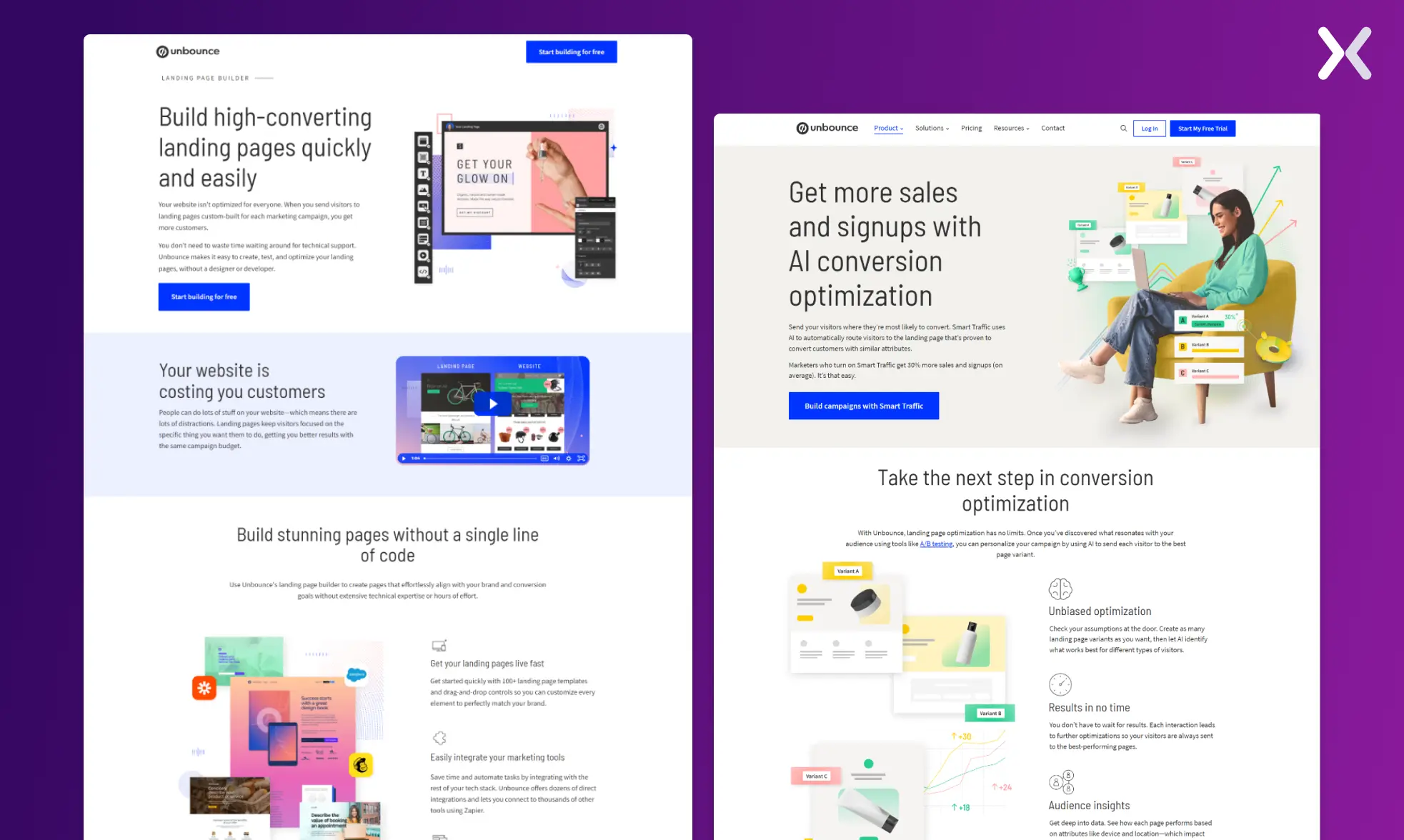 The solution? A/B test your navigation bar. Let the data decide for your specific audience.
3. Don’t make false or unverifiable claims
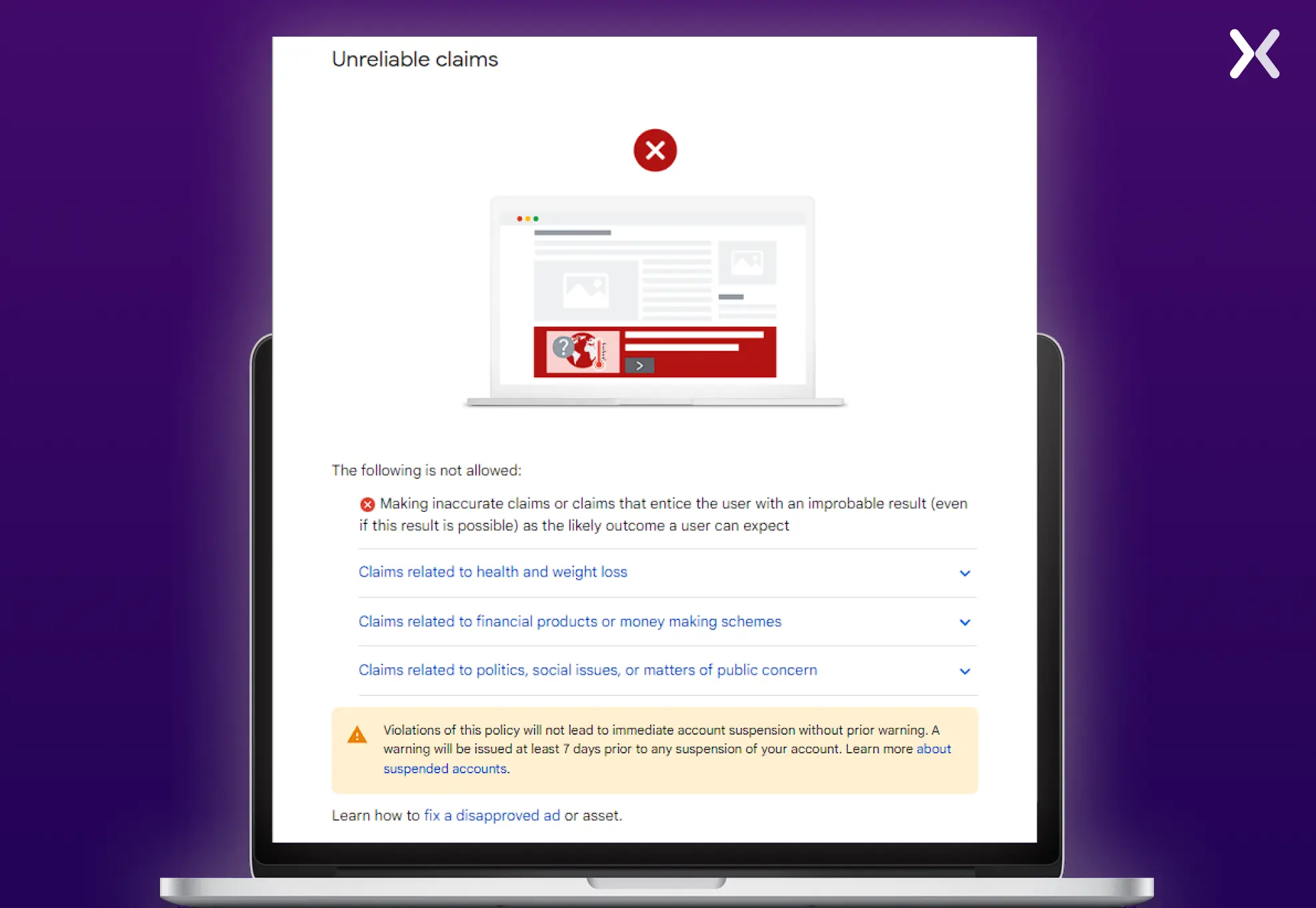
Consumers are more discerning than ever. If your PPC landing page makes claims that cannot be backed up with data, testimonials, or third-party validation, it erodes trust immediately. Google also penalises misleading ad experiences. Ads that promise something the landing page doesn’t deliver will see lower Quality Scores, higher CPCs, and potentially account suspensions.
- Back every claim with a specific number, case study, or testimonial
- Use client logos only with permission and verification
- Display accreditations and certifications prominently
- Avoid superlatives ("best", "fastest", "#1") unless independently verified
- Keep pricing transparent, hidden fees destroy trust
4. Don’t Ignore Tracking and Attribution
Not tracking the performance of your Google Ads landing page is one of the most expensive mistakes you can make. Start with URL tracking using UTM parameters and Google Analytics. Then layer on pixel-based tracking for deeper attribution:
1. Pixel Placement
A tracking pixel, a small, invisible code snippet, is placed on your landing page. It fires when specific user actions occur.
2. Event Tracking
When visitors interact with your page (form fills, button clicks, scroll depth), the pixel sends event data back to your ad platform.
3. Data Collection
The pixel collects data about ad impressions, clicks, and conversions, connecting the dots between ad spend and business outcomes.
4. Optimisation Loop
With accurate data, you can adjust bidding strategies, refine audiences, and improve landing page elements based on what actually converts.
Without proper tracking, you are flying blind, we have audited campaigns spending $50k+/month with zero conversion tracking in place, every dollar was unattributable.
5. Don’t send paid traffic to your homepage
This is the most common, and most costly, mistake in paid search. When a visitor clicks your ad, they have a specific intent. Sending them to a generic homepage with dozens of options is the equivalent of dropping them in the middle of a department store without a map.
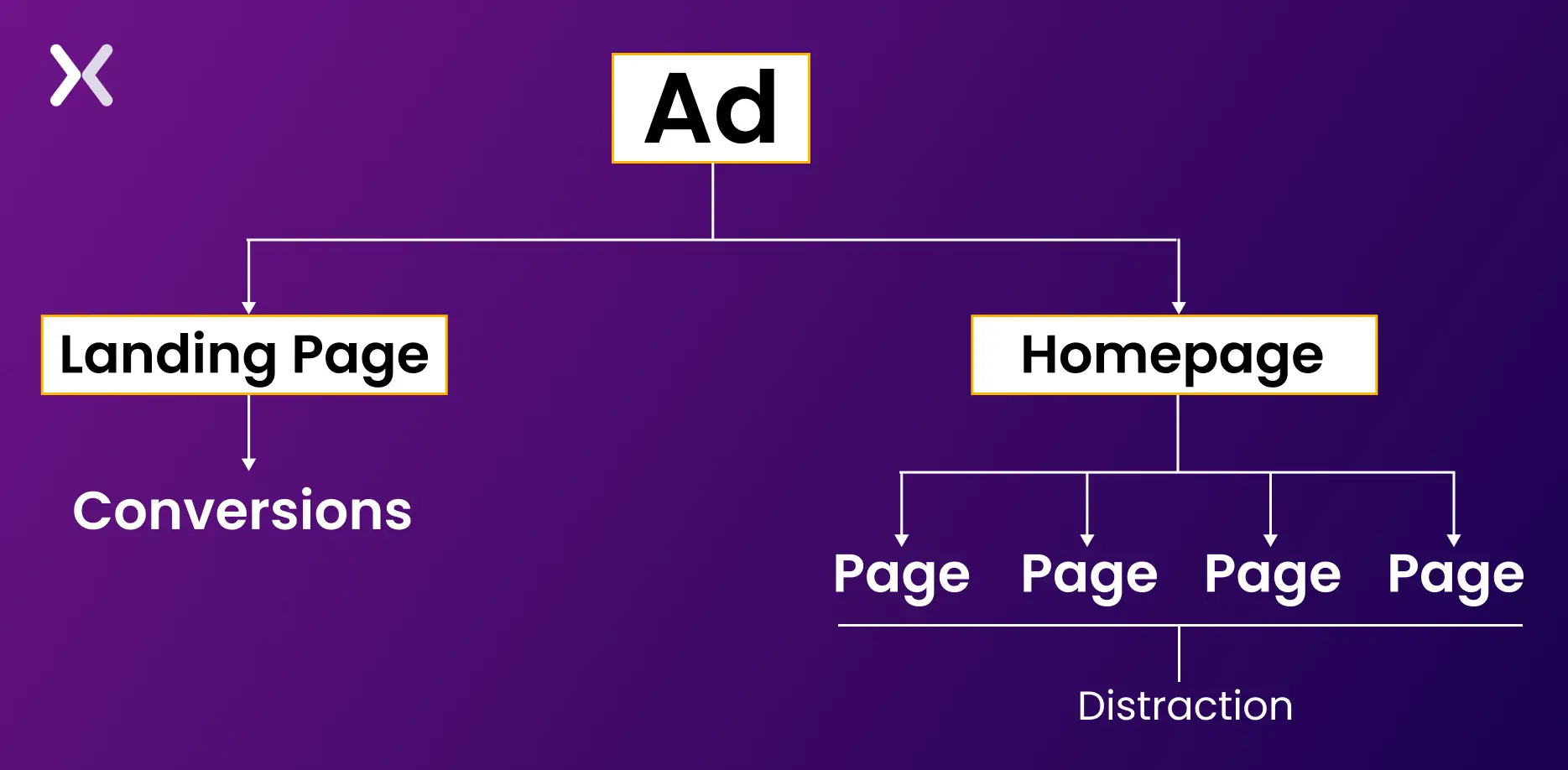 The result: higher bounce rates, lower Quality Scores, higher CPCs, and wasted ad spend.
Every ad group needs its own landing page. Full stop. The initial investment pays for itself within the first few weeks of improved Quality Scores alone.
6. Don’t Be Gimmicky or Scammy
If your landing page looks like it was designed in 2012, flashing countdown timers, stock photos of people in suits shaking hands, ALL CAPS headlines, visitors will close the tab before scrolling. Modern buyers can spot low-effort pages instantly. Credibility is built through clean design, specific proof, and transparent communication.
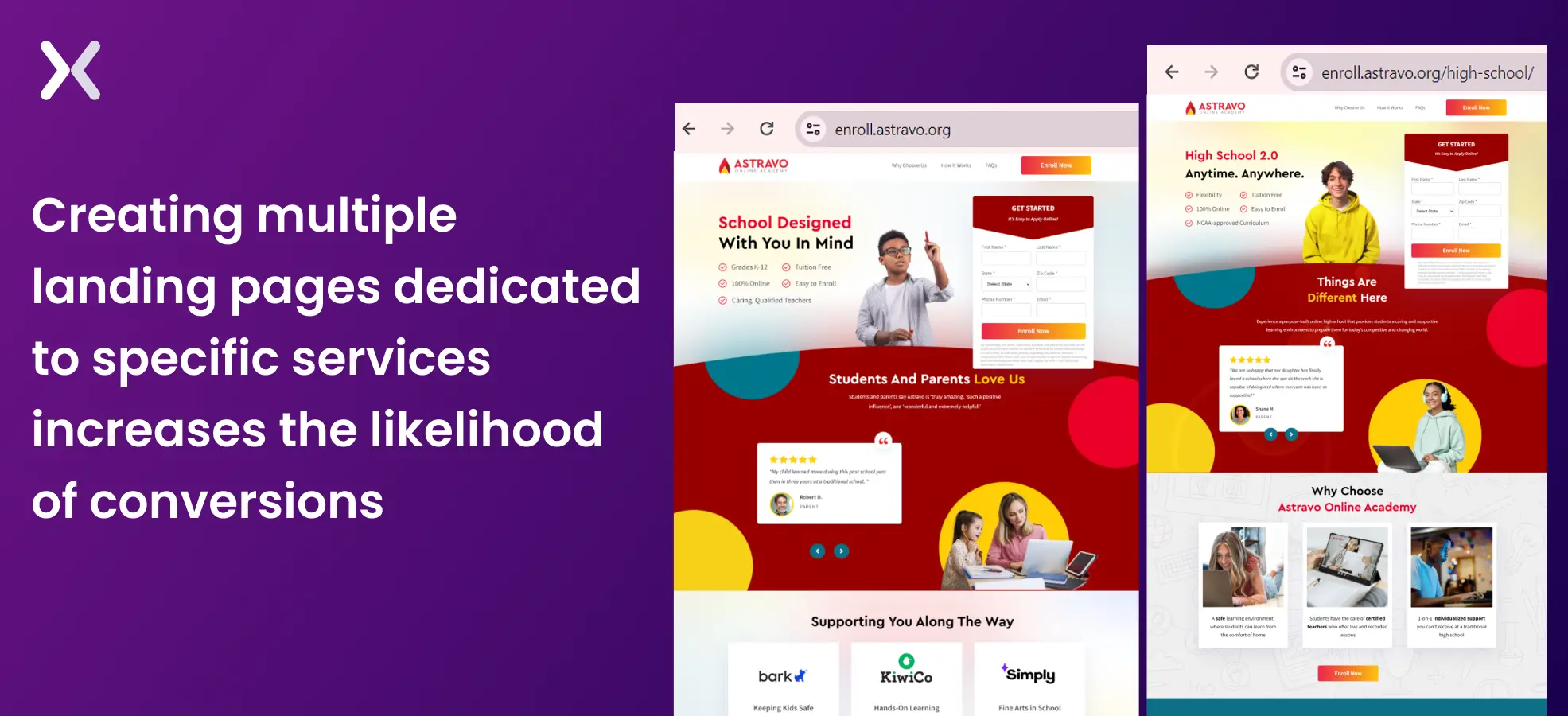
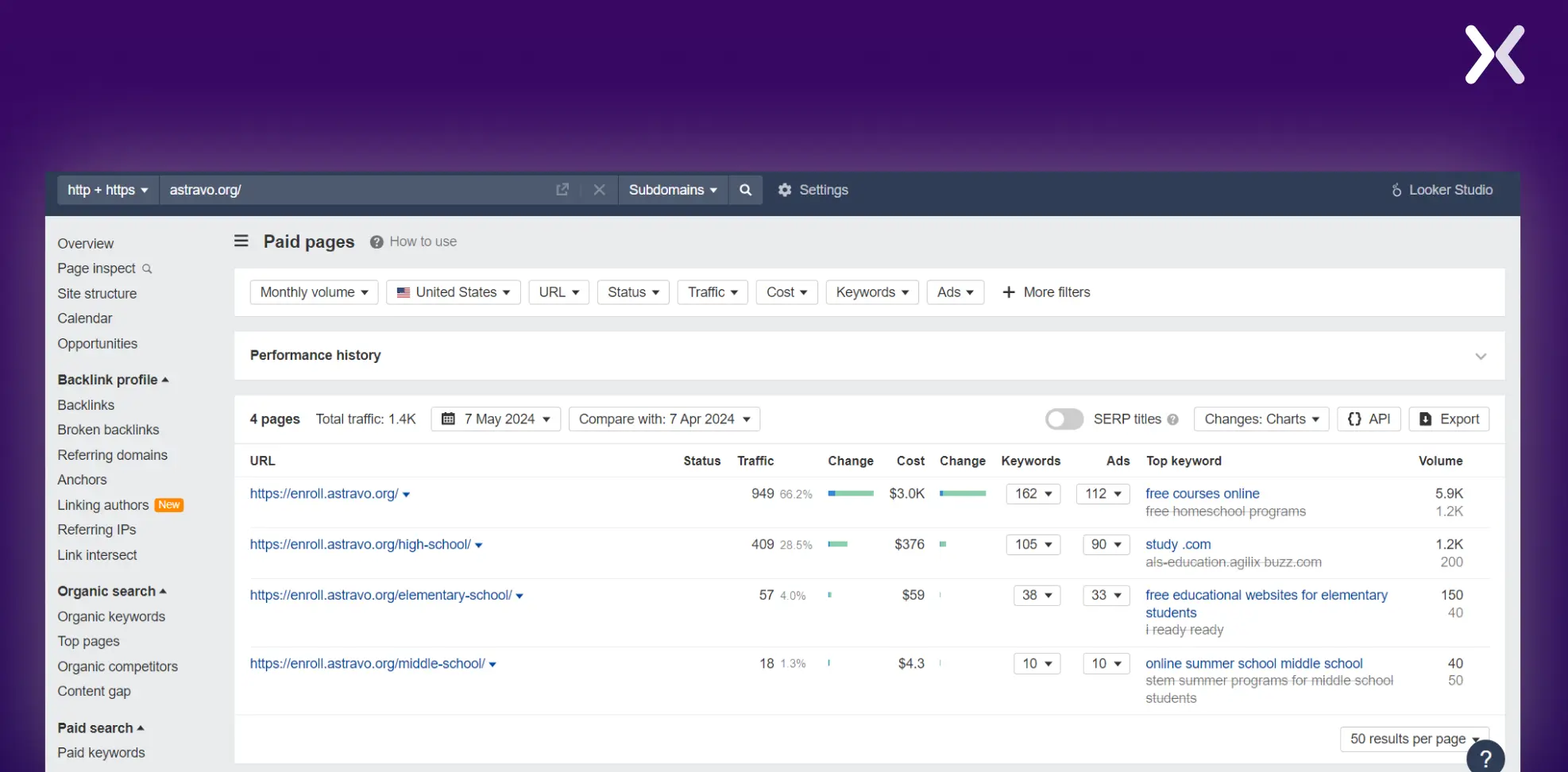 For example, Astravo runs four distinct PPC landing pages, each with dedicated content tailored to a specific service offering. No gimmicks, just focused messaging.
See exampleSmartRoof, Clean, Trust-Focused Lead Gen Landing Page→
7. Don’t ask for too much information too soon
Every additional form field is friction. In a world where identity theft is a real concern, asking for information you don’t actually need, phone numbers, job titles, company size, at the top of the funnel will scare prospects away.
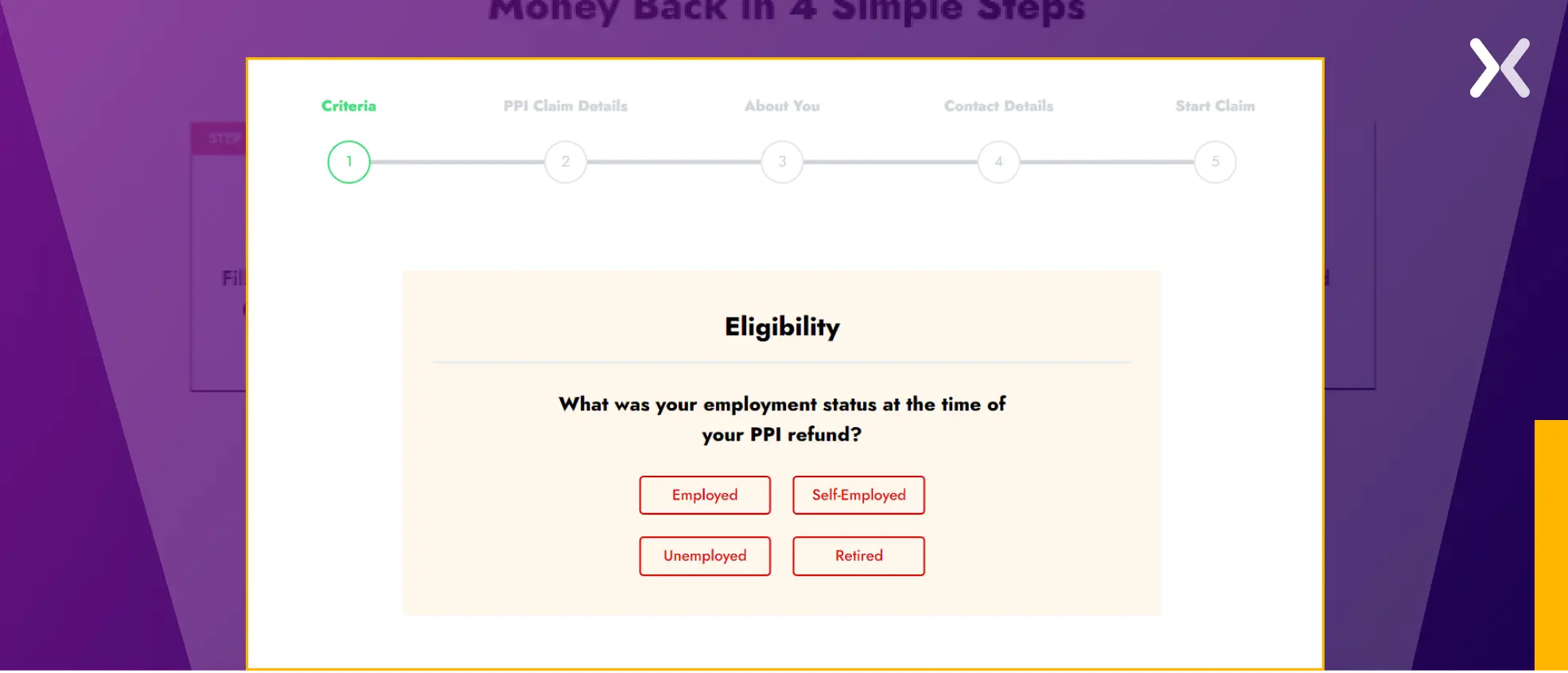
Use multi-step forms to break long forms into digestible steps. We have seen multi-step forms lift completion rates by 15-25% compared to single-page forms with the same number of fields. Learn more about landing page form design best practices.
The rule of thumb: ask for the minimum information you need at this stage of the funnel. You can always collect more data later in the nurture sequence.
Need a PPC landing page that actually converts?
The Apexure team has built 500+ landing pages across SaaS, fintech, healthcare, and professional services. We know what works because we test it, every week, across dozens of live campaigns.
Get a Free Landing Page Audit →The 6 dos: practices that lift conversion rates
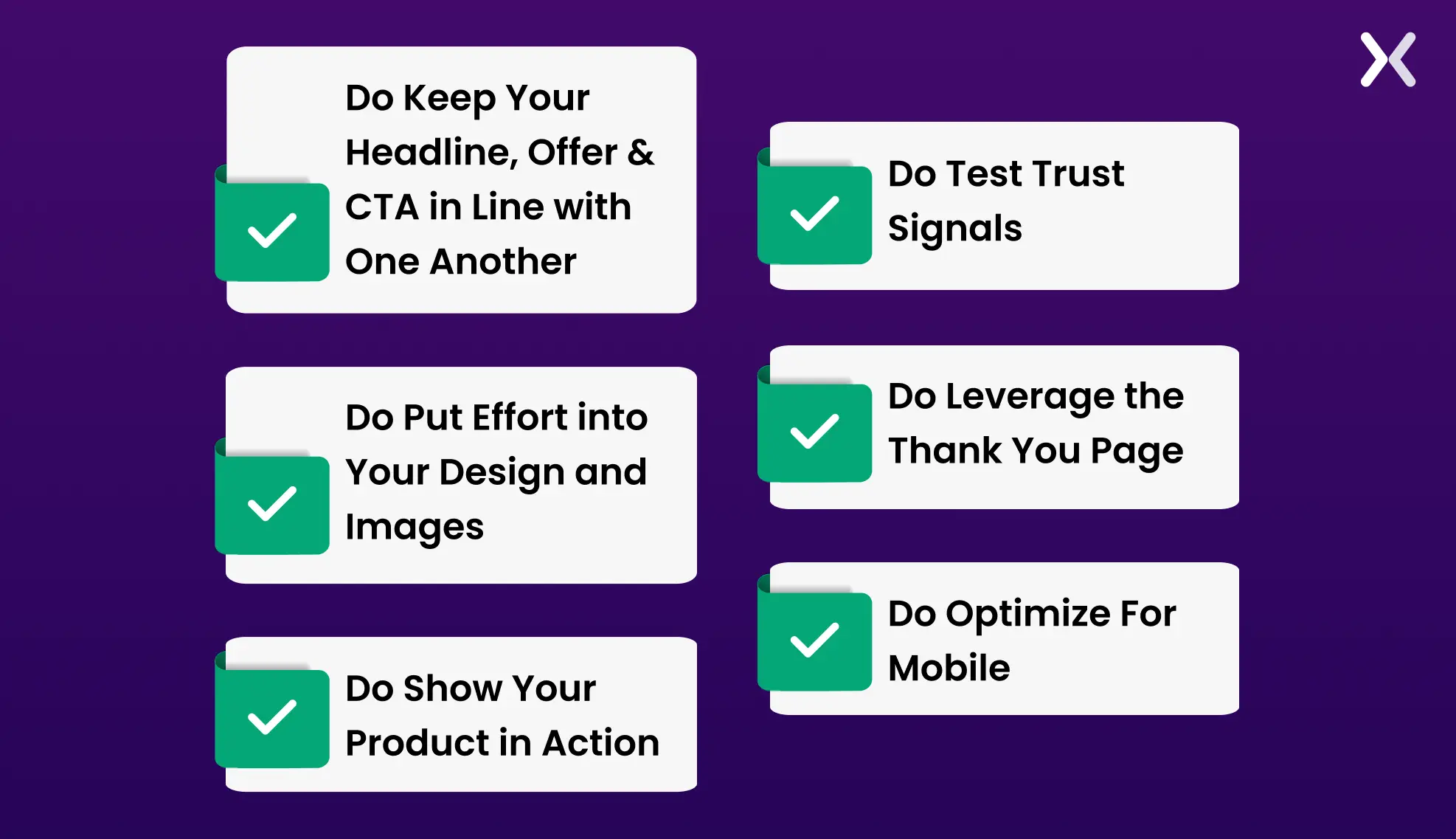
1. Do match your headline: offer, and CTA to your ad copy
Message match is the single most important factor in paid search landing page performance. Your headline, call to action, and offer must mirror the promise made in your ad copy. When all three are aligned, Quality Score goes up, CPC goes down, and conversion rates improve.
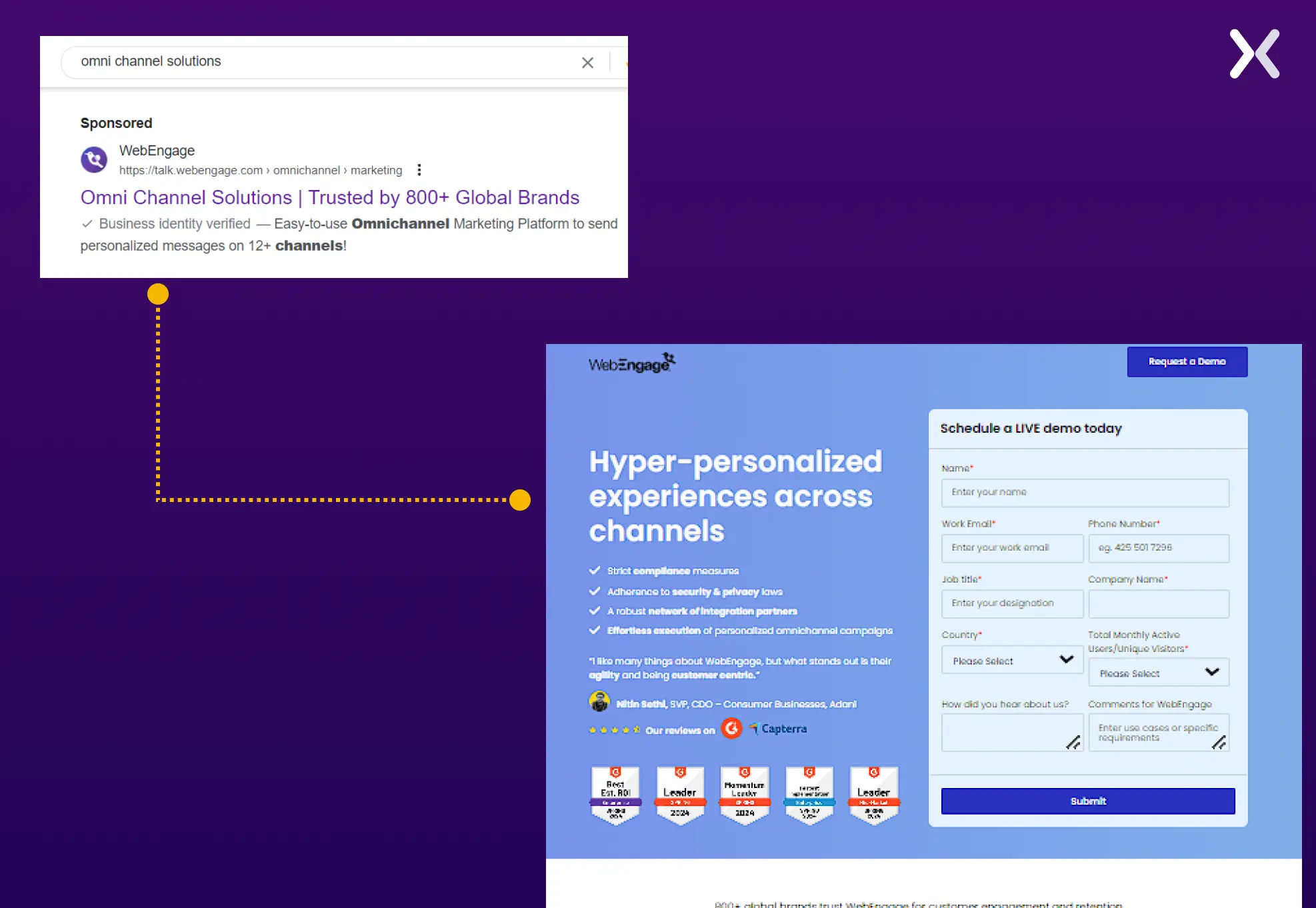 For example, WebEngage’s PPC landing page for “omni channel solutions” mirrors the ad copy perfectly, key features are marked throughout the page, with the headline directly referencing “personalized messages across 12+ channels.”
The Message Match Checklist
- Keyword in headline, The primary search term should appear in or near your H1
- Ad promise in subhead, Whatever the ad description promised, the subheadline should deliver
- Visual consistency, If the ad mentions a product image or offer, it should be visible above the fold
- CTA alignment, The button text should show the action the ad implied ("Get Free Demo" not "Submit")
- Scent trail, A visitor should never wonder "did I click the right link?" after landing
2. Do invest in professional design and imagery
When designing your PPC landing page, every element must work together, layout, imagery, typography, and whitespace. A cluttered or amateur-looking page signals low quality, regardless of how good your product actually is.
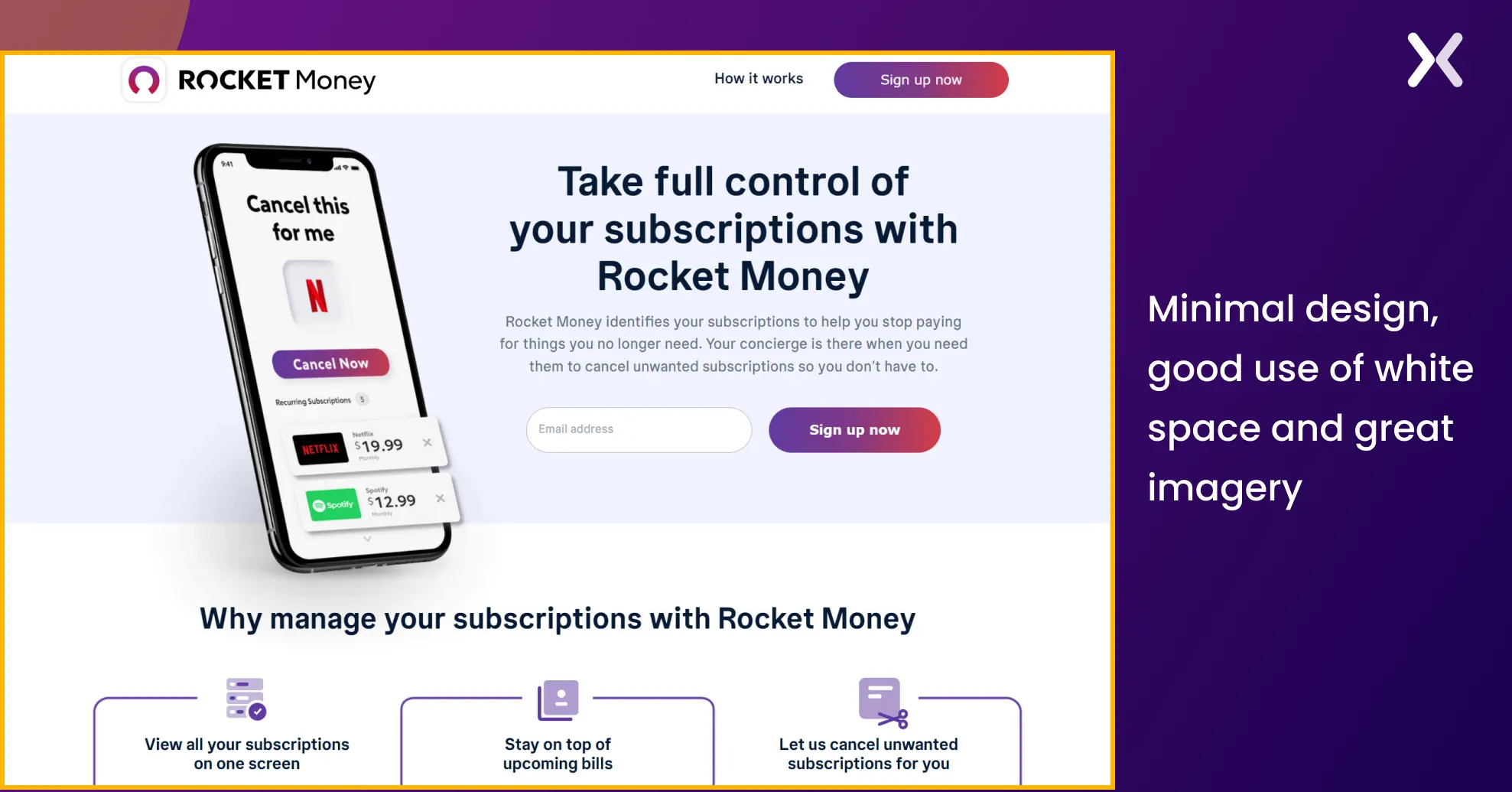 Across the PPC landing pages we have designed, we consistently see that professional, clean layouts outperform busy, template-based designs, even when the content is identical.
See exampleHutch, E-commerce PPC Landing Page Design→
"Really superb landing page builder, knows the score, offers guidance on best practice and works quickly, highly recommend!"
3. Do show your product or service in action
A product or service shown “in motion” has a measurable effect on landing page conversions. Video is one of the most effective ways to demonstrate value, but only when the video is relevant and adds genuine insight. For example, Unbounce lets visitors interact with their builder directly on the SaaS landing page, which takes user experience to the next level.
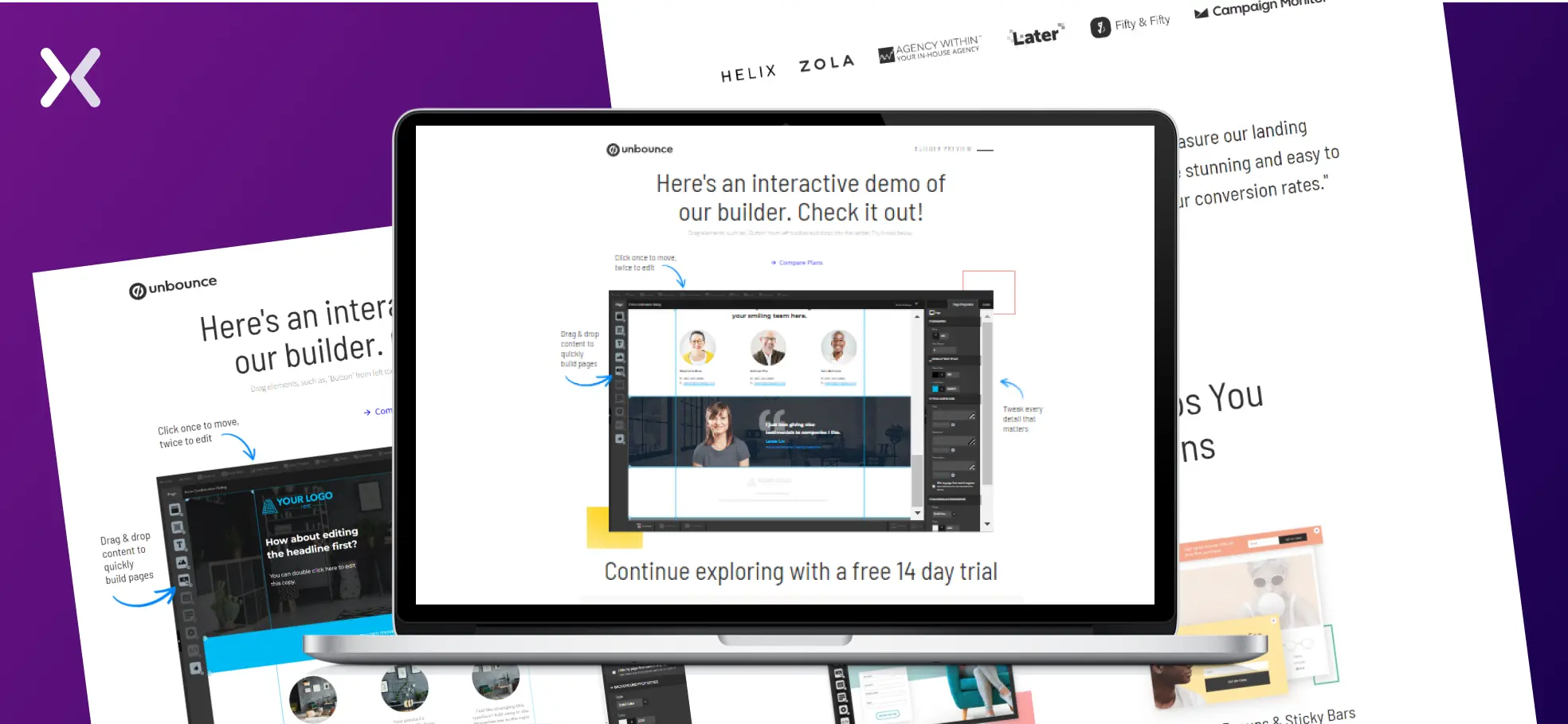
Not every page needs video. Interactive demos, product screenshots with annotations, animated walkthroughs, and before/after comparisons can be equally effective, and faster to produce. The key is showing the outcome, not just describing it.
4. Do test and optimise trust signals
Trust signals are the difference between a visitor who converts and one who bounces. Testimonials, trust seals, client logos, review ratings, and clear privacy policies all reduce friction at the decision point.
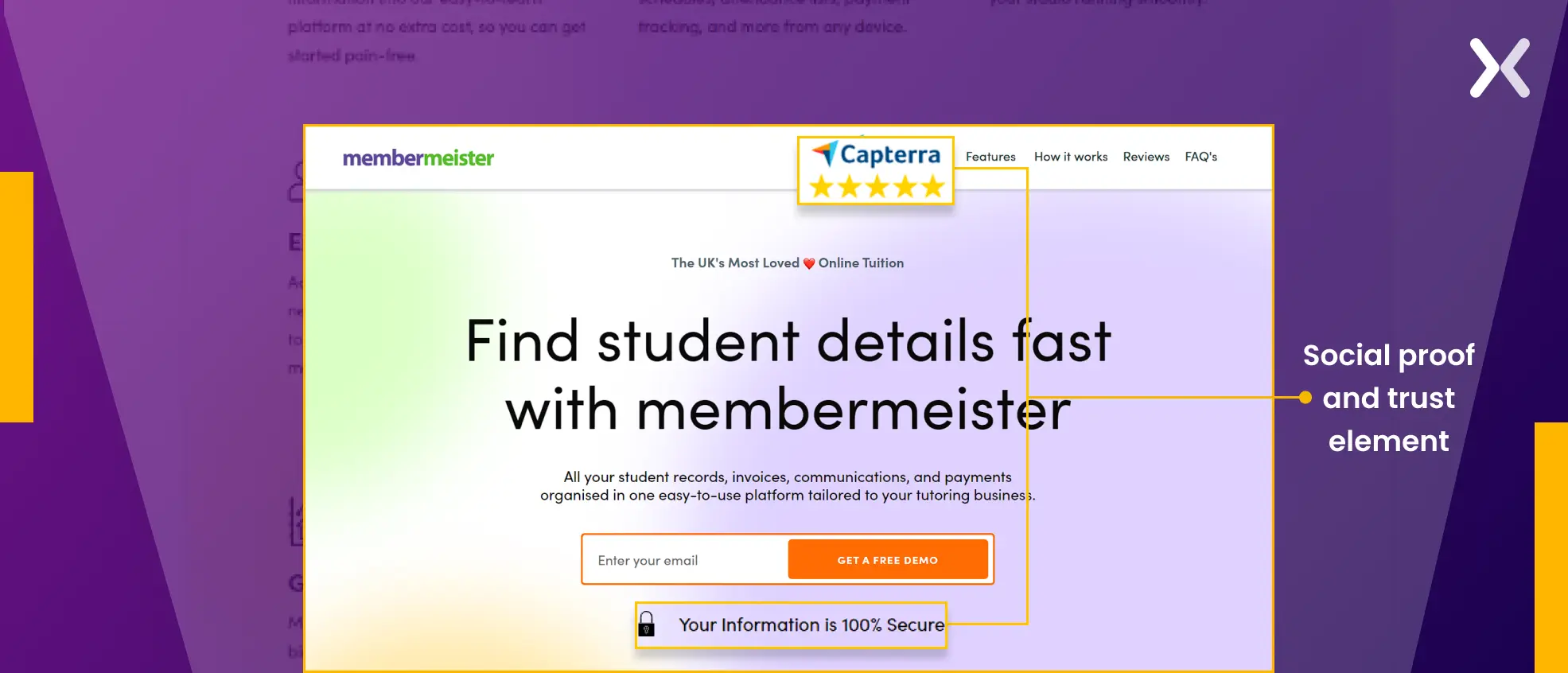 Membermeister does this well, their Capterra rating sits in the sticky navbar, and right after the CTA they reassure visitors with “Your Information is 100% Secure.” Notice how social proof is placed at multiple scroll points, not just in one section at the bottom.
"Honestly, if you're looking for someone to build you a high-converting landing page, then look no further. The Apexure team built me a bottom-of-the-funnel landing page that converted above 4%, double the industry average. Likewise, they made the entire process simple by educating me the entire way through."
Trust signal placement matters as much as the signals themselves. Place your strongest proof (client logos, ratings) above the fold. Position testimonials near the CTA. And always include a privacy reassurance near form fields. Learn more in our guide to increasing landing page social proof.
5. Do use the thank you page
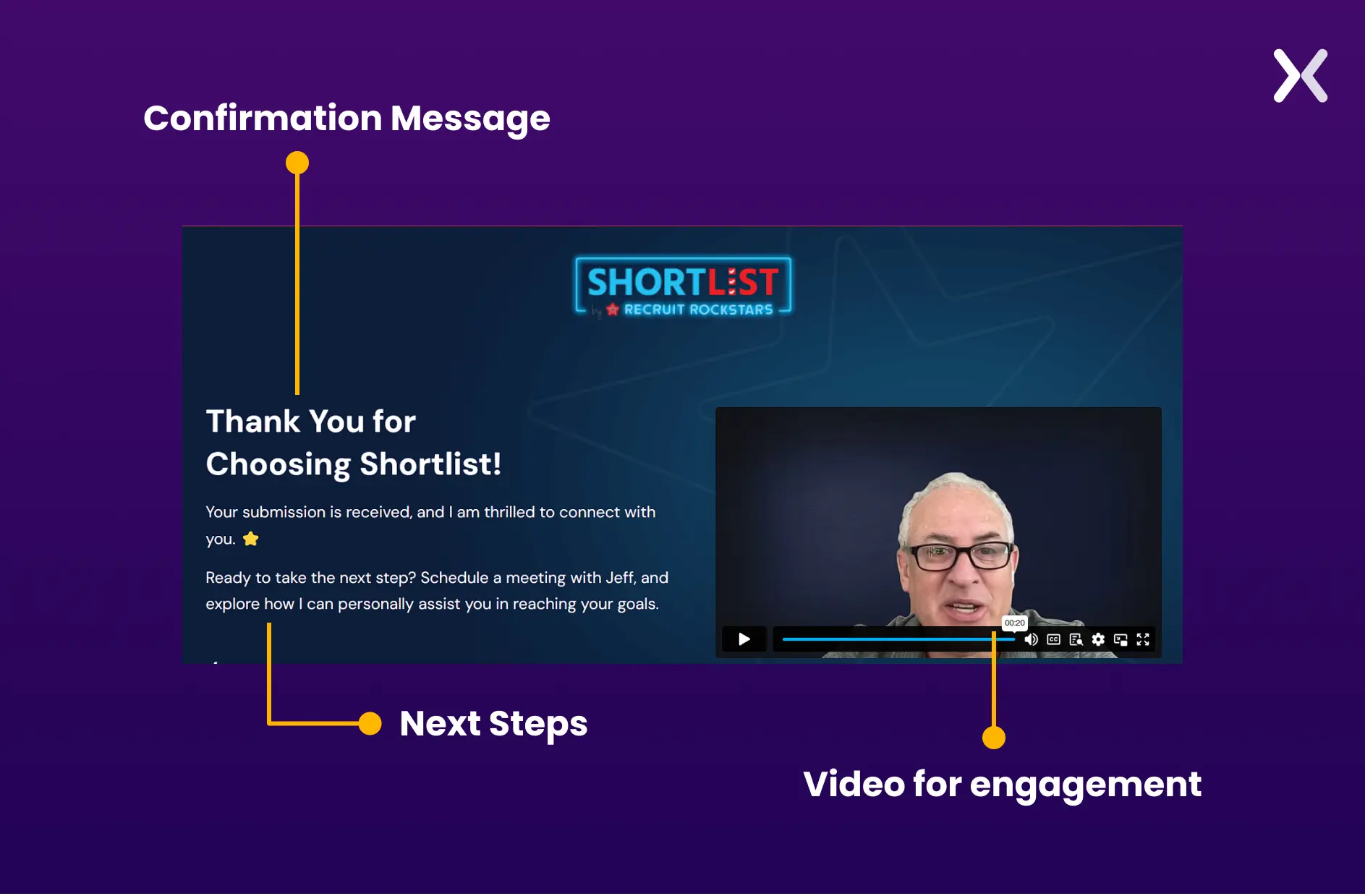
Most teams treat the thank you page as an afterthought, a quick “thanks, we’ll be in touch.” That is a missed opportunity. The thank you page is the moment of highest engagement. The visitor has just committed to your offer. Use that momentum to:
- Provide immediate value (a resource, a video, a next step)
- Cross-sell or upsell a related offer
- Encourage social sharing or referrals
- Set expectations for what happens next and when
- Capture additional qualifying information with a short survey
6. Do Optimise for Mobile , Non‑Negotiable
Over 60% of paid search clicks now happen on mobile devices. If your PPC landing page is not mobile-optimised, you are losing the majority of your paid traffic before they even see your offer.
Mobile Must-Haves
- Responsive layout that adapts to screen size
- Thumb-friendly tap targets (min 48px)
- Short, scannable headlines
- Click-to-call buttons for phone leads
- Fast load time (under 3 seconds on 4G)
Mobile Killers
- Horizontal scrolling
- Tiny text requiring pinch-to-zoom
- Forms with too many fields
- Pop-ups that cover the full screen
- Images that push the CTA below the fold
See exampleLoanTap, Mobile-Optimised Fintech Landing Page→
The psychology behind PPC landing page conversion
Whether or not your landing page converts comes down to psychology, understanding what motivates action and what creates hesitation. Relevance is the foundation. The more precisely your page matches the visitor’s intent, the higher your conversion rate. But beyond relevance, four psychological principles consistently drive PPC landing page performance:
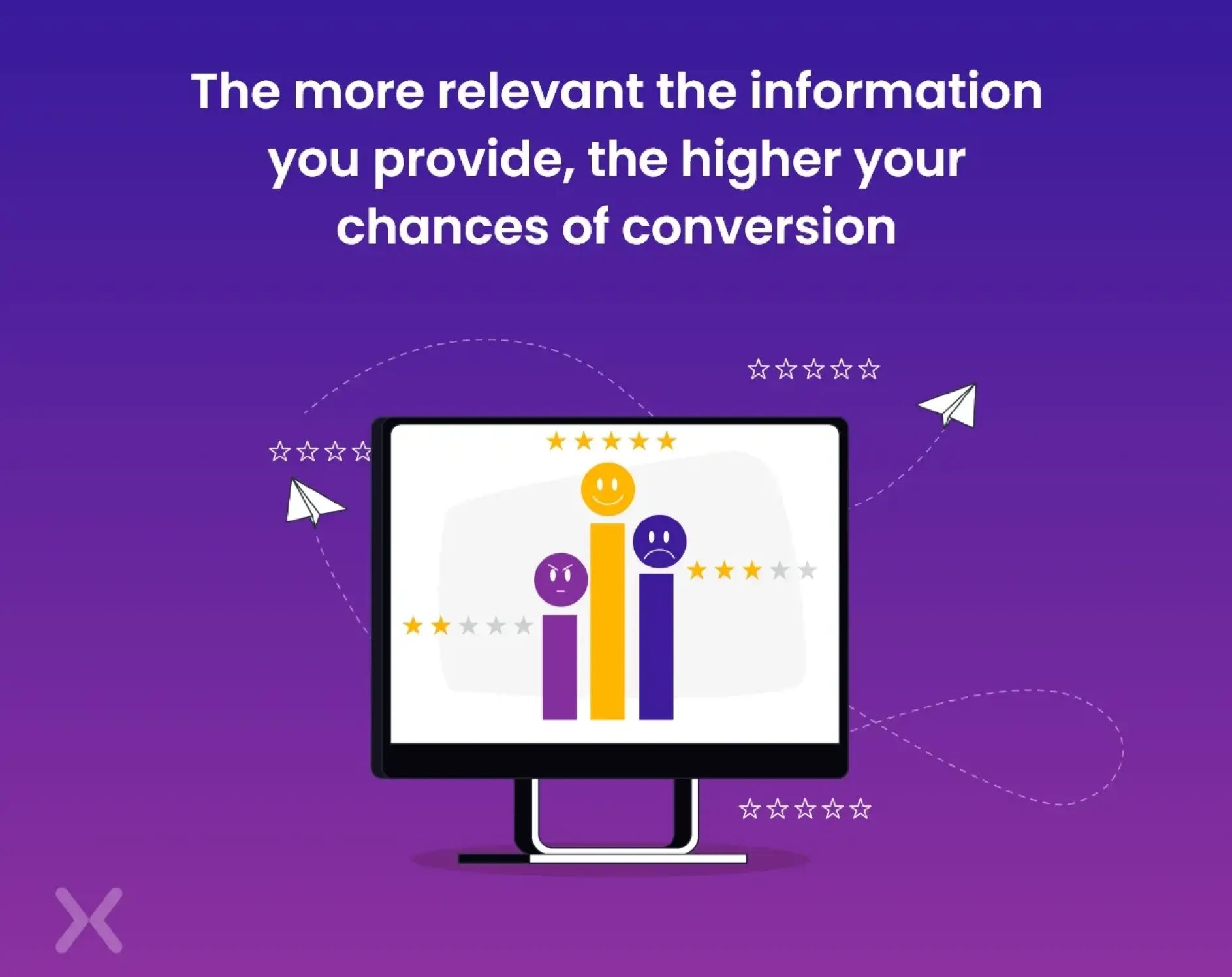
The four psychological principles that drive PPC landing page conversions: authority, scarcity, social proof, and relevance.
6 questions to answer before building your PPC landing page
Paid search plays a particular role in the buyer’s journey, providing content for users scoping out their options. Before you start designing, answer these six questions:
1. Is your “ask” proportional to the visitor’s intent?
A conversion can be whatever you need, a download, a form submission, a video play, or a visit to your app. But your goal must be proportional to where the visitor sits in the funnel. Promoting demo requests to cold traffic from broad awareness keywords is the equivalent of proposing on the first date. Smaller asks, “learn more”, “download the guide”, “see examples”, are less intimidating and often outperform heavy asks at the top of the funnel.
Match the weight of your CTA to the visitor’s position in the buying journey.
2. Is this a quick conversion or a long sales cycle?
E-commerce paid search is often transactional, users know what they want and are comparing deals, shipping costs, and coupon codes. Your ad copy and landing page do the heavy lifting to close the sale.
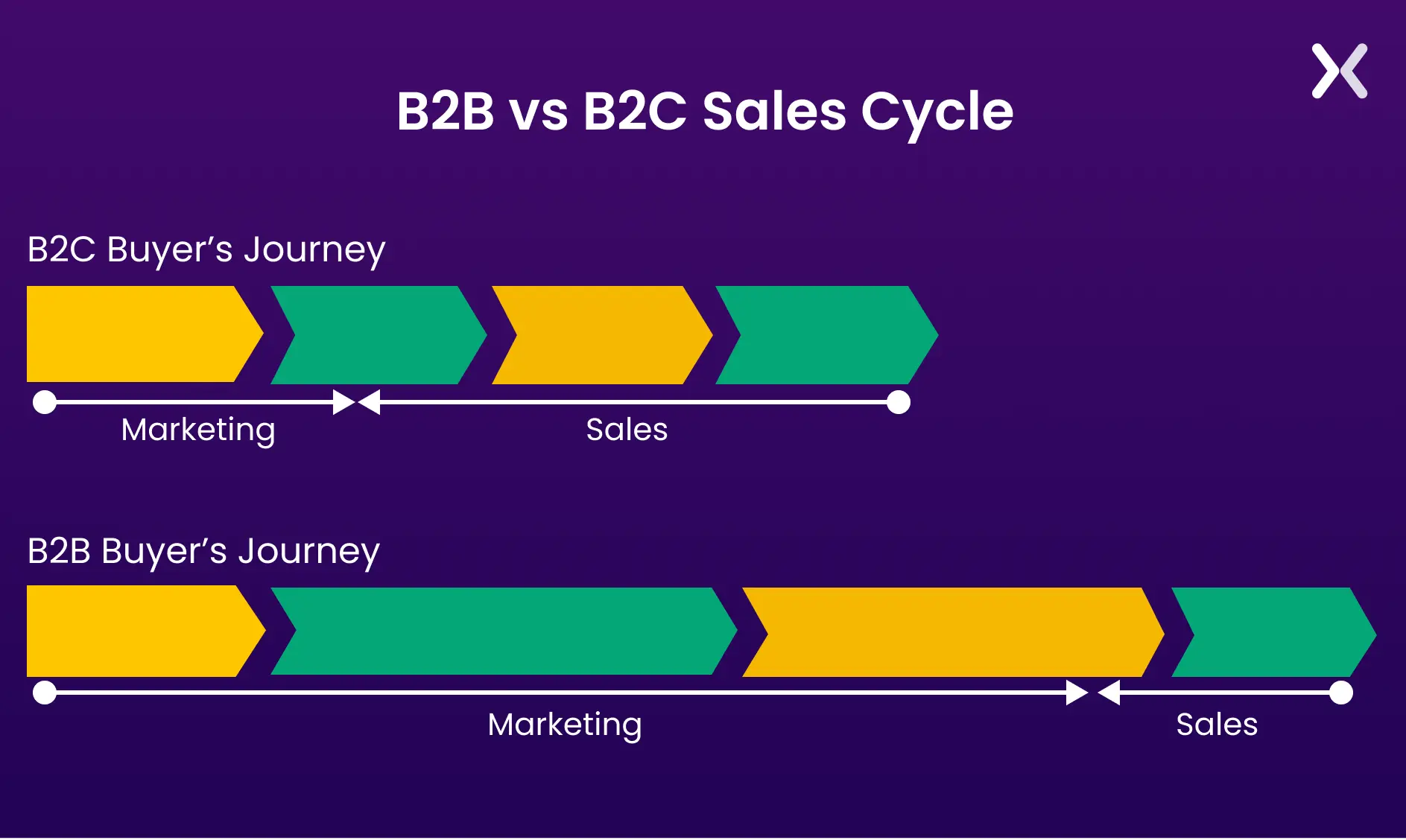 For B2B landing pages, the equation is different. These conversions are slower and involve multiple decision-makers. Your PPC landing page needs to provide enough value, whitepapers, comparison data, ROI calculators, to justify the next step in a longer sales cycle.
3. Who exactly is your ad targeting?
This matters especially for B2B companies. Your PPC landing pages will look very different depending on whether they target the CFO, the CMO, or an individual contributor doing research.
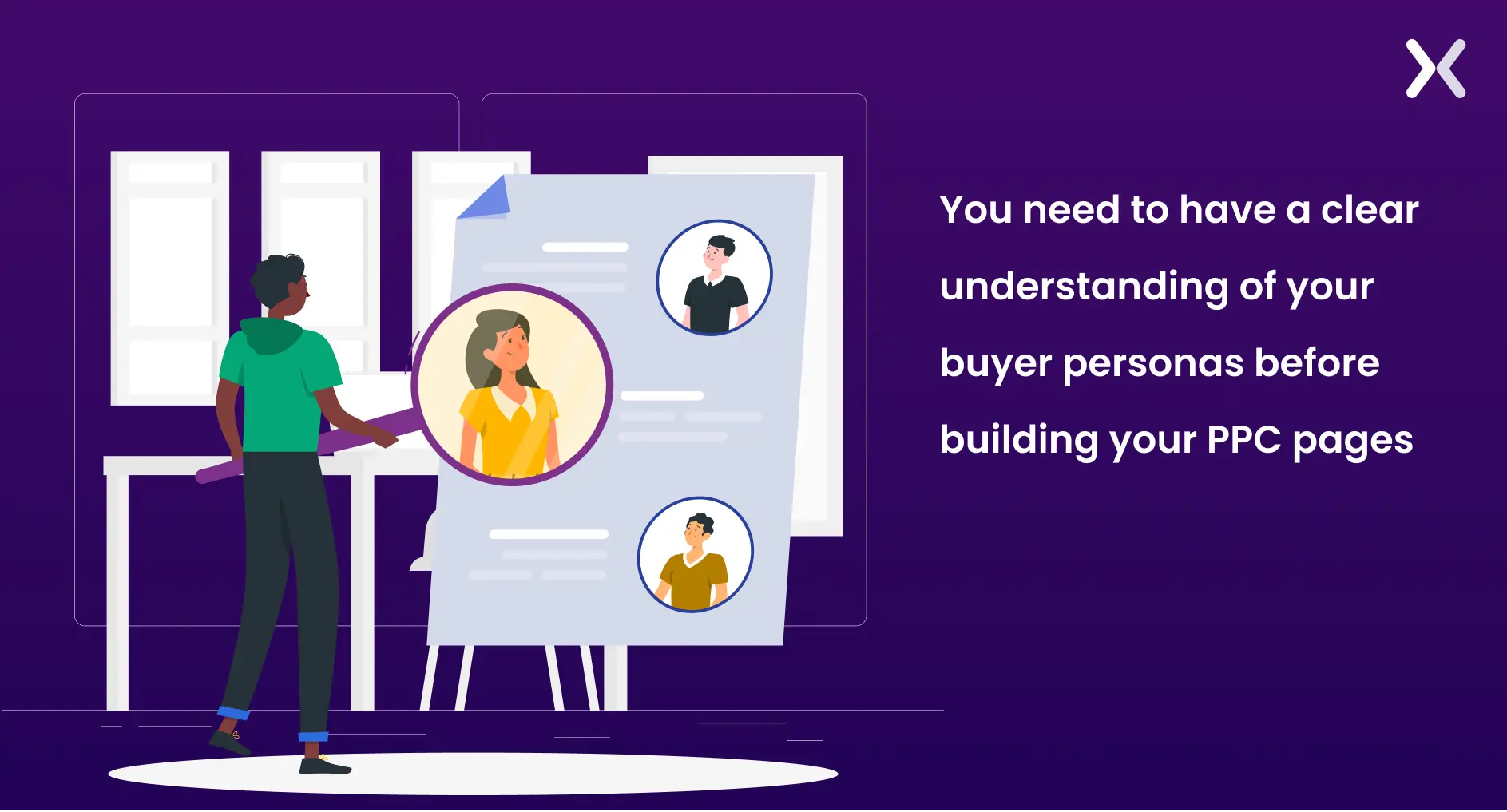 A marketing manager collecting options for a shortlist has different needs than a VP ready to sign off on a vendor. The junior researcher needs comparison content and exportable summaries. The decision-maker needs ROI data and implementation timelines.
4. What specific problem are you solving?
Do you have a particular solution to advertise through paid search? This could be a product, a category, or a service that addresses a specific pain point. If you are selling time-tracking software, your landing page should focus on the problems it solves, not a feature list. Break your messaging into digestible pieces. Lead with pain points, follow with solutions, and support with testimonials, icons, and graphics that make the page scannable.
5. How does this page fit into your funnel?
Your landing page will make or break paid search results. To calculate your Quality Score, Google references your keywords, your ad, your landing page, and user behaviour on the page.
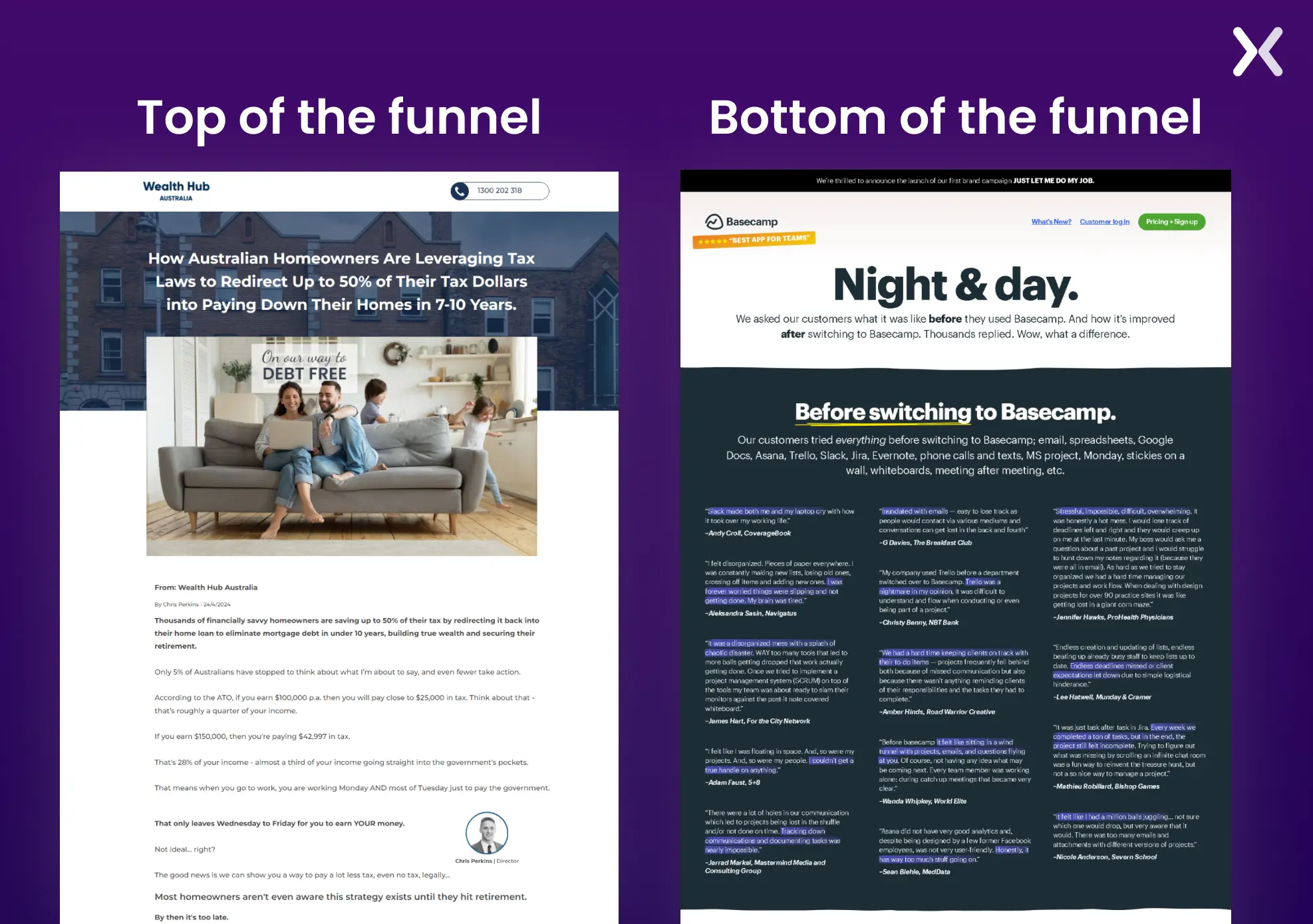 If the landing page is off-topic compared to the ad, visitors will bounce, CPCs will increase, and Quality Scores will fall. A PPC landing page must be a deliberate step in the buyer’s journey, not a dead end.
6. What does success look like: and how will you measure it?
Set clear KPIs before launching. Without benchmarks, you will have data but no conclusions about what is working and what needs to change.
| Metric | What It Tells You | Benchmark Range |
|---|---|---|
| Conversion rate | % of visitors who complete the goal | 4-8% (varies by industry) |
| Bounce rate | % who leave without interacting | Under 50% for PPC pages |
| Cost per conversion | Ad spend per completed action | Varies, track trend over time |
| Quality Score | Google's relevance rating (1-10) | 7+ is the target |
| Time on page | Engagement depth | 45-90 seconds for lead gen |
| Scroll depth | How much content is consumed | 60%+ reaching the CTA |
"The Apexure team are true professionals. They went above and beyond on our landing page, and I'm thrilled with the results. We've gotten great feedback from our peers and they made us look so good. Our landing page was custom and their dev skills made easy work of our requests."
The PPC landing page optimisation cycle
Building the page is only the beginning. The best-performing PPC landing pages are continuously tested and refined. At Apexure, we use our EPIC framework to prioritise what to test next:
The EPIC framework, Apexure’s proprietary method for prioritising CRO tests on PPC landing pages.
See exampleAaron Fox Law, Professional Services PPC Landing Page→
Ready to build PPC landing pages that convert?
Creating a high-performing paid search landing page is not about following a template. It is about understanding intent, eliminating friction, and building trust at every scroll point. The dos and don’ts in this guide are not theoretical. They come from 500+ PPC landing page projects we have delivered across SaaS, fintech, healthcare, e-commerce, legal, and professional services. If you want to stop burning ad spend on underperforming pages, the next step is straightforward:
Get your PPC landing pages reviewed by experts
Book a free audit call with the Apexure team. We will review your current pages, identify the biggest conversion killers, and give you an actionable improvement plan, no strings attached.
Book Your Free Audit →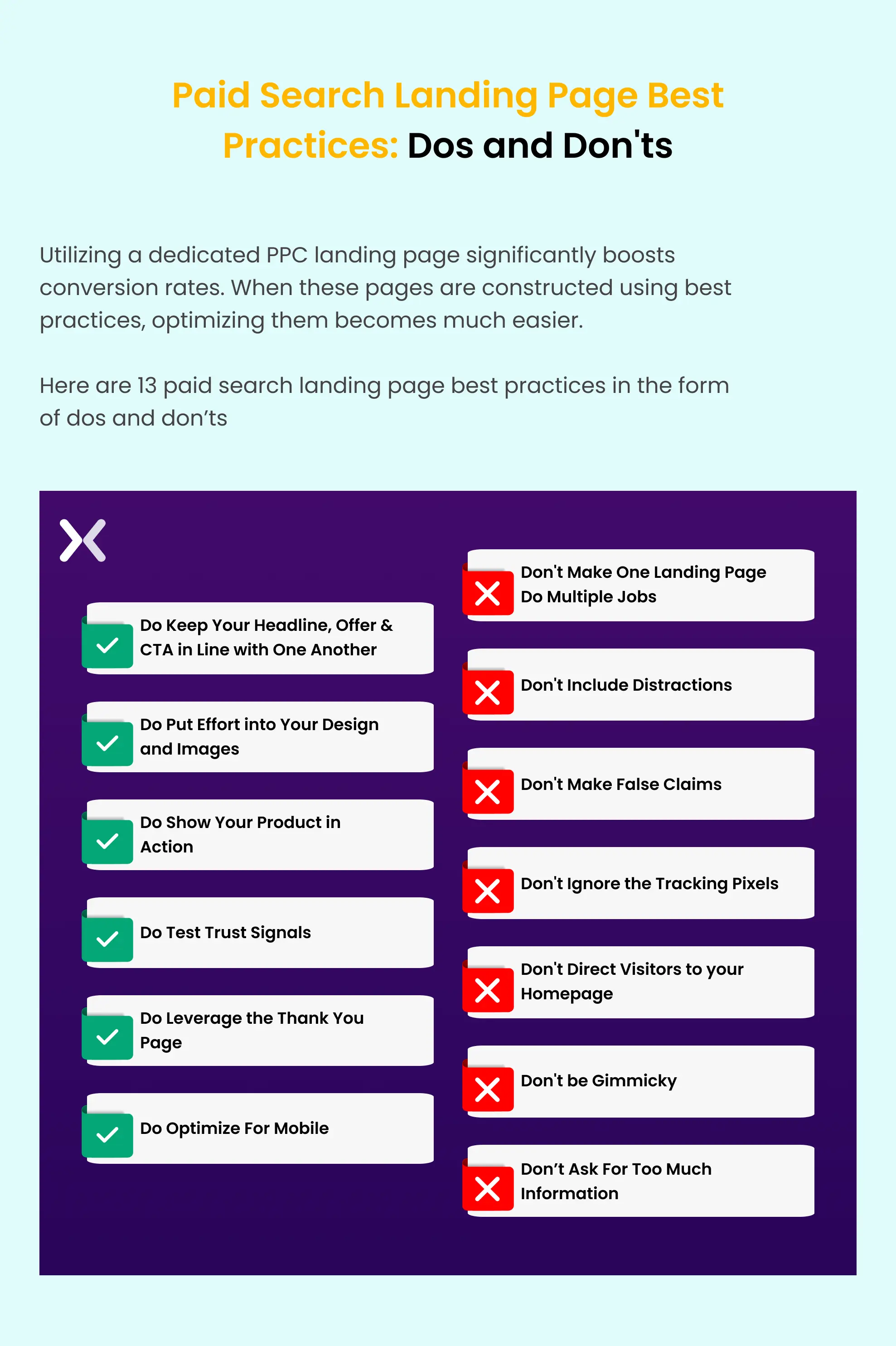
Related Articles: