ROI and ROAS are important measures in marketing that help you manage your budget effectively for campaigns. While they are sometimes used interchangeably, it’s important to understand the difference. ROI looks at the overall profits, while ROAS focuses specifically on the returns from advertising. Both are necessary for making your marketing efforts successful and building a reliable budget. This blog post aims to explain these terms clearly so you can use your marketing budget wisely and achieve better results.
What is the difference between ROI and ROAS?
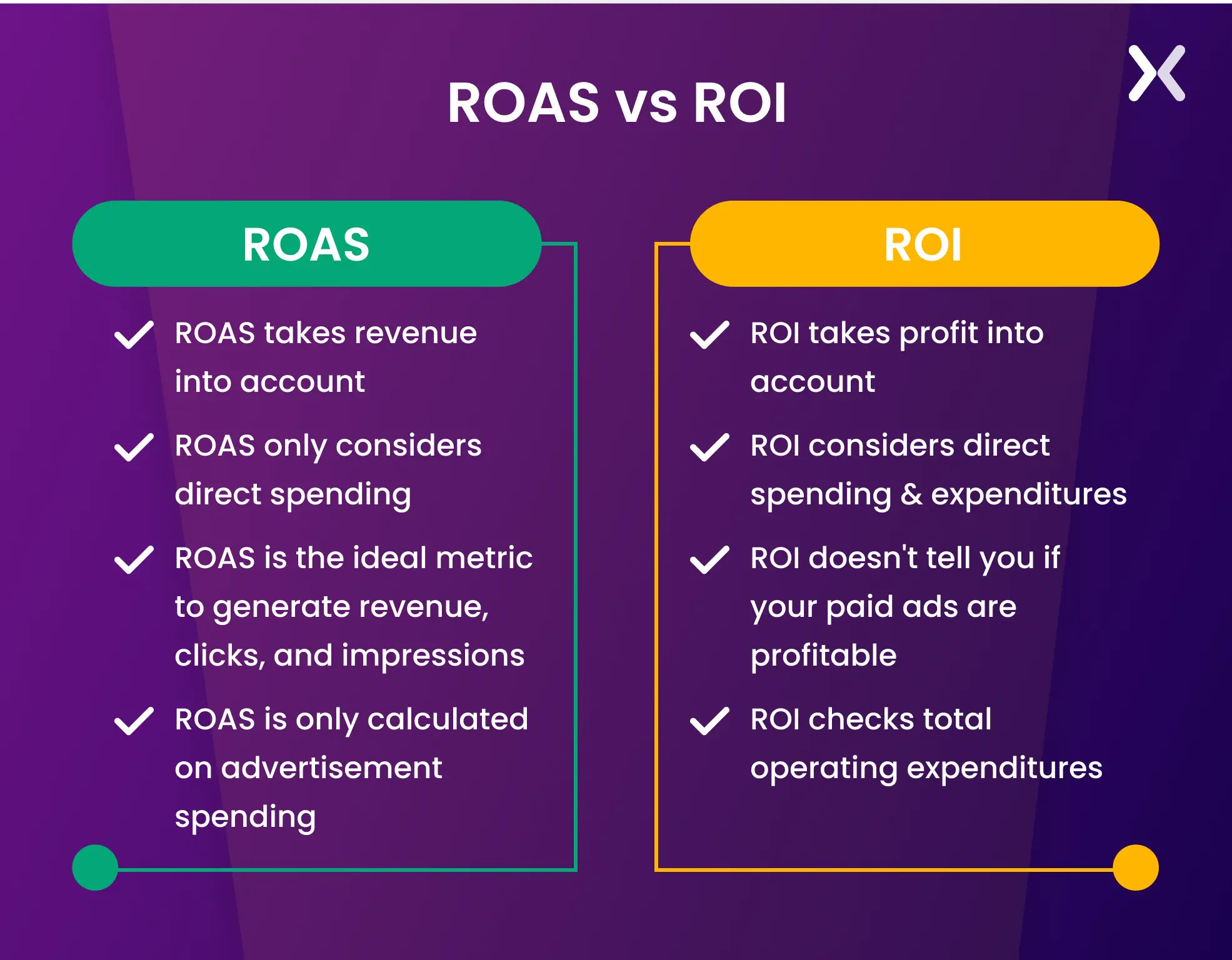 In terms of ROI vs ROAS, there are several notable differences. Primarily, ROAS takes revenue into account instead of profit. Second, ROAS only considers direct spending and not expenditures associated with online campaigns.
As a result, ROAS is the ideal metric if you want to see if your advertisements effectively generate revenue, clicks, and impressions. But unlike ROI, it doesn’t tell you if your paid ads are profitable.
Another major difference between ROAS and ROI is that ROAS is only calculated on advertisement spending, while ROI checks total operating expenditures (marketing, R&D, human resources, etc.). Consequently, online marketers can work more easily with ROAS.
In addition, ROAS is the better option if you want to optimize short-term strategies, whereas ROI helps you assess long-term profitability.
In terms of ROI vs ROAS, there are several notable differences. Primarily, ROAS takes revenue into account instead of profit. Second, ROAS only considers direct spending and not expenditures associated with online campaigns.
As a result, ROAS is the ideal metric if you want to see if your advertisements effectively generate revenue, clicks, and impressions. But unlike ROI, it doesn’t tell you if your paid ads are profitable.
Another major difference between ROAS and ROI is that ROAS is only calculated on advertisement spending, while ROI checks total operating expenditures (marketing, R&D, human resources, etc.). Consequently, online marketers can work more easily with ROAS.
In addition, ROAS is the better option if you want to optimize short-term strategies, whereas ROI helps you assess long-term profitability.
Are ROI and ROAS the same?
No. While ROI assesses profitability across all marketing efforts, ROAS hones in on the effectiveness of individual ad campaigns. Understanding these differences helps marketers to optimize strategies effectively, balancing overall profitability with efficient ad spend.
ROI vs ROAS: definitions and formula
Let’s start from the basics.
What is ROI?
ROI stands for Return on Investment and measures how your expenditures point toward your company’s bottom line. As the name suggests, the metric evaluates the return on particular investments relative to their cost. Put simply, it’s the ratio between net profits and investments.
How to calculate ROI?
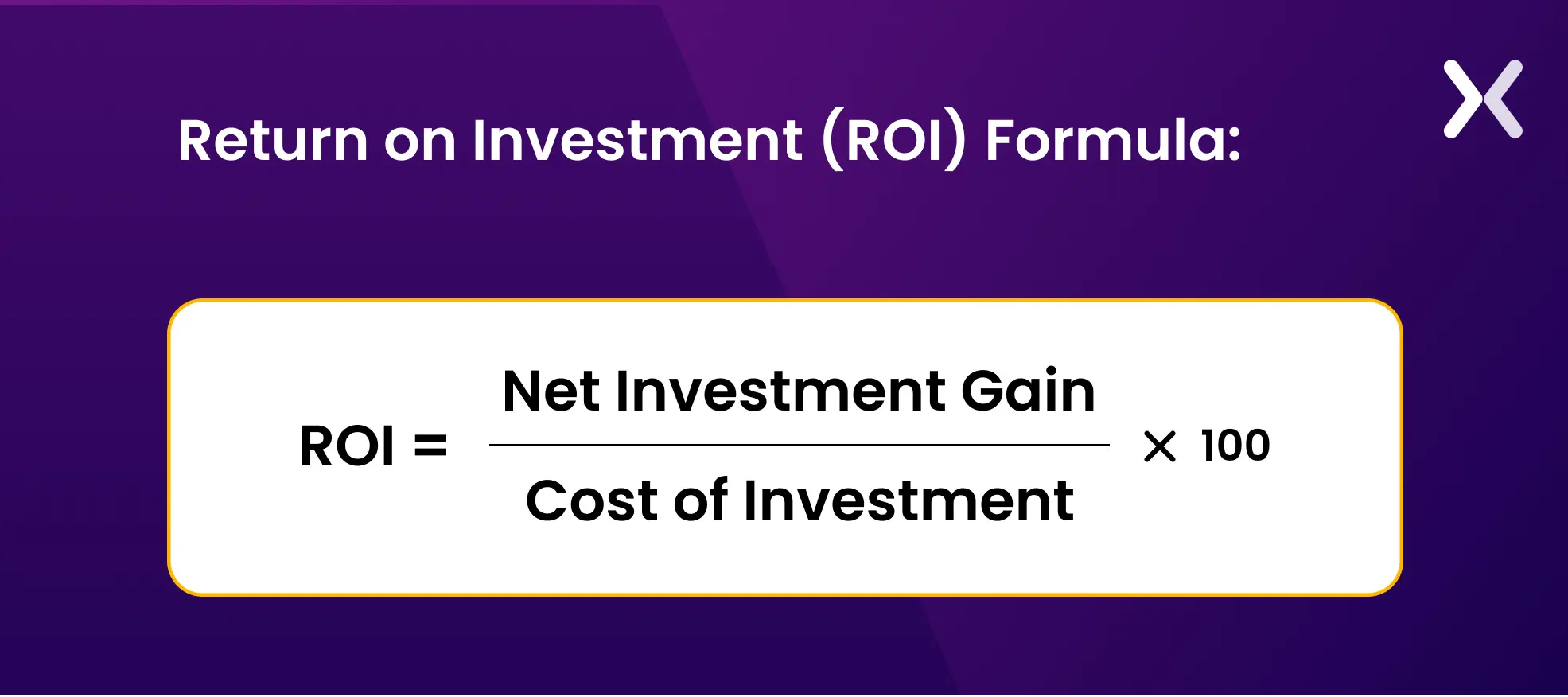 Bear in mind that ROI considers earnings after you’ve deduced expenses.
Suppose your product costs $200 to manufacture and sells for $300. You sell eight products using Google Ads, amounting to $2,400 in sales profits. However, your ad costs are $200, whereas production costs amount to $1,600. In this case, you’ll calculate ROI as follows:
Bear in mind that ROI considers earnings after you’ve deduced expenses.
Suppose your product costs $200 to manufacture and sells for $300. You sell eight products using Google Ads, amounting to $2,400 in sales profits. However, your ad costs are $200, whereas production costs amount to $1,600. In this case, you’ll calculate ROI as follows:
ROI = 600 / 1800 X 100 = 33% The sole purpose of the metric is to help you determine whether your ad campaigns are worth the investment. By considering the margin, you can evaluate overall profit and calculate this metric. Tracking ROI for your campaign performance is critical, but it can’t help you simplify your advertising strategies. It doesn’t determine whether your your post-click landing pages are striking a chord with your target customers.
What is ROAS?
ROAS stands for Return on Ad Spend. It helps you determine the effectiveness of online ad campaigns by calculating your earnings for each dollar spent on advertising.
How to calculate ROAS metric?
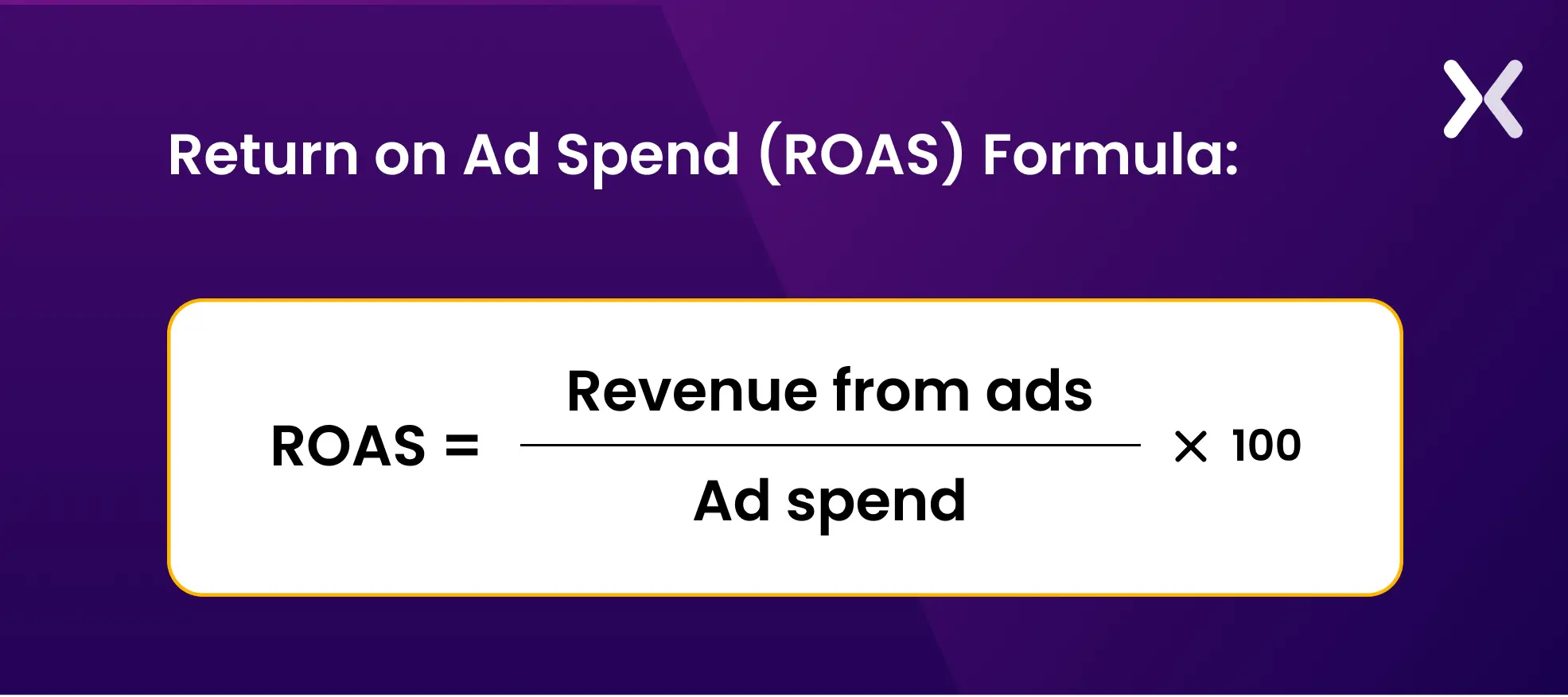 The following ROAS formula divides the total revenue of your advertising strategies by their total cost. The return on ad spend equation is quite simple.
Using the formula, your organization can figure out ROAS values by determining these metrics:
The following ROAS formula divides the total revenue of your advertising strategies by their total cost. The return on ad spend equation is quite simple.
Using the formula, your organization can figure out ROAS values by determining these metrics:
-
The total revenue generated by ad strategies
-
The total cost of managing ad strategies Once you obtain these pieces of information, divide them, and you’ll find out what your business earns back for every dollar spent on ad campaigns. For example, if yours equals $10, it means your organization makes $10 for every $1 spent.
How does ROI vs ROAS measure the success of your campaign?
We’ll now examine a practical example of ROI vs ROAS to help you understand how the methods work.
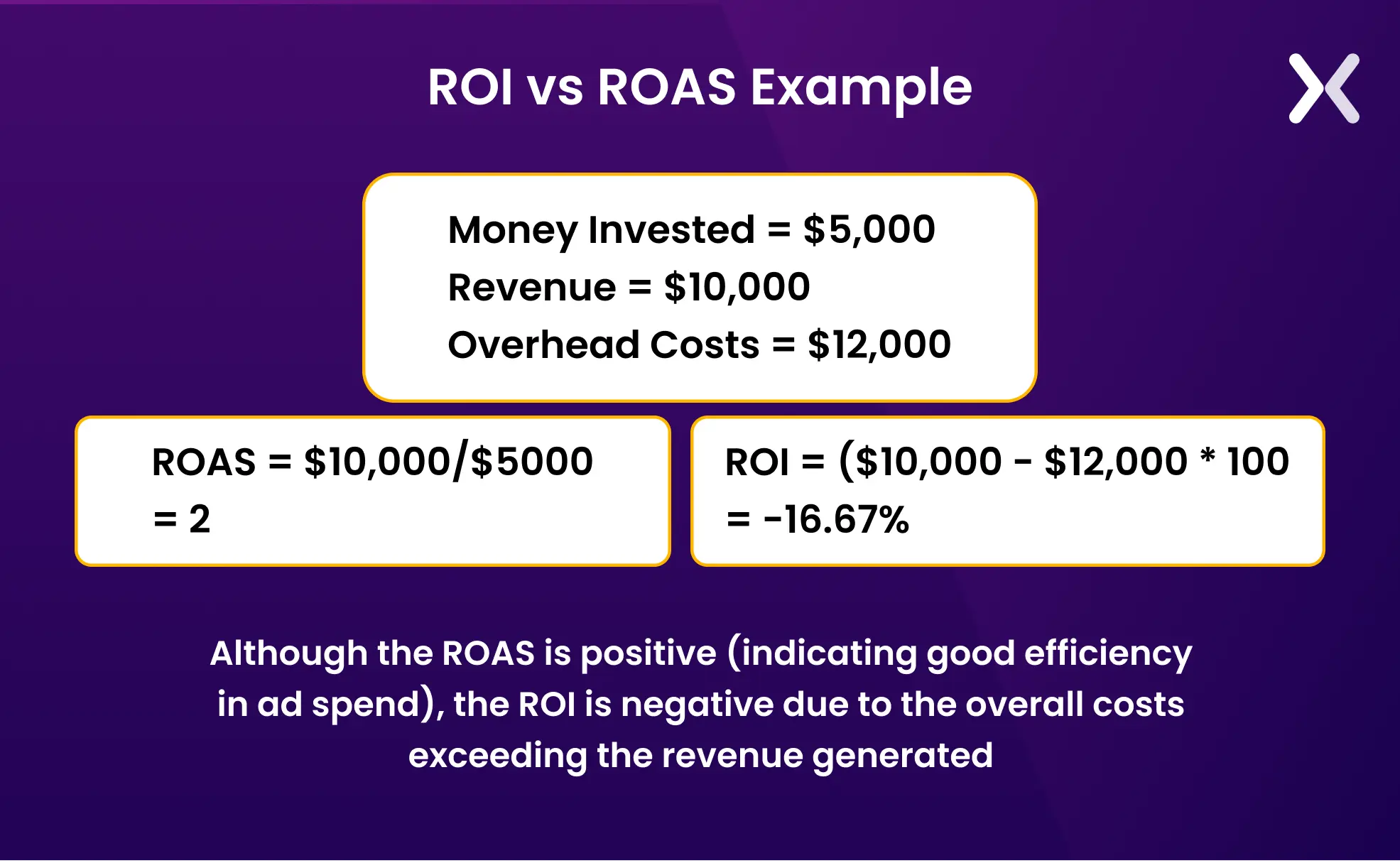 In this case, although the ROAS metric is positive (indicating good efficiency in ad spend), the ROI is negative due to the overall costs exceeding the revenue generated.
What does negative ROI mean?
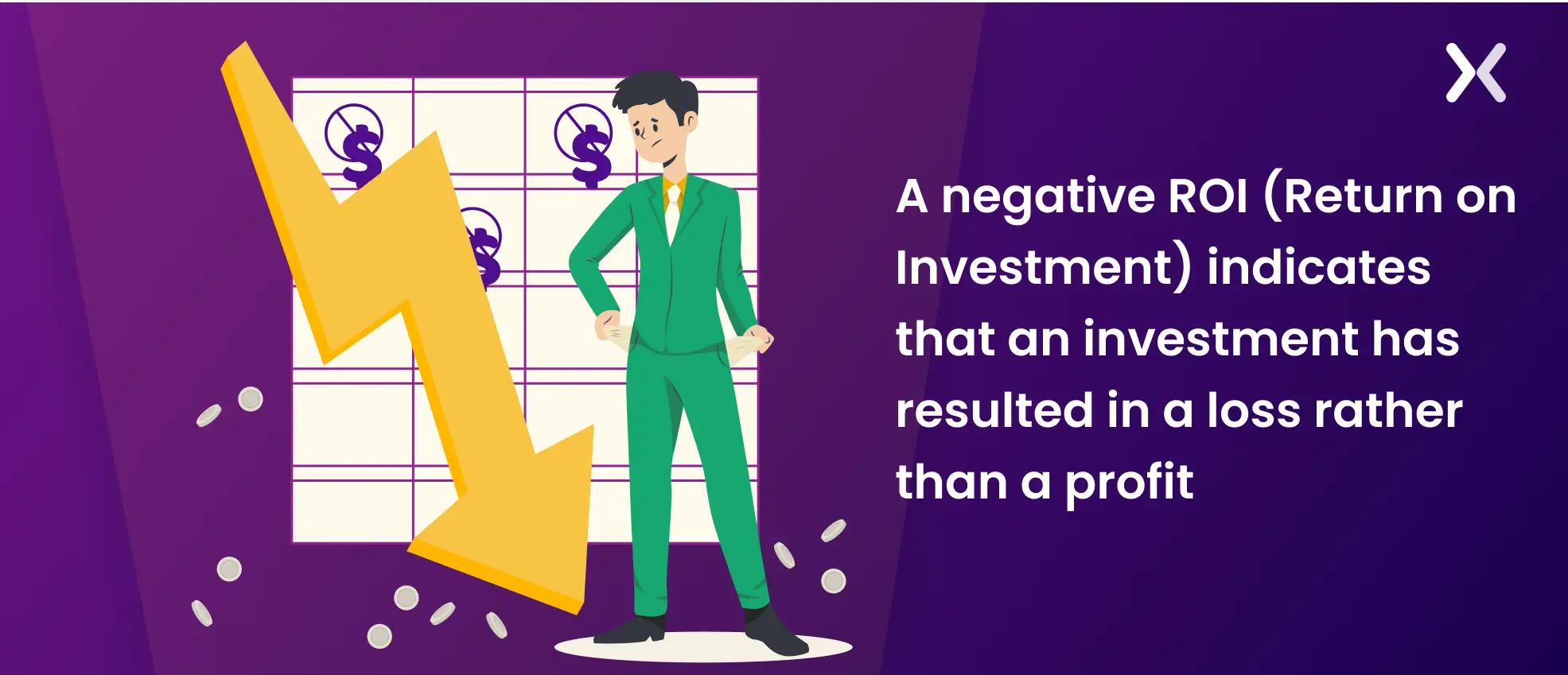
A negative ROI (Return on Investment) indicates that an investment has resulted in a loss rather than a profit. In other words, the return generated from the investment is less than the initial investment itself. In this scenario, the ROI is -16.67%, indicating a negative return. This means that for every dollar invested, the business lost 16.67 cents. Negative ROI suggests that the investment was not profitable and may have been a poor decision for the business.
Should i use ROI or ROAS?
When deciding on ROI vs ROAS, remember that each metric digs into different data. Hence, you should use both when calculating the effectiveness of your marketing campaigns. On the one hand, ROI is perfect for determining long-term profitability. On the other hand, ROAS can help you devise short-term marketing plans. To create a fully-faceted and strong digital campaign, both formulas will be necessary. ROI determines the overall profitability of your ad strategies, and ROAS helps you identify specific aspects to improve your efforts and generate clicks or revenue.
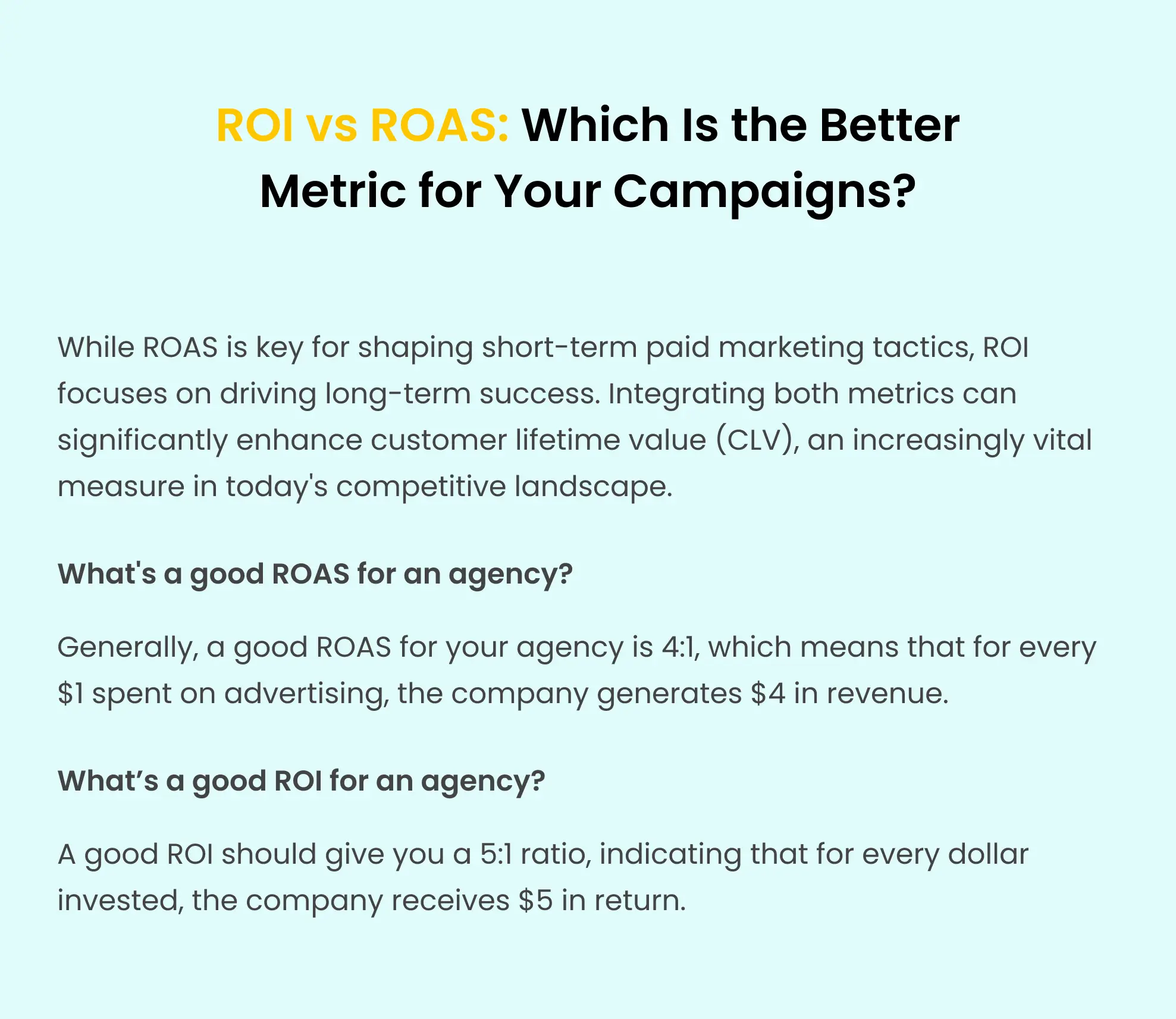
What’s a good ROAS for an agency?
Calculating ROI vs ROAS doesn’t mean anything if you don’t know what to strive for. Let’s first ascertain the ideal number for your ROAS. An acceptable ROAS metric varies from company to company due to different operating costs, business health, and profit margins. Some organizations struggle to stay afloat with a 10:1 ROAS, whereas others thrive with just 2:1. But in general, a good ROAS for your agency is 4:1, which means that for every $1 spent on advertising, the company generates $4 in revenue. By achieving this goal, your ad campaigns will be effective and generate great revenue.
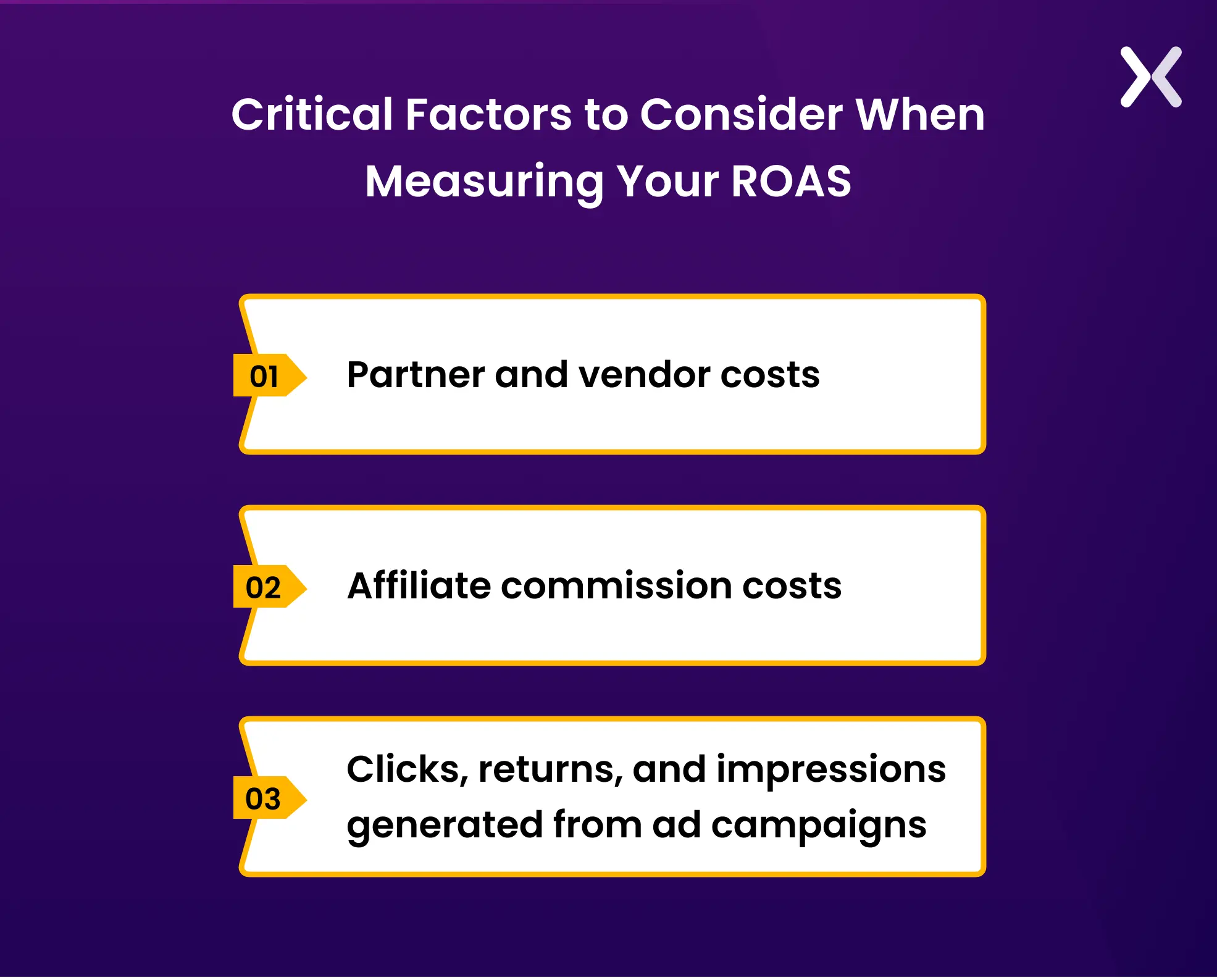 When calculating your ROAS, you should factor in several necessary details.
-
These expenditures cover any fees or commissions paid to partners or vendors collaborating with you on your campaign. They also include the salaries of in-house employees.
-
These comprise commissions for your affiliates on each sale, network transaction fees, and payment transaction fees.
-
You should consider the costs of every 1000 impressions, the total cost per click, and the impressions. These expenditures are easily forgotten, which can be a costly mistake. It prevents you from getting a clear picture of how efficient your campaigns are.
Why improve return on ad spend?
Improving ROAS is key for businesses seeking to maximize the impact of their advertising efforts, particularly in the world of PPC (Pay-Per-Click) ads. By improving ROAS, companies can open several benefits:
-
A higher ROAS makes sure businesses use their advertising budget more efficiently. It enables them to identify and invest in strategies that yield better returns, thereby maximizing the value derived from each advertising dollar spent.
-
PPC ads are a significant component of many digital marketing campaigns. Improving ROAS means refining PPC strategies to reach the right audience, crafting strong ad copy, and optimizing bidding strategies. This results in increased click-through rates, conversions, better ad placement in the SERPs, and, ultimately, higher returns on ad spend. By prioritizing improvements in ROAS, businesses can not just improve the effectiveness of their PPC ads but also drive overall growth and profitability in their advertising efforts.
What is a good ROI for an agency?
A good ROI should give you a 5:1 ratio, indicating that for every dollar invested, the company receives $5 in return. This is considered excellent for most companies, and anything under may not be enough to sustain your operations. In addition, a 10:1 ratio is phenomenal and most likely means your campaign goals are perfectly matched the results. Achieving a higher proportion is possible, but it shouldn’t be your expectation. Like ROAS, your target ROI ratio largely depends on your business environment. It varies by industry and individual cost structures.
How to improve your ROAS vs ROI
Improving your ROAS and ROI involves different strategies tailored to each metric.
How to improve your PPC ROAS?
There are numerous ways to improve your ROAS and maximize the efficacy of your digital ad campaigns:
1. Use negative keywords
Negative keywords are terms added to a marketing campaign that helps weed out unnecessary traffic. By including these search terms, Google stops triggering your ads when people type in these queries. Consequently, the engine only displays your advertisements for relevant searches. The greatest benefit of negative keywords is the limited expenditures incurred while attracting irrelevant traffic that doesn’t convert. Another great thing about them is that they improve the clickthrough rate (CTR) of your ads. In turn, this improves your ROI.
Some Benefits of Negative Keywords:
-
Exclude irrelevant search terms to prevent wasted ad spend on clicks that are unlikely to convert.
-
Negative keywords improve ad relevance and CTR, supporting higher quality scores, lower costs per click, and better ad placements.
-
Allocate your ad budget efficiently by targeting high-value keywords that drive meaningful results, avoiding wasted spend on irrelevant searches.
-
Hone in on the most relevant audience by excluding irrelevant terms, improving campaign effectiveness, and maximizing ROI.
2. Use RLSA (remarketing list for search Ads)
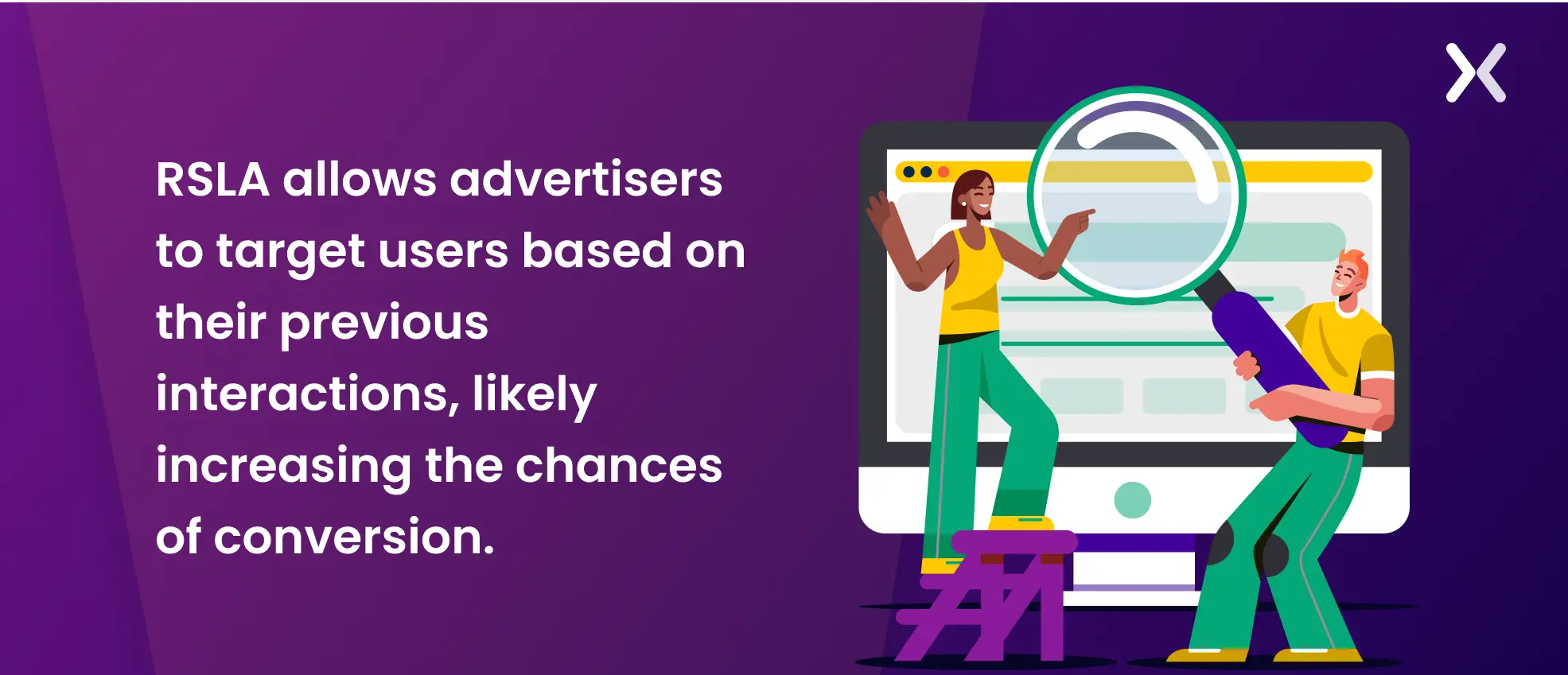
RLSA is a strong Google Ads feature that enables you to customize your campaigns for users who have already visited your website. It lets you tailor keywords and ads, leading to effective retargeting when your target audience is browsing the web. This option is highly advantageous for your paid advertising efforts. By analyzing on-site behavior and search queries, your company can retarget users to encourage them to revisit your webpage. This way, you can significantly increase the chances of conversion.
3. Employ Single-Keyword ad groups
The third strategy can also work wonders for your marketing initiatives. It entails creating ad groups and incorporating just one keyword relevant to your offerings. This ploy has several potential benefits:
-
Boosting CTR
-
Attracting relevant clicks
-
Improving the rate of conversion with valuable traffic and clicks The necessary component of this tactic is using high-value keywords to deliver optimal performance for different types of landing pages and ads. The campaign’s success hinges on this keyword, which is why you need to choose it carefully.
4. Raise your quality score
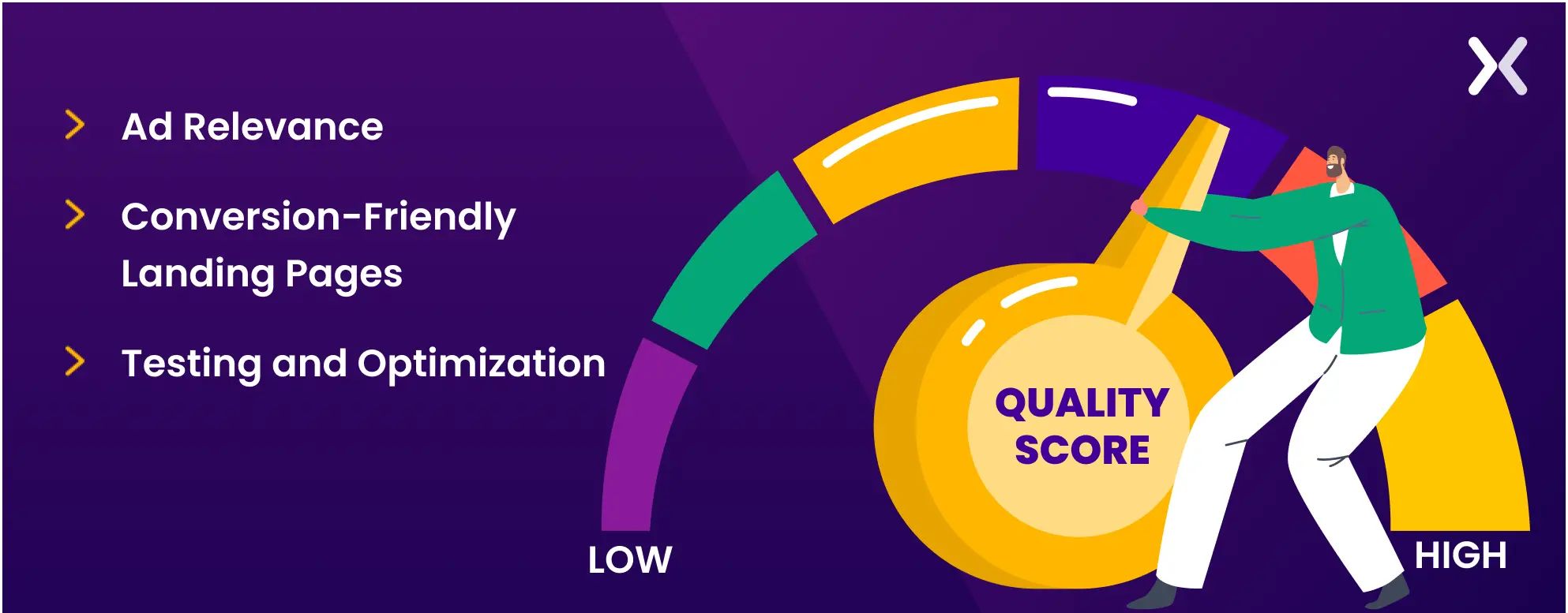
Quality score is a necessary metric assigned by Google that influences the placement of your ads in search engine results pages (SERPs). Improving your quality score improves your ad’s visibility and effectiveness. Here’s how you can achieve a good quality score:
-
Make sure your ad copy aligns closely with your landing page content. Consistency between ad messaging and landing page content improves user experience and increases the likelihood of conversions.
-
Design landing pages with user experience and conversion optimization in mind. Clear call-to-action (CTA) buttons, strong headlines, and relevant content help guide users toward desired actions, increasing conversion rates and overall ad performance.
-
Continuously test and optimize various elements of your landing pages. A/B testing allows you to identify which elements match best with your audience and drive higher conversions, ultimately improving your quality score.
5. Refine keywords and automate bidding
Several methods exist to maximize the revenue generated by your ads. Two of the most popular ones are refining keywords and using automated bidding. Polishing your keywords can have a massive influence on your ROI vs ROAS improvement efforts. If you restart your keyword research and target less competitive terms, your ads can gain more clicks. Therefore, the odds of your investment paying off are much higher. Automated bidding is also a powerful ally. There are a bunch of automated bid strategies that can help you achieve your goals. The most widely used tactics include Improved Cost Per Click (ECPC), Cost Per Thousand Impressions (CPM), and Targeting Outranking Share.
How to improve your marketing ROI?
1. Focus on the right channels
It’s essential to invest your marketing budget wisely by focusing on channels that are most effective for your business. Conduct market research and analyze past performance to identify the channels where your target audience is most active and engaged. Concentrating your efforts on these channels can make sure that your marketing initiatives reach the right people at the right time, leading to better conversion rates and improved ROI.
Regularly review and adjust your channel strategy based on changing market trends and consumer behavior to maintain optimal performance.
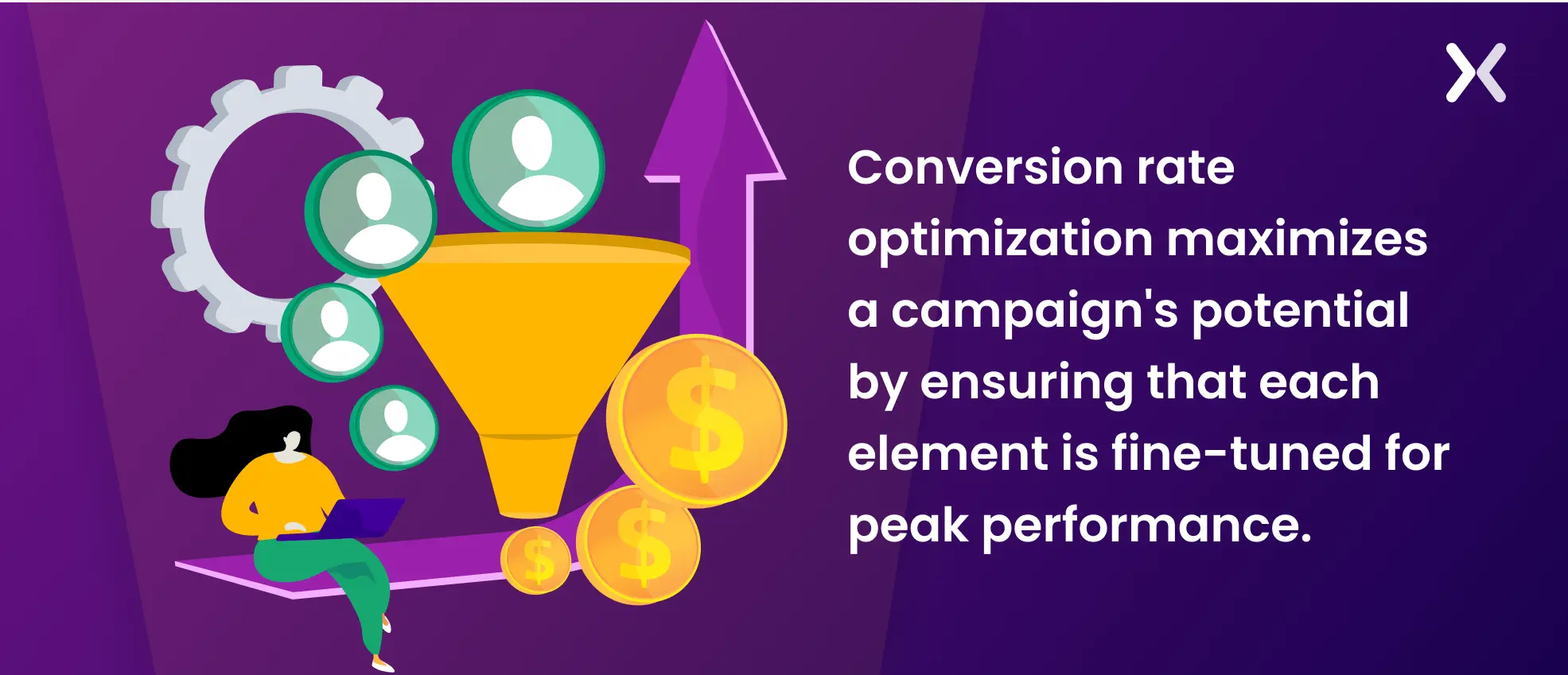
2. Conversion rate optimization
Your website, landing pages, and marketing materials are critical for converting visitors into customers. Optimizing these assets for conversions improves the likelihood of securing high-quality leads. Focus on elements like lead magnets, CTAs, landing pages, and responsive design to improve user experience and prompt action. Here, use CRO and UX together to create effective user journeys. Regularly test your digital assets to identify elements that drive visitors’ action. Adapt your approach based on user behavior to optimize marketing efforts and achieve better ROI.
3. Monitor the right metrics
Monitoring the right metrics is key to understanding the effectiveness of your marketing efforts and identifying areas for improvement. Instead of focusing solely on vanity metrics like website traffic or social media followers, prioritize metrics that directly impact ROI, such as customer acquisition cost (CAC), customer lifetime value (CLV), and return on ad spend (ROAS). Tracking these metrics over time and comaring them against your goals and benchmarks. You can gain valuable insights into the performance of your marketing campaigns and make data-driven decisions.
4. Use the right tools
Investing in the right marketing analytics tools can provide valuable insights into campaign performance and audience behavior. Use tools that offer strong tracking and reporting capabilities to measure the impact of your marketing efforts accurately.
use automation tools and platforms to simplify processes, optimize campaigns in real-time, and maximize efficiency. For instance, GA4 excels in tracking website and landing page metrics, while tools like Hotjar, Crazy Egg, and VWO specialize in improving Conversion Rate Optimization (CRO).

5. Improve targeted marketing
Personalized and targeted marketing initiatives are more drive quality leads to your funnel. Segment your audience based on demographics, behavior, and preferences, and tailor your messaging and offers to meet their specific needs and interests. Use data-driven insights and customer analytics to create create hyper-targeted campaigns that deliver the right message to the right people at the right time.
Why should ROAS vs ROI matter to your business?
Determining and optimizing your ROAS and ROI is vital for many reasons. First, they allow you to gauge the efficacy of your ad campaigns based on their performance. With close examination, you can pinpoint well-performing ads and scale them to boost your results. You can get rid of or improve low-performing advertisements. Another reason why knowing your ROI vs ROAS matters is added accountability. Understanding these metrics drives you to keep growing your company without wasting dollars on inadequate strategies. If you’re familiar with marketing numbers, you can also make necessary decisions, such as determining your marketing budget and allocating funds to each campaign. Blind calculations are bound to cost you dearly. By relying on accurate metrics, you can reinvest in fruitful tactics, maximize your revenue, and boost other business aspects.
You might need both ROI and ROAS
Understanding the nuances between ROI and ROAS is necessary for optimizing marketing strategies. Both metrics are essential in guiding marketing decisions, whether focusing on long-term profitability or short-term optimization. By comprehensively grasping the differences between ROI and ROAS and utilizing them in tandem, businesses can make informed decisions to allocate resources efficiently and ultimately drive business growth.
Related Articles: