A landing page funnel have become more necessary than ever as personalization and relevancy take over every marketing strategy. Imagine a person who wants to purchase your SaaS solution. However, your PPC ad links to a landing page that only captures emails. The potential customer is too bothered to check out your website and will just move on to other options. Using landing pages without relating them to a sales funnel stage moves your campaign further away from the buyer’s intent and hinders your chances of conversions. A single landing page won’t do much. You need multiple campaigns that complement each other to capture maximum conversions. Here’s a guide that helps you understand the basics of creating a landing page funnel with examples.
What is a landing page funnel?
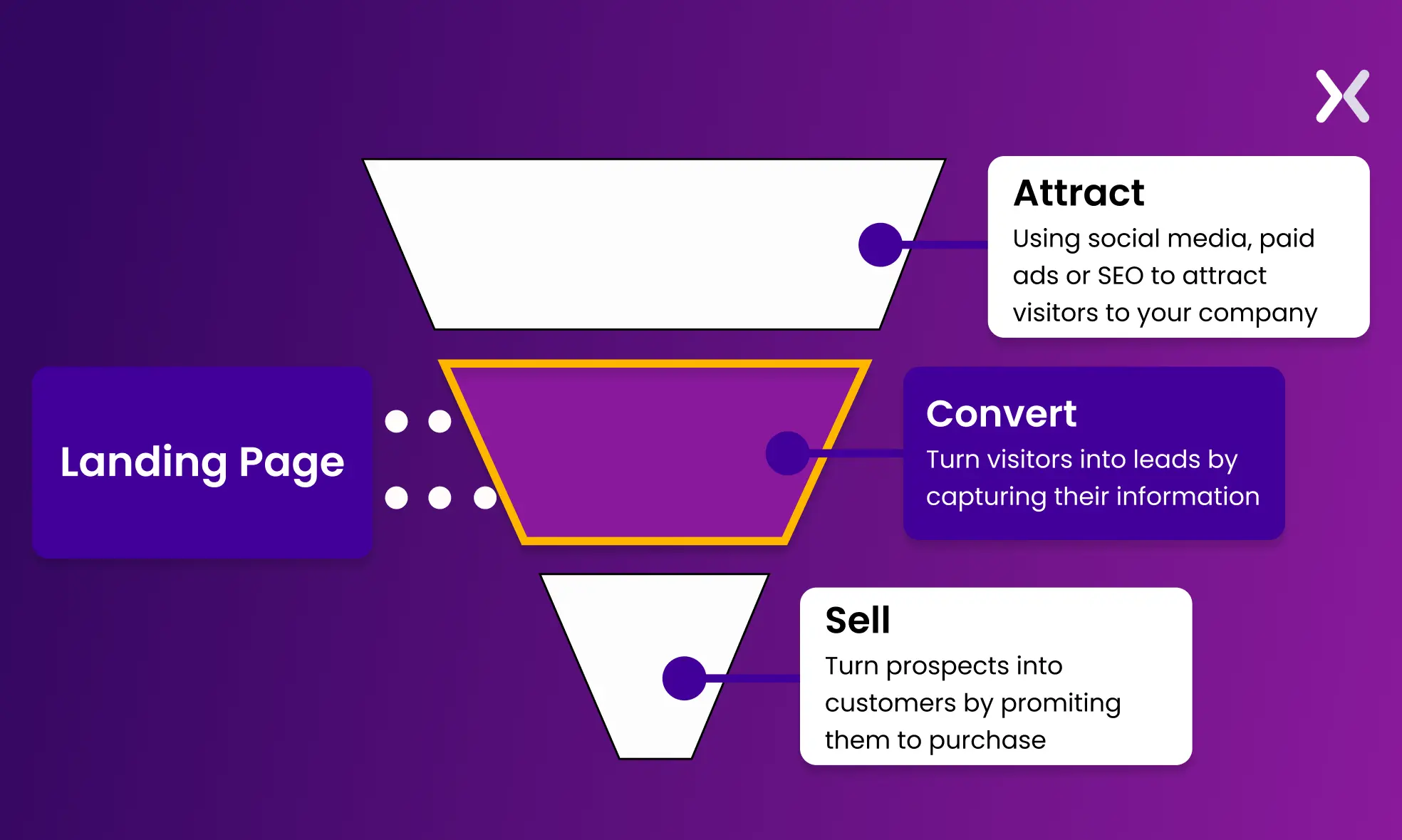
A landing page funnel comprises many web pages that direct visitors toward an ultimate buying decision. Unlike a landing page or a single web page with a single CTA, a landing page funnel has multiple calls to action (CTAs) for different purposes. In essence, each page in the funnel is an opportunity to educate and convert potential customers.
What is the goal of a landing page funnel?
Landing page funnels are useful because they help create optimized landing pages that prompt visitors to take specific actions. These pages convert visitors into recurring consumers by educating them about a product or service.
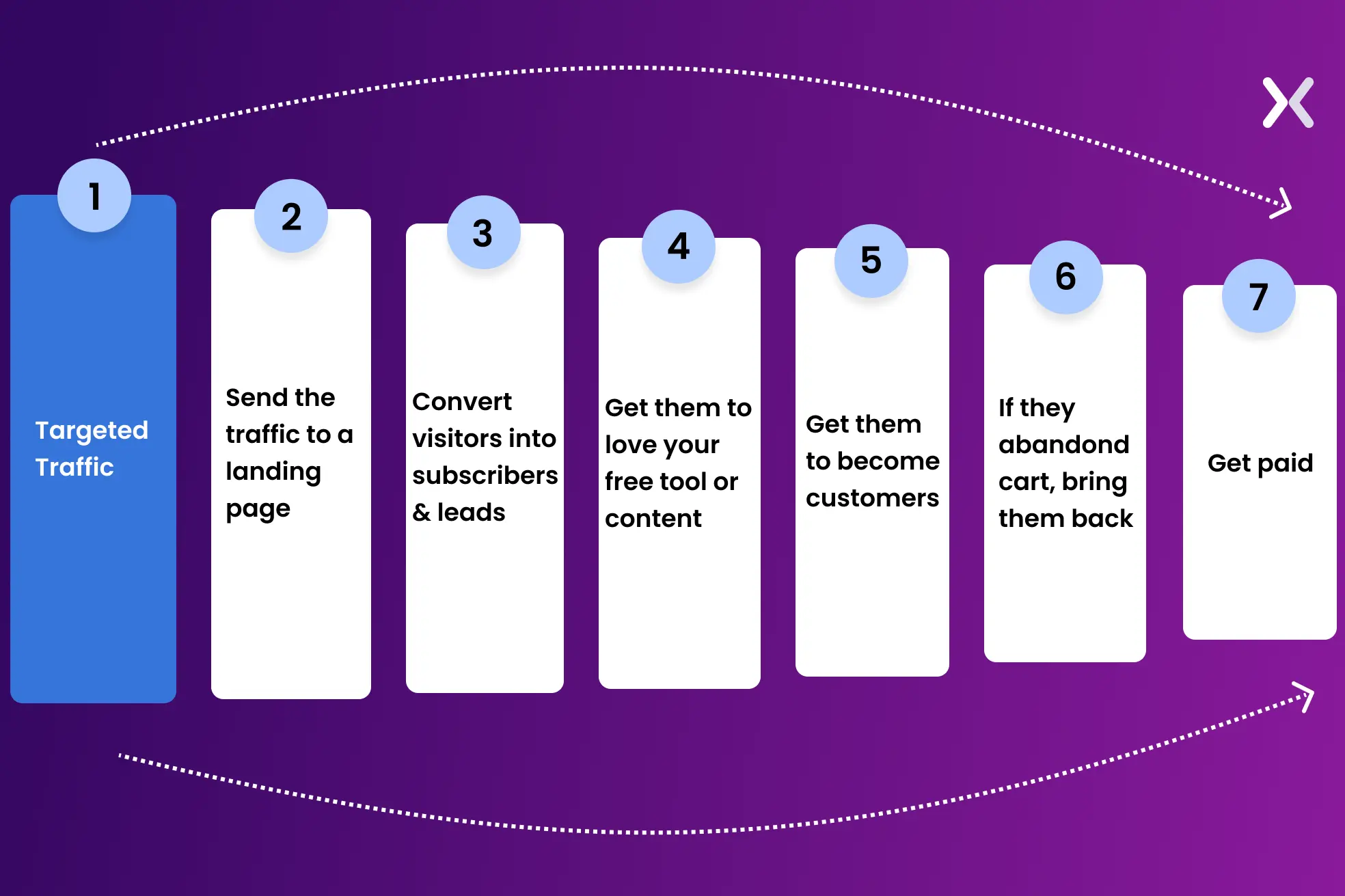 A conversion strategy for all funnel levels is beneficial to help maximize leads at each stage of the purchasing journey. Here, measuring and testing the success of a landing page funnel lets you know what works and what needs improvement.
Struggling with Your Landing Page?
Tell us about your project and we'll get back to you within 24 hours.
How do businesses benefit from a landing page funnel?
If you want to create a profitable funnel, it helps to know the benefits of a landing page sales funnel. As mentioned, these funnels help build recognition for a company, service, or product. In addition, they improve customer interest in the product, encouraging them to perform a desired action. The repeatable process leads to the highest number of conversions possible.
Different stages of a landing page funnel with examples
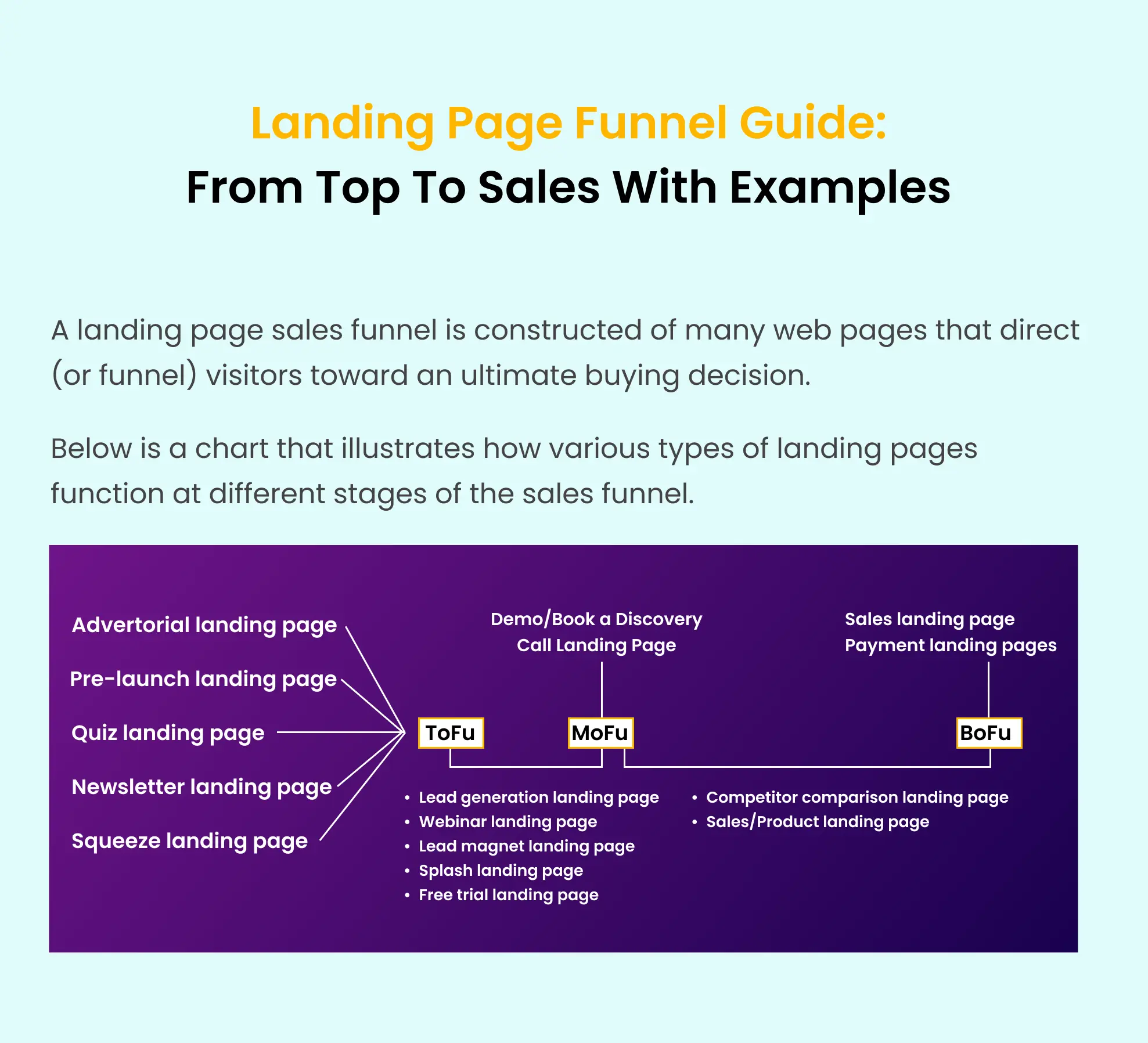
A landing page funnel is divided into three stages, just like a sales funnel.
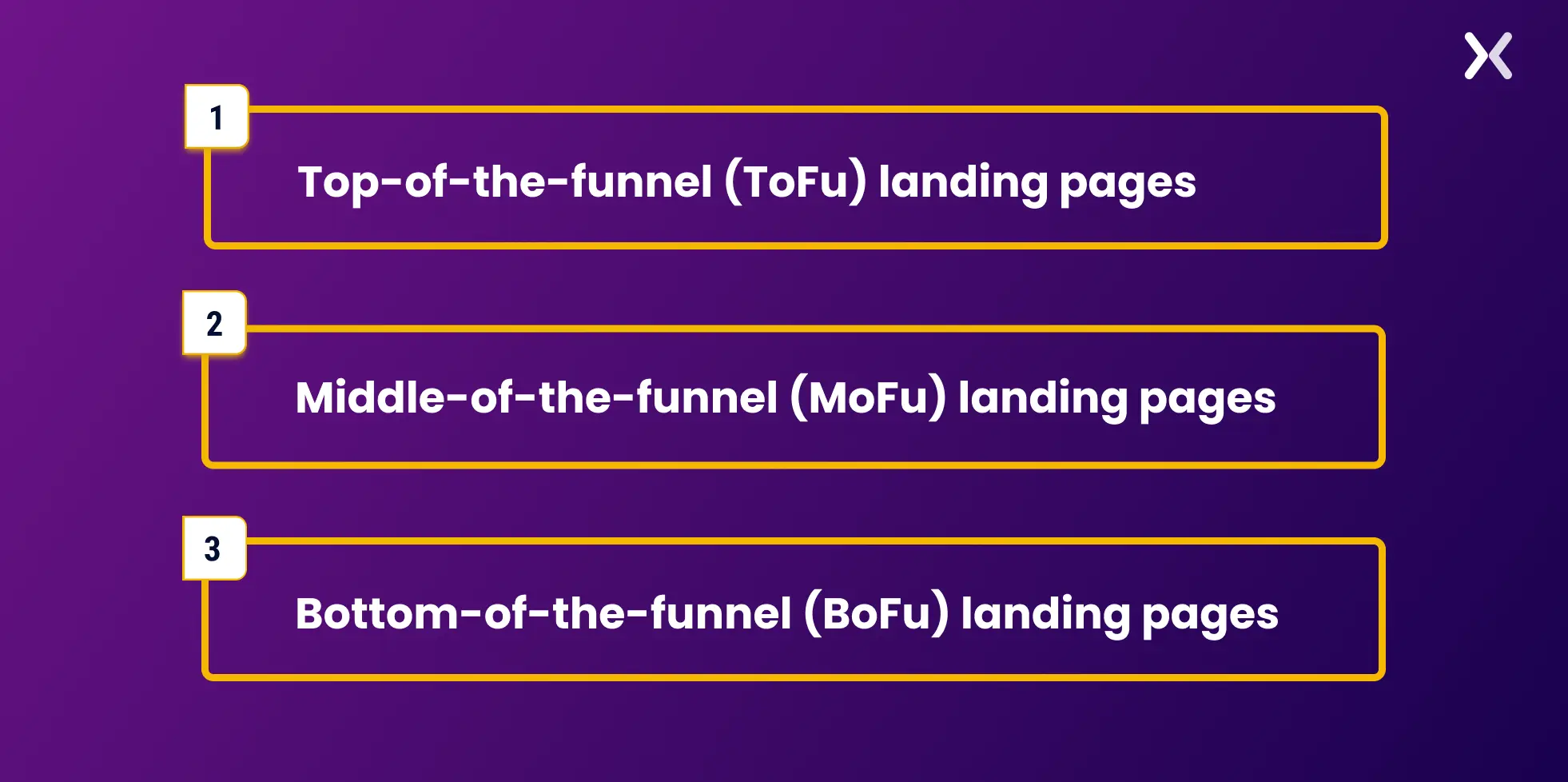 For each stage, dedicated landing pages are present that can strengthen your offer pitch to the targeted audience.
Sometimes, misaligning these landing pages and the sales funnel can lead to low conversion rates. So, it becomes necessary to understand which type of landing page fits into which sales funnel stage.
Let’s discuss one stage at a time.
For each stage, dedicated landing pages are present that can strengthen your offer pitch to the targeted audience.
Sometimes, misaligning these landing pages and the sales funnel can lead to low conversion rates. So, it becomes necessary to understand which type of landing page fits into which sales funnel stage.
Let’s discuss one stage at a time.
Stage 1: Top-of-Funnel landing pages
The top of the funnel is an exploratory point where the target audience learns about your brand. Potential customers may be unaware of your business or product, so the primary goal of the top of the landing page sales funnel is to improve brand awareness.
What is a top-of-the-funnel landing page?
Top-of-the-funnel (ToFu) landing pages make sure visitors know you have something that could benefit them. They revolve around educating visitors, directly addressing their pain points, and raising awareness of potential solutions.
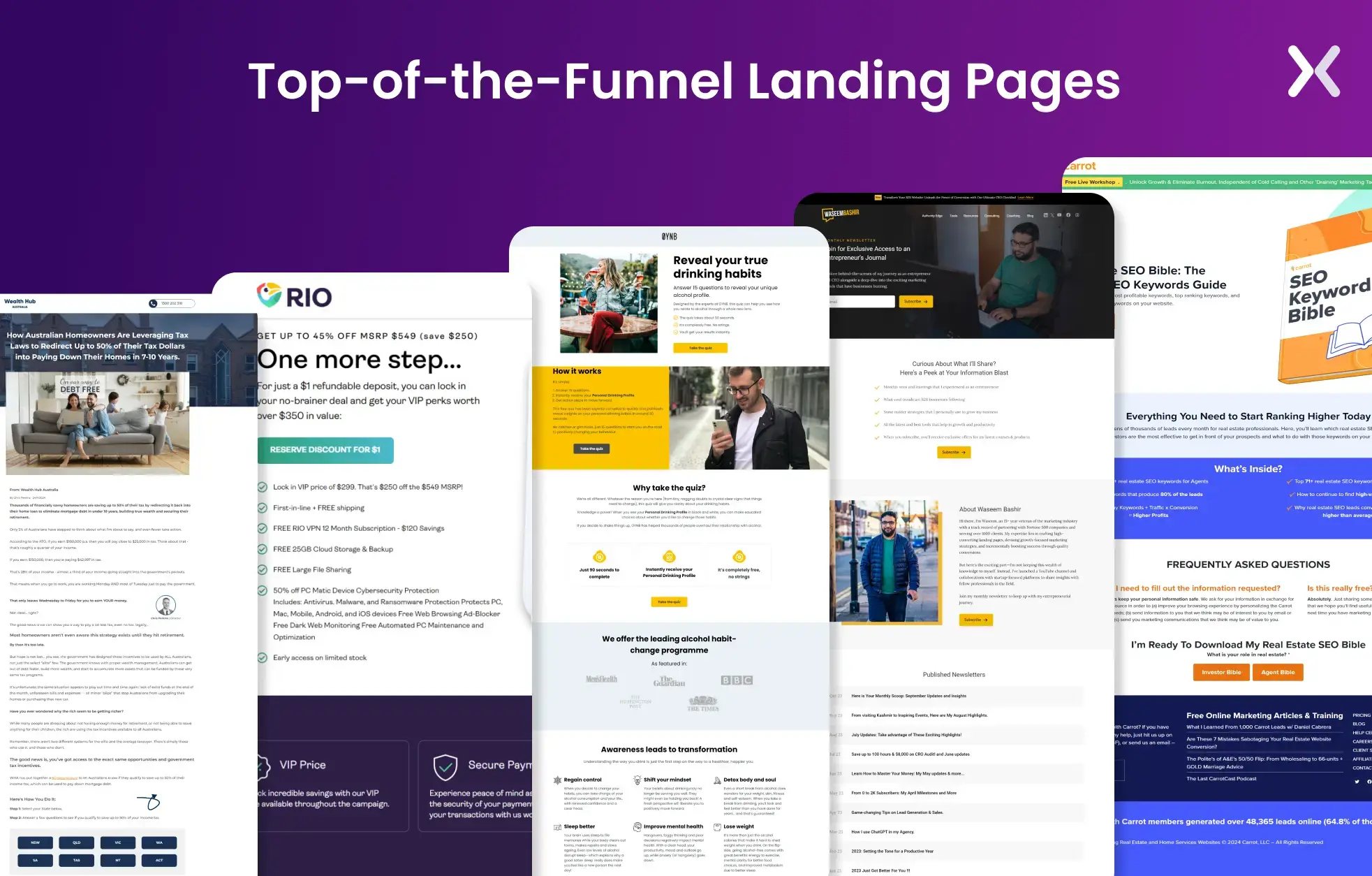 Such landing pages are less about your product and more about the targeted traffic and their requirements.
Types of top-of-funnel landing page:
Keeping ToFu’s definition in mind. It becomes easier to pick landing pages that fit into this sales funnel stage perfectly. Top-of-the-funnel landing pages should give the space and approach required to create helpful campaigns for the audience. Here are some landing page types that do the above:
1. Advertorial landing page
Advertorial landing pages are a clever mix of advertisements and editorials. They have articles that discuss at length the challenges visitors face and possible solutions to them. Instead of directly jumping to a sales pitch, advertorial landing pages give the audience an in-depth understanding of their problem. This helps strengthen your final pitch, as the deeper your target audience understands their pain points, the more inclined they are to seek suitable solutions, potentially leading them to your services.
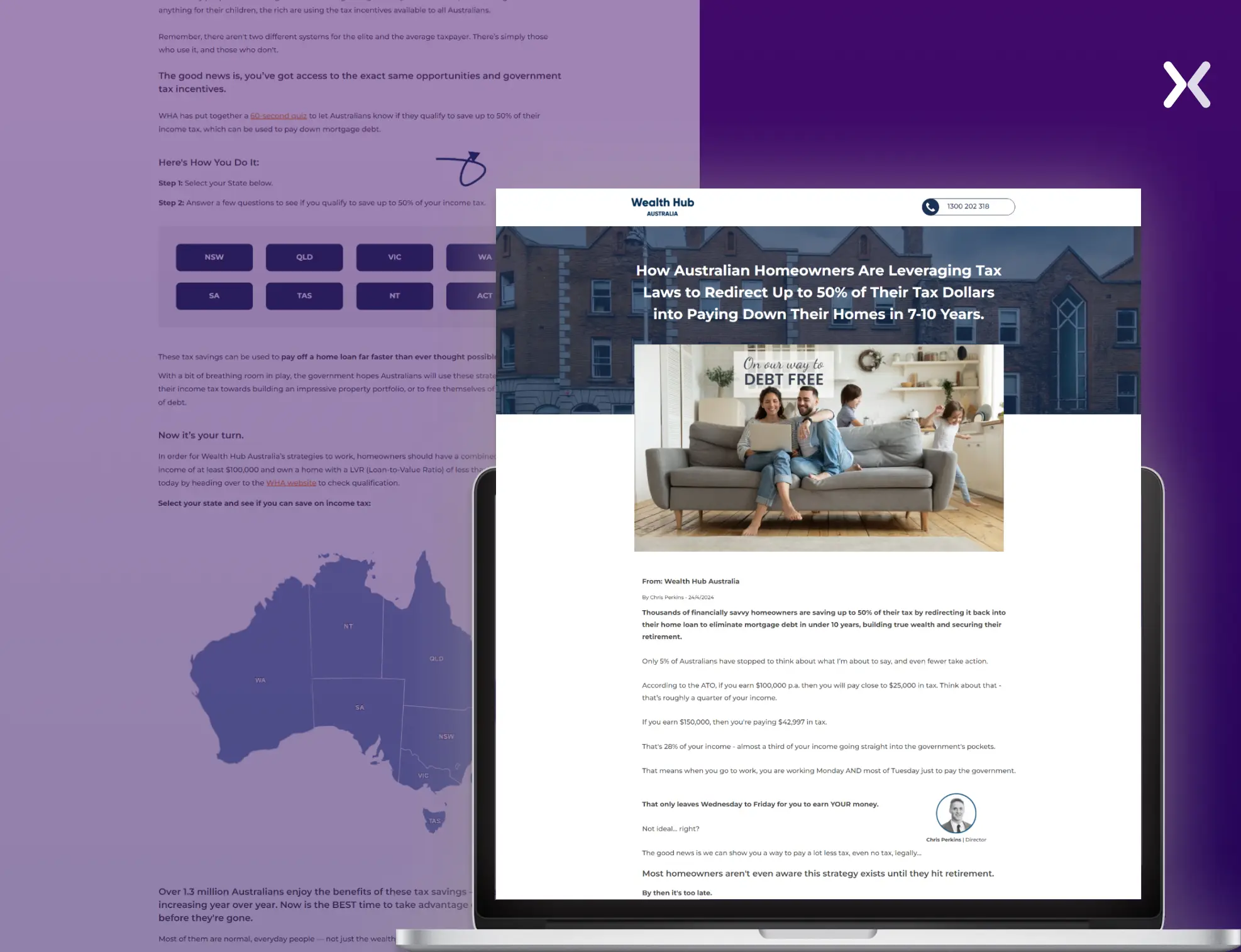 These landing pages are mostly clubbed with PPC ads found on social media, search, or on websites as display ads.
2. Pre-Launch landing page
A pre-launch landing page is a great campaign to promote and educate people about an upcoming product or service. It helps create awareness about issues your product aims to solve and is the first step towards nurturing potential clients.
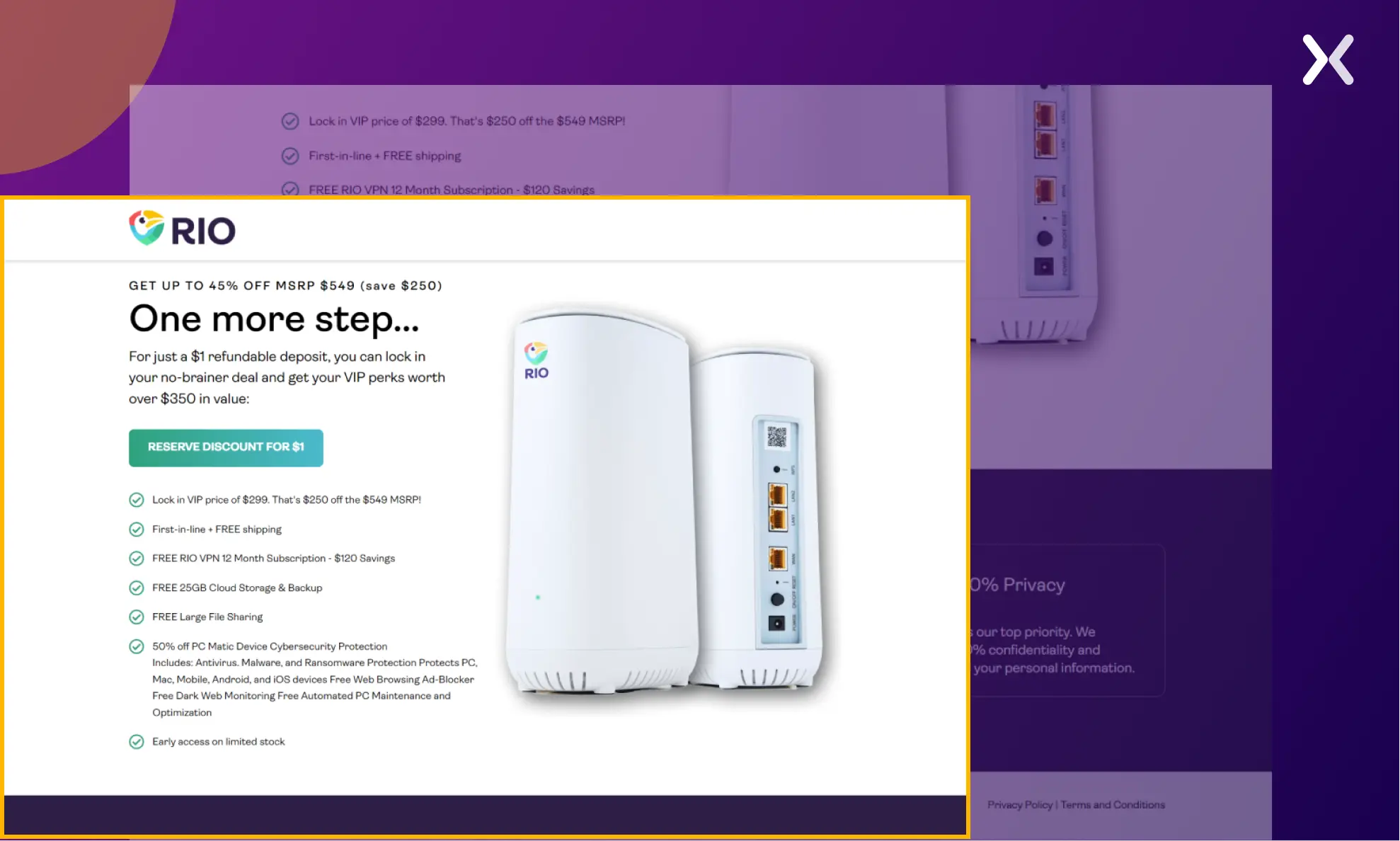 The primary goal of this landing page is to cultivate a list of potential customers who would be interested in buying upon the product’s launch.
3. Quiz landing page
At the top of the sales funnel, a business uses buyer personas for targeted marketing, but such personas are mostly made up of old data that can sometimes be inaccurate. This issue can be solved with quiz landing pages that allow you to ask tailored questions to your audience.
 It assists you in creating more accurate buyer personas and personalization of your future campaigns.
4. Newsletter landing page
This landing page focuses on building your newsletter’s subscriber list. Newsletter forms are often ignored when placed on a website. Landing pages for newsletters solve this by marking the shared information and helping visitors understand the value of subscribing.

5. Squeeze landing page
These are the ultimate landing pages if you want to capture your audience’s email. Squeeze pages are short, sometimes containing only a hero section. They are most often used for sharing top-of-the-funnel lead magnets and quickly creating an email list. Though the leads captured through squeeze landing pages might not be that valuable, through nurturing. They can be converted into clients.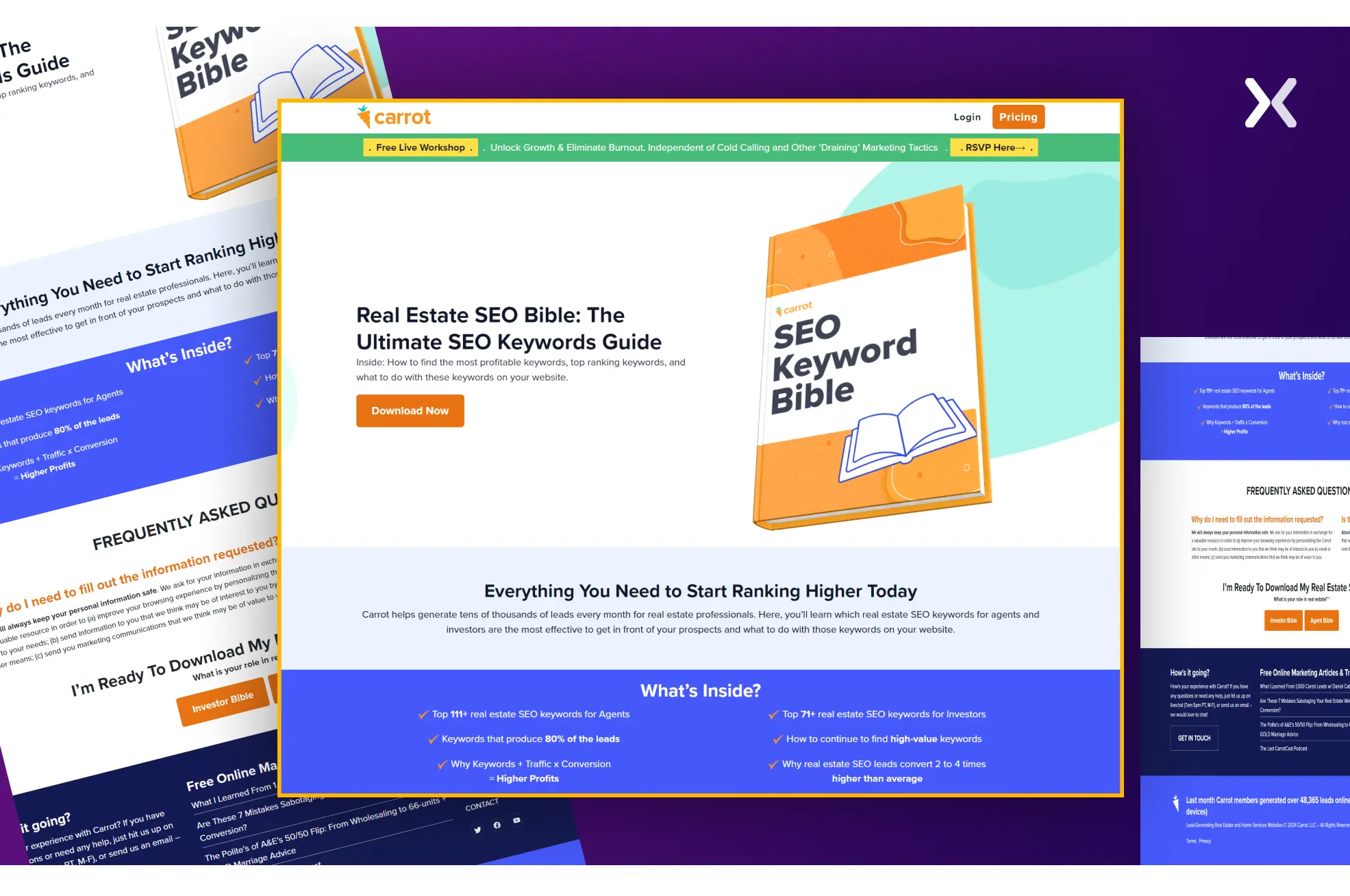
Top-of-funnel landing page examples
Enough with theories. Let’s look into how businesses use top-of-funnel landing pages.
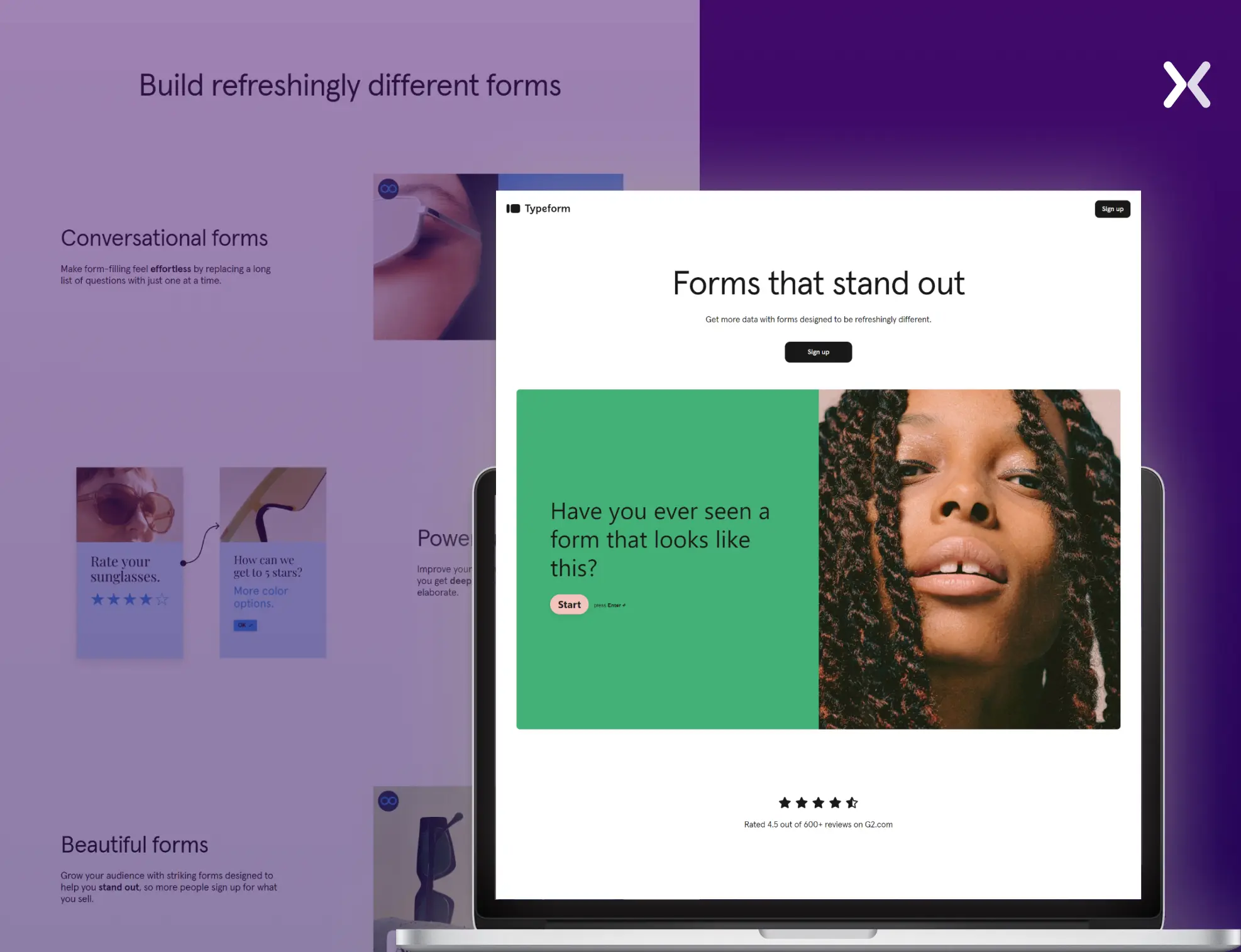
1. Typeform quiz landing page funnel
Typeform beautifully uses a quiz landing page funnel to start a conversation with its targeted audience. This campaign begins with a simple Google search query that leads to a Typeform landing page with an enticing quiz.
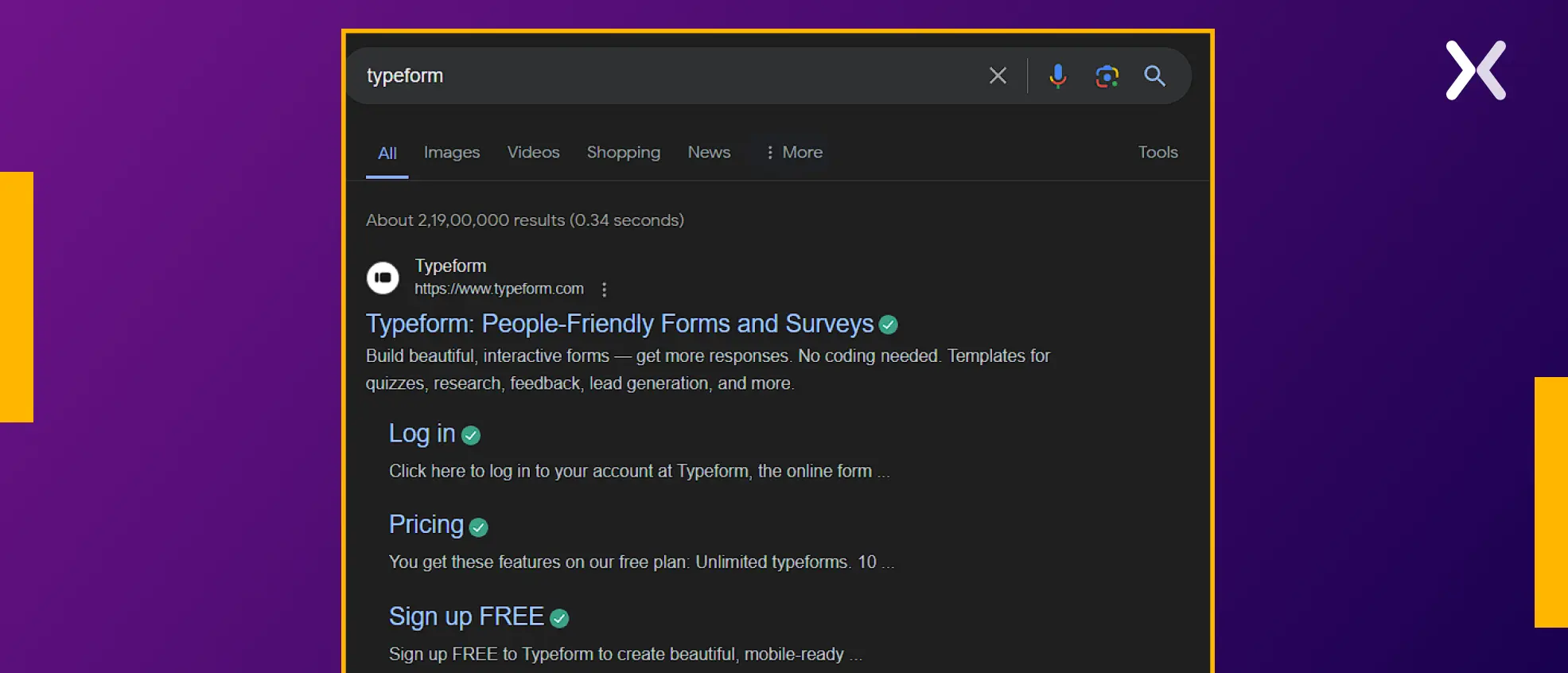 The quiz doesn’t feel like a quiz as it asks genuine questions and, at the same time, makes visitors more informed about the tool. It ends with swiftly moving these top-of-the-sales-funnel visitors towards mid-funnel by asking them to sign up for a free account.
2. YouTube squeeze landing page funnel
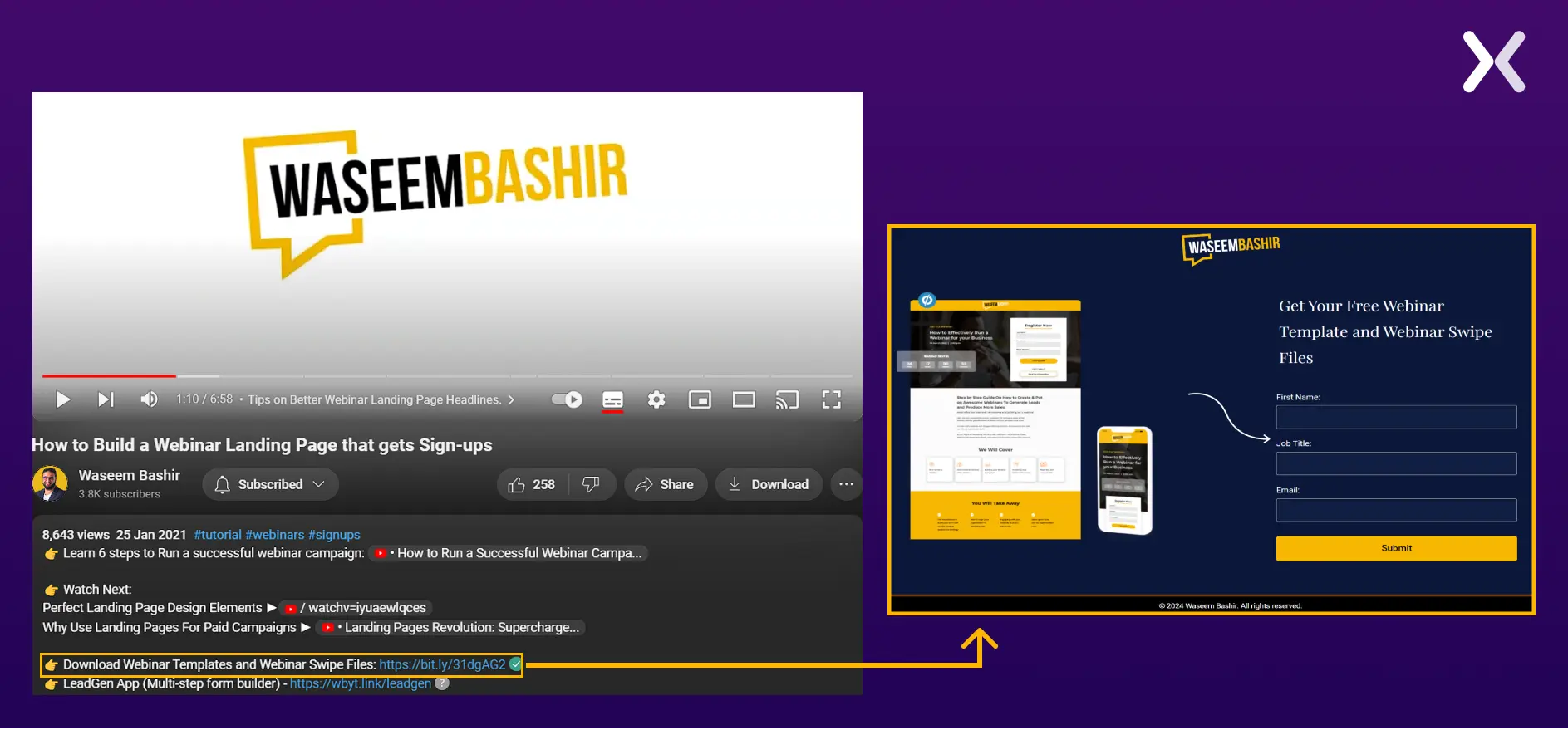
If you have a YouTube channel and want to connect with your audience for more personalized outreach. You can use a squeeze landing page funnel. Whether the person is a first-time watcher or has been a long-time subscriber of the channel, the squeeze page is the perfect place to secure their personal information while sharing something valuable. The same funnel method is used in the video below, where viewers are offered a lead magnet that complements their learnings from the video. The link to the lead magnet takes the viewers to a simple squeeze page with a minimal form.
Stage 2: Mid-Funnel landing pages
Your primary focus at the middle of the landing page sales funnel should be strengthening your rapport with your potential customers so that they can make a final decision. It is vital to capture leads at this point in the funnel, as this is when visitors are considering whether to engage with you or look elsewhere. It becomes necessary to start talking about your product and its USPs through personalized campaigns and capture as warm leads through already-established channels and targeted ads.
Types of Middle-of-Funnel landing page
There are many different types of landing pages, and they are sometimes used interchangeably in the top and middle sales funnel stages, which is not a problem. The only catch is to remember the landing page’s main purpose and use it correctly to present an offer.
1. Lead generation landing page
As the name says, a lead generation landing page captures visitors’ information. They use various offers like a free demo call, trial, estimates, or USPs of the product to encourage potential leads to fill out the form.
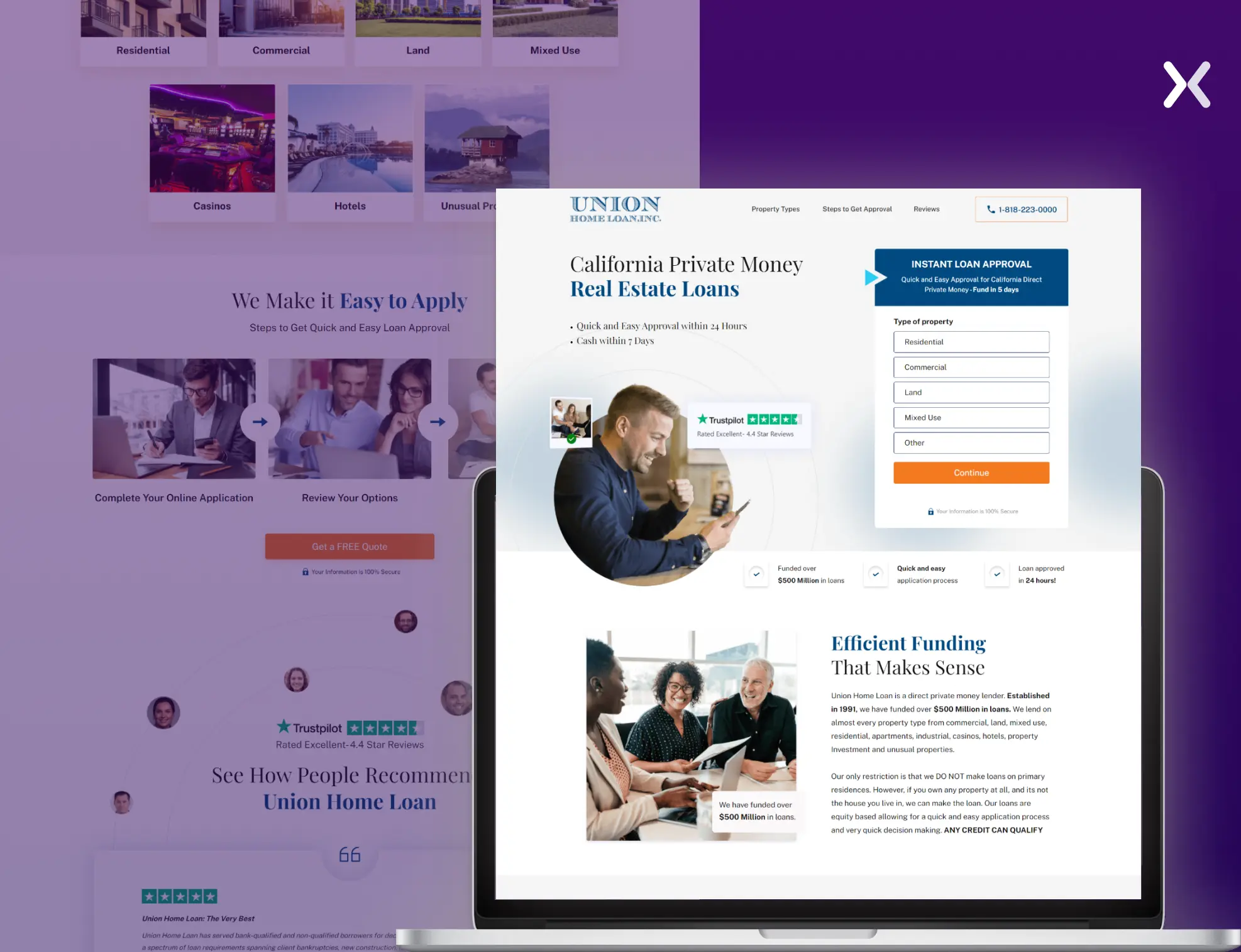 These landing pages feature strong offers tailored for warm leads or marketing qualified leads, individuals who recognize the problem and actively seek the best solution.
2. Webinar landing page
A webinar is a great way to share your expertise or the cool features of your product live with the audience. It helps you get the right exposure and present to prospects how your products or services solve their problems.
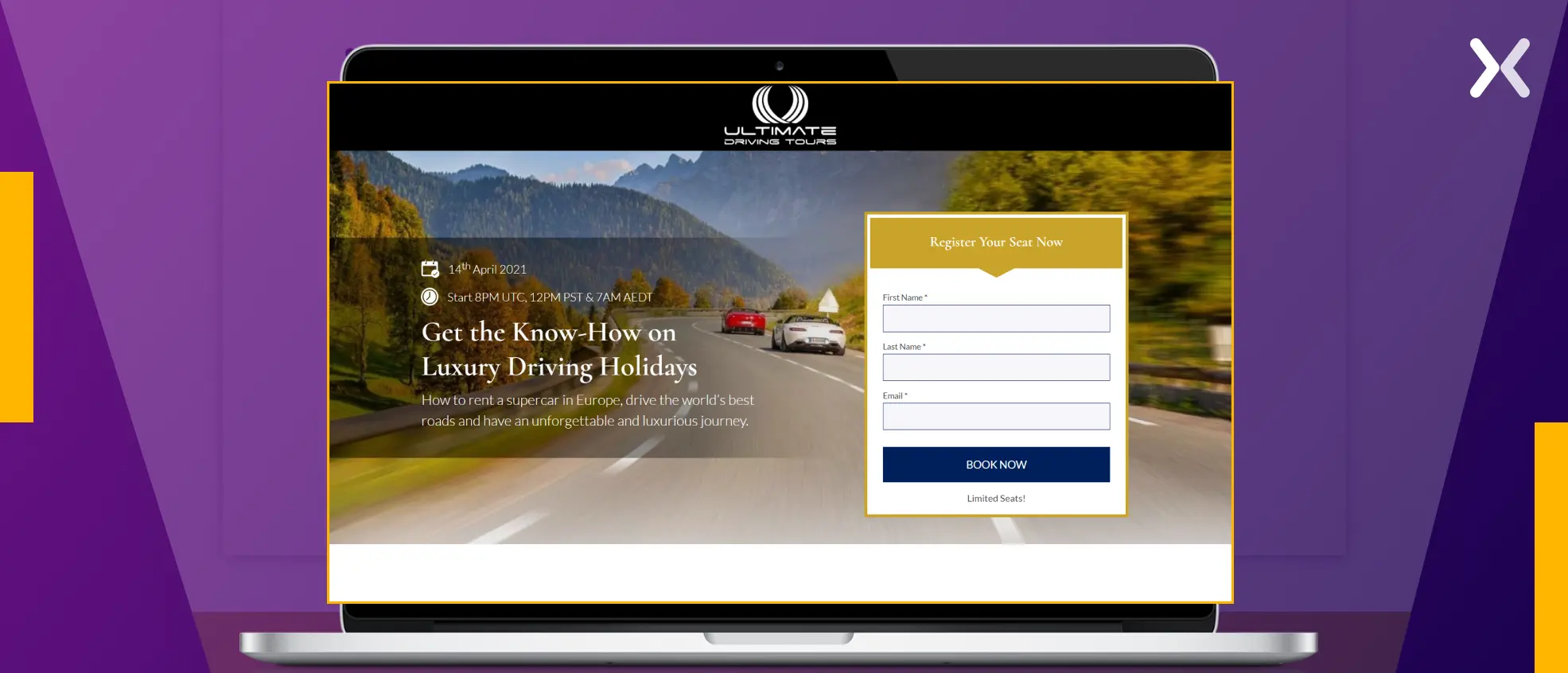 To attract the best crowd for your webinar, you need a webinar landing page funnel. It needs to be simple yet full, as it needs to capture leads, add them to a list, and keep them in the loop until the webinar goes live.
3. Lead magnet landing page
Landing pages dedicated to lead magnet offers are specifically designed to capture visitors’ contact information by offering them something of value, often referred to as a “lead magnet.” A lead magnet can be a whitepaper, surveys, ebooks, free trial, etc. The main aim of a lead magnet landing page is to capture leads. This landing page is used at the top and middle of the funnel, but the lead magnets change accordingly.
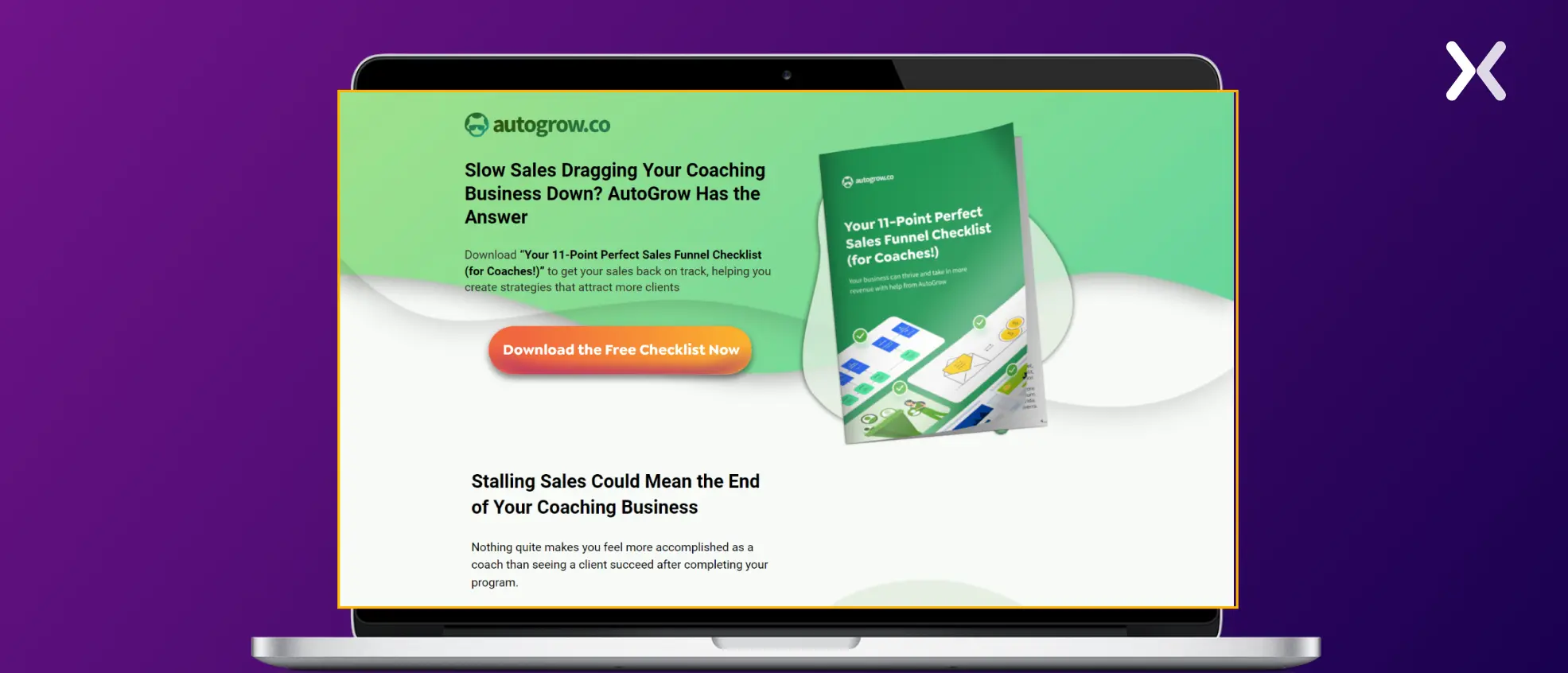 For example, a free trial lead magnet is more suitable for the middle of the funnel landing page, while an ebook is for the top of the funnel.
4. Splash landing page
Splash landing pages are a specific type of web page designed to capture the visitor’s attention immediately upon arrival. Unlike traditional landing pages, which typically focus on conversions through forms or calls to action, splash pages deliver specific messages or options before a visitor continues to the main content. These are typically used for promotions or announcements.
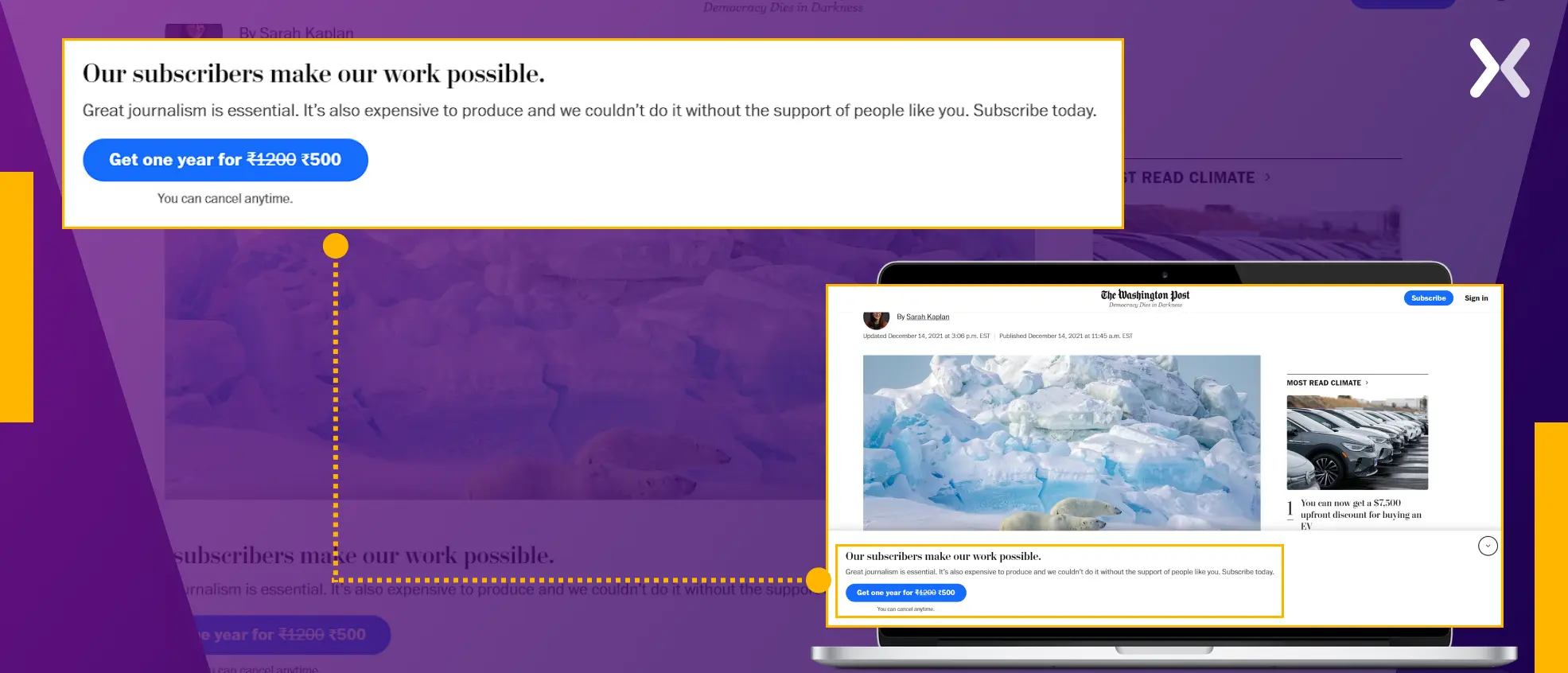
5. Free trial landing page
A free trial of a product sounds like a great offer for acquiring interested prospects and testing out the product’s features.
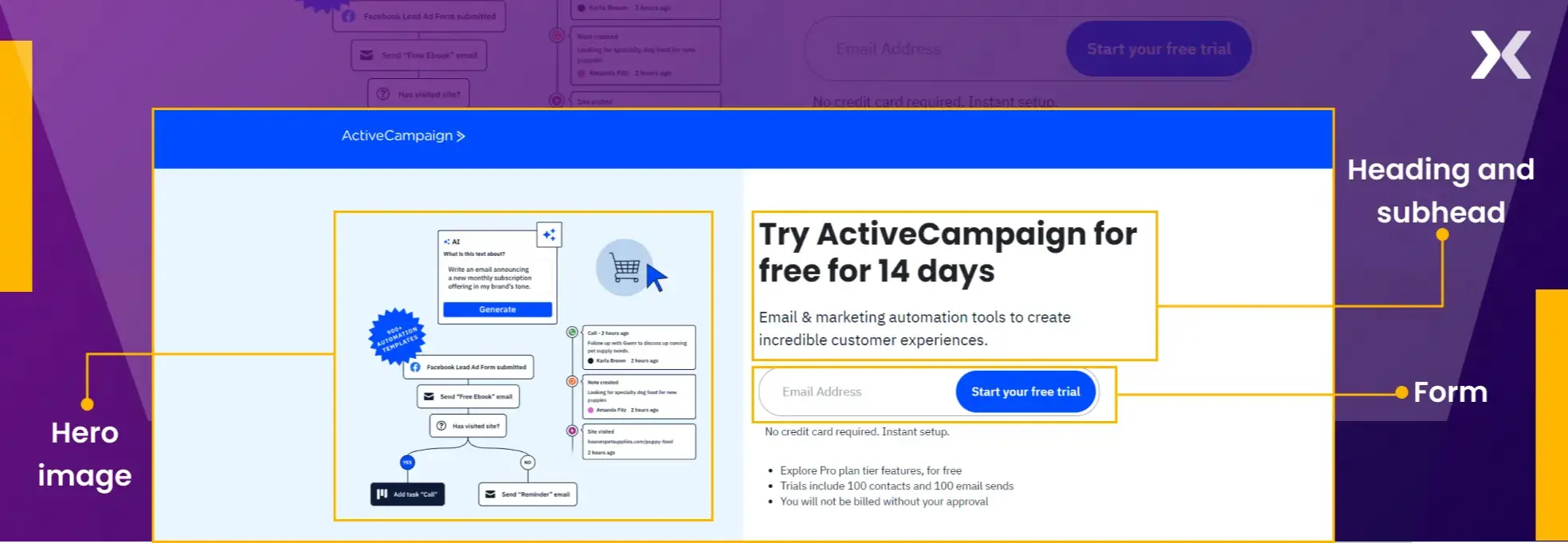 Though the free trial landing page falls under the category of a lead magnet landing page. It needs a special mention as SaaS companies are on the rise, and they definitely need a free trial landing page funnel to strengthen their sales.
6. Demo/ book a discovery call landing page
While demo landing pages are for SaaS companies, discovery call landing pages are for companies that provide services.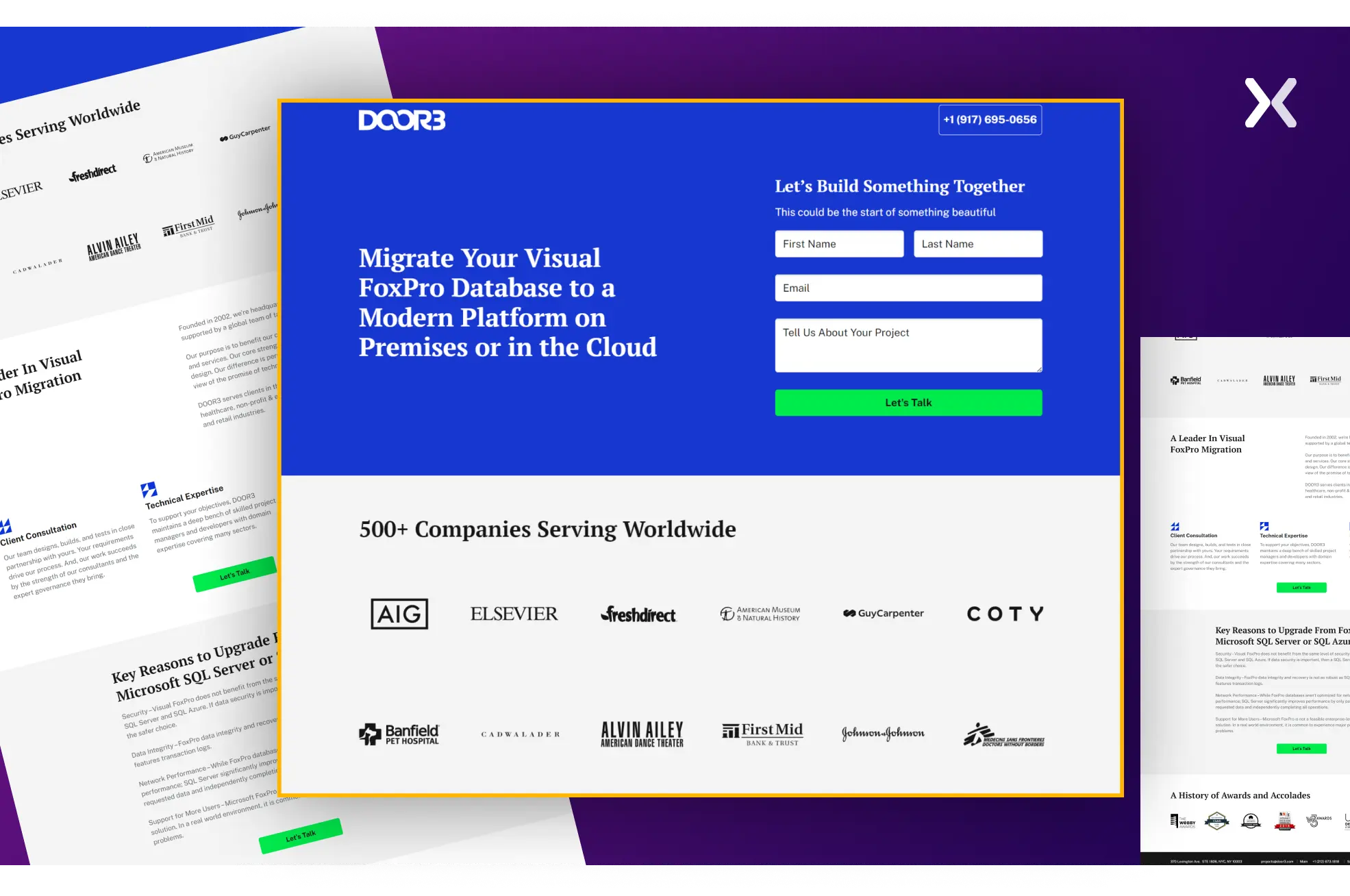 Both demo and discovery calls are amazing ways to introduce whatever you offer to your interested prospects who might have specific doubts about your product or services.
Middle-of-funnel landing page examples
Let’s discuss some examples of MoFu landing page funnels.
1. Alex cattoni webinar landing page funnel
The best place to start a MoFu campaign is from your email list. Alex Cattoni follows the rules and targets her newsletter subscribers who are already interested in copywriting and freelancing with a webinar landing page funnel. Prospects who attend this program will interact with Alex live, which can encourage them to join her course, CopyPosse. She lists all the USPs of attending the webinar and then takes it a step further when people click on the link provided in the email which takes them to a strong webinar landing page.
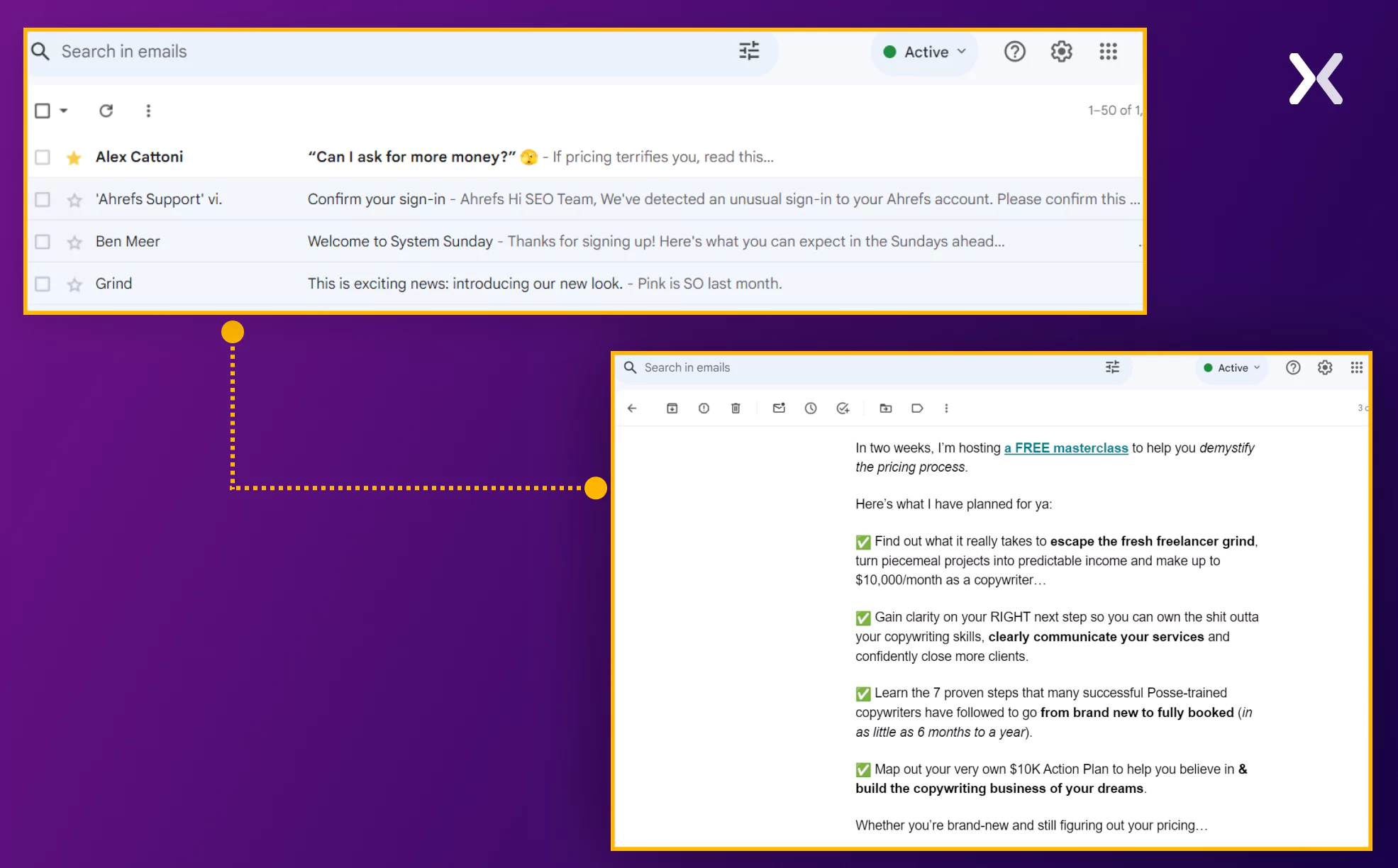 The webinar page includes elements such as a countdown, catchy imagery, social proof, reasons to attend, freebies, and, of course, amazing copy.

2. Demo landing page funnel through SERPs
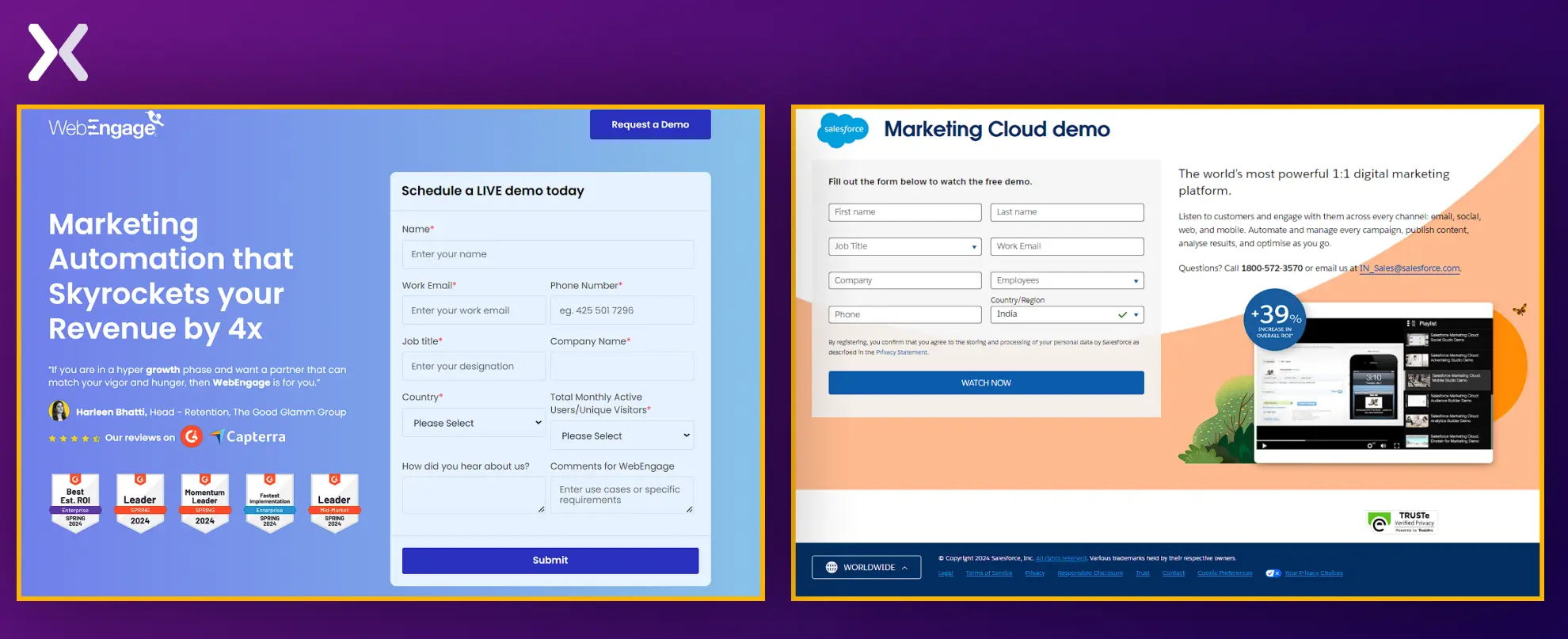
If you’re planning to use PPC search ads for demo landing pages, then you need to make sure that you don’t waste your ad budget by linking your ads to website pages. For example, below, the SERPs present three pages for the query “marketing automation tool.” While the Zoho ad leads to a website page, Salesforce, and WebEngage ads go to a demo landing page.
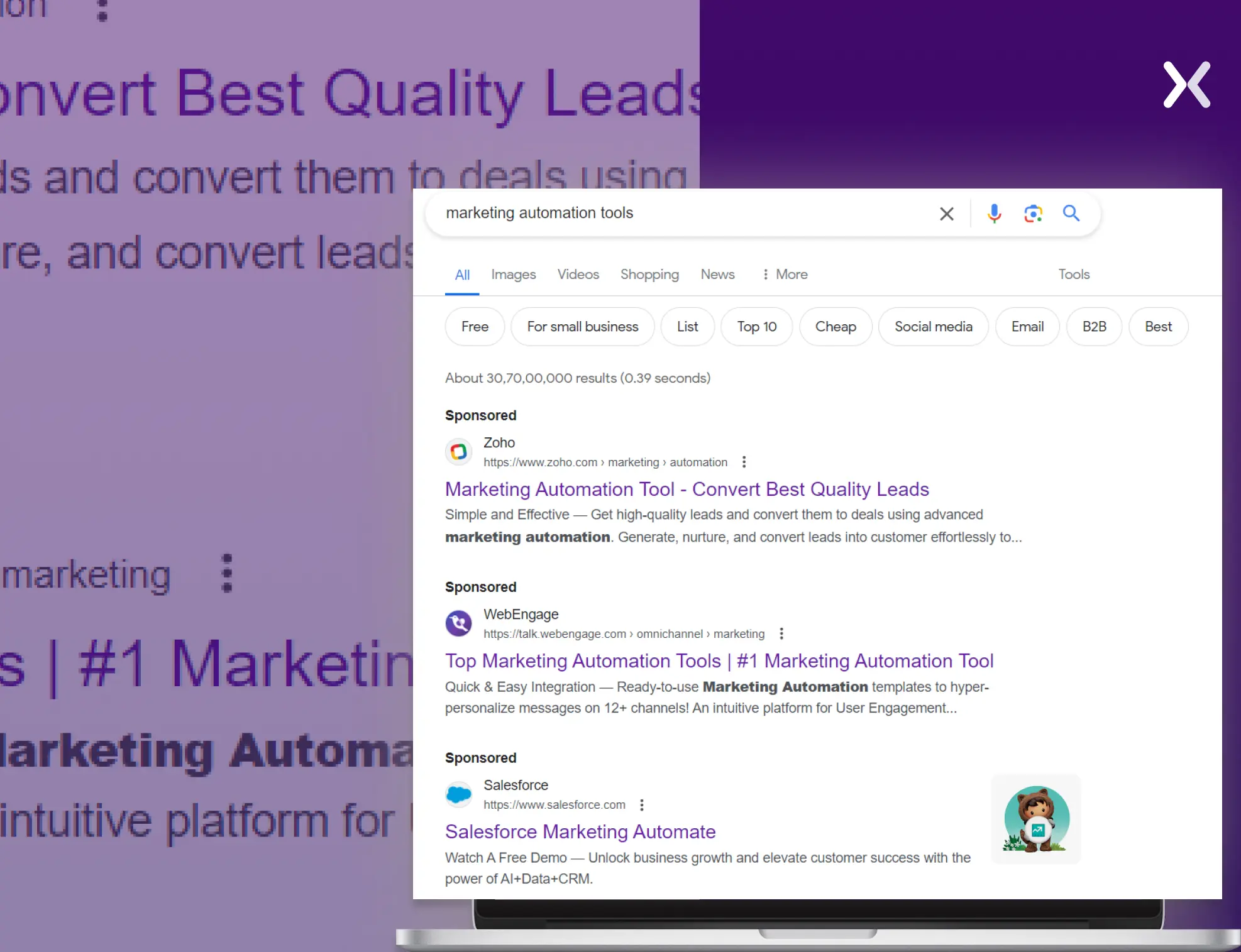 Salesforce’s landing page funnel is short and simple, while WebEngage tries to communicate its values through features and social proof. Two common elements in both demo landing pages are a chat option and a big form.
Bottom-of-funnel landing pages
As leads reach the final decision-making stage in your landing page funnel, blend the hard and soft selling strategies you’ve used at the top and middle of the funnel. It’s time to present why you excel beyond your competitors, simplifying the decision-making process for potential leads. Also, it can be an emotional stage for the buyer. As a result, your messages and sales methods must be emotionally charged and tailored to specific demands.
Types of Bottom-of-Funnel landing pages
1. Comparison landing page
Comparison landing pages work against winning the race against the other available options to your lead. It presents a transparent comparison between your product and others in the market, clearly stating why it stands out.
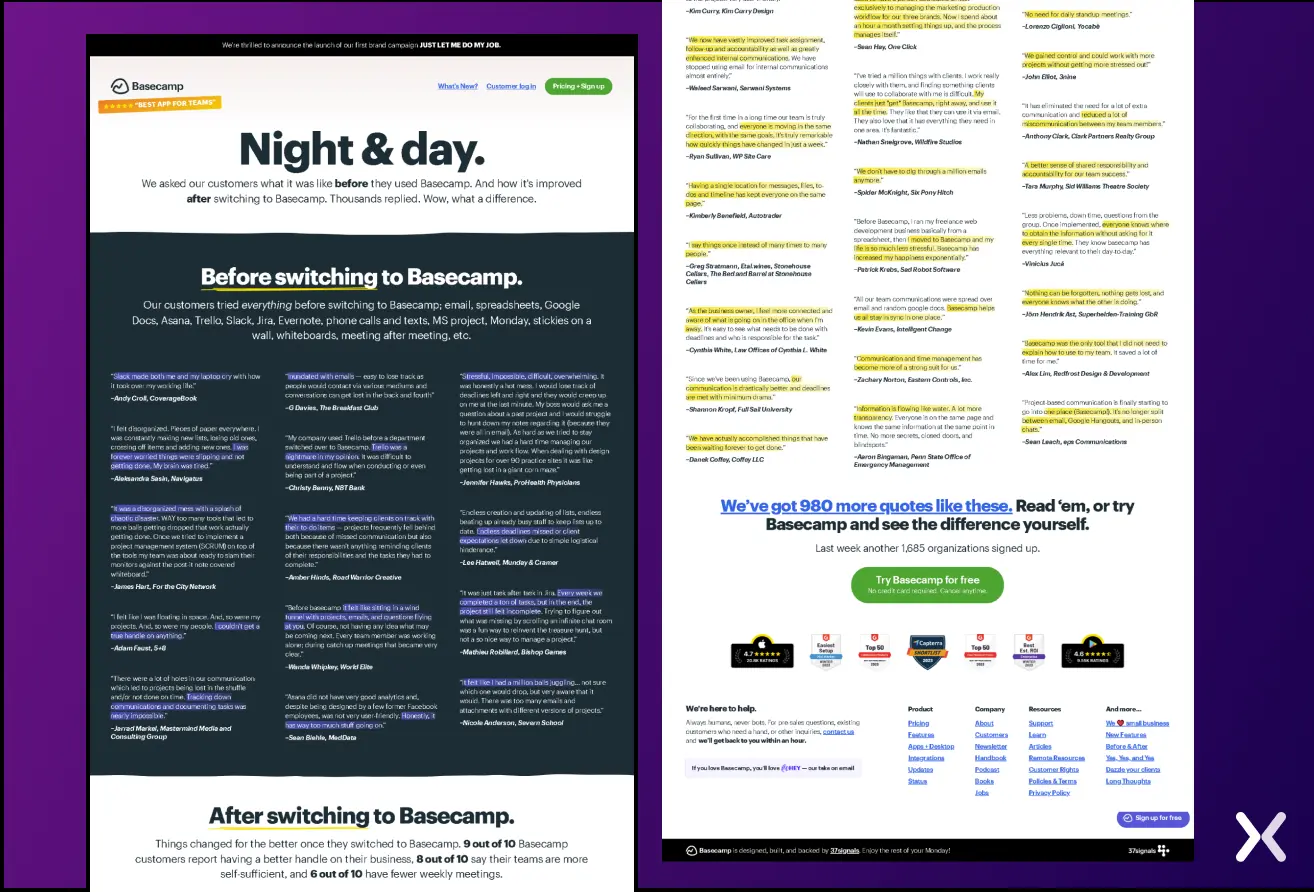 Such landing pages have elements like tables, quantified social proof, brief case studies, etc.
2. Sales landing page
This landing page fully focuses on your products or services. It features everything from unique selling points (USPs) and detailed benefits to product images, concise case studies, and social proof.
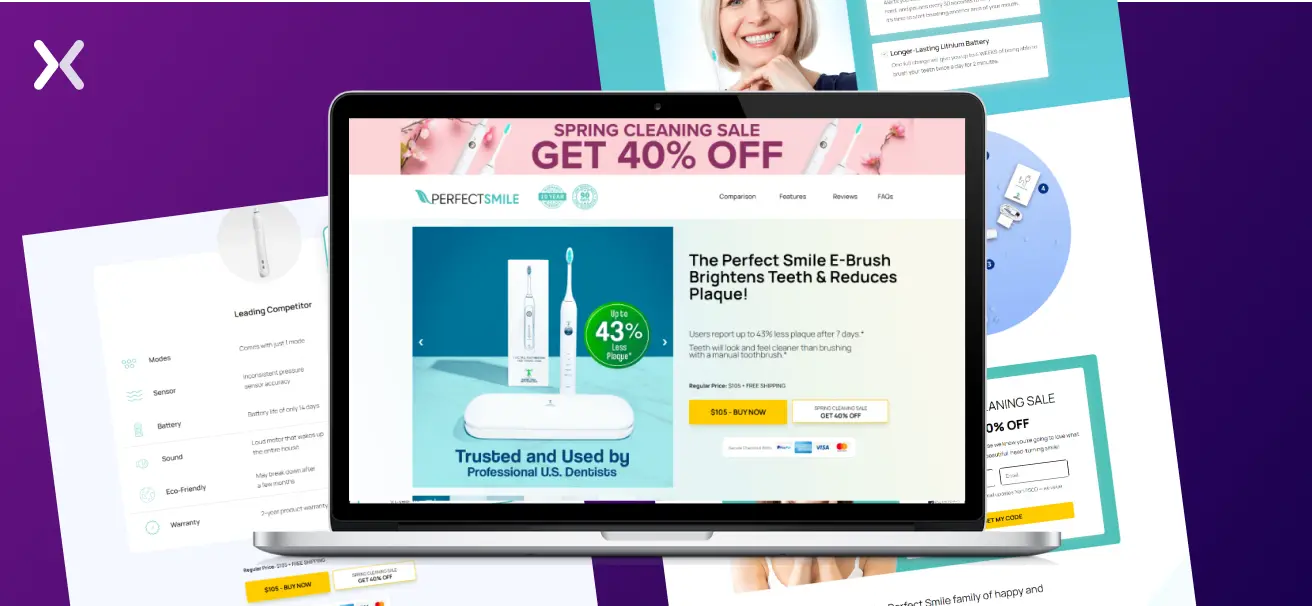 Each element is thoughtfully presented to make sure that your business stands out as a top contender in the visitor’s decision-making process.
3. Payment landing page
Payment-enabled landing pages are necessary for converting leads into clients. These pages typically feature pricing details, comparison tables, extensive social proof, and other key elements that help finalize a decision.
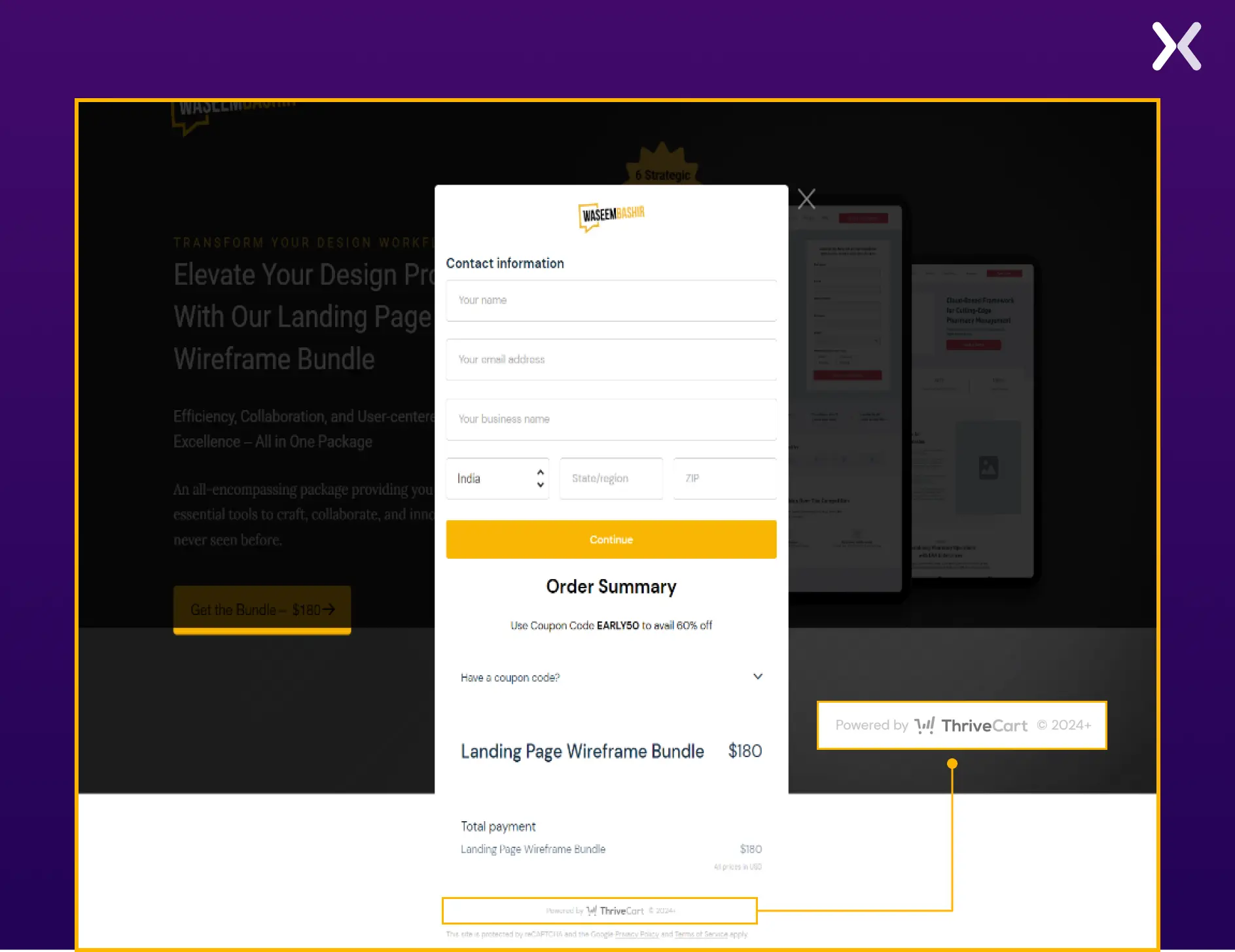 For ecommerce, it’s often strategic to design these pages first and target them with ads. In contrast, B2B companies should focus on developing a thorough landing page funnel from start to finish, guiding leads through each stage of the decision-making process.
Bottom-of-funnel landing page example
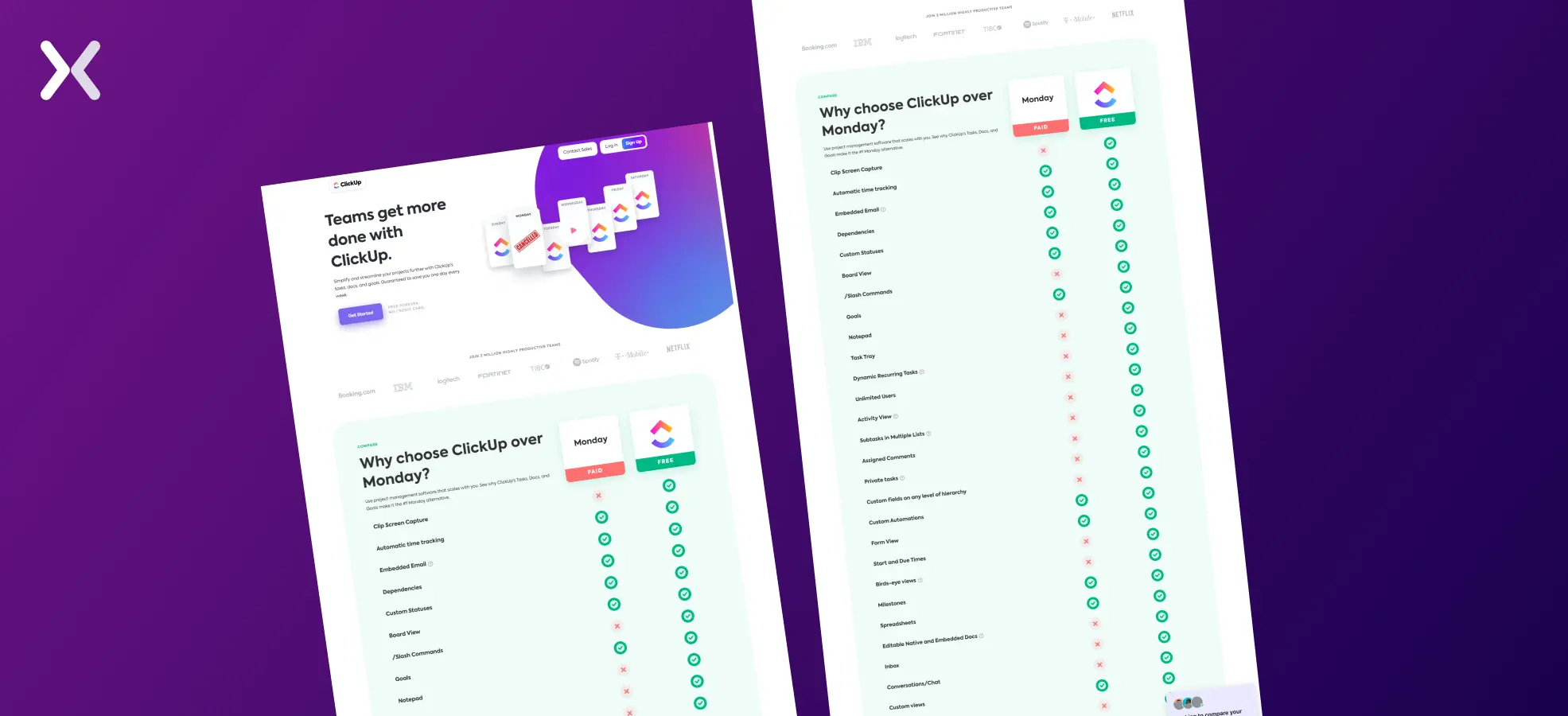
A landing page funnel for the bottom pipeline can effectively use PPC ads targeting specific keywords. For instance, ClickUp smartly targets the search term “Monday vs. ClickUp” with an ad that directs users to a competitor comparison page. This page aids potential customers in evaluating both products to make an informed choice.
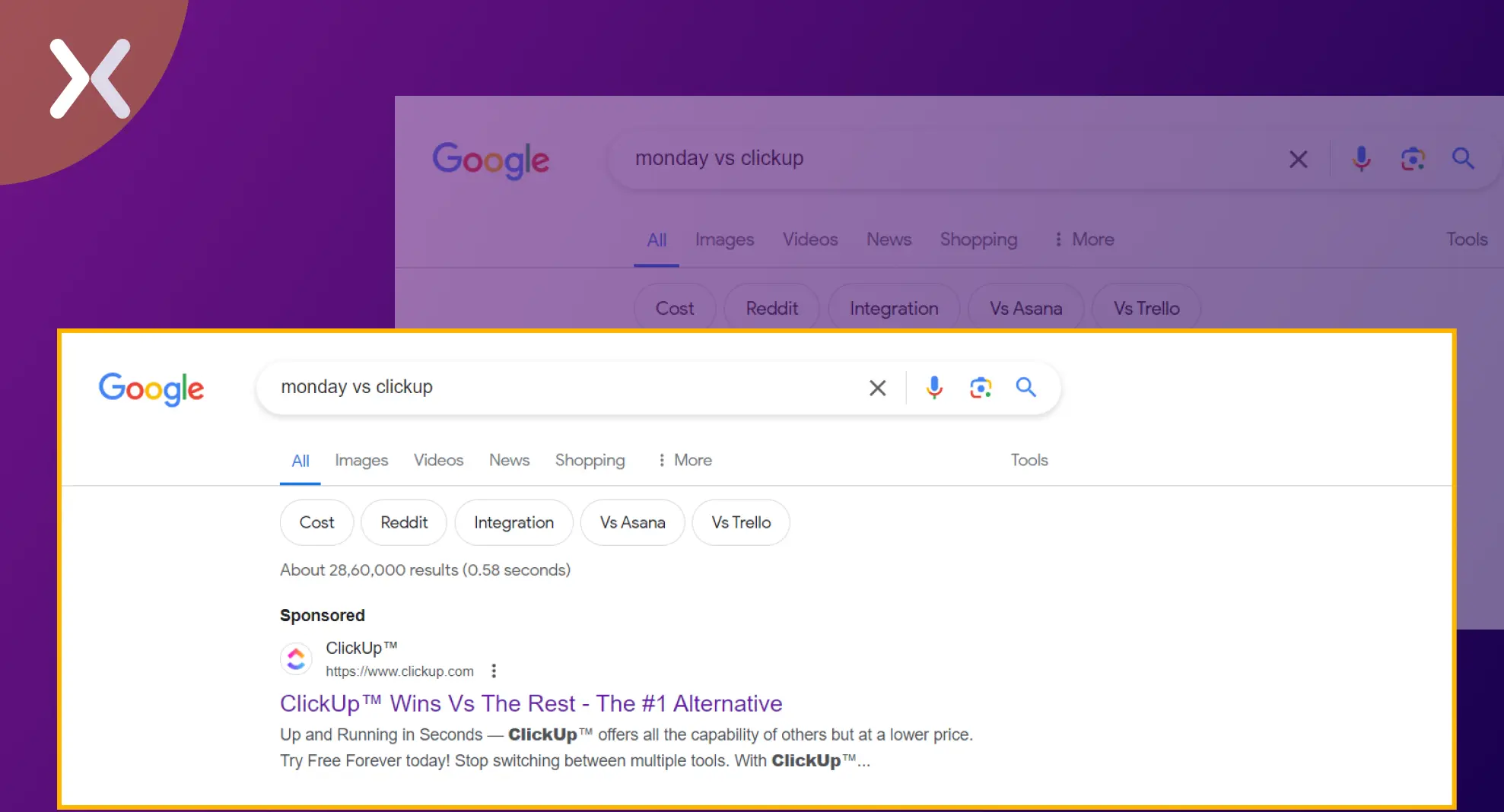 The SaaS landing page has a detailed comparison table and an explanatory video. It prominently displays a “Free Forever. No credit card required” tag adjacent to the CTA button, clearly communicating the offer to all visitors.
How to optimize a landing page funnel?
Creating landing page funnels is just the beginning. These funnels need constant optimization to make sure consistent results and more. A well-designed thank you page is also a key part of this journey, reinforcing the user’s experience and guiding next steps. Given that landing page sales funnels span various stages, developing a CRO system can simplify the process of managing and tracking their progress.
Ready to build a landing page sales funnel?
Creating an effective landing page funnel starts with clearly understanding your marketing campaign’s objectives. Selecting the appropriate type of landing page, be it for lead generation or product sales, is essential for matching these goals. A targeted landing page funnel helps a smooth buyer’s journey, improving customer engagement and encouraging long-term relationships.
Related Articles: