Your landing pages won’t magically fix your PPC ads - you need more. You need landing page A/B testing. While businesses aim to build the best landing pages to boost conversions, treating them as “invest and forget assets” risks watching campaigns disappear and having to start over from scratch, resulting in a waste of time, money, and effort. Landing page A/B testing saves your resources by helping you understand your target audience without invading their privacy. It truly helps personalize your campaigns for the customers and conversions. However, A/B testing extends beyond mere comparison of variations. Misinterpretation of tests can lead to underwhelming results. In this blog post, we will dig into the fundamentals of landing page A/B testing, explore common pitfalls that can compromise the accuracy of your test results, and discuss how to do A/B testing with low traffic on landing pages.
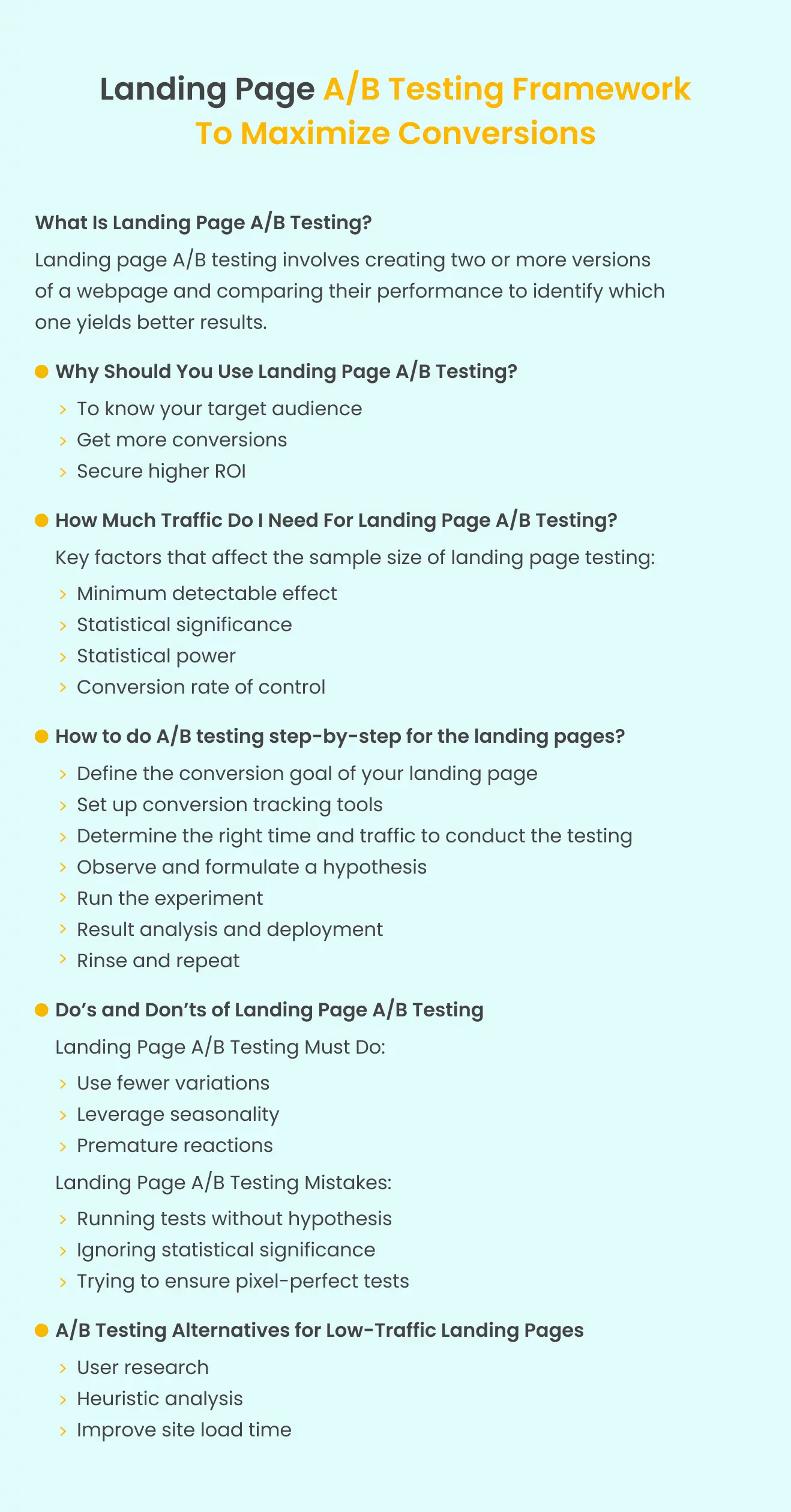
What is landing page a/b testing?
Landing page A/B testing involves creating two or more versions of a webpage and comparing their performance to identify which one yields better results. It is a convenient and effective way to understand how best to optimize your landing pages. It easily tests various page iterations to determine which version gets you to your conversion goal first. A/B testing for landing pages may feature substantial differences, ranging from adopting a new layout to smaller changes, such as altering the color of the CTA button. Irrespective of the scale, the A/B test is adept at addressing all your landing page challenges.
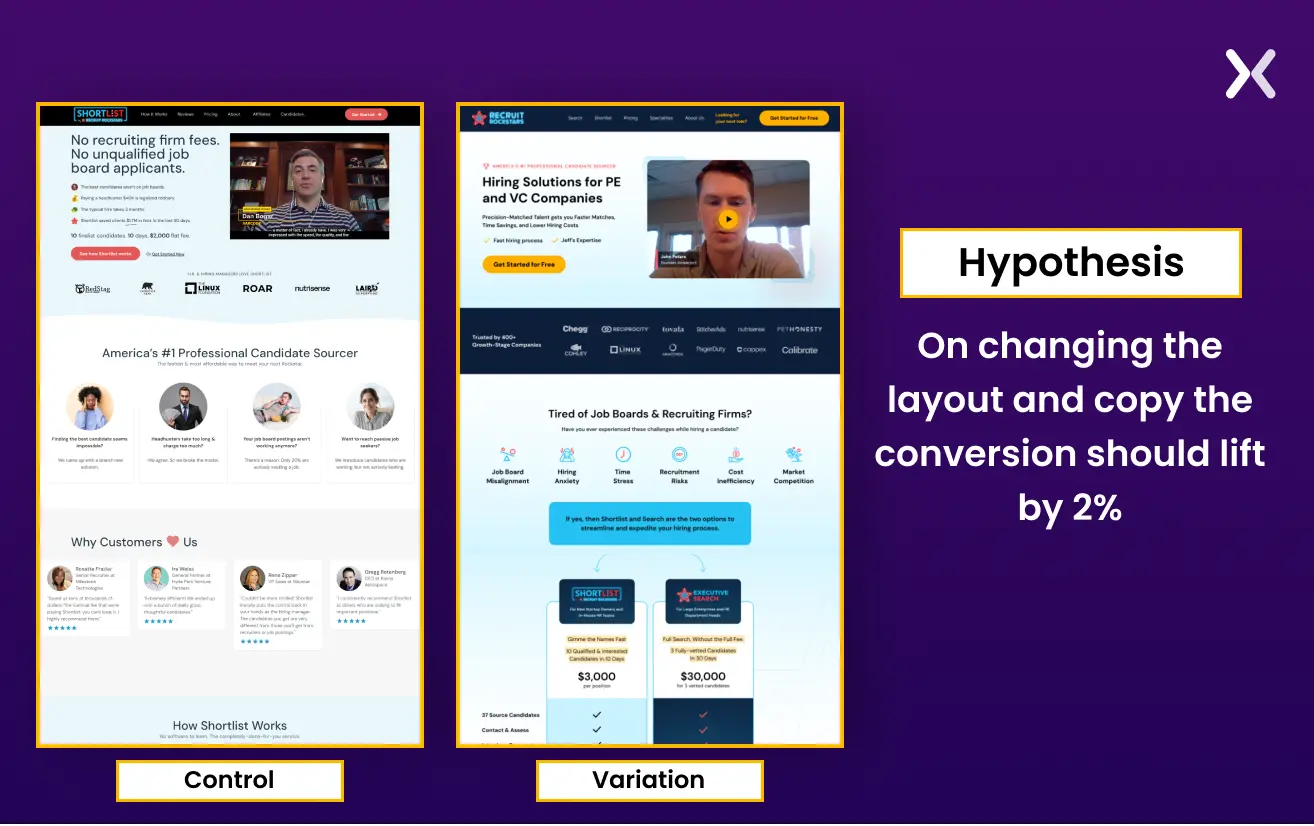
Landing page A/B testing consists of three main elements:
1. Control
- Definition: The original landing page or element that is the starting point for an A/B test.
- Role: Used as a baseline to compare against variations to assess the impact of changes.
2. Variation
- Definition: Modified version of the landing page created to test specific changes.
- Role: These variations are tested against the control to identify which design or content elements are more effective in achieving the desired goals.
3. Hypothesis
- Definition: A statement predicting the expected outcome of the A/B test based on the changes made to the landing page.
- Role: It guides the test by setting clear expectations, helping to interpret results, and making informed decisions based on the observed performance of the control and variations. By making minor tweaks and continuously testing, you can understand the impact of each individual change and eliminate the guesswork of landing page optimization.
The most effective and recommended way to do A/B landing page testing is to make one change at a time. That way, you have an accurate representation of the result of each change, and you can examine them independently.
Why should you run landing page a/b testing?
Using A/B testing for your landing pages is like turbocharging your online strategy, especially for PPC (pay-per-click) landing pages. These pages play a big role in determining whether your ad budget is well spent.
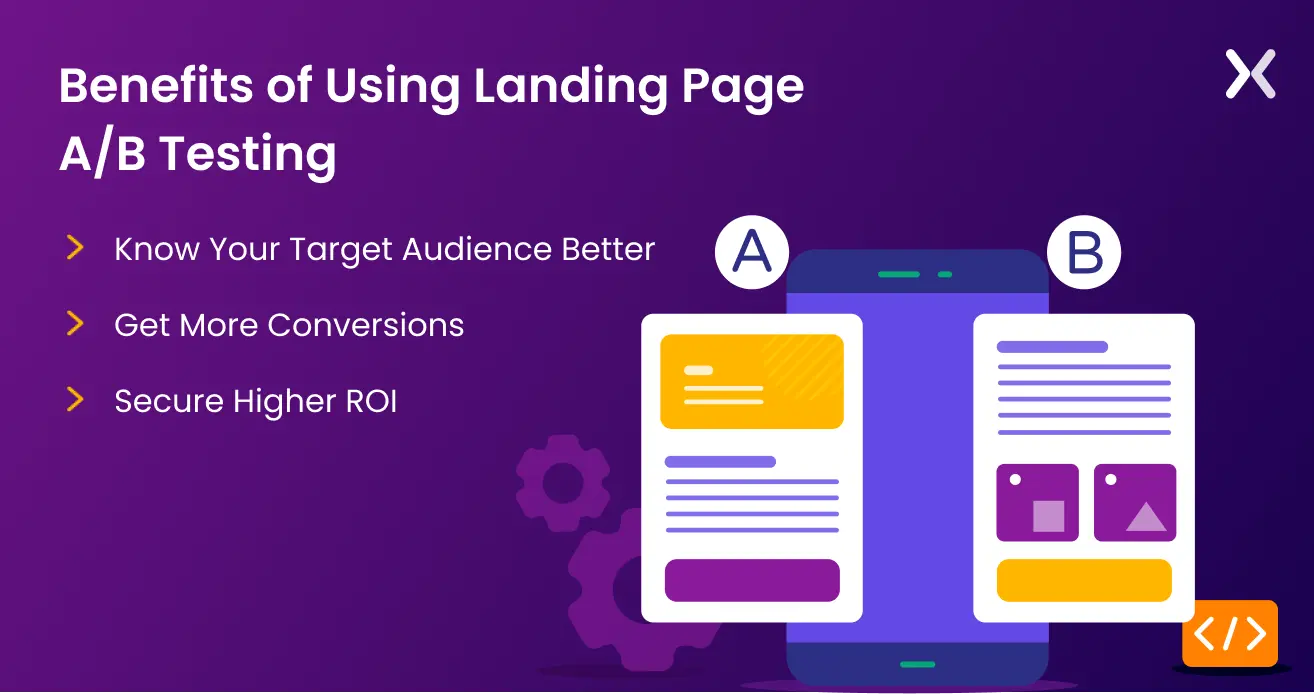 Landing page A/B testing is a big improvement because it helps you to:
1. An a/b test helps know your target audience better
Building a post-click landing page often involves assumptions about your target audience. Competitor research helps, but uncertainties remain. Landing page A/B testing dispels the uncertainty by providing data on user preferences. Instead of guessing about design and content, A/B testing allows you to make informed decisions based on real user feedback. It makes sure your landing page matches effectively with your audience.
2. An a/b test can get more conversions
Even slight adjustments to your landing page can significantly improve conversion rates. A/B testing is the key to discovering these subtle changes in your landing page elements that can make a big difference. Landing page A/B testing not just pinpoints these optimizations but also raises your overall user experience. This translates into a higher conversion rate, changing more visitors into leads and, ultimately, customers.
3. An a/b test secures higher ROI
Landing page A/B testing goes beyond just engagement, it fine-tunes your strategies to get more value from your investment. By looking at how users respond, it helps you make your landing page work better. This means you get the most out of every dollar you spend on advertising, making sure you get the best results. Lower bounce rates and higher conversion rates make up for the perfect equation to get a favorable ROI.
How much traffic do i need for landing page a/b testing?
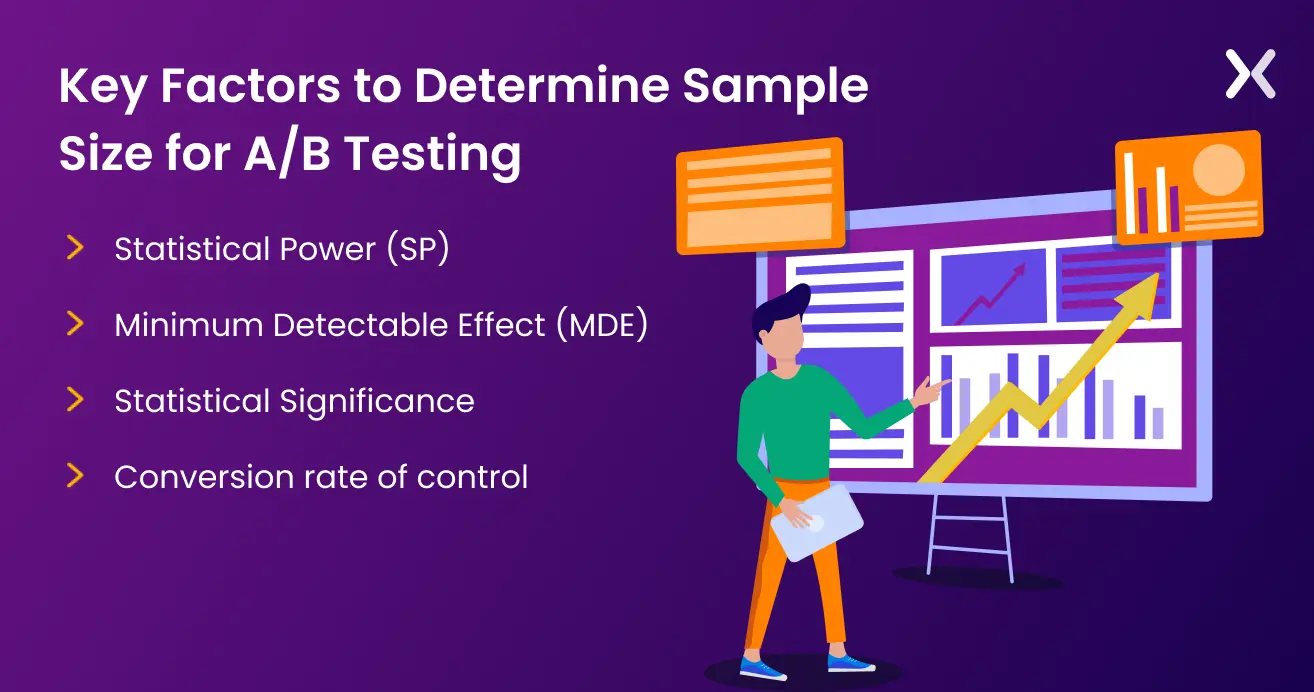
The traffic sample size required to successfully conduct a landing page A/B test depends on four factors.
-
Minimum Detectable Effect (MDE)
-
Conversion rate of control
-
Statistical significance
-
Statistical power All of these four factors together help mitigate two common mistakes that occur while doing landing page A/B testing.
- It’s a mistake leading to the conclusion that there is an effect or difference when, there isn’t one. Statistical significance counters such errors.
Example: In A/B testing, a Type I error would happen if the test incorrectly concludes that a change in the landing page has a significant impact on user engagement when, in fact, there is no real effect.
- It’s the mistake of concluding that there is no effect or difference when there actually is one. MDE and statistical power counter such errors.
Example: In landing page A/B testing, a Type II error would occur if the test fails to detect a genuine improvement in user engagement resulting from changes in the landing page, leading to the incorrect conclusion that the changes had no effect.
What is the minimum detectable effect (MDE) in landing page a/b testing?
A pre-test concept, MDE answers the question: “What is the smallest difference I want my Landing page A/B testing to be able to detect?” It is a necessary parameter to consider during the planning phase of the test because it influences the required sample size.
What is statistical power (SP)?
It’s the ability of the test to detect a meaningful change or improvement when one is present. In landing page A/B testing, it is usually taken as 0.8 or 80%.
What is statistical significance in a/b testing?
In landing page A/B testing, statistical significance refers to the likelihood that the observed differences in performance between the control and variations are not due to random chance. It is usually taken as 0.05 or 5%. Complicated. We know.
 Here’s an example to understand the above:
Imagine you have two types of apples you want to sell in stores. You decide to conduct a taste test to determine whether there’s a real difference in their quality.
Here’s an example to understand the above:
Imagine you have two types of apples you want to sell in stores. You decide to conduct a taste test to determine whether there’s a real difference in their quality.
-
Think of SP like how good your taste buds are. If you can taste even tiny differences (high SP), you’ll notice if one apple is slightly sweeter than the other. If your taste buds aren’t as sensitive (low SP), you might miss small changes.
-
MDE is the smallest difference in taste you want to notice. If you want to be sure you can taste even a tiny improvement in sweetness, your MDE is small. But if you’re okay with only noticing big changes, your MDE is bigger.
-
Now, imagine you have a rule. Before you say one apple is better, you want to be really, really sure. This is like setting a high level of statistical significance. If you follow this rule, you won’t easily say there’s a difference unless you’re highly confident. So, in your taste test, if you have really sensitive taste buds (high SP), you’ll need a lot of apples to be very sure (high Statistical Significance) that your changes made a difference, especially if you want to notice even tiny improvements (small MDE). In Landing page A/B testing. It’s about finding the right balance between noticing small changes, being very sure before claiming a difference, and deciding how small of a difference is important to you.
How to calculate the sample size for a/b testing landing pages?
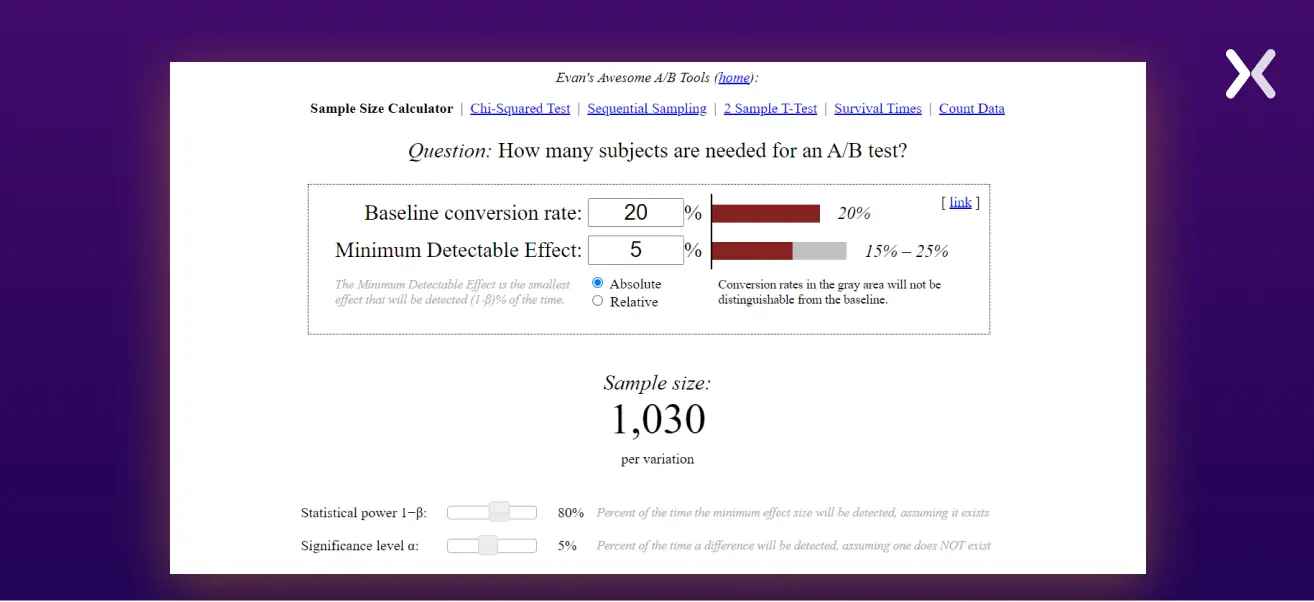
Here’s a calculator you can use to check what the sample size should be for your landing page A/B test. The value of statistical significance and power has been set to 5% and 80% by default in this tool. It helps you get a rough idea of how much traffic you’d require to conduct landing page A/B testing.
How to perform landing page a/b testing - Step-by-Step
Get started on your landing page A/B testing to boost the conversion potential of your pages and increase your revenue. Follow these seven steps to develop your landing page A/B testing framework and start running your own tests.
1. Define the conversion goal of your landing page
The initial and most important aspect of constructing your landing page A/B testing framework is having a well-defined conversion goal for your landing page. In other words, you need to know what you want to achieve before you get started. This is because you need a clear idea of how to design and optimize your landing page based on the goals that you have set out.

The landing page goal should be clear, for example:
-
Register for the webinar
-
Subscribe to our newsletter
2. Set up conversion tracking tools on the landing page
You need to acutely understand how your landing page is currently performing and how each change has made a difference. One of the ways you can do this is by adding Google Analytics tracking to your landing page.
 Google Analytics is a great tool to monitor key metrics on your landing page, enabling successful landing page A/B testing. It helps you understand what needs to be tweaked. Some of the useful metrics that you can use to understand and optimize your landing page include:
-
Traffic source
-
Goal completions
-
Session duration
-
Landing page sessions Another pro tip is to use a landing page builder that can track your conversion rates. The more information you gather about your landing page, the better your understanding of it. And this, ultimately, means you know exactly which areas of your landing page to target for your A/B testing.
3. Calculate the time and traffic required to run the test
Before running any landing page A/B testing. It’s necessary to understand how much traffic you need and how long you’ll need to run the tests. Make sure your marketing strategy fits the goals of your landing page to make sure you generate enough data for your landing page A/B testing. Beyond that, you need an idea of how much time it will take you to run and complete these tests, get the results and make the necessary changes.
 There are various free and paid channels you can use to get that traffic flowing. Some of the most useful free and paid options for you include:
-
Marketing campaigns, sending out email newsletters.
-
Social media ads on platforms like LinkedIn and Facebook, Search advertising. There are many platforms at your disposal to help you complete this step. The key is to make sure that how you structure marketing on these channels fits the goals of your landing page.
4. Draft hypothesis/observe and formulate hypothesis
Now that you have gathered your qualitative and quantitative data. You need to create a hypothesis for your landing page A/B testing. That’s right - it’s time to make sense of all of the data you have collected. To do this in the most accurate way possible, consider drafting a hypothesis. Your hypothesis should be specific, and the goal you are trying to meet or the question you want to answer should be clear.
 Once you are confident that you have your hypothesis. You’re ready to test the different elements or parameters to either prove or disprove your hypothesis. The type of testing that you do on your data depends on how much traffic you manage to get to your page.
-
Use simple A/B testing where you pick one hypothesis to test at a time.
-
Use a multivariate test to make changes to multiple-page sections and test the impacts thereof. There are other methods we share for low-traffic landing pages as well later in the blog post.
5. Run the Experiment
Yes! Running your experiment is the exciting part of the landing page A/B testing process. You’ve made it to the exciting part. In running your experiment, you finally have the opportunity to collect data. This data, in turn, will give you invaluable insight into how people interact with your landing page and the variants that you are testing. These results will ultimately inform whether you should pick your variant or control it to increase your lead generation.
 Before we get on with running any experiments, let’s look at what types you can use and which methods are best to apply.
-
The important first step is to start your experiment from a position of equality. The key is to create a variant and then distribute your traffic equally between your variant and original pages. The variant is the new version of your landing page that you use for your A/B testing. You can have as many variants as you desire based on how many elements of your page you want to test. For successful testing, 50% of your traffic should be directed to your variant page, and the remaining 50% should be directed to your control page. The one catch with this method is that you need to have enough users visiting the page for your testing to be statistically significant. This method is best applied when you have high traffic volumes.
-
Another method that can be used is sequential testing. With this type of testing, the traffic is not split. Instead, you run the tests one at a time, sending 100% of the traffic to each page you are testing. This means you are running the tests one at a time.
6. Result analysis and deployment
Now that you have your test results, you need to analyze your data to determine which elements work best for increasing your landing page conversion rates. Some of the metrics you might consider while analyzing your landing page a/b testing data are:
-
Confidence level
-
Direct and indirect impacts on other metrics
-
Percentage increase or decrease in your conversion rates
 After running these landing page A/B testing experiments and analyzing the data. You should have a clear winner.
7. Rinse and Repeat
As with any experiment, there is a chance that you may run your tests and the results are inconclusive. You might not know which variation of your page to launch because the data wasn’t as clear-cut as you would have liked. If this is the case. Don’t panic. You can always run the landing page A/B testing again, and you may get a different outcome. You can also change the parameters of the test (for example, increasing your sample size). The beauty of using the landing page A/B testing framework is that you can run the test as many times as you’d like. Eventually, you’ll get the outcome of increased landing page conversions.
How to make the most of landing page a/b testing framework?
While the efficacy of the step-by-step A/B testing landing page framework is undeniable, a necessary question comes: ‘What should we test?’ When conducting landing page A/B testing, the multitude of elements on a page often lead to many potential hypotheses, which can confuse marketers. The key to successful Landing page A/B testing lies in asking the right question: What should we test to maximize data acquisition in minimal time? If you initiate testing on a singular element, such as an image. It may take an extended period before any substantial changes become evident. Let’s revisit the earlier concept we explored, namely the Minimum Detectable Effect (MDE), which posed the question:
'What is the smallest difference I want my Landing page A/B testing to detect?’ To achieve this minimal detectable difference, it is advisable to test an element that can achieve significance more swiftly. This presents us with two viable options:
-
Focus on high-impact changes directly influencing your primary metric.
-
Test alterations on an element with which the visitor interacts.
In short, we want to focus on landing page elements directly impacting visitors’ mindset.
Here are some strategies to align the MDE with your landing page A/B testing:
1. Reformatting the Layout
If you’re thinking about making big changes to your landing pages and wondering what to do, try shaking things up by changing the whole layout. This way, visitors will react differently, making it easier for you to figure out what your target audience likes.
2. Switching the Price
Price matters in decision-making. Compare your prices with competitors to make sure you offer the right value. If adjusting prices isn’t an option, experiment with improving the pricing section’s layout during your landing page A/B testing.
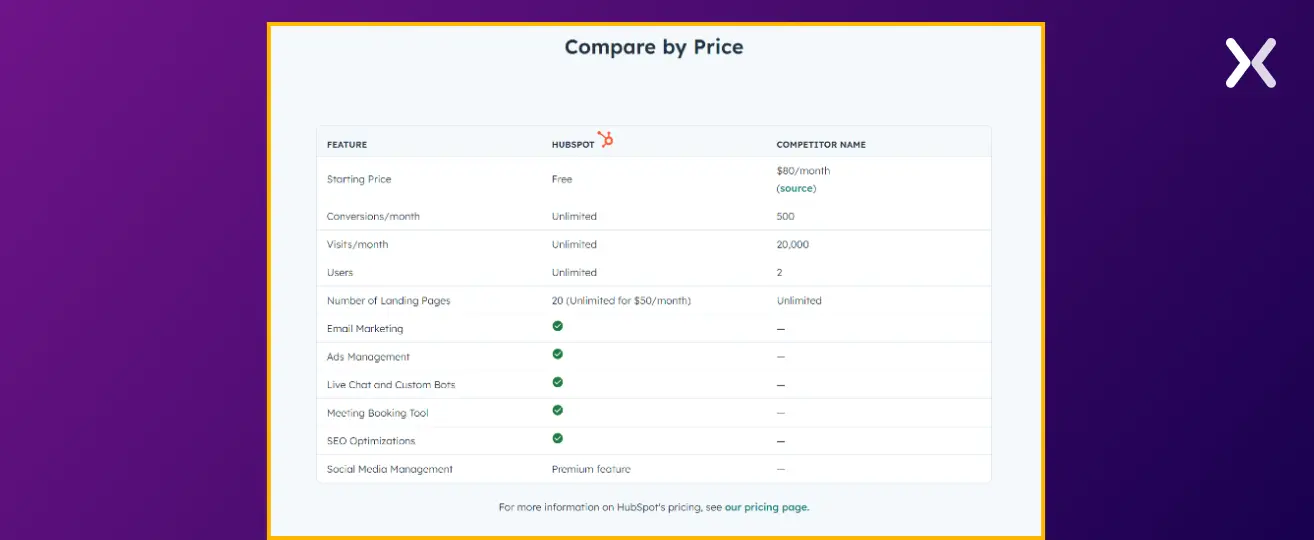 Accent unique selling propositions (USPs) with strong use cases and imagery for maximum impact. Experimenting with different layouts and copy can be beneficial as the pricing section is a key point of interest.
3. Changing the offer
Providing incentives like discounts, lead magnets, and free quotes is common for lead generation landing pages. Your offer should strongly match the audience, fulfilling a genuine need to encourage conversion. Offering valuable incentives also boosts interaction and increases the likelihood of gathering essential data during landing page A/B testing.
4. Using a different creative approach
Try something new in showing off your campaign on the landing page. Instead of using the same pictures, text, and buttons, mix it up a bit. Get creative to grab your audience’s attention in a fresh way. You can use conversational or interactive landing pages in the quest to execute that.
5. Testing above the fold
Maximize the potential of the space above the fold on your landing page, as 100% of your traffic encounters it. Use this prime real estate effectively for your tests, making sure that changes here are interactive for visitors.
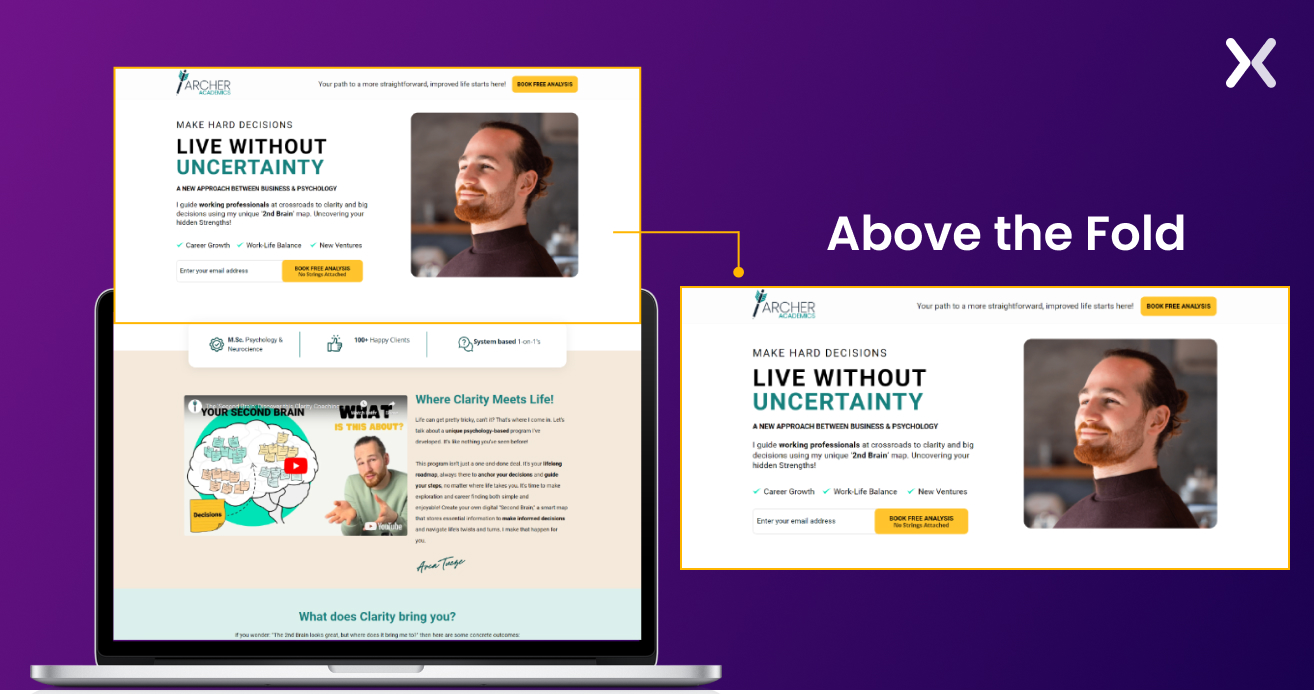 When conducting tests below the fold, consider generating custom impressions to trigger events at specific scroll depth points (e.g., reaching 30% of the page). This approach allows you to track visitors who were exposed to the changes made.
Do’s and don’ts of landing page a/b testing
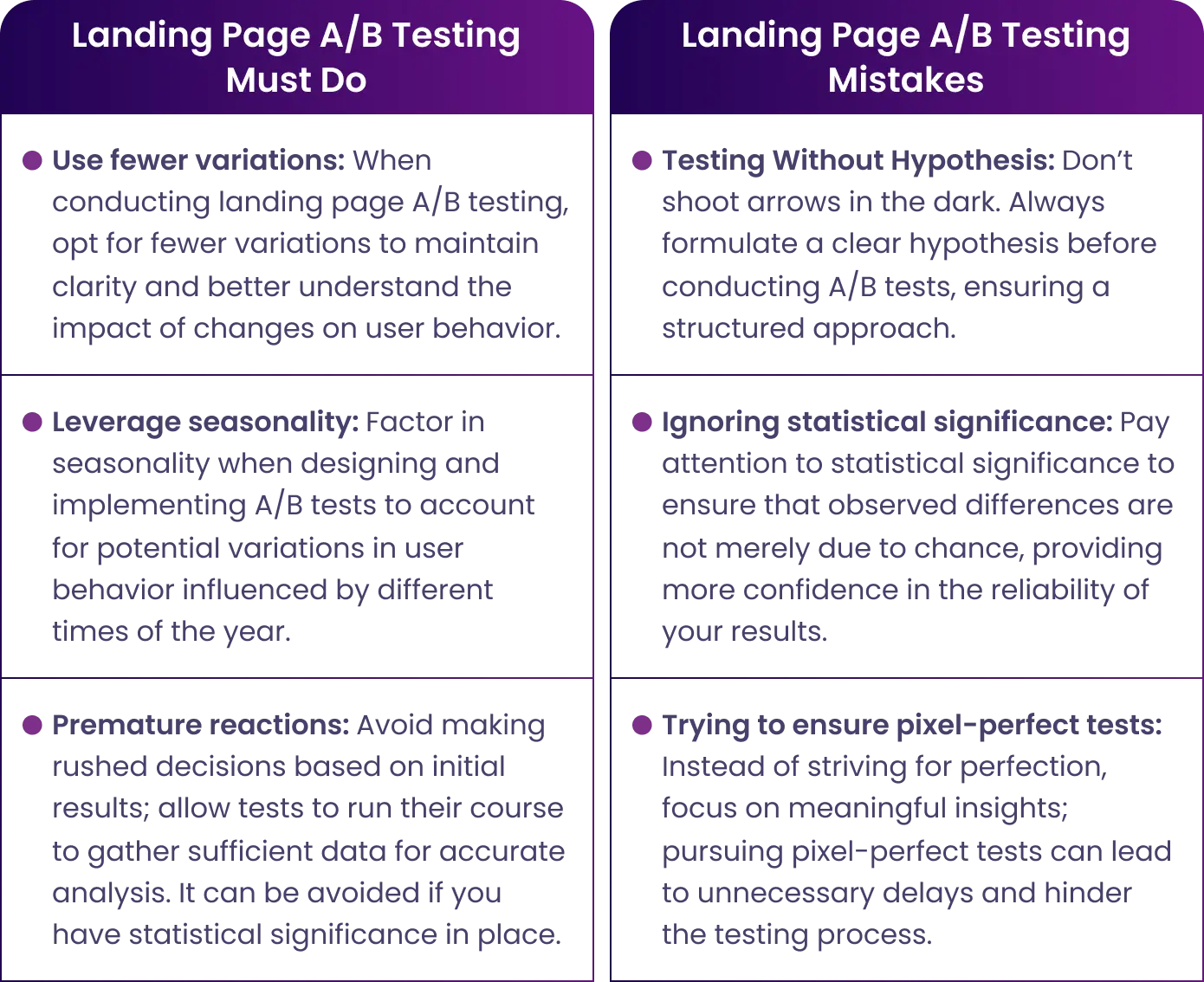
Businesses often encounter common pitfalls and essential elements in landing page A/B testing. Neglecting these factors can result in delayed outcomes and the wastage of testing potential. Let’s discuss the essentials.
Landing page a/b testing KPIs to follow
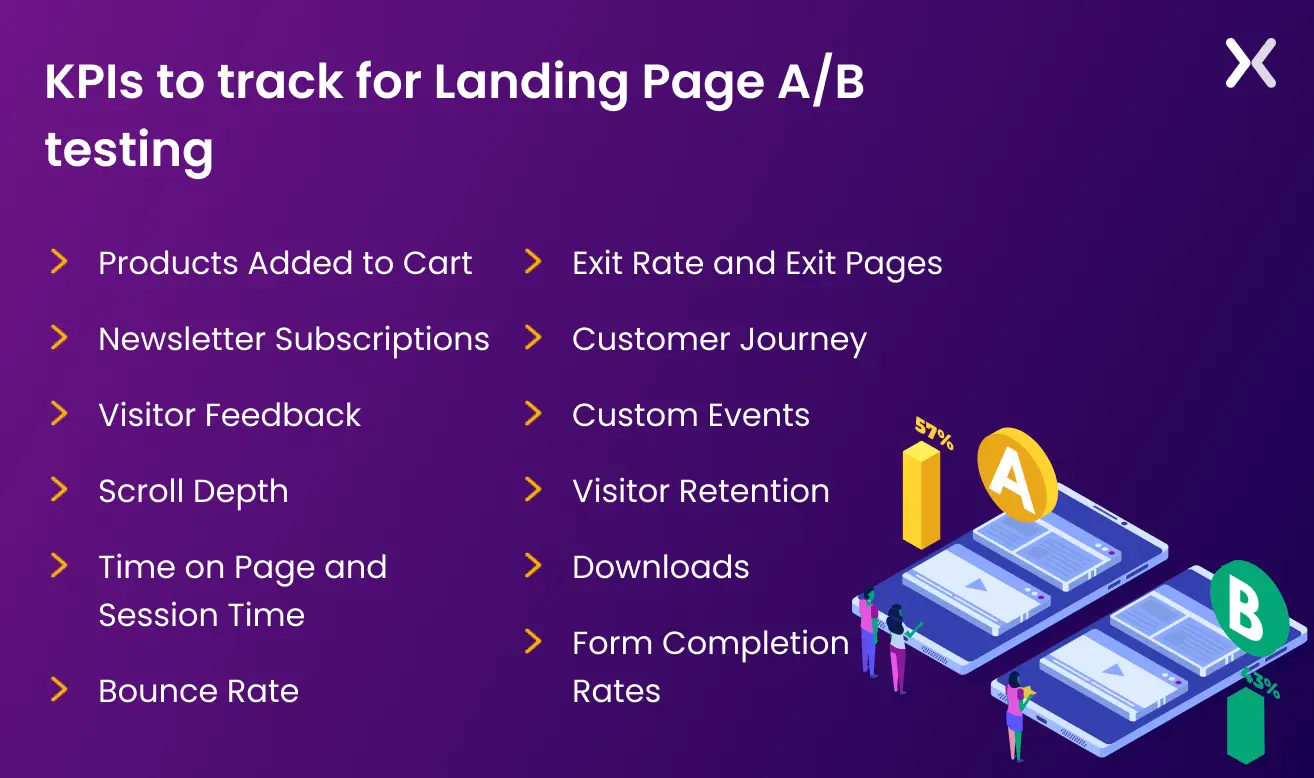
Once you’ve completed the setup of your landing page A/B tests. It’s necessary to conduct a thorough analysis. Refer to the following list of Key Performance Indicators (KPIs) that are essential for a precise understanding of the performance of your landing page variations.
-
Monitor cart additions to analyze both cart abandonment and landing page performance.
-
Evaluate the effectiveness of email marketing campaigns by tracking new subscriptions.
-
Gather direct insights from customers to better understand their experiences on the landing page.
-
Assess whether necessary landing page sections are being viewed by analyzing user scrolling behavior.
-
Gauge user engagement levels by tracking the time spent on the page and overall session duration.
-
Identify potential issues with landing page content, especially at the top fold, by examining the bounce rate.
-
Pinpoint common exit points on the landing page to understand where users commonly leave.
-
Track user paths through the landing page to identify specific drop-off points in their journey.
-
Measure specific user interactions such as button clicks or video plays to assess engagement.
-
Differentiate between new and returning visitors to understand overall audience retention.
-
Track the downloading of resources like ebooks or white papers to measure user interest.
-
Evaluate how many users initiate versus complete forms on the landing page.
When should we do iterative a/b testing for landing pages?
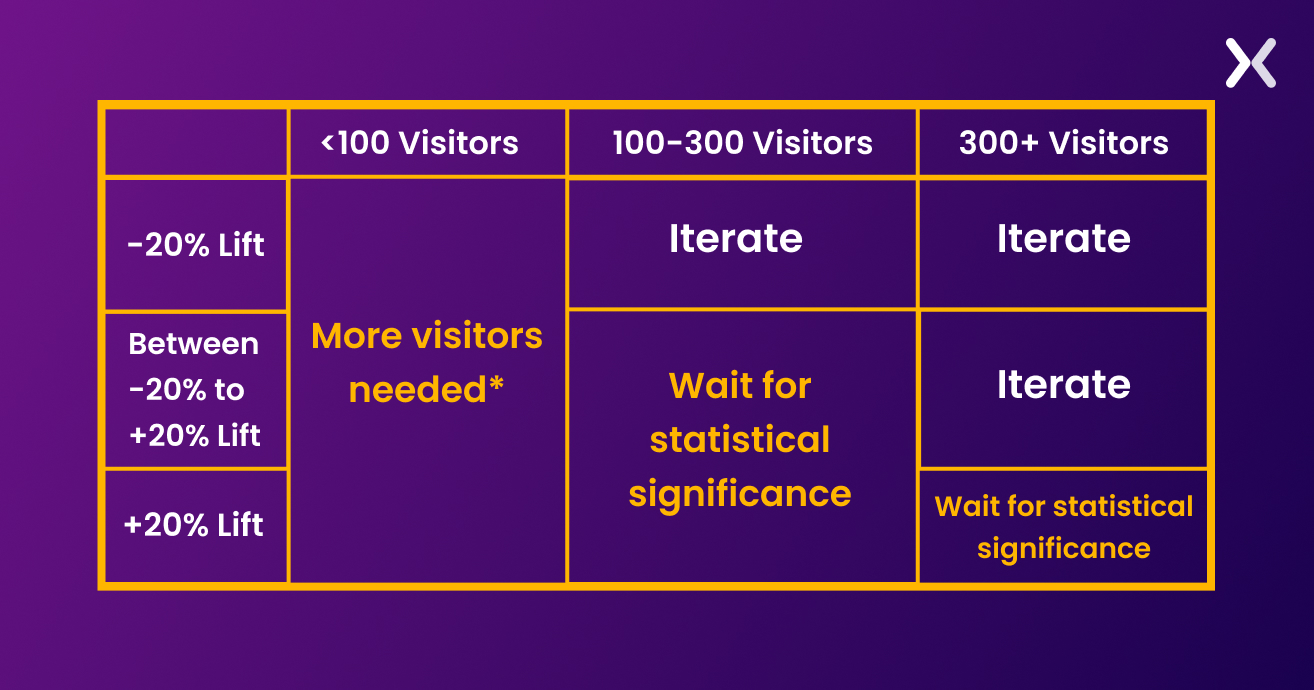
Determining the optimal point to conclude landing page A/B testing can be challenging. To guide you in making this decision, consider the following framework. It can assist you in understanding when it’s appropriate to reassess or refine your variation and when patience might be the better course of action. Created by Mutiny for websites, we believe it is also suitable for landing pages. Here is a better version of the table where the sample size has been kept as small as possible.
What is conversion lift?
Let’s understand what we mean by lift in the table with the help of an example: Let’s say we have two landing pages: Landing Page A and Landing Page B.
-
Landing Page A has a Conversion Rate (CR) of 25.6%.
-
Landing Page B has a Conversion Rate (CR) of 43%. We want to understand the percentage difference between their conversion rates, which is called the LIFT. First, we find the difference between the two conversion rates. Difference = |25.6 - 43| = 17.4 Then, we divide this difference by the initial conversion rate of Landing Page A (25.6). Percentage of increase = 17.4 / 25.6 ≈ 0.6796875 Finally, to express it as a percentage, we multiply by 100.
LIFT ≈ 0.68 * 100 ≈ 67.97% Now, let’s discuss the different scenarios in brief:
1. <100 Visitors
If your landing page has less than 100 visitors. It’s too early to decide anything. If you see a lift of 20%, you still need more visitors. Don’t lose hope with a 20% decrease either, just get more visitors for a better picture.
2. 100-300 Visitors
If your landing page shows a decrease in conversions of 20% or more. It’s necessary to revisit your variation. Analyze what went wrong using tools like heatmaps and GA4. For conversion changes ranging between -20% to +20%, or anything exceeding a 20% lift. It’s advisable to wait until statistical significance is achieved before making any changes.
3. 300+ Visitors
Even if you experience a conversion lift of more than 20%. It’s advisable to wait until statistical significance is reached. However, for changes in conversions ranging from -20% to +20% or anything below a -20% lift. It’s recommended to make iterations.
A/b testing alternatives for Low-Traffic landing pages
Landing Page A/B testing does take a lot of effort, as you’ve already read more than 3000 words about it. So, if you want to take it slow. We have options for you as well.
1. User Research
User research covers diverse methods, including user testing, design surveys, and preference tests. User testing involves hands-on interaction for insights into usability, while surveys collect quantitative data on preferences.
 Design preference tests focus on aesthetics, guiding designers to create visually appealing and user-centric products. This whole-person approach makes sure products match user expectations and improve overall user experience.
User research employs various methods, including heatmaps and session recordings. Heatmaps visually depict user engagement, assisting in optimizing element placement. Session recordings capture real-time interactions, identifying usability issues and improving the user interface. Integrating tools heat mapping tools like Crazy Egg, VWO, Hotjar, etc., improves a business’s ability to refine designs based on observed user behavior.
2. Heuristic Analysis
Heuristic analysis is key in optimizing a landing page design. This method evaluates the design against usability principles and identifies potential issues in navigation, information clarity, and workflow efficiency. By applying basic principles of UX and CRO, designers can improve the user experience, addressing weaknesses and making sure the landing page fits best practices.
3. Improve site load time
Boosting landing page performance focuses on improving site load time. Simplifying elements, optimizing images, and using CDNs create a faster, more efficient user experience, leading to increased engagement and higher conversion rates.
 Swift load times are vital for positive first impressions and overall user satisfaction on landing pages.
Ready to do landing page a/b testing the right way?
A well-executed landing page A/B testing framework is key for optimizing conversions. By understanding the essentials, avoiding common pitfalls, and adopting strategic frameworks. You can refine your pages effectively. Patience is necessary, especially with varying traffic levels. Focus on effective changes, monitor key performance indicators, and consider alternatives like user research. With a strategic approach and continuous testing, you can consistently improve your landing page performance for maximum results.