A good SaaS sales funnel can save you time in the long run. With PPC ads, influencer campaigns, social media ads, and more to pull simultaneously, small but necessary details can get sidelined. No matter which campaign you’re running. You need a dedicated landing page to complete it. Since SaaS products are intangible, landing pages are the place to convince your prospects that your product is the best solution to their problems. Pouring money on paid promotions can only prove beneficial when optimizing clicks for conversions. Landing pages centered around targeted marketing help your SaaS sales funnel secure free trials and demo calls. Well-built landing pages engage prospects through targeted messaging and help brands create an efficient sales funnel. Let’s understand how you can use different types of landing pages at different SaaS funnel stages for higher conversions.
Landing pages for the four stages of a SaaS sales funnel
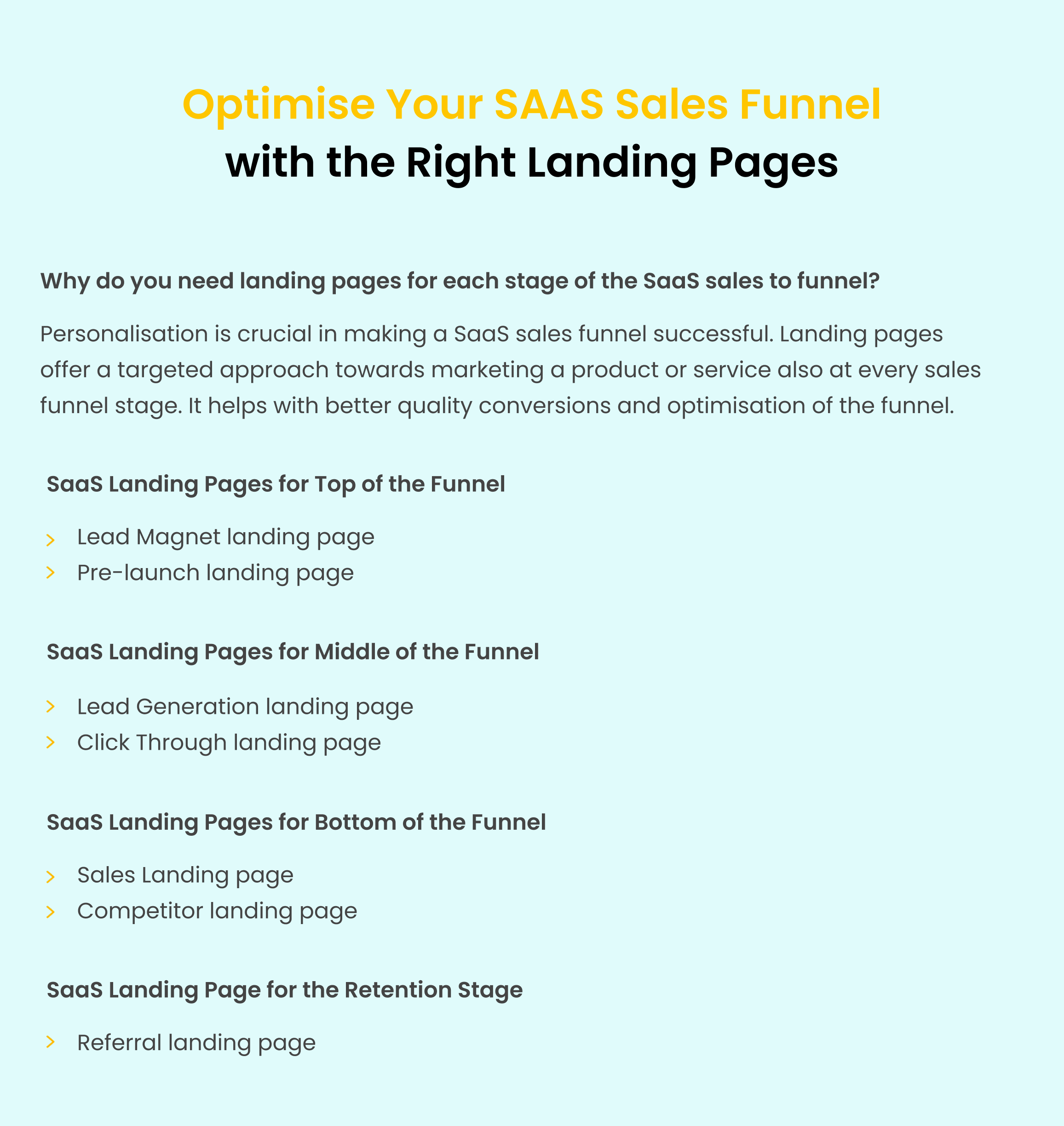
SaaS marketing needs thoughtful designing and execution of campaigns. Creating landing pages for all SaaS sales funnel stages makes this task easier and more cost-effective. They are flexible, and you can customise them to support various marketing campaigns. Here’s how to position different landing pages for your B2B SaaS sales funnel.
1. Top of the SaaS funnel (ToFu): the awareness stage
The ToFu is the first stage of the SaaS sales funnel. It is the broadest and identifies potential customers from the entire market. The goal should not be to make a sale immediately. You should establish brand recognition and help clients become aware of the product and the ongoing support you will provide over time.
Your leads seek information at the awareness stage that solves their queries. They may not even be fully aware of the problem and therefore don’t know the exact remedy to their pain points. The best way is to design a landing page that clarifies the problem first. You can do this in two ways:
Lead magnet landing page:
A lead magnet landing page offers a helpful resource in exchange for the user’s contact details. The free offering or lead magnet can be a product trial, a webinar, or any offer the visitor might find helpful and makes them confident enough to share their contact information. A SaaS lead magnet landing page will help you turn interested visitors into leads you can nurture into loyal clients via the sales funnel. To convert more visitors, include the following components in your SaaS lead magnet landing page:
-
a strong lead magnet
-
a clear CTA
-
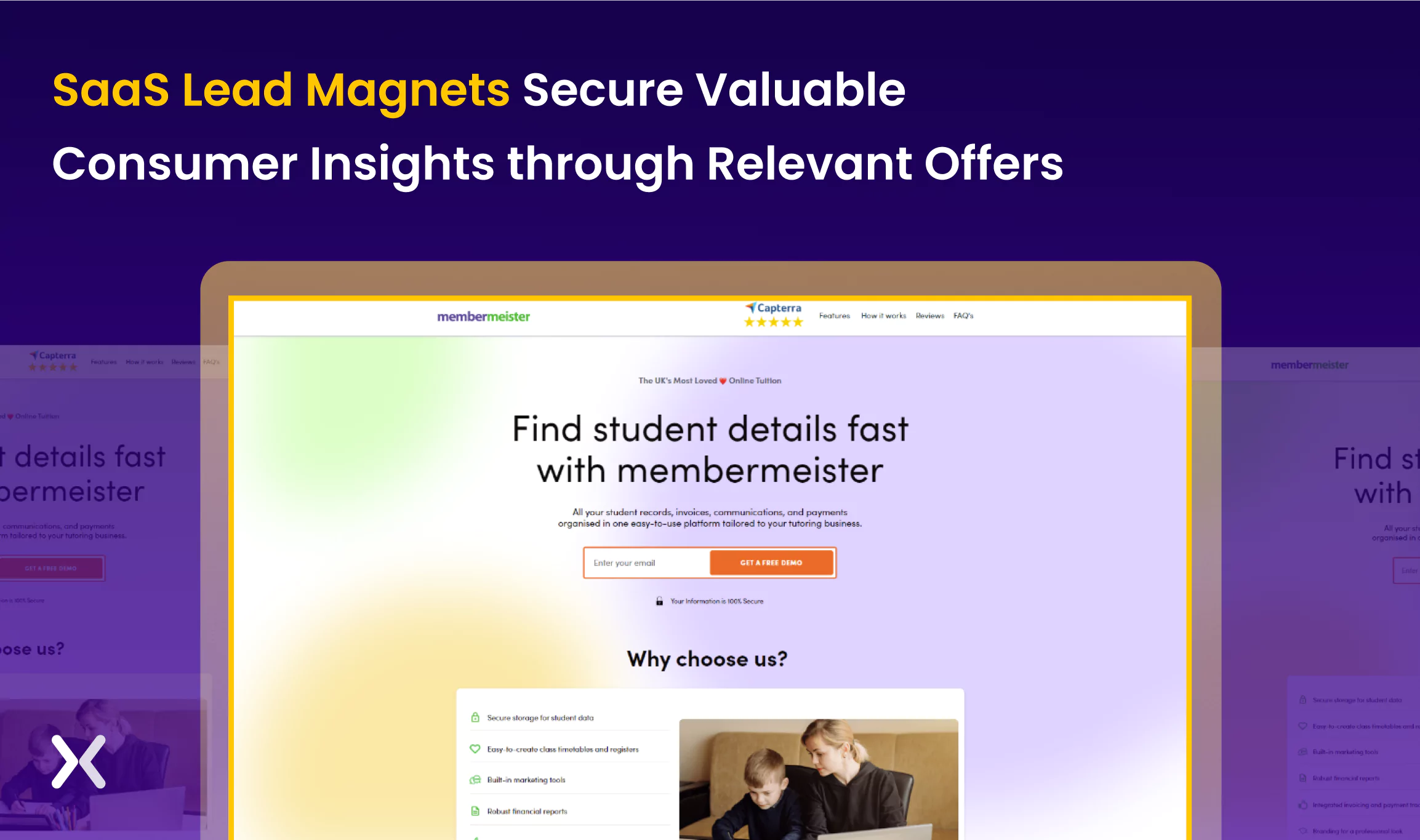
a simplified form to capture contact information. For instance, Membermeister involves the detail of their offering (the lead magnet), what it does, and how it helps the audience, along with CTA at the top of the page.
Pre-launch landing page:
Before you release a SaaS product, you can design a pre-launch landing page to spark interest and gather emails from potential buyers. A pre-launch landing page will help you generate interest and excitement about the product. You can also identify potential buyers to target later through concise forms and attractive CTAs.
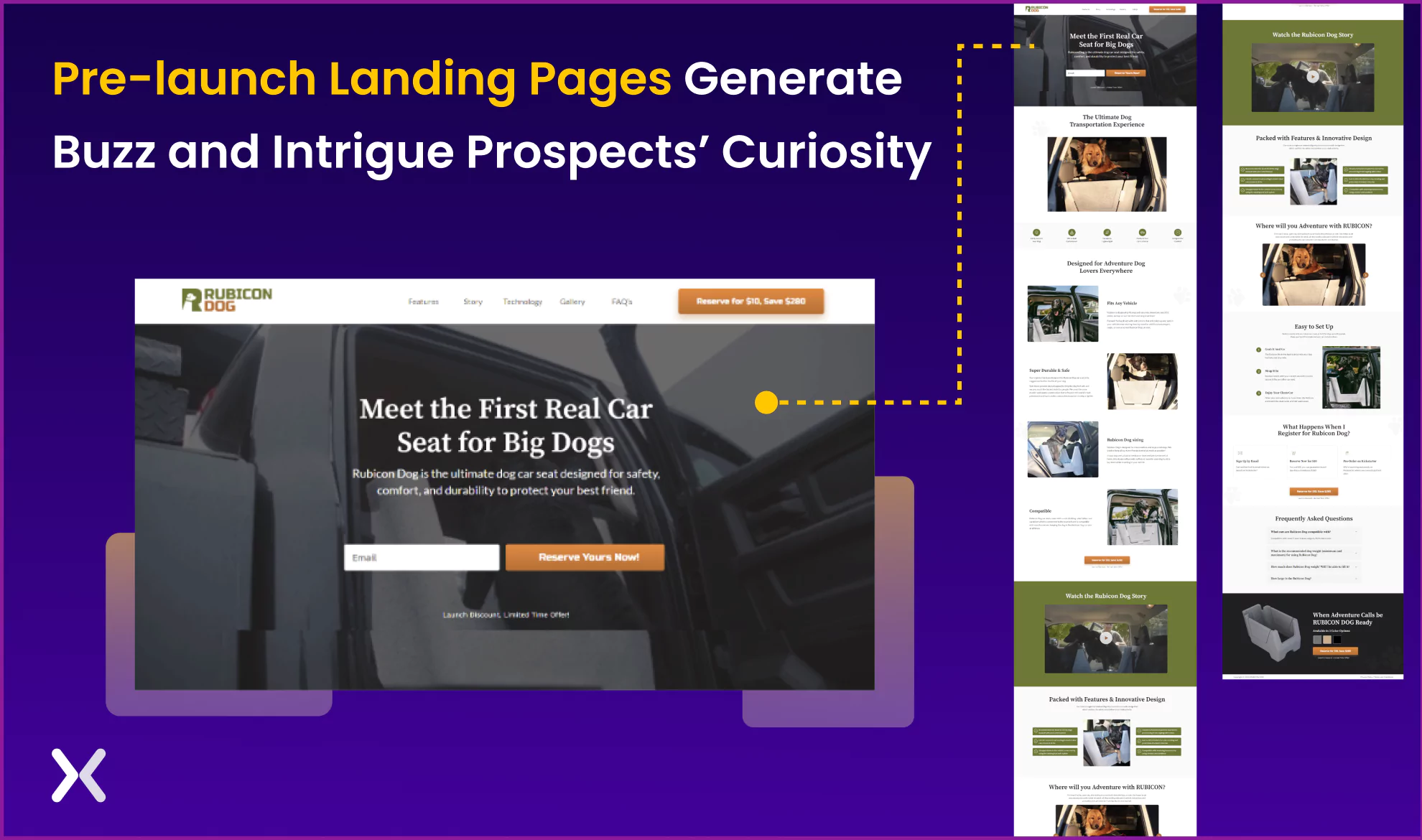
You must improve the effectiveness of pre-launch landing pages. For that, you need to communicate the value proposition of the SaaS product, including what it does and how it will benefit the customer. For example, Rubicon Dog landing page shown below includes all the details of their upcoming product and conveys its arrival through a clear and crisp form headline.
Suggested Read: Using a Pre-Launch Landing Page To Market Your Upcoming Products
2. Landing pages for the middle of the SaaS funnel (MoFu)
The landing pages for this stage of the B2B SaaS Sales Funnel concentrate on checking out leads found in the first stage. You can identify answers for critical avenues like:
-
Do they have an interest in your SaaS offerings?
-
Do they have the money and power to decide to buy your product? The goal is to drop unqualified leads since they waste time for marketers and sales teams. Qualified leads, on the other hand, help you boost win rates. A well-designed landing page forms can help brands learn more about their potential customers and gain critical insights about them. Here are two types of MoFu landing pages.
Lead generation landing page:
A landing page for SaaS lead generation aims at gathering leads for a SaaS product by offering free trials or demos. They capture complex details about leads to help you better understand their expectations and create effective user journeys. A well-designed SaaS lead generation landing page involves numerous features like
-
SaaS USP
-
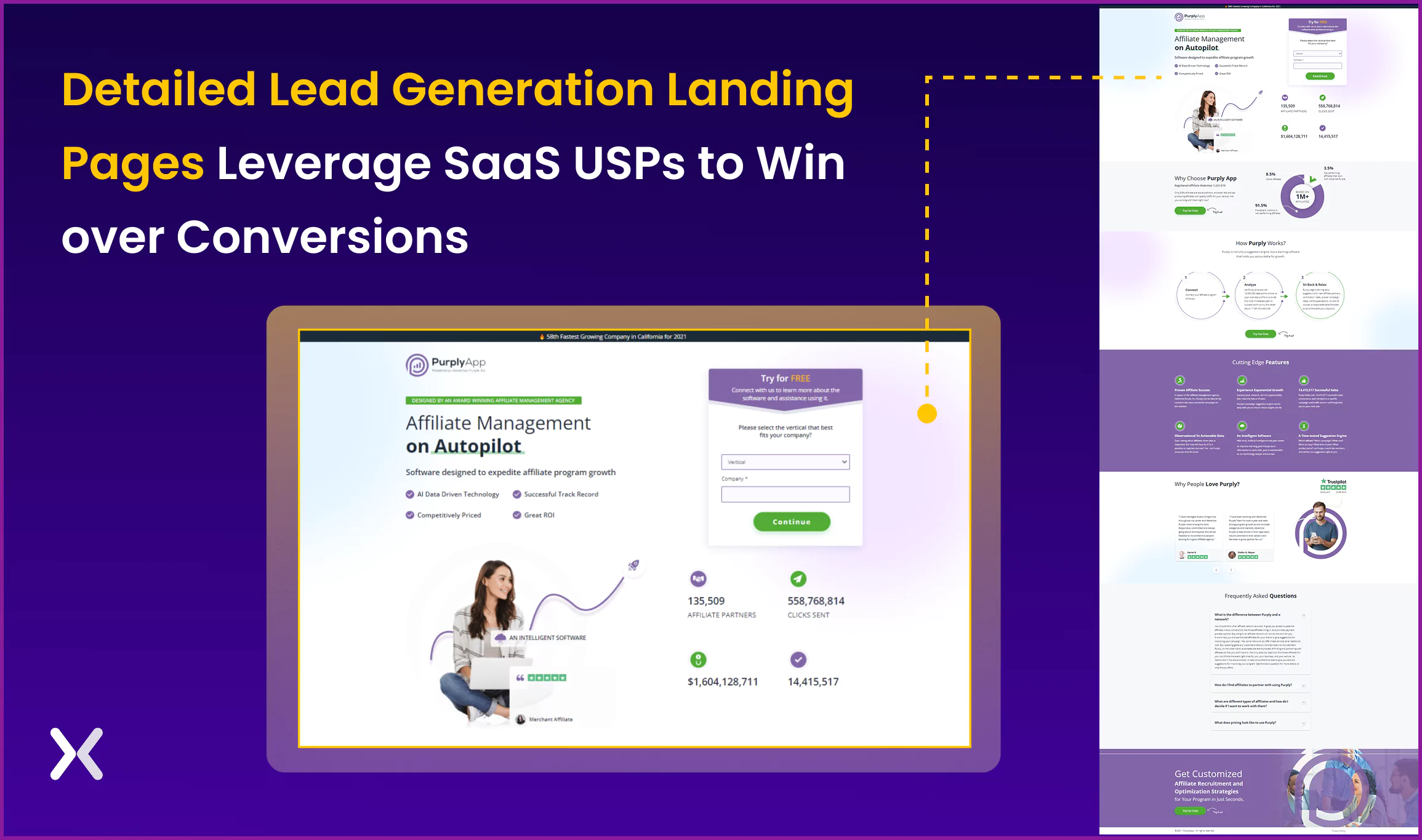
Long forms to collect visitor info and qualify high potential customers Purply is a great example. It includes a detailed contact form, USP, and exclusive features of their product marking worthy achievements at the top of the upper fold.
Click-through landing pages:
A click-through landing page is built to direct visitors to a specific location, which can be a sales or service page. You can use this type of landing page as a part of a marketing campaign for your SaaS sales funnel, as it helps you direct targeted traffic to service sites. To do this, your page’s design must
-
be relevant
-
focus on the niche audience
-
have an explicit and persistent CTA
-
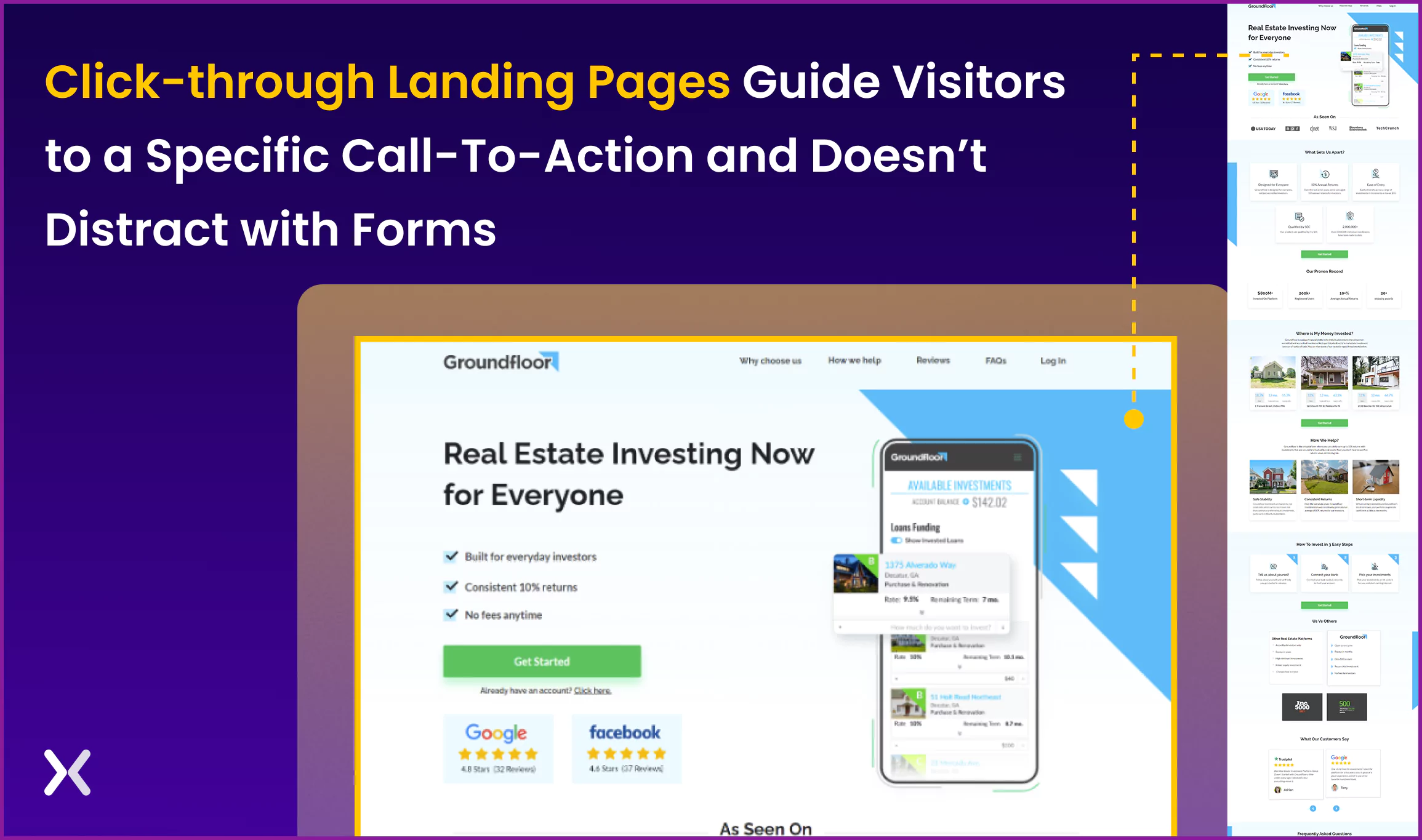
elements encouraging visitors to take the desired action. Groundfloor is a good example. It clearly states that it’s a real-estate tech firm, has features and conditions, and has a simple CTA.
3. Landing pages for the bottom of the SaaS funnel (BoFu)
It’s necessary to keep in mind that, in the BoFu stage of the SaaS sales funnel, closing signifies the start of a relationship. It’s not the end. Your sales team must aim to construct a deal that inspires leads into:
-
buying the initial services
-
requesting contract extensions repeatedly.
At this point, the best way to handle leads is to go all-out. Use your landing pages as platforms for sharing your USPs. Below are the landing pages you can use at this funnel stage:
Sales landing page:
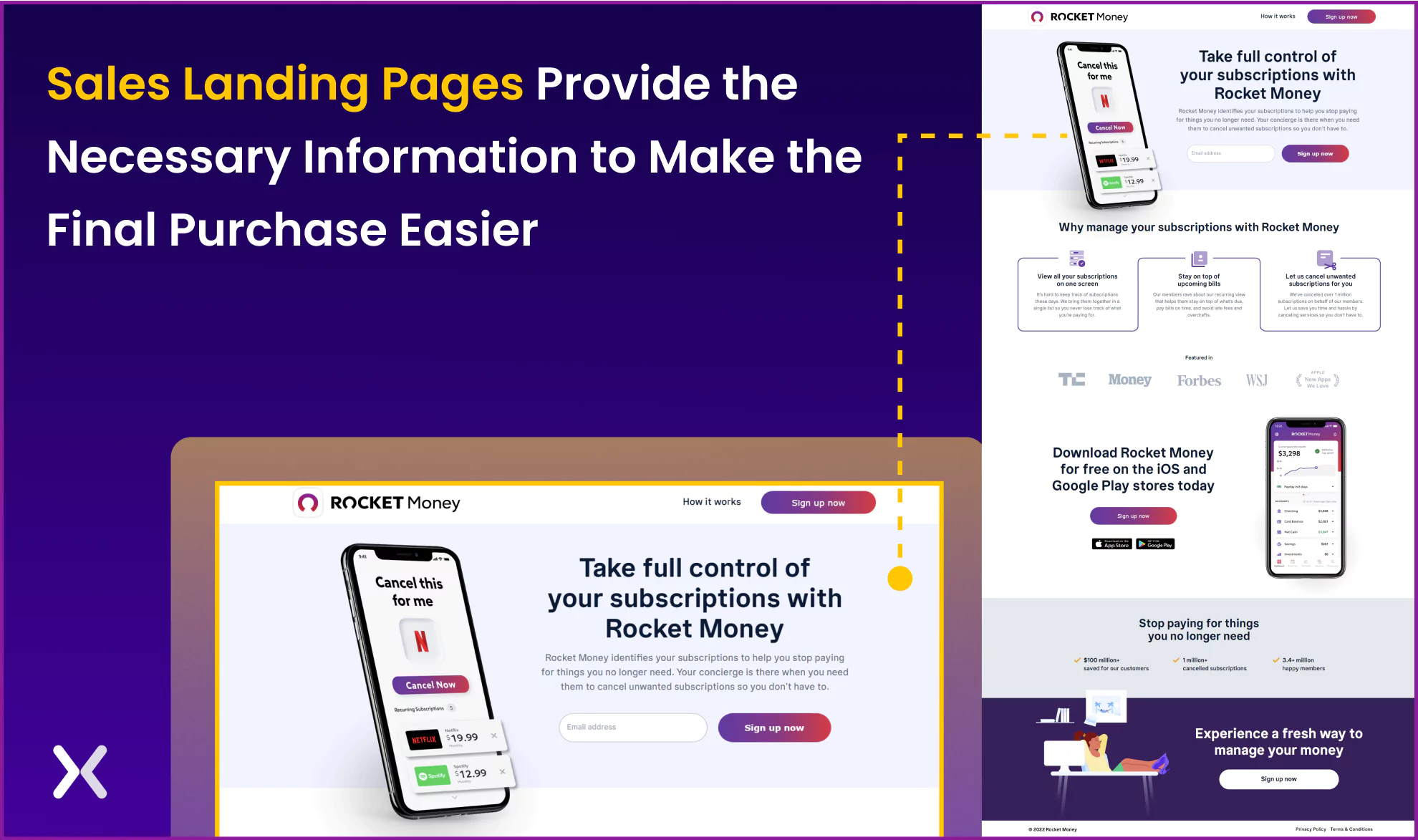
This type of sales landing page helps turn leads into customers. It aids in the following advertising a particular feature or product and enticing users to subscribe to a paid service with a clear pricing section.
a sales landing page at this SaaS sales funnel stage aims to persuade the visitor to buy products. The landing page should include the following:
-
easy-to-digest quantifiable testimonials
-
a straightforward form that encourages conversion. Rocket Money, for instance, includes a direct and crisp message to describe the product and directly asks to sign up for a free trial.
Payment landing page:
A payment landing page makes sure that leads ready to turn into paying customers have no problem doing so. Such landing pages are simple with many payment options and to-the-point design. Nothing fancy or unnecessary images are present on such pages. This makes them easy to build. If a lead is having issues with the payment, there should be prompt communication with the help center on the payment landing page in the form of a chat or click-to-call button.
Competitor landing page
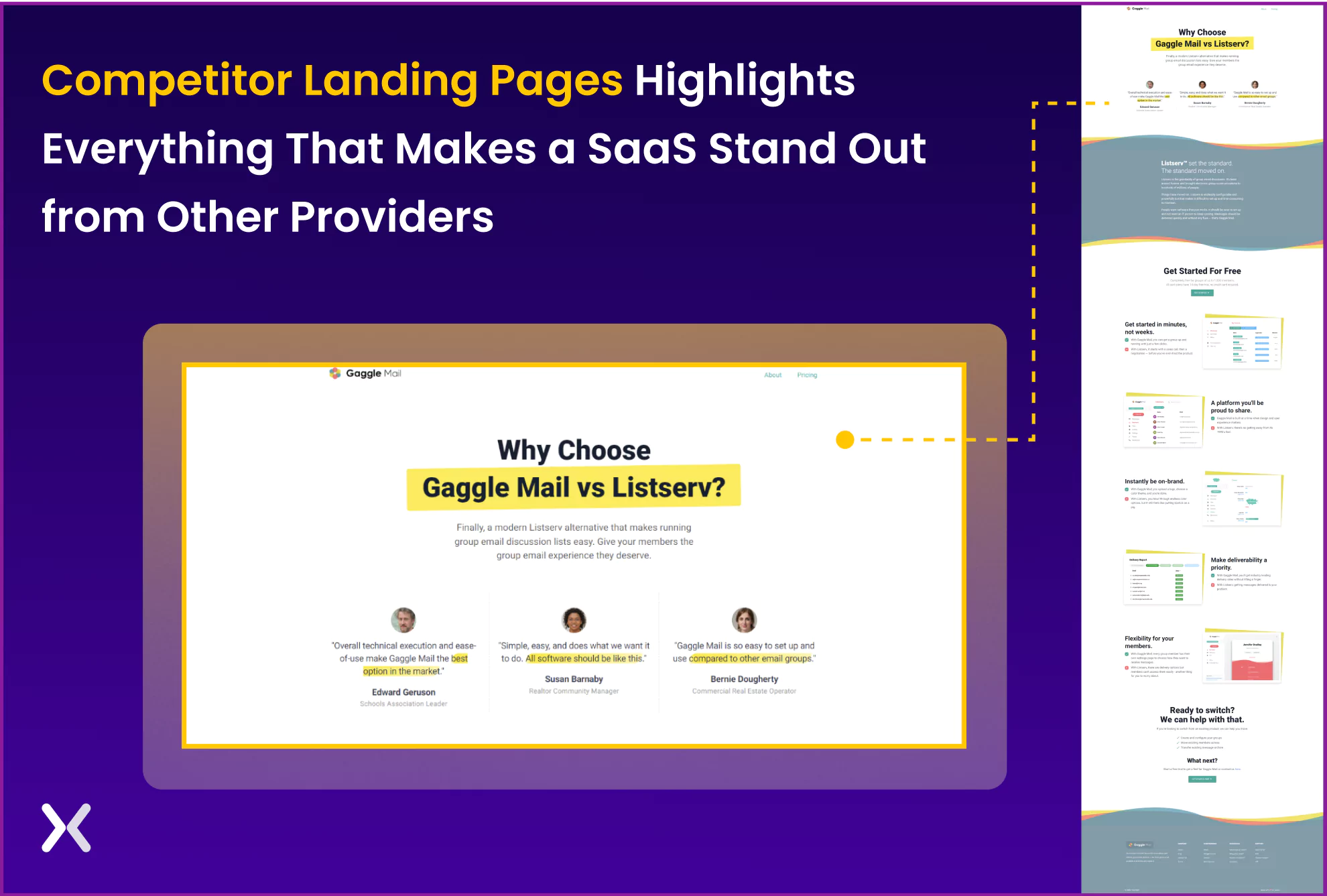
A competitor landing page helps target B2B SaaS sales funnel customers, comparing your products with your rival. It helps convince the visitor to pick your offerings over your competitors.
Make sure that you:
-
answer any potential objections
-
use social proof
-
make it simple for visitors to take action Gaggle Mail, for example, shows a direct comparison of its offering with that of Listserv. It clearly states the differentiation and then shows testimonials below.
4. Retention stage of the SaaS funnel
Now, coming to the last stage of the B2B SaaS sales funnel. Retention is all about giving smooth and exemplary experiences to your customers. If it’s good, they’ll stick with you. If not, they won’t have trouble switching to your rival because there are many choices. Consider building a referral landing page to boost retention rates and profit from positive feedback.
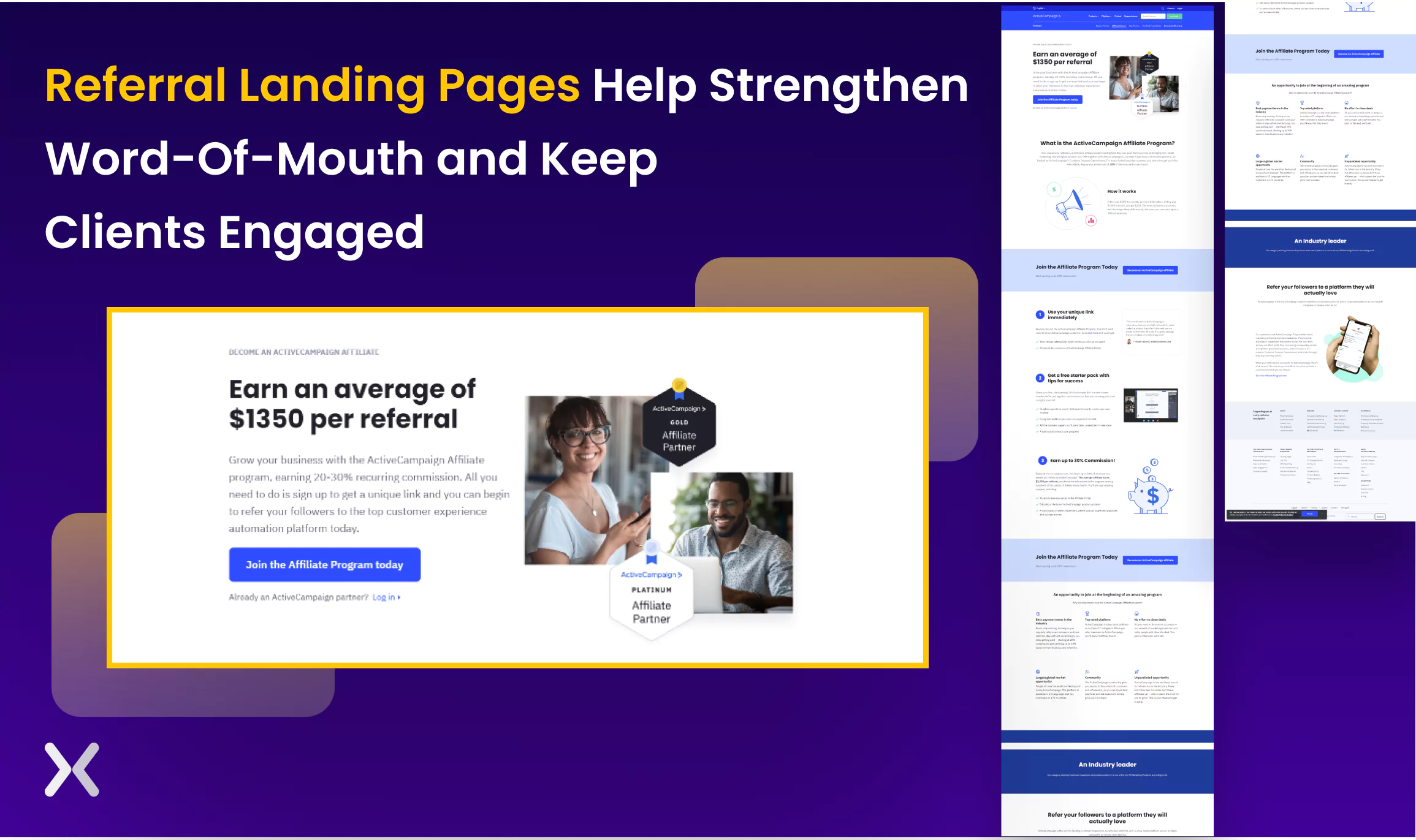
Referral Landing Page: Do you know what every brand wants the most? To be recommended by customers. Customer loyalty is a potent weapon against rivals and a necessary resource for corporate expansion. Positive reviews and references from happy customers can be a powerful tool for a SaaS company. It not just helps attract new customers but also increases brand awareness. Basically, a referral page is a specific landing page to advertise the advantages of your referral programme. It helps boost conversions, providing you with more new customers through word-of-mouth. Here are the two things your referral page must have:
-
Explain rewards in simple words
-
Make registering easy Most notably. It should function as a single source of truth. A referral page is like a product page. The only exception is that the product is your referral program. Active Campaign is one of the companies with the best referral page. It mentions the referral amount, the benefits of referral, CTAs, and the categorisations of referrals.
 Remember to end all your SaaS sales funnels with a good thank you page that is consistent with the tone of your landing page and brand.
Make your B2B SaaS sales funnel better with landing pages
Landing pages are an essential part of a great SaaS sales funnel. It gives prospective buyers targeted and pertinent information at all SaaS sales funnel stages. Landing pages will also aid you:
-
Increase brand recognition
-
provide leads
-
cultivate potential clients
-
turn site visitors into paying clients
You can also boost conversions and support the development of a loyal client base. All you have to do is analyse the requirements of potential customers at all SaaS sales funnel stages and serve them through the right landing pages. Want to learn more about building the right landing page for your SaaS company? Or could you increase sales for each level of your SaaS sales funnel? Apexure is here to assist you. Reach out to us today to book a consultation.
Related Article: