Websites aren’t just for human visitors anymore. AI agents are soon going to become a part of your traffic. With OpenAI’s assistants, AI shopping agents, and autonomous browsing, it is time to make sure your websites are accessible to both humans and AI. After extensive research on the internet and our own observations, we can confirm that SEO best practices remain largely unchanged. But some tactics have suddenly become more necessary than ever before, for example, schema. It is essential to understand these nuances before you start optimizing or building your website for AI agents. So, here’s an article that focuses on discussing the top five things you must have to make your AI agent friendly websites.
But, what are AI agents?
Now, there is a lot of chatter about AI. From tools, models, to bots, and assistants, there are different types of AIs in the market. To be able to focus on only AI agents, first, you need to understand what exactly they are and how they are different from other AI types. Let’s start:
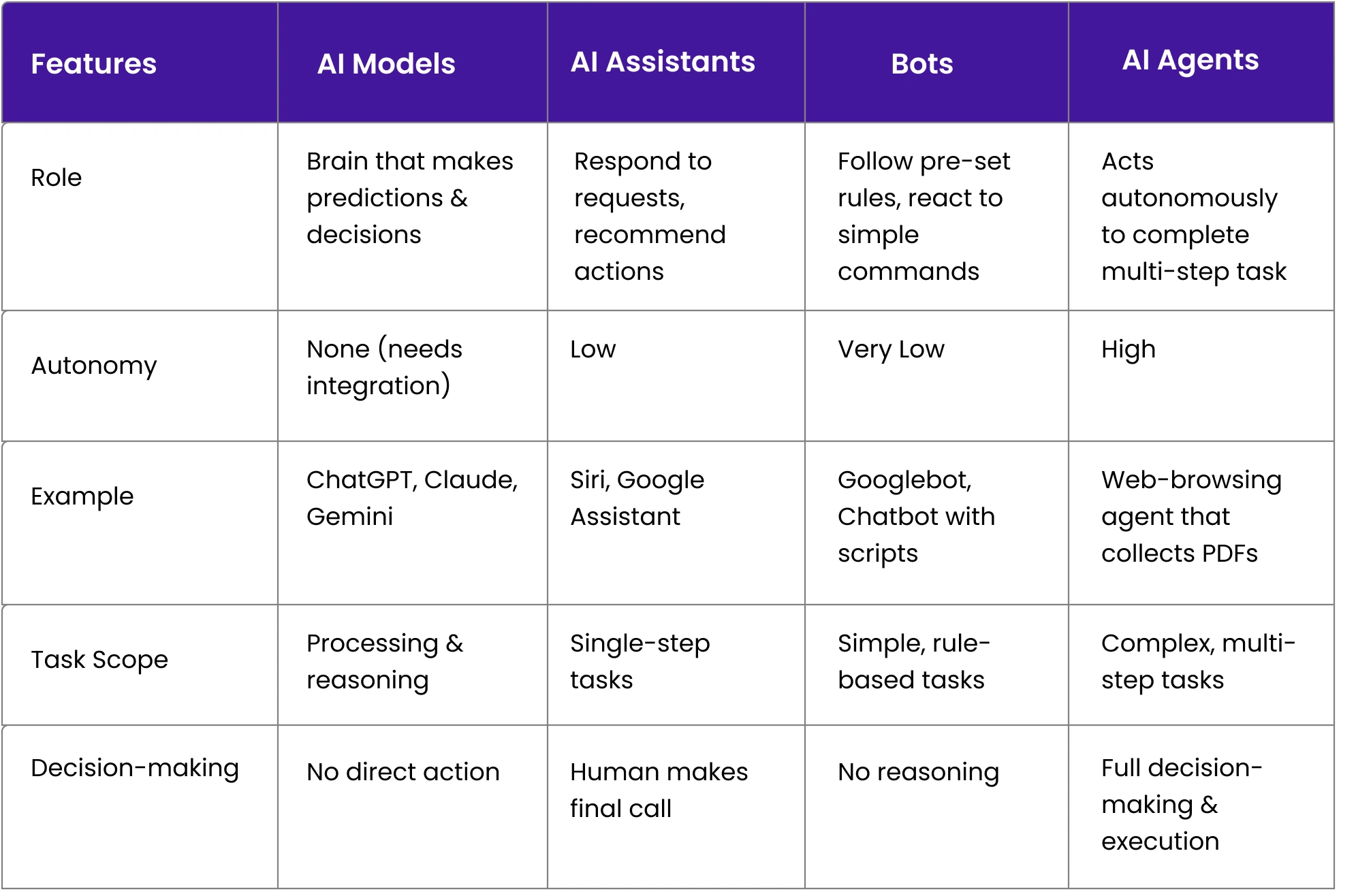
1. AI Models
Think of AI models as the brain of your AI agent. For example, you can use ChatGPT, Claude, and Gemini to build AI agents. The job of an AI model is to make predictions and decisions, while the AI agent acts on these decisions.
2. AI Assistants
Think of voice assistants on your phone; they respond to requests and recommend actions, but you’re usually making the final decision. AI assistants are designed for single-step tasks, whereas an AI agent is used to execute a sequence of tasks without human intervention.
3. Bots
These are the least autonomous because they follow pre-set rules and react to simple commands, going far beyond this by reasoning, planning, and adapting. You do already have AI bots visiting your website in the form of web crawlers. They are used by search engines to understand the quality of your content based on pre-defined guidelines. For example, Google’s web crawlers are known as Googlebots, and they are responsible for indexing and ranking your website.
4. AI Agents
AI agents are like your faster virtual assistants. They have their own mouse, keyboard, and decision-making capabilities to get your work done. For example, you need a list of all the PDFs currently available as lead magnets for Beginner SEO. AI agents can not just search the relevant sites but also move through pages, fill out the form, and get the PDFs for you.
Top 5 ways to make AI agent friendly websites
AI agents are getting integrated into the web and changing how users interact with websites, landing pages, and social media. It becomes necessary to make sure that your website is easily accessible by AI agents. Here are five practical ways to prepare your site for AI interactions.
1. Semantic HTML
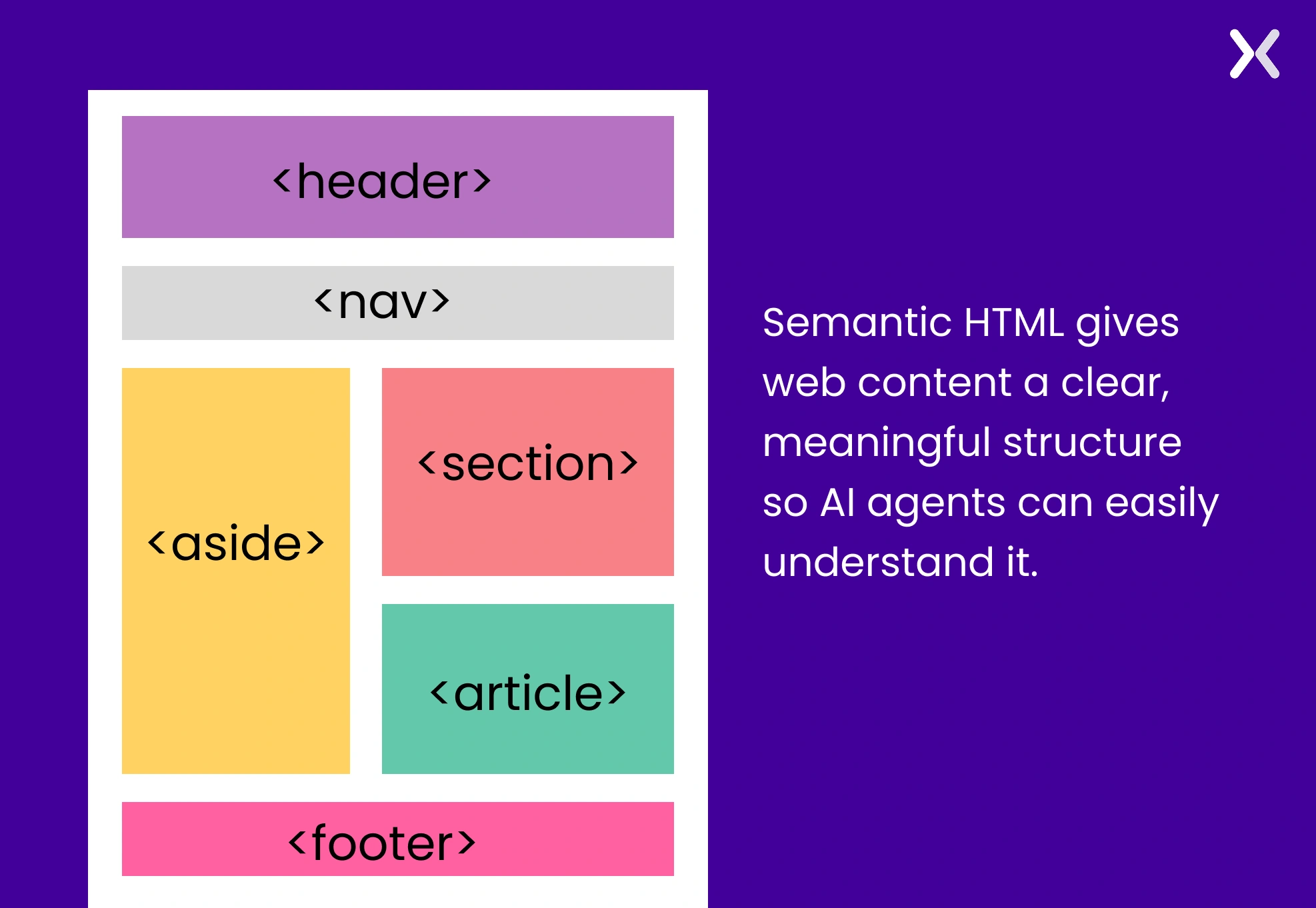
It is easier for AI agents to “read” your website when it is structured properly. Well-defined header tags are a must, as they make your blog post more readable. But while website visitors might see just the surface of the blog post, AI agents explore the backend as well. In this case, using Semantic HTML helps clearly indicate what each part of your site means, and not just how it looks.
What is semantic HTML?
Think of it like labeling boxes in storage. Instead of using blank boxes (<div> or , which don’t say much). You use boxes with clear labels like:
-
- the top part of your page (usually with logo and nav) -
- the main content area
Making buttons and forms understandable
Often, we leave buttons and forms without much context on the website. This can be an issue with AI agents, as it can become hard for them to find the right form to fill out or button to press. It is essential to make sure that when an AI agent lands on your website, say to book a call. They get directly signaled about which CTA button will lead them to Calendly. Now, such labeling can be approached in two ways.
First Priority: Use Clear Button Text Always try to write button labels that clearly state the action. Good examples:
-
Book a free consultation
-
Download full report
-
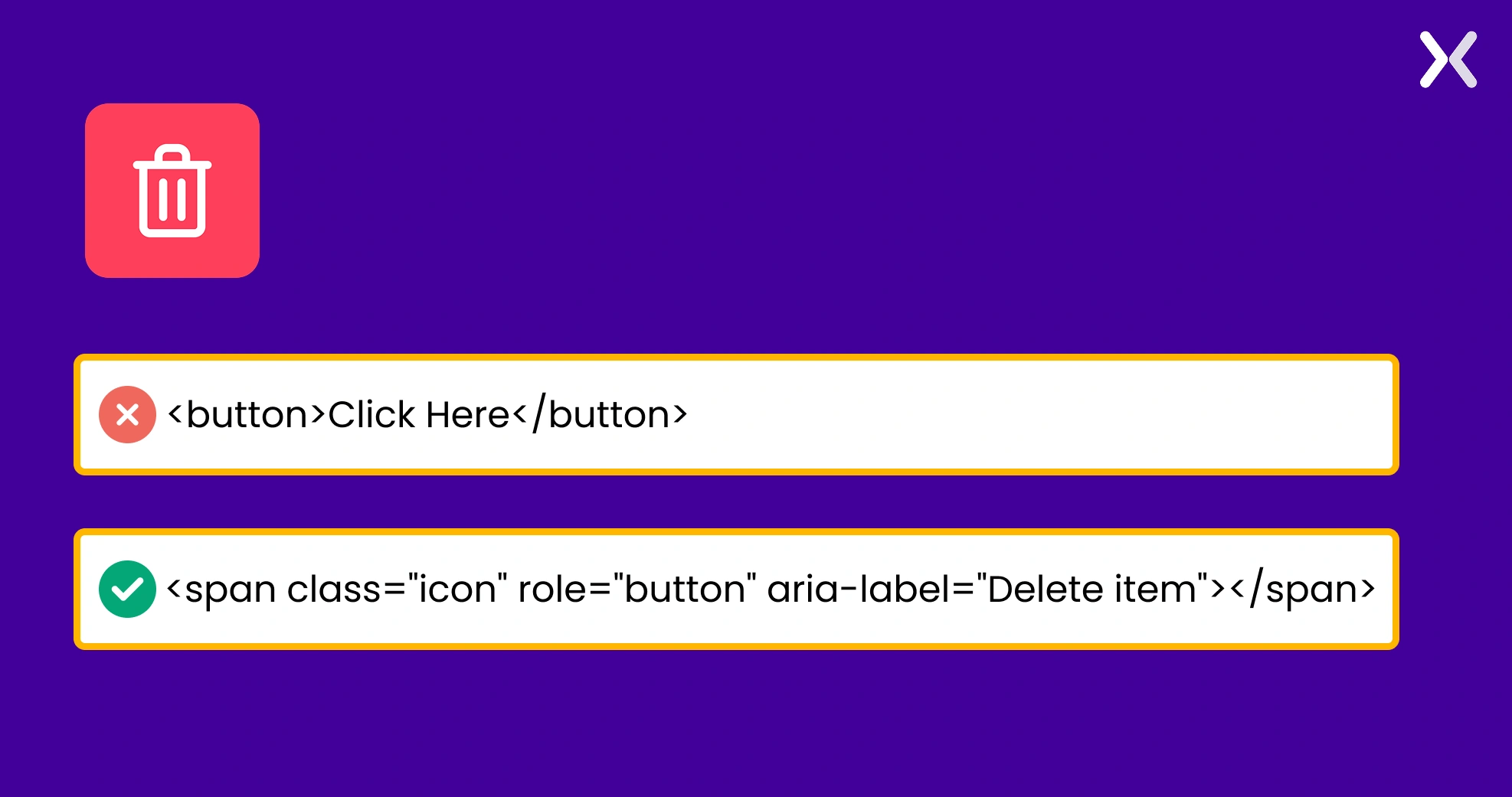
Subscribe to the newsletter These tell the user and AI agents exactly what will happen when clicked. Sometimes, websites use clickable icons, on which you might not be able to use descriptive CTA button text. In such cases, we use ARIA attributes that provide context to AI agents without ruining your website aesthetics.
What is ARIA?
ARIA stands for Accessible Rich Internet Applications. These are invisible “hints” that tell machines what a part of your site is meant to do.
Example:
2. Schema
If you have been optimizing your website, you might have already heard of schema. It is an old SEO technique that has made a comeback, all thanks to AI agents. Schema markup is like a “hidden label” you can add to various pages of your website so that it becomes easier for search engines, and now AI agents, to understand what your content is all about. For example, if you already indicate a certain page is a blog post with the help of schema. It becomes easier for search engines and AI agents to understand what type of content to expect from the page.
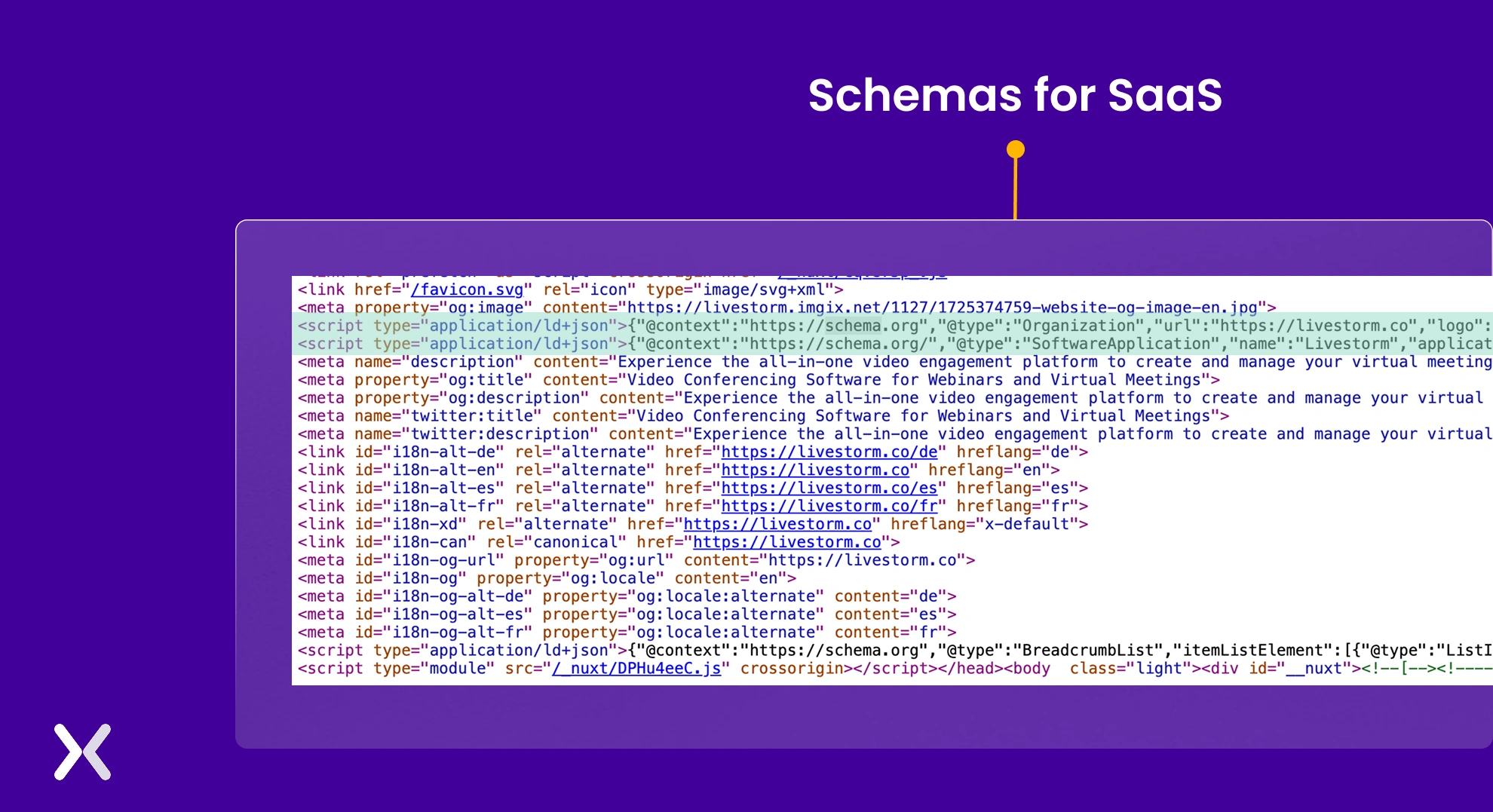 It uses a standard vocabulary from Schema.org, which Google, Bing, ChatGPT-style AI agents, and other tools recognize.
So, while all the blog visitors might see is the meta title and meta description of a page on SERP, search engines and AI agents see more with the help of proper Schema.
It uses a standard vocabulary from Schema.org, which Google, Bing, ChatGPT-style AI agents, and other tools recognize.
So, while all the blog visitors might see is the meta title and meta description of a page on SERP, search engines and AI agents see more with the help of proper Schema.
Key schema types to consider:
Depending on your business, here are some common schema types you might want to use:
-
Labels your videos with titles, thumbnails, durations, transcripts, and more.
-
Adds metadata to necessary images, helping AI tools understand what the image shows and why it matters.
-
Perfect for webinars, launches, or workshops. Helps AI extract dates, times, locations, and registration links.
-
For SaaS tools, use this to describe pricing tiers, product features, and software categories.
-
A subtype of Product, ideal for SaaS companies to accent features, platforms supported, and reviews.
-
Helps Google and AI agents pull your answers directly into search results and summaries.
For better visibility of your research
Let’s say you publish an annual SaaS benchmarks report. Instead of just writing: “Companies that adopted automation saw a 28% increase in team efficiency.” You also add:
-
A download link to the full dataset (Download full dataset - CSV)
-
Schema markup for Dataset and SoftwareApplication
-
Metadata like publication date, licensing, and categories Now, AI tools can:
-
Understand that the report is a credible source
-
Reference specific data points
-
Recommend your content when users ask things like:
-
“What’s the average efficiency gain from using SaaS tools?”
Tip: To check whether a page has schema, go to Rich Results Test by Google. Here you can find all the schemas present on a web page.
3. APIs
Application Programming Interface (API) makes it easier for other software to interact with your website. APIs act like the front desk of your company, but only for AI agents. Whenever an AI agent lands on your website, the API determines its request, retrieves the right information from the website’s backend, and delivers it in a structured format and in less time.
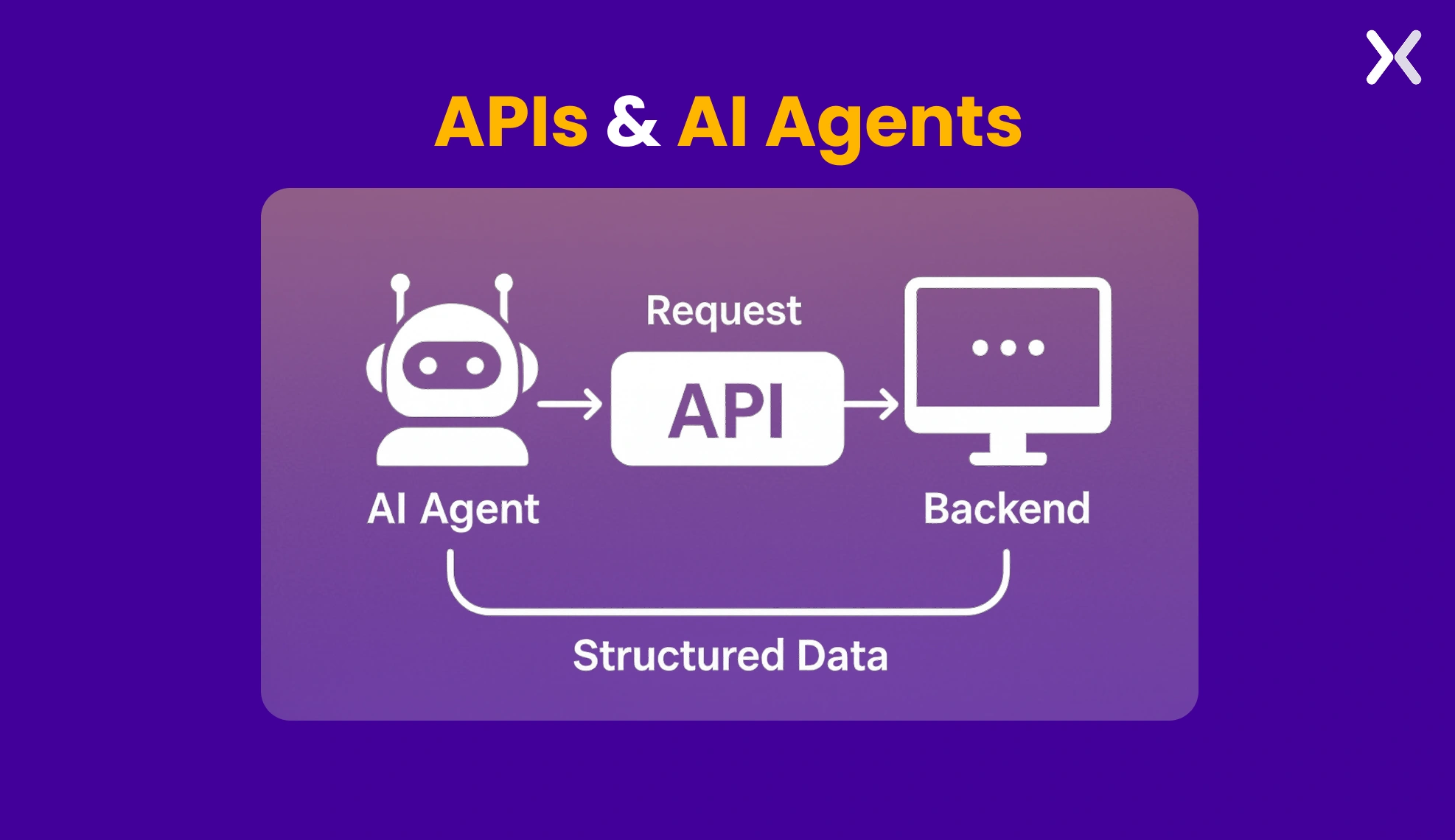 So, instead of scraping your website for the correct data, API makes the job of AI agents much easier and faster.
Why APIs matter for AI agents?
AI agents don’t “see” your website the way people do. They don’t browse with eyes; they look for structured data to make decisions. Without APIs, they might have to:
-
Scrape your site
-
Interpret inconsistent layouts
-
Guess at what your data means With APIs. You’re giving AI agents a direct line to your most useful content, product info, service details, availability, reports, blog posts, etc. It’s faster, more accurate, and more useful, and more likely to result in your content being referenced by AI-powered tools.
Example:
If you provide an API that shares your feature list, pricing tiers, or integrations, an AI agent like ChatGPT could respond to a user asking:
“What SaaS tools integrate with Notion and support Kanban workflows?” And if your API exposes that info clearly, your tool could be part of the answer, without the user even visiting your homepage.
What do you need to do?
Ask your web or product team:
-
Do we have public APIs?
-
Do they expose useful content, like pricing, features, or resources, in a structured way?
-
Are they documented so that other tools (and AI agents) know how to use them? What to aim for:
-
JSON format: This is the standard data format AI tools prefer.
-
Documentation: A clear guide explaining what data is available and how to request it.
-
Stability: APIs shouldn’t change without notice. Versioning helps keep things stable.
-
Security: Your dev team should manage who can access what and how.
4. Website Updates
An inconsistent website layout can lead to confusion regarding necessary data. If key information related to your brand gets hidden behind layers of interactions. It might result in misinterpretation or your brand’s name being left out on relevant GPT queries. Your site should feel predictable and easy to explore, whether the visitor is a human or an AI agent. Here are some ways in which you can make sure necessary data doesn’t hide behind loads of information.
-
Use Descriptive URLs
Cryptic URLs with numbers and special characters make it look like spam and create distrust among visitors and AI agents. We advise only include your targeted keyword in the URL.
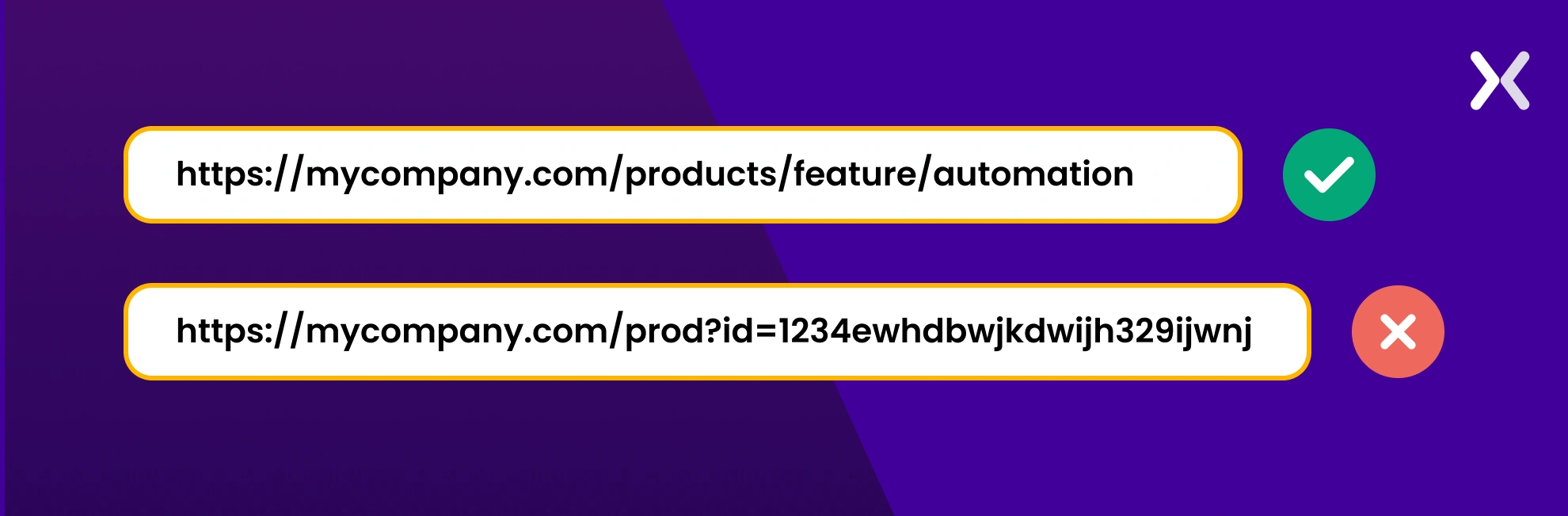 This improves both SEO and how AI agents move through your content.
-
Maintain an Up-to-Date XML Sitemap
Your sitemap is a file that lists all the important pages on your site. If you are adding new service pages to your website, you must make sure that they are present on your sitemap. It helps AI agents and search engines to qucikly discover essential pages on your site. Make sure your team:
-
Keeps it updated when new pages are added
-
Submits it to tools like Google Search Console
-
Includes important pages like blogs, pricing, and feature lists
-
Avoid Frequent Layout Overhauls
Changing the website structure too often forces AI tools to go through your website again and again. It can result in incorrect content or being dropped off the GPT results altogether. To avoid such cases, it is necessary to avoid major design overhauls without keeping your core website structure stable. If you do make changes, make sure metadata and key sections remain recognization.
-
Don’t Hide Content Behind JavaScript or Clicks
A common mistake on modern websites is hiding important content behind clicks, tabs, or JavaScript. While this might look clean to users, it often blocks AI agents from seeing key information, like pricing, product features, or service descriptions. If an AI tool can’t access this content right away in the page’s code. It may miss it entirely.
Keep it simple: Make sure critical info is visible in the initial HTML. Don’t force AI agents to click around just to find out what you offer.
6. Simple Language
AI agents consider your content to answer queries when it is written in plain and unambiguous language. It becomes easier to answer user questions, move through your site, and summarize a page’s content when simpler language is used to communicate complex content.
Example: Instead of putting this on your event landing page: “Event Details: Date: March 15, Time: 6 PM, Location: Main Hall” Use: “Join us on March 15 at 6 PM in the Main Hall for the event.” The second version is clearer, more readablte, and easier for visitors and AI agents to understand, which means your information is more likely to show up in search results and GPTs.
Why is an AI agent friendly website important?
As people become more accustomed to AI agents, it won’t be long when be it queries, bookings, etc., are being done by AI agents on your website. Hence, it becomes necessary to build or optimize websites to be AI-friendly. Here’s why it matters across different industries.
-
SaaS Platforms:
The prime use of AI agents is to automate repetitive workflows. It is possible when the AI agents can smoothly interact with your SaaS tool. For example, a command like “generate a monthly sales report on Hubspot and share it with the team” can only be executed when your tool has well-documented APIs, structured data, and smart UX patterns that AI agents can easily interpret without human intervention.
-
Travel & Hospitality:
From end-to-end trips, searching for flights, building an itinerary, booking hotels, and scheduling all activities, AI agents are capable of executing everything. Your websites need to be prepared with standardized pricing info and agenct accessible booking endpoints. Real Estate & Property Platforms:
-
Real Estate & Property Platforms:
Agents might scout listings for users, filter homes based on preferences, or even schedule viewings. This requires consistent listing metadata and accessible calendars.
Build your first AI agent friendly website
AI agents are already here, moving through the web and making decisions for users. It is time to optimize your website not just for search engines, GPTs, but also for smooth workflows with AI agents. If your website has solid SEO foundations, you should plan towards integrating APIs, structured data, and a clear website layout to make sure AI agents can retrieve the right information easily from your website. If SEO isn’t your website’s strong point, it is time you made it one. Focus on the basics: clean structure, fast performance, and EEAT principles, then build from there using the strategies we’ve covered in this post. And then go one step further, optimizing your website for AI agents. Be it web crawlers, bots, or AI agents, your website should be ready for all.
Related Articles: