Landing pages have emerged as indispensable marketing tools employed by businesses of all scales to capture valuable visitor information and convert it into potential leads. As such, adhering to the rules laid out by the General Data Protection Regulation (GDPR) becomes essential. Whether companies use landing pages for email marketing campaigns or to attract leads through paid advertisements, making sure landing page compliance is a responsibility marketers must pay attention to.
 As the business environment rapidly embraces virtual models, the demand for heightened data protection has become essential. In this context, GDPR, a key standard for business owners, offers a foundation to construct landing pages prioritizing transparent information transfer. By using GDPR principles, professionals can raise their marketing to an advanced level.
Every business is entrusted with making sure landing page compliance with GDPR. However, the language of the rules can be complicated and full of jargon. Through this article, we want to make it easier for you to understand the essential aspects of GDPR when it comes to landing page compliance.
Let’s get started.
As the business environment rapidly embraces virtual models, the demand for heightened data protection has become essential. In this context, GDPR, a key standard for business owners, offers a foundation to construct landing pages prioritizing transparent information transfer. By using GDPR principles, professionals can raise their marketing to an advanced level.
Every business is entrusted with making sure landing page compliance with GDPR. However, the language of the rules can be complicated and full of jargon. Through this article, we want to make it easier for you to understand the essential aspects of GDPR when it comes to landing page compliance.
Let’s get started.
Understanding landing page compliance
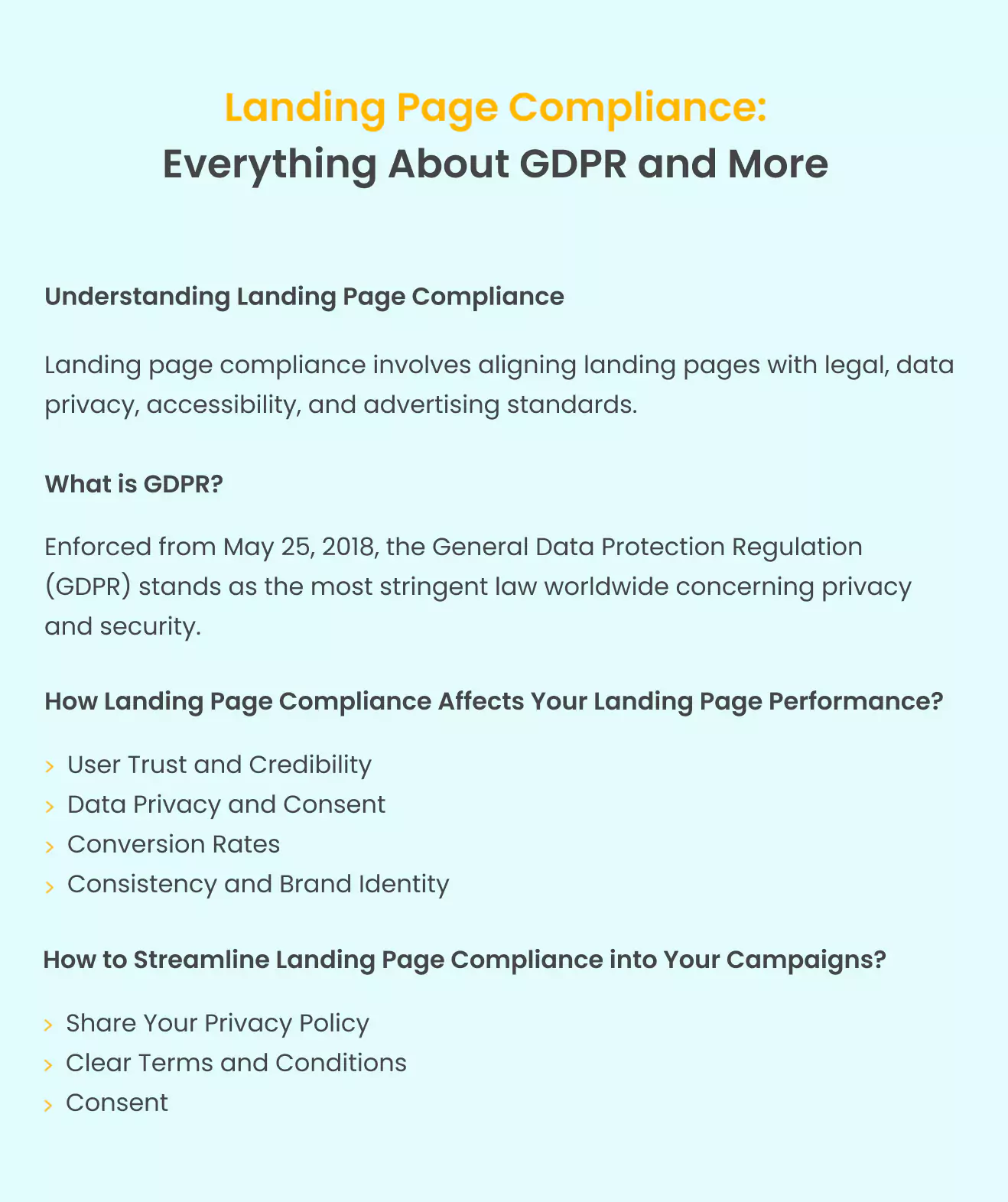
Landing page compliance involves aligning landing pages with legal, data privacy, accessibility, and advertising standards. It pushes for transparent information, respects user rights, and maintains credibility. Non-compliance can result in legal issues, reputational damage, and wasted marketing efforts. Compliance requires integrating necessary legal disclaimers, securing user data in line with data protection laws, and following advertising guidelines set by platforms. Accessibility considerations make sure inclusivity for all users. Upholding compliance safeguards a brand’s reputation, builds trust with users, and maximizes the effectiveness of marketing endeavors within ethical and legal boundaries.
What is GDPR?
Enforced from May 25, 2018, the General Data Protection Regulation (GDPR) is the most stringent law worldwide concerning privacy and security. While originating from the European Union (EU), this regulation places responsibilities on entities globally as long as their activities involve data collection from or targeting individuals within the EU. The GDPR enforces substantial fines on those who breach its privacy and security protocols, with penalties extending into the tens of millions of euros.
 GDPR was introduced to help EU citizens with complete control over the processing of their personal data. This expansive notion of “personal information” covers a range of identifiers, including names, addresses, locations, online identifiers, health details, income, cultural identities, and more.
How landing page compliance affects your landing page performance?
Landing page compliance is necessary in determining your landing page’s overall performance and effectiveness. While compliance might seem like a legal or technical concern, its impact goes far beyond that, it directly influences user experience, credibility, conversion rates, and even your brand’s reputation. Below. We have explained how it affects various parts of your landing page marketing strategy:
user trust and credibility
Landing pages that adhere to compliance standards exude professionalism and reliability. When visitors encounter transparent information, proper data handling practices, and clear consent mechanisms. They are more likely to trust your brand. Trust is a fundamental element in converting visitors into leads or customers.
data privacy and consent
Compliance with data protection regulations like GDPR assures users that their personal information is treated with respect and care. Explaining data usage, obtaining explicit consent, and providing easy opt-out options improve users’ comfort with sharing their data, ultimately leading to higher conversion rates.
Conversion Rates
Well-designed landing pages compliant with advertising guidelines tend to have higher conversion rates. Compliance makes sure that your messages are clear, truthful, and matched the visitor’s expectations, thus minimizing confusion or distrust that can hinder conversions.
consistency and brand identity
Compliant landing pages that follow your brand’s values and visual identity point toward consistent branding. Visitors should feel a smooth transition from your ads or marketing campaigns to your landing page, building familiarity and trust.
Gdpr influence on Google Analytics
The influence of GDPR on Google Analytics is significant, as the GDPR has far-reaching implications for how businesses collect, process, and manage user data, including data gathered through tools like Google Analytics.
-
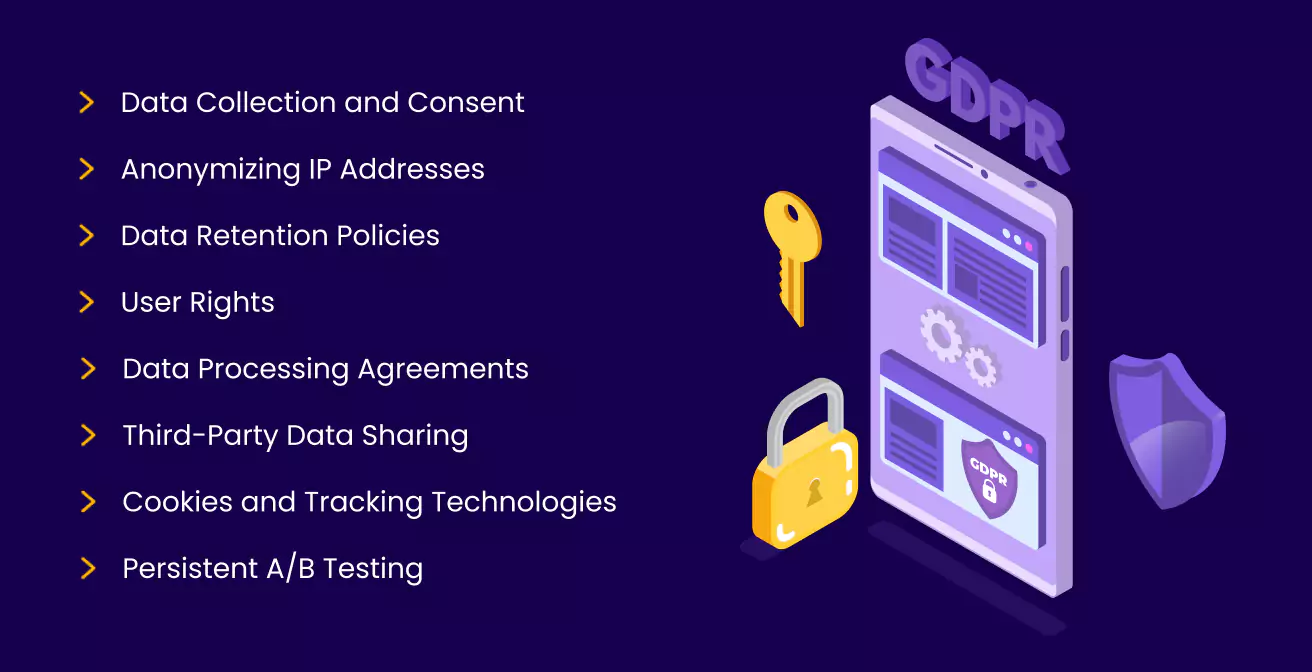
Data Collection and Consent Under GDPR, businesses must obtain explicit and informed consent from users before collecting and processing their personal data, including online identifiers like IP addresses. It impacts Google Analytics, as the tool collects user data to provide insights into landing page traffic and user behavior. Landing pages must now inform users about the data collected by Google Analytics and seek their consent to track their activities.
-
Anonymizing IP Addresses GDPR encourages anonymizing IP addresses before sending data to Google Analytics. Anonymization helps in protecting user privacy by masking the complete IP address, reducing the risk of identifying individual users.
-
Data Retention Policies Google Analytics data retention policies should be matched GDPR requirements. Businesses need to specify how long user data will be stored and explain the retention period clearly.
-
User Rights GDPR grants users rights over their data, including the right to access, rectify, and erase it. Google Analytics users need to be aware of these rights and have mechanisms in place to respond to user requests related to their data.
-
Data Processing Agreements If you’re using Google Analytics, you must sign a Data Processing Agreement (DPA) with Google. This agreement outlines the responsibilities of both parties in making sure GDPR compliance when processing user data.
-
Third-Party Data Sharing If your Google Analytics account shares data with third-party services. You should make sure that these services also comply with GDPR. Any data sharing should be transparent, and user consent should be obtained if necessary.
-
Cookies and Tracking Technologies GDPR stresses informed consent for using cookies and similar tracking technologies. Landing pages using Google Analytics need to educate users about the types of cookies used for their purpose and provide an option for users to accept or decline their use.
-
Cross-Border Data Transfers If data collected by Google Analytics is transferred outside the EU, businesses need to make sure that appropriate safeguards are in place, such as using Google’s EU-US Privacy Shield certification.
How to simplify landing page compliance into your campaigns?
Simplifying landing page compliance into your campaigns involves integrating legal and regulatory considerations smoothly into your marketing strategies. By weaving compliance into the fabric of your campaigns, you make sure that your landing pages effectively convert leads and adhere to data protection, privacy, and advertising regulations. Here’s a step-by-step guide to achieving this balance:
1. Share your privacy policy
Certainly, discussing privacy policies is necessary when it comes to landing page compliance. A privacy policy is a foundational document that outlines how your business collects, uses, stores, and protects user data. When users interact with your landing pages. They’re entrusting you with their personal information, and a well-crafted privacy policy helps build trust by demonstrating your commitment to their privacy and data security. Keep two things in mind while sharing your landing page privacy policy:
-
Accessibility
When integrating compliance into your campaigns. It’s necessary to make your privacy policy easily accessible. It could involve including a link to the privacy policy on your landing page near any data collection forms or opt-in checkboxes. It demonstrates that you value user privacy and want them to know how their data will be handled.
-
Transparency
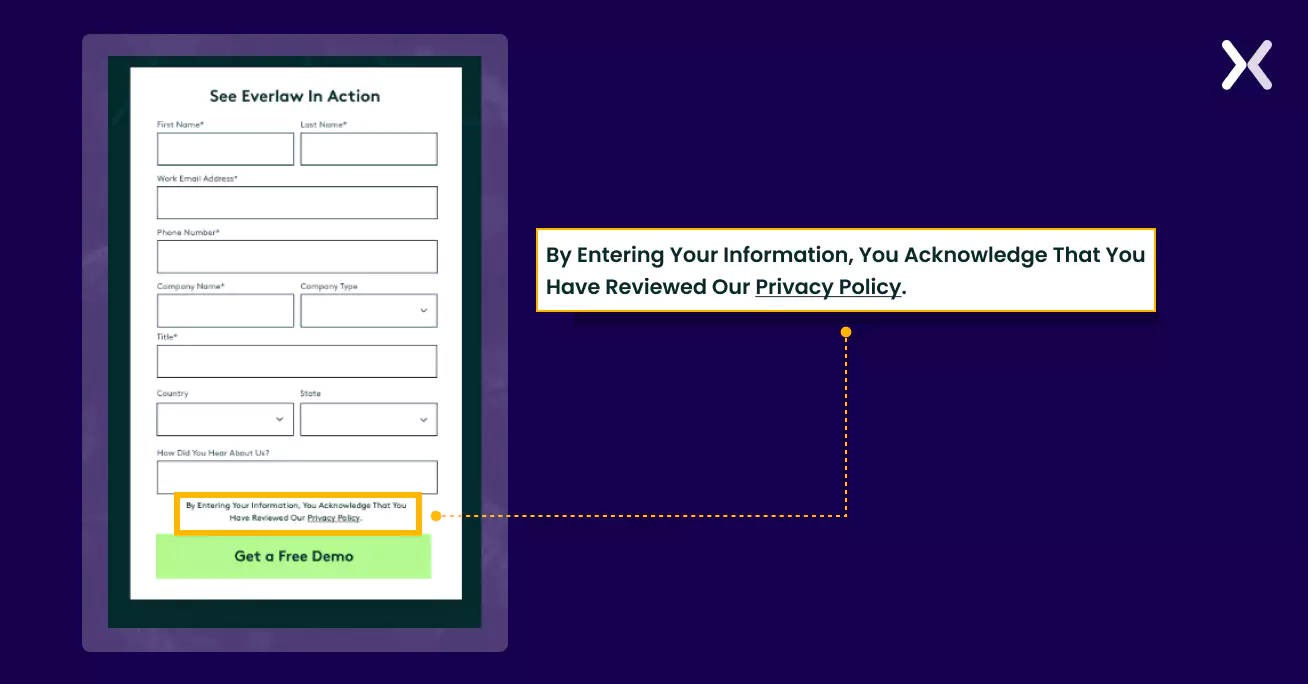
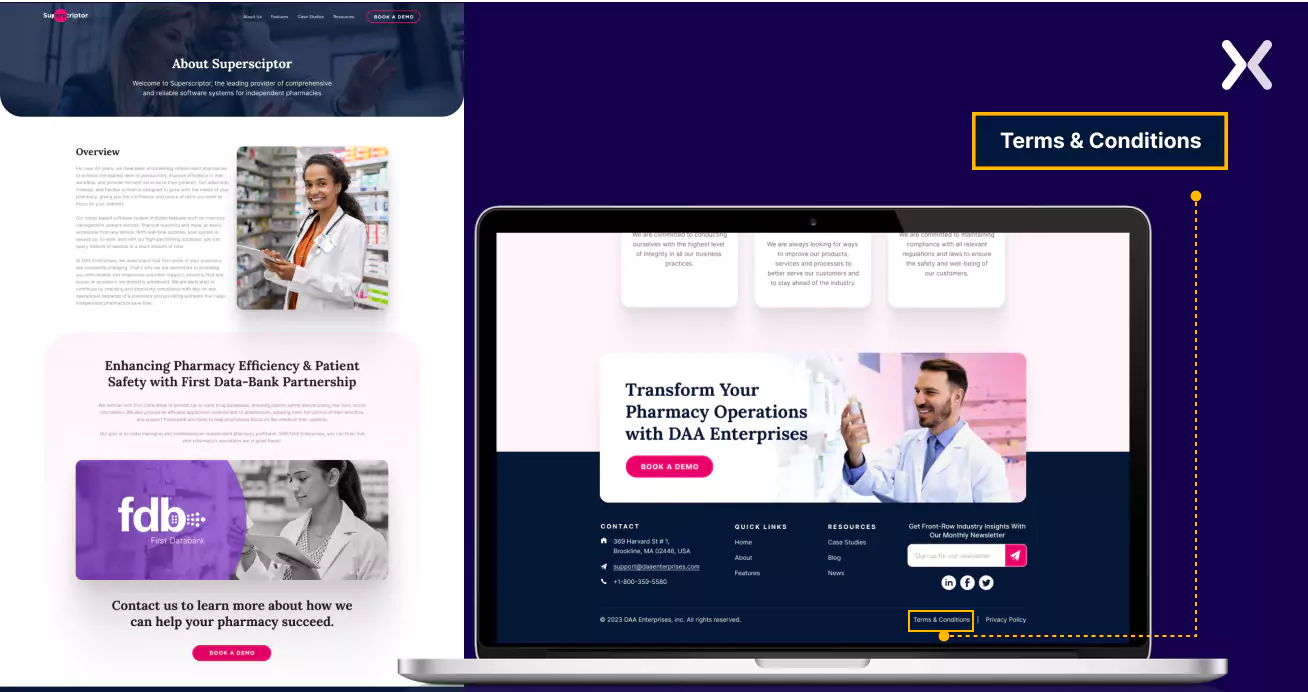
Your privacy policy should provide a full overview of the data you collect from users interacting with your landing pages. It includes explicit details about the types of data you gather, such as names, email addresses, IP addresses, and any other relevant information. Clearly explaining the purpose of collecting every kind of data is necessary - whether it’s for marketing communication, order processing, or any other legitimate business reason. For example, below is a landing page example that shares its privacy policy at the footer, one of the best places to put it.
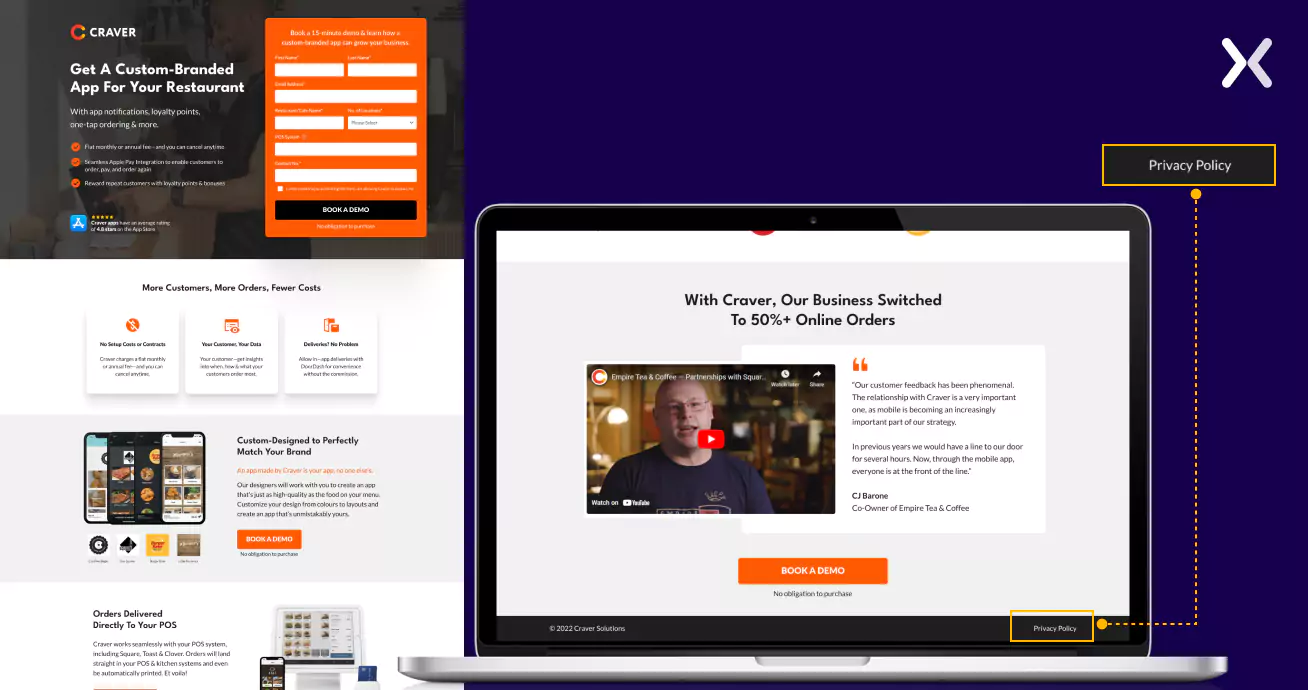 You can also put it right on your form like below:
2. Clear terms and conditions
Incorporating terms and conditions (T&C) into your landing page is necessary, especially when offering special promotions or deals. These terms outline the rules, restrictions, and guidelines that users must adhere to when participating in your offers, making sure transparency and fairness in your promotional activities. Here’s how T&C matters for special offers on landing pages:
clarity on offer details
T&C allows you to spell out the specifics of your special offer. It includes information like the discount percentage, eligibility criteria, validity period, and any minimum purchase requirements. Clear and concise terms help users understand what they’re signing up for.
Redemption Process
If your offer involves a coupon code, unique link, or specific steps to claim the deal, T&C can explain the redemption process in detail. It allows for clarity and satisfaction among users trying to avail of the promotion.
Restrictions and Exclusions
T&C can accent any limitations or exclusions associated with the offer. For instance, if the discount doesn’t apply to certain products or services. It’s not combinable with other offers, or it’s limited to one use per customer.
User Responsibilities
Outline what’s expected of users to enjoy the offer. It might include providing accurate information, adhering to usage guidelines, and complying with any verification requirements. You can put your Terms and Conditions right next to your privacy policy like done below:
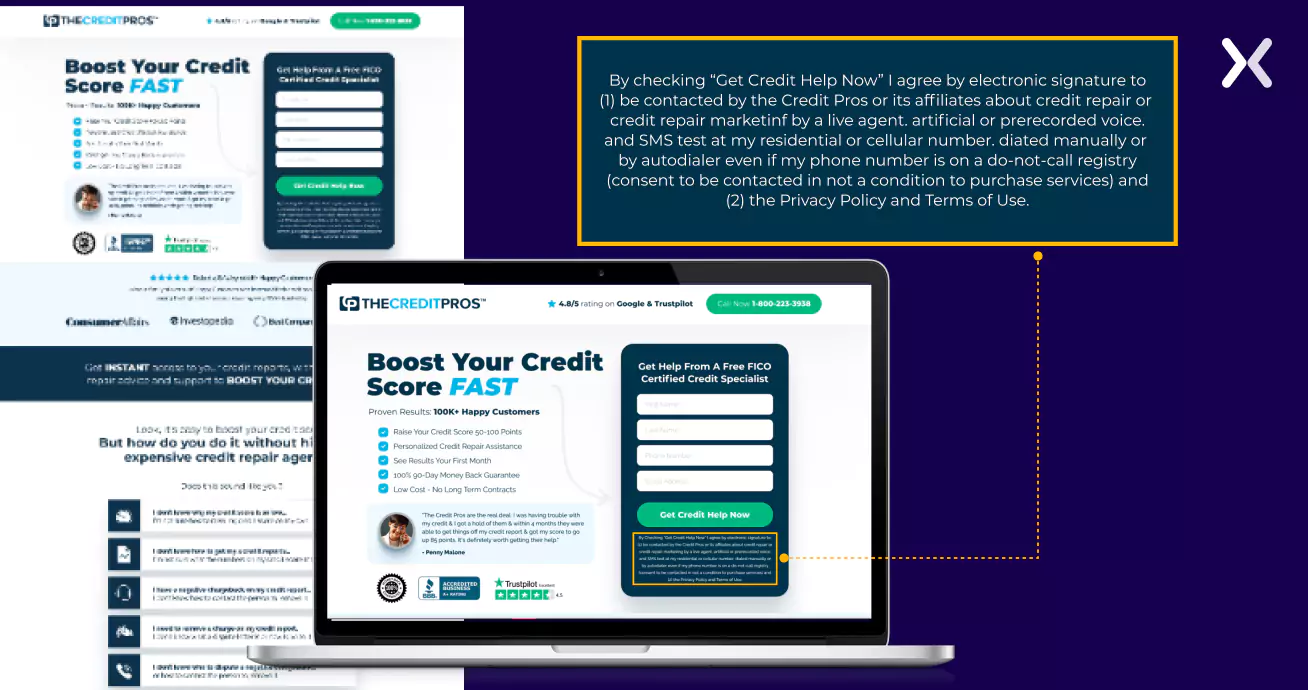
 Or, if there is anything specific you want to bring your users’ attention to. You can place it right below your form.
3. Consent
Consent matters for making sure that users are informed about how their data will be used and that they willingly agree to the terms set by your business. Here is how you can incorporate consent into your campaigns:
-
Make sure your consent requests are clear, specific, and transparent. Users should have no ambiguity about what they are consenting to.
-
Request separate consents for different purposes, such as data collection, marketing emails, or sharing data with third parties. Users should be able to choose which consents they grant.
-
Allow users to grant or deny consent for each type of data processing. It means giving them the option to opt in or out of specific data uses.
-
Make it easy for users to withdraw their consent anytime. Provide clear instructions on how they can do so.
-
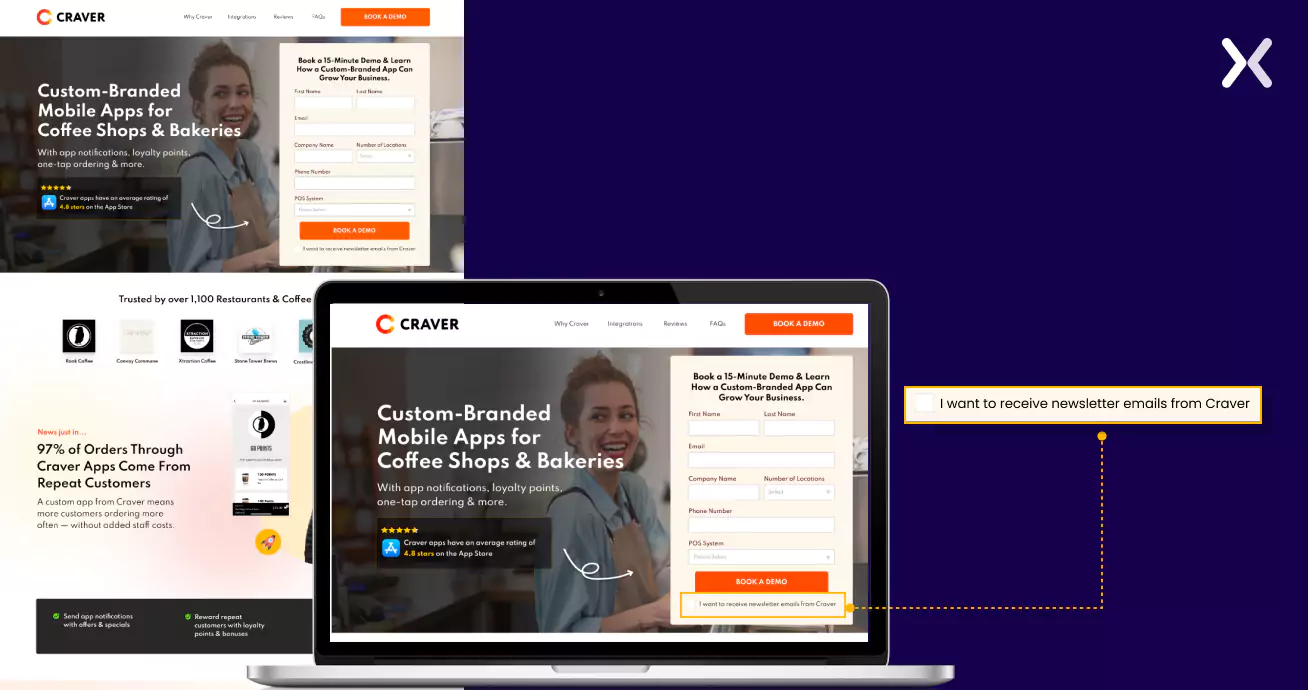
Keep records of user consent. This documentation can be necessary in demonstrating your compliance if needed. Here is why consent matters not just for your customer but also for you. Say one of your visitors fills out a form, and you have secured their email. Now, without their consent, if you are using their emails for sharing newsletters. It might not just put up a bad brand image but also result in that lead blocking you from their email. On the other hand, you can do what Craver did on their your SaaS landing page form. Right below the CTA, they have placed a check box that asks for the permission of the visitors to share their newsletter, which is the right way to win visitor trust and is in line with landing page compliance.
What about landing page compliance for PPC Ads?
When running PPC campaigns, your landing pages must adhere to various regulations and best practices to make sure a smooth user experience, maintain ad quality, and meet legal requirements. Though the rules for PPC landing pages might be similar to the ones discussed above, some more additions can be present.
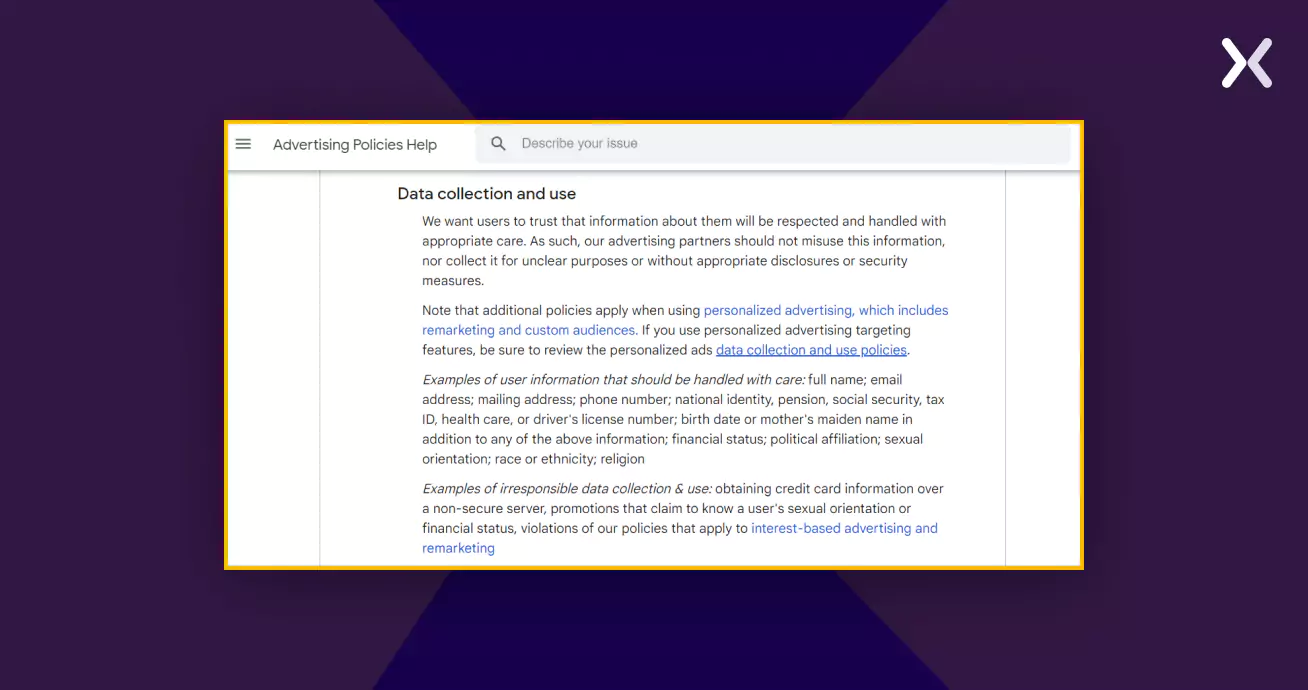 Landing page compliance on geotargeted pages is necessary as well. It helps keep in check legal adherence, user trust, ad quality, and relevance. It also makes sure data privacy, platform policy compliance, and a positive brand image. Compliant pages lead to better conversion rates and long-term sustainability, while non-compliance can result in penalties and damage to your brand.
How do you implement landing page compliance?
When it comes to winning customer trust, landing page compliance emerges as a vital cornerstone. This full discussion stresses its multi-dimensional importance. From GDPR’s data safeguarding to crafting transparent policies and terms, each element shapes trust and regulatory harmony. For business owners moving through this complex realm, expert guidance shines. Seeking a seasoned landing page optimization consultant is strategic. These professionals move through data details, allowing you to focus on business growth. Enter Apexure - over eight years of adeptness. We blend compliance mastery with conversion optimization. Our expertise assures GDPR and PPC policy adherence. We craft engaging, compliant landing pages that drive conversions. Connect with us today! In closing, landing page compliance isn’t mere regulation; it’s a trust-building, growth-driving asset.
Related Articles: