CRO for local search improves a website’s performance to attract and convert local search visitors into customers. For local businesses, this means optimizing the website experience to improve engagement and drive local leads. Many confuse local CRO with local SEO, which can result in underwhelming performance. While Conversion rate optimization (CRO) and SEO together can help you capture your local audience, SEO is just a small part of CRO. Website optimization goes beyond content and schema, diving into design and user flows that bring in conversions. In this article, you’ll learn everything you need to know about CRO for local search and how to optimize your website to deliver the best possible local experience.
Before you start CRO for local search
Before diving into local CRO. It’s important to understand the key fundamentals that set the foundation for success.
-
Psychological Triggers in Local Search Queries
Consumer local search behavior is typically motivated by psychological factors influencing their decisions. When it comes to conversion rate optimization of local enterprises, such psychological drivers need to be understood so the user experience is optimized to influence website conversions.
-
Local searchers tend to make decisions promptly, typically due to the urgency of a solution. For example, if someone is looking for a “coffee shop near me,” chances are. They will go somewhere soon. It can be harnessed by making sure that local businesses publish in real-time, i.e., inventory or availability.
-
Local consumers are highly influenced by online reviews, ratings, and testimonials. A strong Google My Business or review site rating can be the deciding factor for consumers choosing where to spend their money. Including reviews on local landing pages and websites can significantly improve CRO for local search.
-
Businesses should make sure that their content has localized keywords, such as the name of the neighborhood or local landmarks, to increase relevance and build trust.
-
Impact of Mobile Devices on Local Search
The evolution of local search behavior and the rise of mobile devices and smartphones have witnessed significant growth in recent years. Google states that the number of searches with the phrase “near me” has increased by over 500% during this period. This enormous peak shows that more consumers seek businesses within proximity and decide quickly.
-
Customers tend to search on their mobile phones for details regarding local businesses, such as their opening hours, location, and availability of products.
-
A highly optimized mobile experience increases the possibility of converting mobile searchers into paying customers. Statistics show that 76% of people searching for something on their mobile phone visit a business within 24 hours. Recognizing this change is critical in applying CRO to local search. Local companies need to make their website mobile-friendly, fast, and give customers relevant, easily accessible information so that customers who are on the go and in a hurry to make a decision can do so easily.
-
Local CRO vs Local SEO
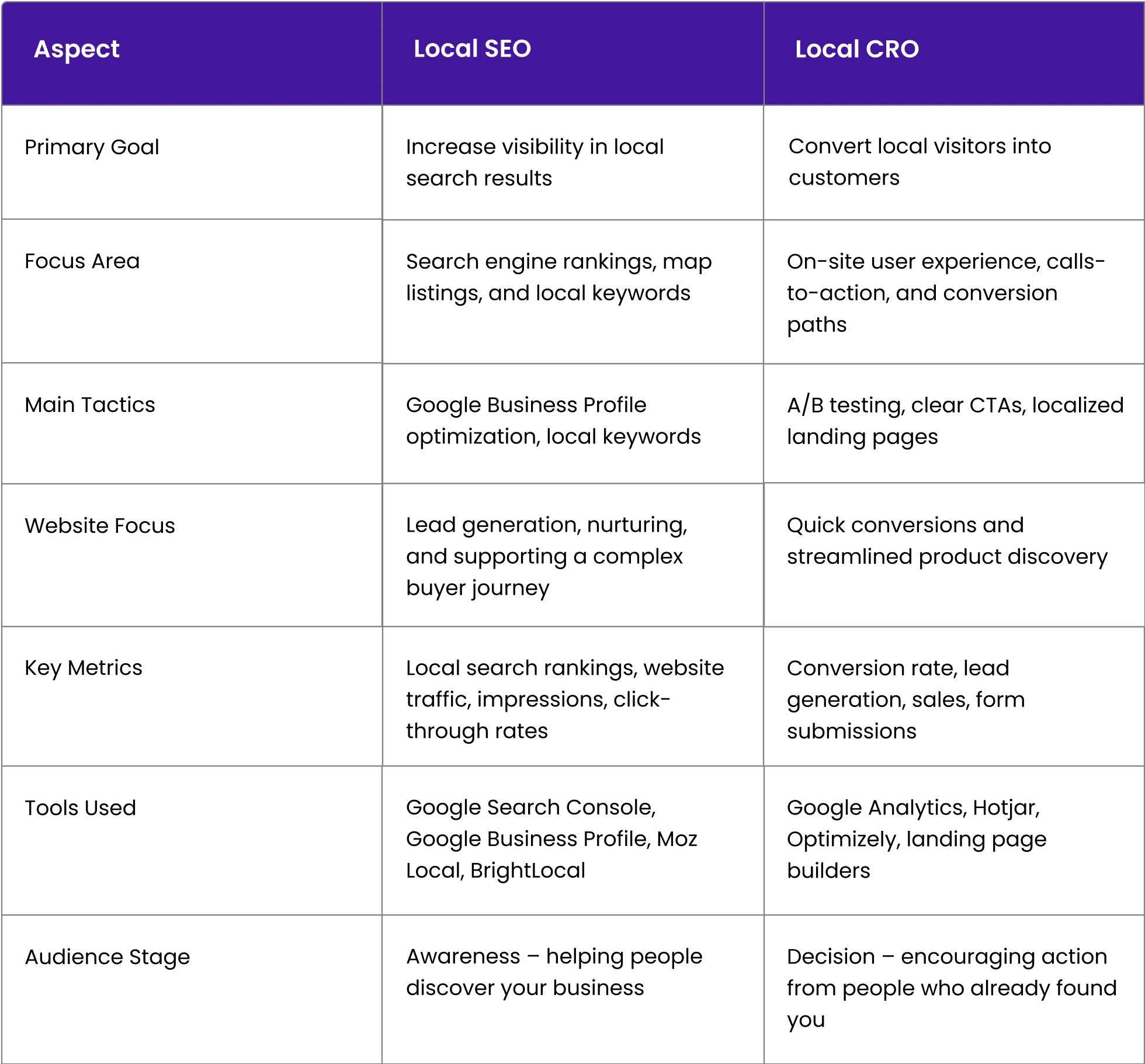
Local SEO is a part of Local CRO. While local CRO focuses on converting website visitors into customers, local SEO makes sure that your website gets the visibility in local search to bring in traffic. Let’s understand other elements of local CRO vs local SEO with the help of a comparison table.
8 strategies to implement CRO for local search
Here are some of the best local CRO strategies you need to know.
1. Optimizing landing pages for local relevance
A key part of CRO local is aligning landing pages with local search intent. Businesses are optimizing landing pages for local relevance, which is one of the most necessary elements of CRO for local search.
-
Including location-based keywords like the city, neighborhood, or nearby landmarks causes businesses to appear in local searches. For example, a San Francisco bakery should include keywords like “San Francisco bakery” or “best cupcakes in San Francisco.”
-
Beyond using localized keywords, businesses should tailor their content to show regional culture, events, and customer preferences. This builds trust and increases engagement. Displaying location-based pricing in local currency or offering region-specific discounts can make the purchasing decision easier, improving conversion rates.
2. Making the most out of Google my business features
A perfectly configured Google My Business (GMB) listing is a key resource in CRO for local search. It helps local visibility and conversions by enabling users to gain instant access to vital information.
-
Complete business details (such as hours, address, and phone number) make them full and up-to-date.
-
Periodically, update your GMB listing using posts regarding promotion, events, or new releases. Reply to reviews to make sure credibility and trust, and, therefore, meaningfully increase the conversion rate.
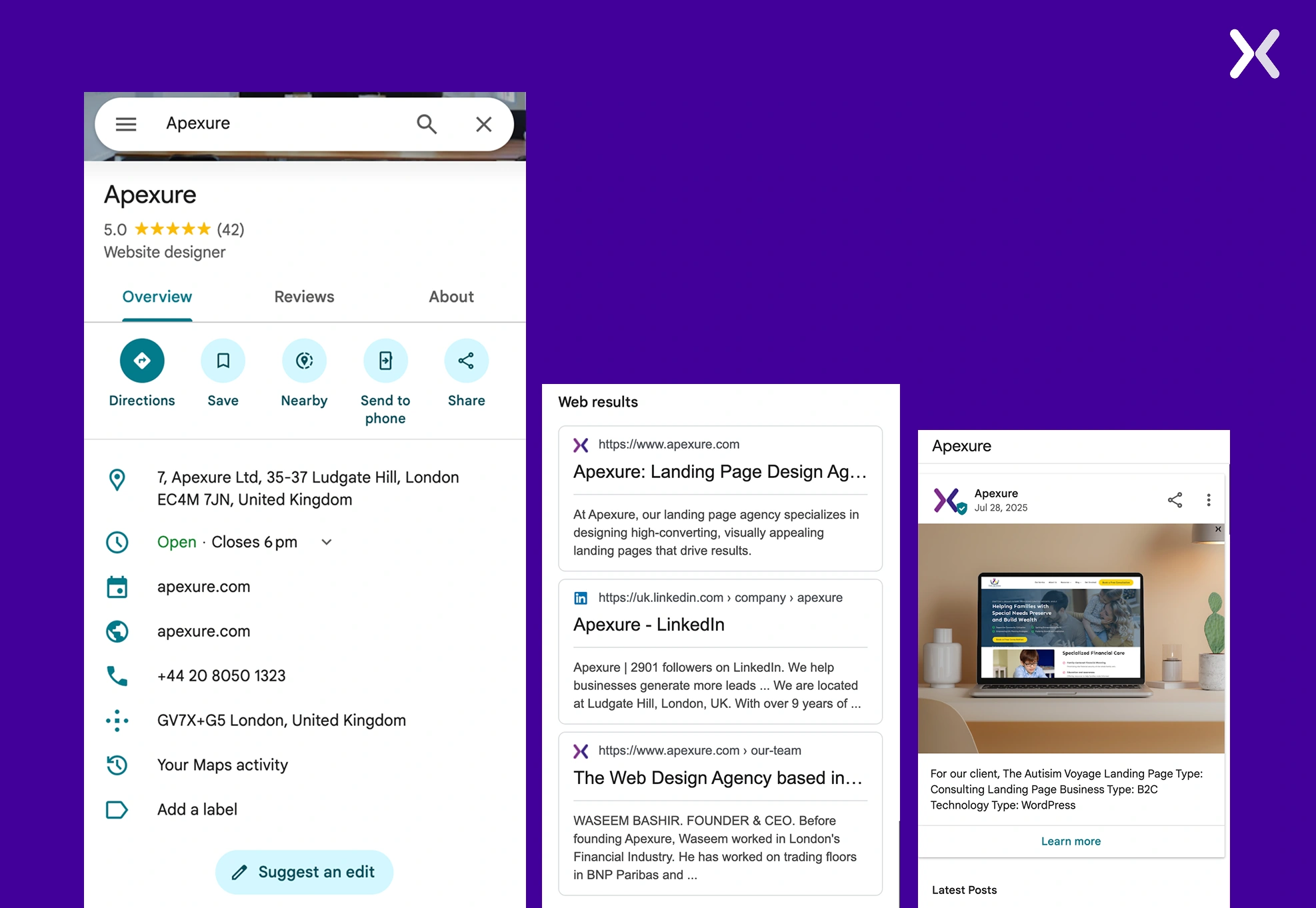 By using features of GMB, local businesses can not just increase visibility but also directly connect with potential consumers, thereby maximizing CRO services for local businesses.
3. Use of structured data markup for local SEO
Structured data is important in helping search engines understand and rank local content. Businesses can help search engines acquire explicit, structured knowledge about their products through schema markup.
-
A consulting firm or software provider can use “Organization” or “LocalBusiness” schema to accent key details like services offered, client reviews, office locations, and contact information. This helps search engines display rich results, improving visibility and credibility.
-
Structured data boosts local search visibility through an improved ability to appear in rich snippets that receive more clicks.
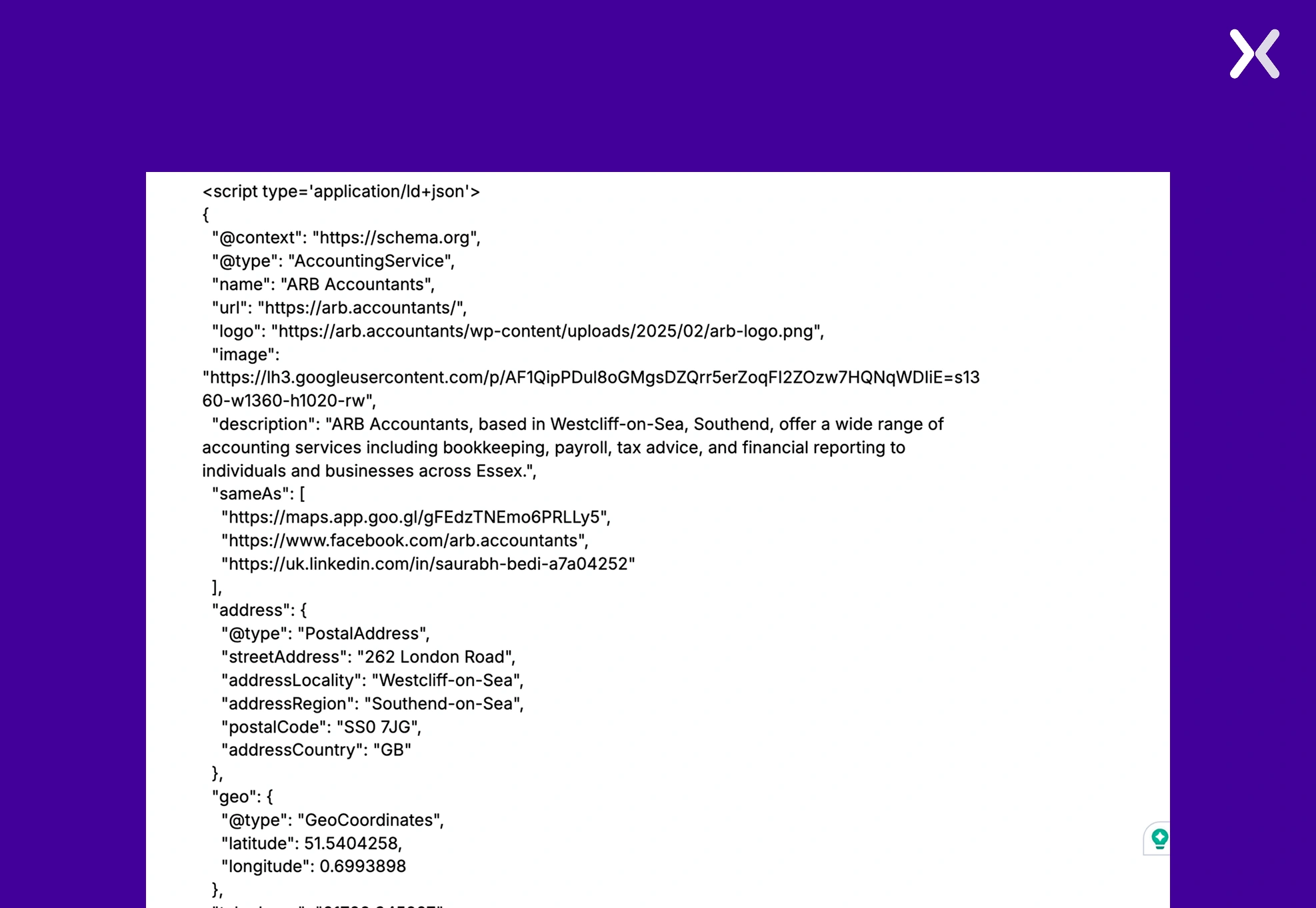 For local companies, integrating schema markup within an overall CRO for local search strategy has the potential to drive rankings, along with user engagement.
4. Mobile optimization for local search CRO
Mobile optimization is essential in CRO for local search since the majority of local searches occur on smartphones. An effective mobile experience makes it easy for potential customers to locate and interact with a business when searching locally.
-
Many professionals search for services like “IT consulting firm near me” or “best marketing agency nearby.” Optimizing for voice search with structured answers helps businesses capture high-intent leads.
-
Service providers, such as logistics firms or co-working spaces, can improve conversions by adding one-click call buttons or integrated Google Maps directions on their mobile sites, making it easy for prospects to schedule consultations or site visits.
-
A software provider offering on-demand solutions can boost engagement with a “Request a Demo” button that auto-fills based on location. Similarly, a warehouse or office space provider with a simplified “Schedule a Tour” form can reduce friction and encourage conversions. Businesses prioritizing mobile optimization see higher engagement and conversion rates that equate to improved CRO for local search listings.
5. Utilizing localized content and reviews
Localized content matters for building trust and driving website conversions. By displaying content relevant to their local audience, businesses can become more accessible and understandable to potential customers.
-
Local customers’ positive reviews can have a big impact on others’ decision-making. Putting reviews front and center on your website or GMB profile gives social proof and drives conversions. Studies reveal that companies with over five reviews on their GMB profile get 70% more clicks from users.
-
Service providers can integrate location-based keywords such as city names, industry hubs, or nearby business districts to improve local search visibility. For example, a marketing agency in Chicago might target keywords like “Chicago digital marketing agency”.
6. A/b and multivariate testing for local landing pages
A/B and multivariate testing are among the most powerful strategies in CRO for local search. Testing numerous variations of local landing pages can help businesses know what works best for their audience, resulting in increased conversion rates in the long run.
-
Comparing two versions of a landing page to determine which performs better. For example, a consulting firm might test different headlines or CTA placements to see which drives more inquiries or demo requests.
-
Testing multiple variables simultaneously to find the best-performing combination. For instance, a software company could experiment with different hero images, messaging variations, and button placements to optimize lead generation. A strategic process of A/B and multivariate testing enables companies to determine the best components of their website, improving CRO services for local businesses. Repeated testing helps local landing pages always be optimized in terms of fulfilling user expectations and generating conversions.
7. Behavioral targeting based on local user data
Understanding local search behavior is needed to offer localized experiences for driving conversions. Analyzing local user behavior allows businesses to tailor their approach based on the needs and preferences of the local audience.
-
Businesses can use products like Google Analytics, heatmaps, and session recordings to track how their local users are interacting with their site. For example, a local boutique might notice that users from a particular neighborhood spend more time on pages featuring specific products or collections.
-
Once this behavior is understood, businesses can personalize their CRO strategies. A local service provider could target ads or special offers based on the geographic location of users, creating more relevant and engaging experiences. By using data on local user behavior, businesses can fine-tune their CRO for local search efforts and drive more targeted conversions.
8. Conversion as a service (CaaS) for local businesses
Conversion as a Service (CaaS) is an emerging model offering an end-to-end, outsourced solution to local businesses to maximize their conversion rates. This model involves hiring experts to undertake each and every step of CRO for local search, right from landing page design to tracking analytics.
-
There are no budgets for small and medium-sized enterprises to employ conversion optimization experts. CaaS presents these businesses with a cost-cutting chance of using local business conversion rate optimization skills without keeping an in-house team.
-
With CaaS services, organizations can benefit from web analysis, A/B testing, user experience improvement, and performance measurement. Through the application of the model, local firms can gain great returns on their conversion rates without spending much time on core business processes. For organizations that require improved local search optimization without taking the burden of internal CRO staff, CaaS is a good option for better CRO facilities for local firms.
How to measure and analyze CRO success in local search
To measure the success of local search CRO, businesses must track relevant KPIs that show how successful their optimization has been. Tracking these metrics will allow businesses to know what’s working and where they can improve.
-
The most direct metric of local search success for CRO. An improved conversion rate means more local visitors are performing desired actions, such as purchasing or completing a contact form.
-
A high bounce rate indicates that visitors are not engaging with the content on the landing page. Reducing this metric is necessary to improving local search conversions.
-
These metrics indicate how engaged users are with your content. The longer the session duration and the greater pages per session, the higher the odds of better conversion rates. By monitoring these KPIs, businesses can gain actionable information on their CRO for local search performance and adjust their strategies accordingly continuously.
Adjusting strategies based on analytical insights
Decision-making based on data is key to maximizing CRO local strategies. By utilizing performance metrics and user behavior, firms can refine their strategies to optimize conversions. These adjustments, based on analytical insights, allow businesses to make informed decisions based on data that result in more conversions and optimize the general performance of their CRO for local search strategies.
Implement CRO for local search today
Optimizing CRO for local search is necessary for driving conversions and improving user engagement. Key strategies include optimizing local landing pages, using Google My Business, and implementing structured data. Understanding local search behavior through mobile optimization and A/B testing further improves results. Adopting CRO for local search practices helps businesses improve lead generation and online performance by creating more engaging and conversion-friendly websites. The future of CRO local search involves embracing new trends like voice search and AI-driven personalization. Local businesses that adapt to these changes will remain competitive and continue to see success.
Related Articles: